Smart Bathroom Mirrors With Built-In Speakers and Display
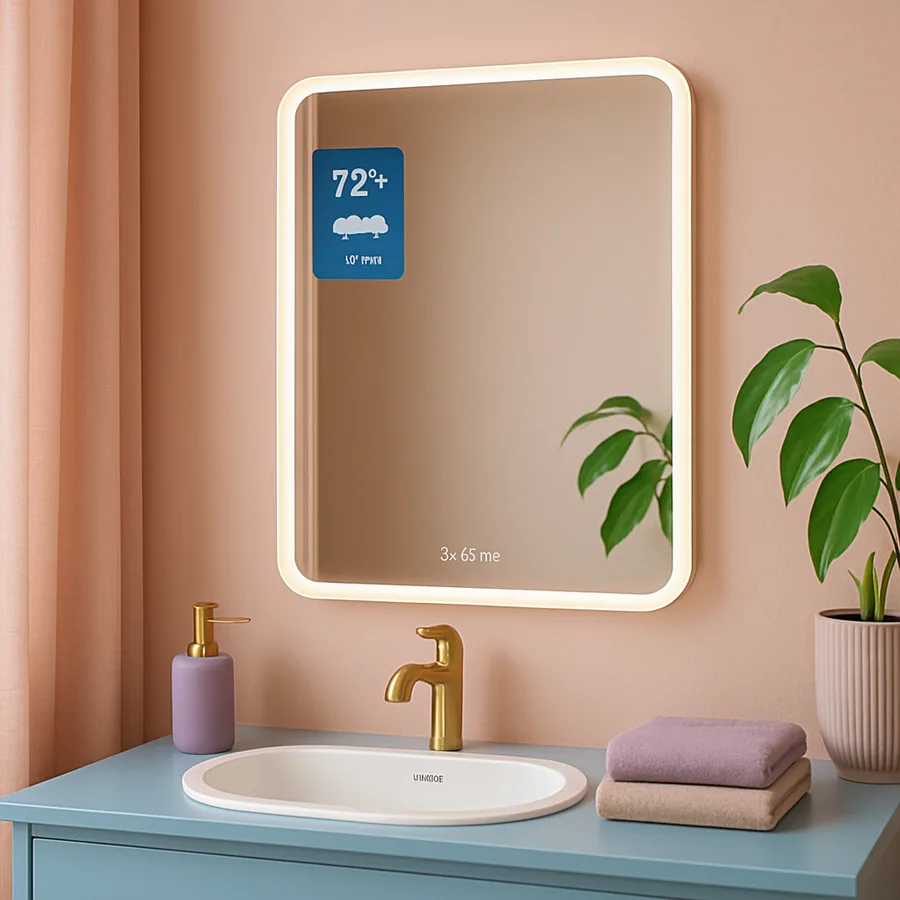
The smart bathroom mirror has matured. What was once a novelty product with a glued-on Bluetooth speaker and a tiny LCD strip has become a serious category of integrated fixture, with edge-lit displays, room-filling audio, voice control, and, in higher-end units, full touch-screen interaction with weather, news, calendar, and streaming services. For a certain kind of buyer, the smart mirror has replaced both the morning radio and the bathroom television, and it does so without taking up any additional surface in the room.
The category is also messy. Pricing ranges from a few hundred dollars for a basic backlit mirror with a Bluetooth speaker to several thousand for a full-screen Android-powered unit with voice assistants and biometric sensors. Audio quality varies wildly. Display brightness and viewing angles are inconsistent across brands. Privacy and connectivity practices range from reasonable to alarming. This guide walks through what the features actually do, how to evaluate them, and what the install and code implications look like in a real residential bathroom.
What "Smart" Actually Means in a Mirror
The term "smart mirror" covers a wide range of products. At the basic end, a smart mirror is a backlit mirror with an integrated Bluetooth speaker and a touch sensor for power and dimming. At the high end, it is a full Android or proprietary computing platform with a built-in display, microphone array, speakers, ambient sensors, and Wi-Fi connectivity, capable of running streaming apps, displaying calendar entries, and responding to voice commands.
The most common feature set in mid-tier units includes perimeter LED lighting with tunable color temperature, anti-fog heating, integrated Bluetooth audio, and a small embedded display showing time, weather, and notifications. Above this tier, units add larger touch-responsive displays, voice control through Alexa or Google Assistant, motion-activated wake, and integration with smart home platforms.
According to a 2024 American Lighting Association market report, smart bathroom mirrors with audio and display features grew 41% year over year in unit sales, the fastest-growing sub-segment of the entire bathroom lighting category. The same report noted that customer satisfaction varies dramatically by price tier, with the highest dissatisfaction concentrated in budget units that promise smart features but deliver poor audio quality, low display brightness, and unreliable connectivity.
Have you considered which features you actually want? Buyers often over-spec on day one and end up using only the lighting and audio features in practice. A common pattern is buying a full-touchscreen unit and then only using the music and weather display, which a much cheaper unit could have provided. Defining the use case before shopping prevents this kind of overspend.
Audio Quality and Speaker Integration
The audio system is the feature that separates a thoughtful smart mirror from a gadget. A bathroom is an acoustically challenging room: hard surfaces everywhere, no soft furnishings, lots of reflective glass and tile, and the user often inside a glass shower enclosure when they want to hear the audio most clearly. A small, low-power speaker glued to the back of a mirror will be unintelligible against running water.
The minimum acceptable audio for a serious smart mirror is a stereo pair of full-range drivers with at least 5 to 10 watts of total amplification. Look for specs that mention frequency response down to 80 Hz or lower, which indicates the driver and enclosure can produce some bass; a tinny mirror with no low end will sound worse than a phone speaker. Premium units include subwoofer drivers or passive radiators to extend low-frequency response, and the difference is dramatic over running shower water.
Speaker placement matters. Forward-firing drivers built into the mirror frame and aimed at the user produce noticeably clearer sound than rear-firing drivers that bounce off the wall behind the mirror. Some units include independent volume control for the bathroom and shower zones, with secondary speakers wired into the shower wall, which is genuinely useful in a primary bathroom suite. According to the American Lighting Association, integrated multi-zone audio is now offered by roughly a quarter of premium smart mirror brands.
Bluetooth versions and codecs determine audio fidelity. Bluetooth 5.0 or higher is the current minimum. Support for aptX or LDAC codecs indicates higher-quality wireless audio, which matters more for music than for podcasts. If you plan to listen to music while showering or doing makeup, the codec spec is worth confirming. If you only listen to spoken-word content, the standard SBC codec is fine.
Display Technology and Use Cases
The display in a smart mirror sits behind the reflective coating, with the coating either fully one-way mirrored (so the display is invisible when off) or selectively transparent in a window where the display lives. The transparency window approach is common in budget and mid-tier units; the full one-way mirror approach is more expensive and looks cleaner when the display is off.
Display brightness is critical. A bright bathroom in the morning will easily exceed 500 lux of ambient light, and a dim display will be unreadable. Look for displays rated at at least 400 nits of peak brightness, and prefer units that automatically adjust brightness based on ambient light sensors. The Illuminating Engineering Society (IES) notes that displays in high-ambient-light environments need at least three to four times the brightness of displays in typical residential viewing conditions.
The most common display use cases in the bathroom are time, date, weather, calendar appointments, news headlines, and music playback controls. Some units add streaming video, news anchor video, or workout videos, which work well during long grooming routines but can become distracting during short ones. Voice-activated control is particularly useful in the bathroom because the user often has wet hands.
Touch interaction on a wet glass surface is unreliable, which is why voice control or smart home app control is the more practical control method for many users. Touch sensors that work through glass and water can be made reliable, but they are more expensive than basic capacitive touch. Check whether the touch interface remains responsive when the user's hands are wet or slightly soapy, because this is the actual condition of use in a bathroom.
Privacy, Connectivity, and Smart Home Integration
A smart mirror with a microphone, camera (in some premium units), and internet connection raises legitimate privacy questions, particularly in a bathroom. The microphones are typically always-on, listening for a wake word; the camera, if present, is typically reserved for skin analysis features. Both deserve serious thought before installation.
Look for units that include physical microphone and camera disable switches, not just software toggles. A hardware switch that breaks the circuit guarantees the device cannot listen or see, regardless of firmware behavior. This is the same approach that high-end laptops have adopted for webcam privacy, and it is increasingly common in smart home devices that live in private spaces. Brands that omit hardware switches in bathroom-class devices should be evaluated more carefully.
Connectivity is typically Wi-Fi only, with some units adding Bluetooth and Zigbee or Z-Wave for smart home integration. The mirror should support your existing smart home platform: Alexa, Google Home, Apple HomeKit, or Samsung SmartThings. Compatibility with all of these is rare; most units pick one or two. Integration with the rest of your smart home (lights, climate, locks) is what turns the mirror from a gadget into a control surface.
Software updates are an underrated factor in smart device longevity. A mirror that the manufacturer stops updating after two years will become obsolete and possibly insecure. Look for brands with a track record of multi-year update support, and prefer units that run on a standardized platform (Android with Google Mobile Services, for example) rather than a proprietary OS. The ENERGY STAR Connected Devices program publishes guidance on long-term device support that is worth reviewing for any internet-connected fixture.
Installation, Power, and Code Compliance
Smart mirrors require more power than traditional mirrors and a more careful install. The total power draw of a full-featured unit can reach 150 to 250 watts with the LED, heater, display, and audio all active simultaneously. This is well within the capacity of a standard residential 15A circuit but requires a dedicated junction box behind the mirror with appropriate gauge wiring.
Per the National Electrical Code (NEC), the circuit feeding the mirror must be GFCI-protected. The mirror itself should carry a damp rating for typical bathroom installation, and installations within the splash zone of a shower or tub should use wet-rated units. Most reputable smart mirror brands list both ratings on their product specs; if a brand omits these specs, treat it as a red flag.
The junction box location must be planned during rough-in, before drywall and tile go up. Smart mirrors are typically heavier than backlit-only mirrors due to the display, speakers, and amplification hardware, sometimes weighing 40 to 80 pounds for a large unit. The mounting hardware and the wall framing must support the weight without sag. Blocking in the wall framing at the mirror location is a standard precaution and should be discussed with your contractor during framing.
Wi-Fi reception in a bathroom can be weak, particularly in older homes with plaster walls or tile-covered substrates. If you plan to install a smart mirror, test Wi-Fi signal strength at the mirror location with a phone before ordering. If the signal is weak, plan to add a mesh node or access point nearby. The National Kitchen and Bath Association (NKBA) notes that connectivity issues are now among the top three reasons for warranty claims on smart bathroom devices, almost all of which trace back to inadequate Wi-Fi coverage rather than device defects.
Choosing a Smart Mirror That Earns Its Price
The premium for smart features is significant: a comparable backlit mirror without smart functionality costs roughly 30 to 50 percent of a full-featured smart unit. To justify the premium, the smart features have to be ones you will use daily. The most common reasons buyers regret a smart mirror purchase are: poor audio quality, dim or hard-to-read display, unreliable voice control, and short manufacturer support cycles.
The features that consistently deliver value are tunable LED lighting, anti-fog heating, good stereo audio, and discrete information display (time, weather, calendar). Features that often disappoint or go unused are full streaming video, complex touch interfaces, AR makeup overlays, and biometric sensors. Match your purchase to the features you will actually use, not the features that look impressive in marketing.
Warranty length is a useful proxy for build quality. Premium smart mirrors typically carry three to five year warranties on the electronics and longer warranties on the mirror coating itself. Cheaper units often carry one-year warranties that expire just as the unit starts to fail. The cost difference between a one-year and a five-year warranty on a $1,500 mirror is usually negligible relative to the replacement cost, and the warranty is the manufacturer's signal of confidence in the product.
Ventilation in the bathroom remains important even for smart mirrors. A high-humidity environment will degrade electronics over time, and the mirror's internal components are no exception. The Home Ventilating Institute publishes sizing guidance for bathroom exhaust fans, and a properly sized fan run for at least 20 minutes after each shower will extend the life of every electronic fixture in the room. The American Society of Interior Designers (ASID) consistently lists ventilation as one of the most underspecified categories in residential bathroom renovations.
Conclusion
A smart bathroom mirror with built-in speakers and display is a real upgrade in the right context. For a buyer who genuinely uses audio and information display in the bathroom every day, a well-specified unit replaces multiple devices, saves counter space, and integrates cleanly into a smart home. For a buyer who mostly wants flattering vanity lighting and the occasional podcast, a basic backlit mirror with a Bluetooth speaker delivers most of the value at a fraction of the price.
The specifications that matter most are audio quality (5 to 10 watts minimum, frequency response down to 80 Hz or lower), display brightness (at least 400 nits with auto-adjustment), connectivity (Wi-Fi 5 or 6, smart home compatibility with your platform), privacy (hardware microphone and camera switches), and warranty (three to five years on electronics). Hit those marks and the unit will earn its premium daily for years.
The install matters as much as the spec. Junction box planned during rough-in, GFCI-protected circuit, damp or wet rating appropriate to the location, blocking in the wall framing for the mirror weight, and confirmed Wi-Fi coverage at the mirror location. Skip any of these and the unit will either fail to install cleanly or fail to perform as advertised. Have you tested the Wi-Fi signal at your existing mirror location? It is the single fastest pre-purchase diagnostic.
Ready to evaluate smart mirror options? Define your top three desired features, set a realistic budget, and pull spec sheets on three to five candidate units. Compare audio specs, display brightness, smart home integration, privacy controls, and warranty length side by side. Confirm Wi-Fi coverage and electrical capacity at your bathroom location, and bring all of it to a licensed electrician before ordering. The result will be a bathroom that quietly upgrades your morning routine for years to come.
More Articles You May Like



Comments
Post a Comment