Salvaged Door Hardware From Architectural Antique Shops
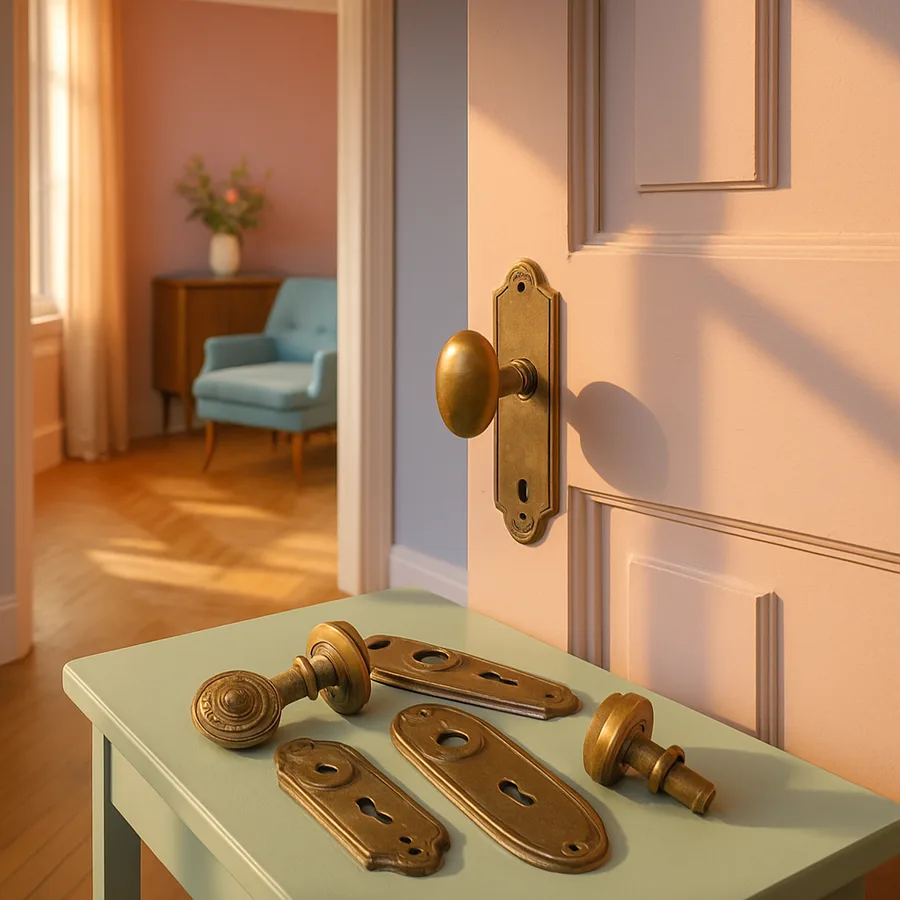
The doorknob you grasp every day says more about your home than almost any other detail. Mass-produced contemporary hardware feels interchangeable, while a salvaged Victorian rim lock, a mercury-glass crystal knob, or a hand-forged Mission-era hinge transmits the texture of another era through your fingertips. Architectural antique shops have become the primary stewards of this material, rescuing hardware from demolitions, estate liquidations, and abandoned commercial buildings before it is melted as scrap. This guide explores how designers and homeowners can navigate these shops to source authentic salvaged door hardware that performs reliably in modern installations.
The Architectural Antique Shop as Resource
An architectural antique shop is fundamentally different from a general antiques store. The proprietors typically come from a deconstruction or restoration background, and the inventory consists almost entirely of building components: doors, hardware, mantels, columns, windows, and decorative metalwork. Olde Good Things in New York City, Architectural Antiques in Minneapolis, and The Demolition Depot in Manhattan are among the most established operations, each maintaining inventories that span more than a century of American building history. Walking into one of these spaces is a research experience as much as a shopping trip.
The value of an architectural antique shop lies in the depth of curation. A good proprietor can identify a door knob as Eastlake era from across the room, distinguish between Sargent and Russell and Erwin lock manufacturers by the keyway profile, and explain whether a particular hinge pattern was used in residential or commercial applications. This expertise saves the buyer from costly mistakes and accelerates the matching of hardware to the architectural style of the project. According to Architectural Digest, designers working on historic renovations increasingly rely on a small network of trusted shops to maintain stylistic consistency across multiple homes.
Inventory in these shops moves quickly, especially for sought-after styles like Arts and Crafts bronze or Art Deco chrome. The most successful buyers cultivate ongoing relationships, sharing project sketches and standing requests so that the shop can flag matching pieces as they arrive. Have you visited an architectural salvage shop in your area, or do you assume new reproduction hardware is your only option? You may be surprised at the inventory and at the prices, which often undercut high-end reproduction lines.
Identifying Quality and Authenticity
Genuine antique door hardware can be identified by several physical and manufacturing details. Cast brass and bronze pieces from the late nineteenth century show file marks where craftsmen smoothed the casting seams, and they carry maker stamps on the inside surfaces of escutcheons and on the shanks of knobs. Patina on these metals develops as a complex bronze-green or chocolate-brown layer that bonds with the surface; a uniform, painted-on finish suggests reproduction. Glass and porcelain knobs from the era often show small bubbles or asymmetries that betray their handmade origin.
Manufacturing histories are well-documented for the major American hardware makers. Yale and Towne dominated lock production from the 1880s through the 1920s, while Sargent and Company specialized in decorative bronze. Russell and Erwin produced extensive catalogs of door hardware in the late Victorian era, and original copies of these catalogs - many digitized through the Smithsonian Institution archives - allow accurate dating and stylistic identification. A serious antique shop will have reference catalogs available for browsing, and a knowledgeable salesperson can usually tie a piece to a specific catalog entry.
Beware of common reproductions sold as antique. The most pervasive imitation is the porcelain doorknob with a brass shank, which has been reproduced continuously since the 1970s and is often artificially aged. Look at the threading on the shank: original threads are coarser and slightly inconsistent, while modern reproductions have machine-perfect threading. The same applies to skeleton keys, which are reproduced in vast quantities and rarely retain antique value unless they came from a documented original lock set. The Antique Doorknob Collectors of America maintains identification guides that experienced collectors use to verify questionable pieces.
Restoration and Preparation for Installation
Most salvaged door hardware requires some level of restoration before installation. The goal is to preserve patina and character while restoring mechanical function and surface integrity. Cleaning is the first step, and it should always be done with the gentlest method that achieves the desired result. A soft brass brush with mild soap removes dirt without damaging patina, while ultrasonic cleaning works well for intricate mechanisms but should be avoided on glass or porcelain knobs because the vibration can crack thin sections. Aggressive chemical strippers and wire wheels destroy the very patina that defines the antique character.
Mechanical restoration of mortise locks is a specialized craft. The internal springs, levers, and tumblers in a hundred-year-old lock are often worn or broken, and replacement parts are not commercially available for most antique lines. Skilled restorers fabricate new internals using period-appropriate materials, often from donor locks of the same manufacturer. A working antique mortise lock costs roughly 200 to 600 dollars to restore, depending on the maker and complexity, and the result is a mechanism that will outlast almost any contemporary alternative.
Refinishing decisions should preserve as much original surface as possible. A brass knob with worn lacquer should typically be stripped of lacquer, lightly polished to remove tarnish from high-touch areas, and then sealed with a microcrystalline wax such as Renaissance Wax. This approach respects the wear pattern of the original hand and produces a living finish that develops further character through use. The American Institute for Conservation publishes guidance on metals conservation that translates well to hardware restoration in residential contexts.
Compatibility With Modern Doors
Installing salvaged hardware in a contemporary door requires careful dimensional analysis. Antique mortise locks were typically built to fit a 7 by 4 inch pocket cut into the door edge, while modern doors come pre-bored for a 2 1/8 inch cylindrical lock and a 1 inch latch hole. Adapting a modern door to receive an antique mortise lock is a substantial joinery operation that requires a router template, a sharp set of chisels, and patience. Many homeowners are surprised by the labor involved, so this should be discussed openly with the contractor before purchase.
Backset is another critical dimension. Antique knobs were often paired with locks having a 2 3/4 inch backset, while modern doors are typically prepared for a 2 3/8 inch backset. The mismatch may seem small, but it determines whether the knob ends up centered on the stile or visually awkward. Some restoration shops fabricate adapter plates to bridge the gap, but the cleanest solution is to find a salvaged lock with a backset that matches the door preparation.
Hinge compatibility is generally easier because most antique butt hinges follow standardized patterns that align reasonably well with modern door preparations. However, the leaf thickness and pin diameter often require minor mortise adjustments, and the weight rating of decorative antique hinges may not support a heavy modern solid-core door. The American Institute of Architects has published technical notes on hardware compatibility for adaptive reuse projects that offer useful guidance for residential designers facing similar dimensional puzzles.
Where to Shop and What to Bring
Beyond the major shops named earlier, regional architectural salvage operations offer rich and often underexplored inventories. Caravati's Architectural Salvage in Richmond, Architectural Salvage of Asheville in North Carolina, and Black Dog Salvage in Roanoke each maintain large hardware sections with strong regional character. On the West Coast, Recycling the Past in California and Aurora Mills Architectural Salvage in Oregon are well known to designers working on Craftsman and Mission revival projects.
When you visit a shop, bring photographs of your existing doors, including close-ups of the edge profile, the bored holes, and any existing strikes. A small ruler or caliper helps confirm dimensions on the spot. If you are sourcing for multiple openings, bring a labeled diagram showing which openings need exterior versus interior locking, which need passage hardware, and which need privacy mechanisms. This level of preparation transforms a shopping trip into an efficient sourcing session and helps the proprietor pull options that actually fit your project.
Pricing in architectural antique shops varies widely, and skilled negotiation is part of the experience. A complete matching set of six interior knobs and rosettes might run 300 to 800 dollars depending on the maker and condition, while a single exceptional Eastlake lock set with original key can exceed 1,500 dollars. Bundle pricing is common, and shops often discount substantially for full-house orders. Ask whether the shop offers consignment of compatible pieces from your existing house in trade against new purchases, an arrangement that benefits both parties.
Sustainability and Investment Value
Salvaged door hardware represents one of the highest-leverage sustainability choices available in interior design. According to the U.S. Environmental Protection Agency, building demolition generates roughly 600 million tons of debris annually in the United States, and a meaningful fraction of that mass is metal hardware that could be reused. Each restored mortise lock or pair of butt hinges represents avoided manufacturing energy, reduced raw material extraction, and diverted landfill weight. The embodied carbon savings are substantial when scaled across a full house, often exceeding the carbon footprint of an equivalent new product by an order of magnitude.
Beyond environmental value, antique hardware often appreciates over time, particularly pieces from named makers in original or skillfully restored condition. Auction records from Bonhams and other houses show steady price appreciation for documented sets from premier manufacturers, with some Greene and Greene-attributed pieces reaching five-figure values at auction. While most homeowners are not buying for resale, the financial calculus is meaningfully different from buying mass-produced reproduction hardware that depreciates the moment it leaves the showroom.
Have you considered the lifespan question more broadly? A well-made mortise lock from 1895 that has been in continuous service for over a century, restored once and reinstalled, easily has another century of operation ahead of it. By contrast, a contemporary residential lock often fails within 15 to 25 years of regular use. The total cost of ownership picture, when projected across multiple decades, frequently favors the salvaged option even before factoring in aesthetic and environmental benefits.
Conclusion
Architectural antique shops are an underused resource for homeowners and designers seeking authentic, durable, and characterful door hardware. Building a relationship with a knowledgeable proprietor unlocks access to inventory that never reaches a public floor, and the expertise these shops offer is itself worth the visit. Whether you are restoring a Victorian townhouse or adding period character to a new build, salvaged hardware grounds the project in a tactile material history.
The path from shop floor to installed hardware involves real work: identification, restoration, compatibility analysis, and skilled installation. Each step rewards the buyer who plans carefully and partners with experienced restorers and contractors. The result is hardware that operates beautifully, looks irreplaceable, and contributes to the broader project of reusing the material wealth already present in our existing building stock.
Begin by identifying two or three architectural antique shops within driving distance of your project, and schedule visits during weekday hours when the proprietors have time to talk. Bring photographs, dimensions, and an open mind about what you might discover. Make the trip this month, and let the shop guide you through what is possible - your project will be richer for the conversation, and your hardware will carry a story that no catalog can supply.
Final Notes on Building Your Hardware Collection
Many homeowners discover that working with salvaged door hardware becomes a multi-year practice rather than a single transaction. As you complete one project and live with the result, your eye becomes more discerning, and you begin to notice opportunities to upgrade additional openings throughout the home. Maintain a small notebook or shared digital album that records the openings you have completed, the suppliers used, the prices paid, and the styles installed. This running record becomes invaluable when sourcing matching hardware for future expansions.
Consider also the conservation responsibility that accompanies salvaged hardware ownership. The pieces you install in your home are part of a finite remaining stock, and basic maintenance practices extend their service life by decades. Avoid harsh polishes that strip patina, lubricate mortise lock mechanisms annually with a graphite-based lubricant rather than oil, and address minor mechanical issues before they cascade. According to the National Trust for Historic Preservation, well-maintained antique hardware can serve indefinitely, and the cost of preventive care is trivial compared with replacement.
Finally, share what you learn. The community of designers, restorers, and homeowners who specify salvaged hardware is small and generous, and your project documentation contributes to a broader knowledge base. Photographs of your installations, notes on what worked and what did not, and recommendations of suppliers who delivered well are all valuable to others entering the field. The future of architectural salvage depends on this knowledge transfer as much as on the physical material itself.
More Articles You May Like



Comments
Post a Comment