Pocket Door Hardware Selection for Soft-Close and Lock Options
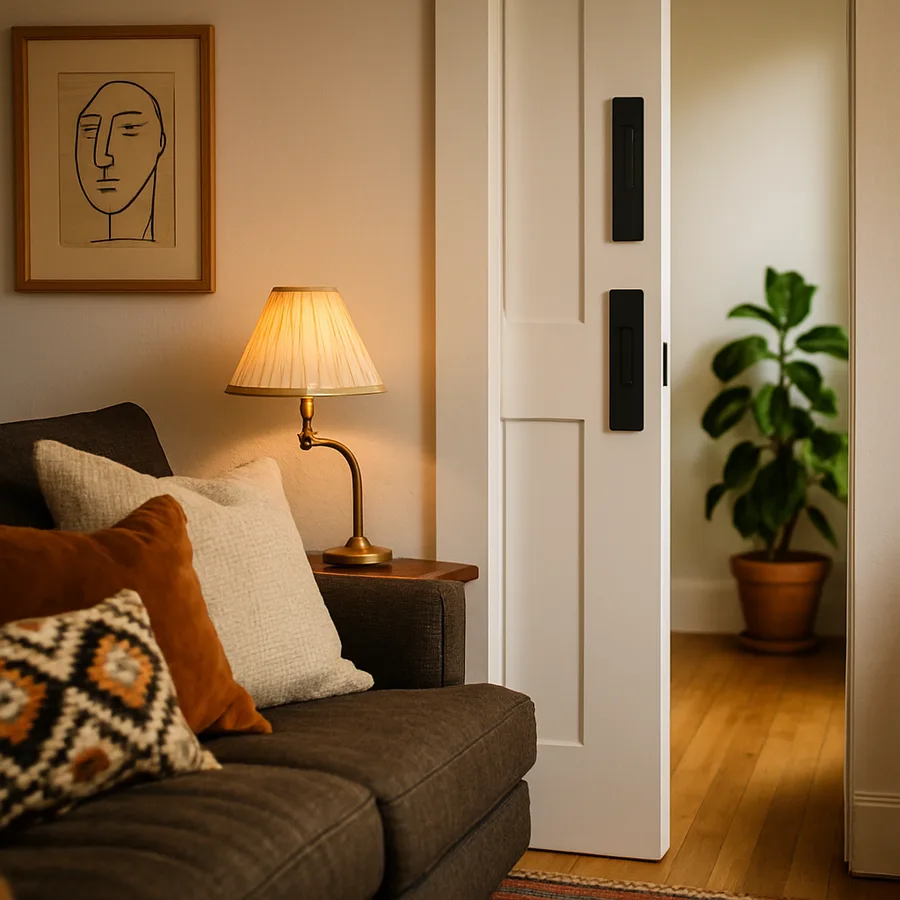
Pocket doors look effortless when they glide shut with a whisper, but that quiet performance is built almost entirely on the hardware hidden inside the wall cavity. Hinges, head jambs, and visible casing get most of the homeowner attention, yet the track system, hangers, soft-close mechanism, and lockset determine whether a door still works smoothly twenty years from now or starts skipping off the rail after a single season of summer humidity. Choosing well at the parts list stage is cheaper, easier, and quieter than ripping drywall later.
This guide is structured the way a working remodeler thinks through a pocket door spec: starting with weight class, moving through track style, then layering on soft-close, privacy hardware, and edge pulls. Whether you are sourcing for a single bathroom retrofit or specifying eight openings on a whole-home renovation, the same decision tree applies. Have you ever closed a pocket door that bounced back on the latch, or tried to lock one only to feel the bolt skid past a hollow strike? Those failures almost always trace back to hardware selected by price rather than by load and cycle expectations.
Weight Ratings and Why They Drive Every Other Choice
The first number to write down is the door weight. A standard 1-3/8 inch hollow-core slab around 32 inches wide weighs roughly 28 to 35 pounds. A 1-3/4 inch solid-core door at the same width hits 70 to 90 pounds, and a custom 96-inch tall solid-walnut slab can climb past 140 pounds. Track kits are rated by the manufacturer in tiers, typically 75, 125, 200, and 400 pounds. The National Association of Home Builders notes that interior door weight has crept upward over the last decade as buyers chase the acoustic isolation that mass provides, which means many older spec sheets undercall the hardware now needed.
Always design with at least a 50 percent safety margin above the slab weight, because the track also has to absorb closing impact and decades of micro-shock from people leaning on the door. A 90-pound solid-core door belongs on a 200-pound track, not a 125. Johnson Hardware, Hafele, Krownlab, and Cavity Sliders all publish load ratings in their catalogs, and reading the fine print matters: some ratings assume a single hanger pair, while heavy-duty kits use four-wheel trucks per hanger and can effectively double capacity.
Door height changes the math too. A 96-inch tall door creates more leverage on the hangers than an 80-inch door, so even at the same weight you should bump up one rating tier. According to a This Old House field report on retrofit pocket installations, more than half of failed pocket doors they inspected were running on undersized track for a heavier slab installed years after the original framing. The fix in those cases almost always means opening the wall, which is exactly the outcome good upfront spec is meant to avoid.
Track Systems: Aluminum Box, Steel I-Beam, and Continuous Roller
Three track architectures dominate the residential market. The aluminum box track is the most common, found in Johnson 1500 and 2000 series and most big-box pocket frame kits. It is light, inexpensive, and entirely adequate for hollow-core or light solid-core doors up to about 125 pounds. The wheels ride on a flat aluminum surface, and the box geometry resists twisting from a door swung carelessly off-axis.
The steel I-beam track, used by Hafele and Krownlab on their premium lines, supports much heavier doors and is the standard for slabs over 150 pounds. The hangers ride on machined steel surfaces that wear far slower than aluminum and tolerate the heat and dust of a working construction site. Continuous-roller systems, sometimes called gear-drive or chain-drive, replace individual wheels with a long sealed roller running the full length of the door. They are quieter and smoother than either box or I-beam, but they cost three to five times more and are usually reserved for doors over 200 pounds or for clients who will accept no audible movement at all.
Mounting hardware matters as much as the track itself. The track should bolt into a steel header plate that spans the rough opening, not directly into the wood header. Most quality kits ship with a galvanized splice plate; if yours does not, ask why. The American Institute of Architects publishes interior detailing standards that recommend a continuous steel header for any pocket opening wider than 36 inches, and that recommendation should be treated as a floor, not a ceiling.
Soft-Close Mechanisms: Hydraulic, Magnetic, and Spring-Damped
Soft-close is the upgrade that most homeowners notice immediately and most contractors forget to include in the base bid. The mechanism catches the door in the last few inches of travel and decelerates it into the jamb, eliminating the hollow slam that pocket doors are notorious for. Three technologies are widely available, and they perform differently enough that the choice deserves real thought.
Hydraulic dampers are the most common and most affordable, using a sealed oil cylinder similar to a screen-door closer. They tolerate a wide weight range, typically 40 to 200 pounds in a single unit, and their resistance is fixed at the factory. Magnetic soft-close uses a moving magnet that induces eddy currents in a copper plate, providing damping without any moving fluid to leak or wear out. Cavity Sliders and several European brands favor magnetic systems for their longer service life, though the initial cost is roughly double a hydraulic unit. Spring-damped systems pair a closing spring with a hydraulic delay, which means the door not only slows but also self-closes from a partially open position, useful for bathroom doors that should not be left ajar.
A critical detail almost always missed: soft-close needs to be fitted on both ends of the track for any door that gets opened by yanking. A single-end soft-close stops the door at the jamb but lets it slam against the back stop when fully retracted, which over time will loosen the track mounting screws and chip the slab edge. Has your current pocket door ever rebounded back out of the wall after a hard pull? That is a one-end soft-close talking, and a second damper retrofit is usually a one-hour fix.
Privacy Locks and Latch Options
Pocket door locks have to do something a regular door lock does not: function with no door edge to receive a deadbolt and no jamb-mounted strike to engage. The standard solution is a mortise-style lock that recesses into the leading edge of the door, with a spring-loaded hook bolt or pin that drops into a strike mortised into the jamb when the door is fully closed. The two leading designs are the round mortise lock (used by Emtek, Baldwin, and most decorative-hardware brands) and the square mortise lock (favored by Accurate Lock and Hardware on commercial-grade installations).
For privacy doors such as bathrooms, look for a true privacy turn-with-emergency-release. The interior thumb-turn engages the hook bolt, and the exterior face has a small slot that accepts a coin or emergency key to release the lock from outside. The International Code Council requires that all privacy locks on bathroom and bedroom doors be openable from the outside without a special tool, and a properly specified pocket door privacy lock meets this requirement using a standard flat-blade key or coin slot.
Keyed entry pocket door locks exist but are uncommon and expensive, typically $300 to $600 per opening. They are most often specified for home offices, primary bedroom suites, and wine rooms. If full key security is a real requirement, many designers instead spec a swing door, because pocket door locks are inherently easier to defeat than a deadbolt-equipped swing door with a multi-point strike.
Edge Pulls, Flush Pulls, and Finger Recesses
The pull is the only piece of pocket door hardware most people will ever touch, so it deserves the same care as the parts hidden inside the wall. There are three families. Edge pulls are spring-loaded handles mounted in the leading edge of the door, exposed only when the door is open. They retract flush when the door is closed so the slab can fully enter the pocket. Flush pulls are recessed cups mounted on each face of the door, allowing a finger to hook in and slide the door open or shut. Finger recesses are simply machined-out scoops in the slab itself, sometimes lined with a thin metal liner.
The classic mistake is omitting the edge pull entirely. Without it, the door cannot be retrieved once it disappears into the wall, and homeowners end up using a butter knife or a magnetic catch hack within the first month. Always spec at least one edge pull per door, and for double pocket doors spec edge pulls on both leading edges. Flush pulls should be installed at a height matched to the rest of the door hardware in the home; the National Association of the Remodeling Industry guideline puts pull centers at 36 inches above finished floor as a default, dropping to 30 inches for households with young children or wheelchair users.
Finishes should match the rest of the room hardware, but be aware that pocket door pulls live in a slot and accumulate dust faster than swing-door hardware. Brushed and satin finishes hide fingerprints and dust better than polished brass or polished chrome. Matte black and oil-rubbed bronze look striking but show every speck, so plan for a quick monthly wipe.
Coordination with Frame Kits and Service Life Expectations
Hardware compatibility with the pocket frame kit is the last and most overlooked part of the spec. Not every track fits every frame. Johnson, Cavity Sliders, FritsJurgens, and Eclisse each design their tracks to mate with their own frame kits, and mixing brands often means custom drilling, shimming, or fabricating a new mounting plate. If you are using a steel-stud commercial frame from a brand like ScreenView, the track must be specified in matching steel-stud-compatible mounting holes.
Service life is dictated by cycle ratings. Residential-grade hardware is typically rated for 25,000 to 50,000 cycles, which works out to about 7 to 14 years at 10 cycles per day. Commercial-grade hardware, used in high-traffic applications, is rated for 100,000 to 1,000,000 cycles. For a primary suite door that will be used twenty times a day, residential rating is fine. For a high-use entry off a great room that gets used a hundred times a day, step up to a commercial-rated kit. The price difference is rarely more than $200 per opening and the longevity is meaningfully better.
Finally, document everything. Take photos of the installed track and hardware before drywall closes the wall, and tape a printed parts list inside the access panel above the head jamb if your kit has one. When a hanger truck eventually fails ten years from now, the next person opening that wall will thank you for naming the brand, model, and load class on a piece of paper inside the cavity.
Conclusion
Pocket door hardware is one of those categories where the cheapest option and the best option look almost identical at the showroom but diverge sharply over a decade of use. Spec the track to a generous weight class, fit soft-close at both ends, choose a privacy lock that meets emergency-release codes, and install edge pulls on every leading edge. None of these decisions adds significant cost at the rough-in stage, and all of them are difficult to change after drywall is closed.
The brands referenced in this guide, Johnson Hardware, Hafele, Krownlab, Cavity Sliders, Emtek, Baldwin, and Accurate Lock, all publish detailed spec sheets on their websites and most will send physical samples to design professionals on request. Take advantage of that. A 30-minute meeting with a hands-on sample box will surface fit, finish, and operational differences that no online catalog can convey, and it will save the kind of post-installation regret that haunts every remodeler at some point in their career.
Before you sign off on the hardware list for your next pocket door installation, pull this article up on your phone and walk through each section against the parts your supplier has quoted. Ask the supplier specifically about cycle ratings, soft-close end placement, privacy lock emergency release, and edge pull inclusion, and require the answers in writing on the quote. The doors you build today will outlast your kitchen, your flooring, and probably your roof, and the hardware you specify is what determines whether they age into a beloved feature of the home or a recurring service call.
Ready to build pocket doors that work as well in year twenty as they do on day one? Start by walking your home with a tape measure and a notepad, listing every existing or planned pocket opening, the slab weight you intend to hang, the daily cycle count you expect, and the privacy needs of the room beyond. Bring that list to your hardware supplier or designer, and use the framework in this article to evaluate every quote against the same standards. Your future self, and every guest who slides one of your pocket doors closed, will hear the difference.
More Articles You May Like



Comments
Post a Comment