Pool Safety Fencing Code Requirements Around Backyard Pools
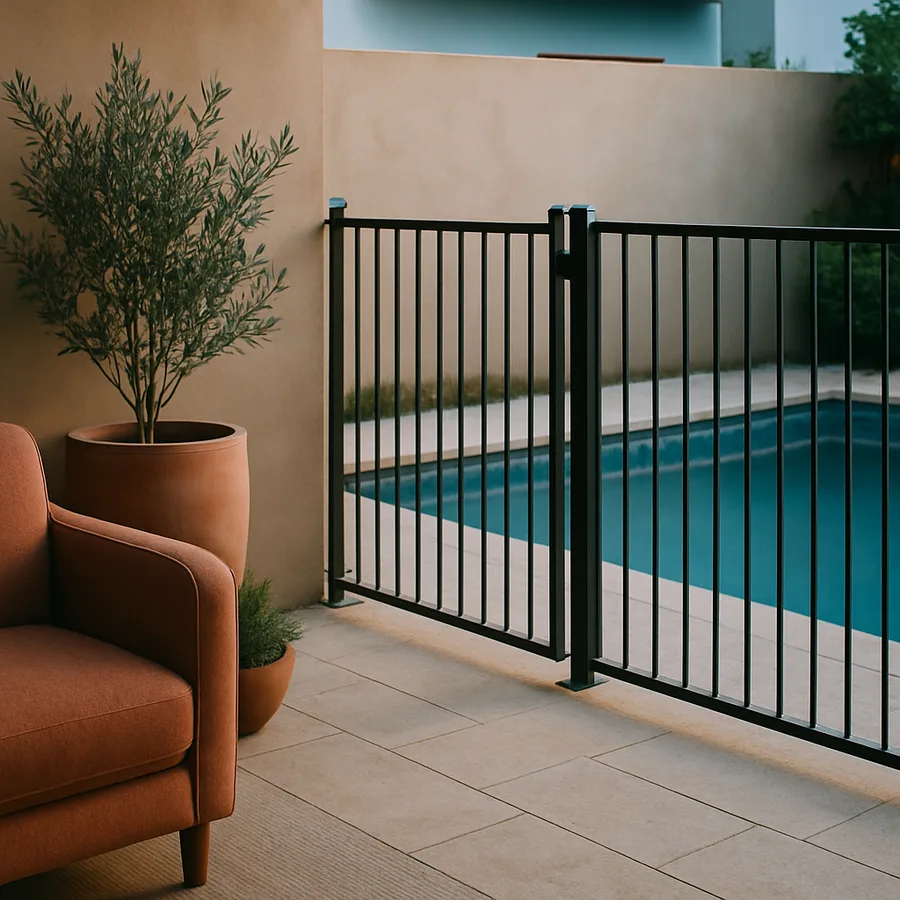
A backyard pool transforms a home into a private resort, but it also introduces one of the most heavily regulated safety hazards on a residential property. Local jurisdictions across the United States enforce strict barrier requirements that govern fence height, gate hardware, latch placement, and the gaps that separate the deck from open water. These rules are not arbitrary bureaucratic clutter. They exist because drowning remains the leading cause of accidental death for children ages one through four, according to the U.S. Centers for Disease Control and Prevention, which reports an average of 4,000 unintentional drowning deaths in the United States every year.
If you are planning a new pool, replacing an aging fence, or renovating a yard that already includes a swimming feature, understanding the underlying code framework is essential. Inspectors rarely accept retrofits that miss the spirit of the regulations, and homeowner insurance carriers increasingly require documented compliance before binding a policy. This guide walks through the major requirements published by the International Code Council, the practical decisions you will face during installation, and the questions you should be asking your contractor before the first post hole gets dug.
Why Pool Barrier Codes Exist and What They Aim to Prevent
The International Swimming Pool and Spa Code (ISPSC) is the foundational document most cities and counties adopt or modify when writing local barrier ordinances. The ISPSC, maintained by the International Code Council, treats a residential pool as an attractive nuisance that demands a layered defense system between curious children and open water. The code recognizes that a determined adolescent can defeat almost any barrier, but a properly designed enclosure adds enough friction that a toddler simply cannot pass through unaccompanied.
Layered protection is the operative philosophy. The U.S. Consumer Product Safety Commission notes that no single safeguard prevents drownings on its own, which is why barrier codes work in concert with door alarms, pool covers, and adult supervision. Have you ever wondered why your jurisdiction insists on a self-closing gate even though you already have a perimeter fence? The answer is statistical: layered systems eliminate single points of failure, and gate hardware represents the most failure-prone link in any barrier chain.
Code adoption varies widely. Some states adopt the ISPSC verbatim while others publish their own statutes that borrow heavily from the model code. Florida, Arizona, and California each maintain pool safety acts with provisions that exceed the ISPSC baseline, including requirements for door exit alarms on any home opening directly onto the pool area. Always confirm the current edition adopted by your municipality before purchasing materials.
Minimum Barrier Height and Construction Standards
The ISPSC specifies a minimum barrier height of 48 inches measured on the side facing away from the pool, though many local amendments push that figure to 60 inches. The measurement is taken from the finished grade or the top of any permanent surface within two feet of the barrier, which is why mounding mulch or stacking patio stones near the fence can quietly create a code violation. Inspectors carry tape measures specifically for this verification.
Vertical members of the barrier must be spaced no more than 1.75 inches apart when the fence has horizontal members spaced less than 45 inches apart. When horizontal rails are spaced 45 inches or more apart, the vertical spacing can widen to a maximum of four inches. The reasoning involves child climbability: closely spaced horizontal rails create a ladder, while widely spaced rails do not. Chain link mesh, which is permitted in many jurisdictions, must use openings of 1.75 inches or smaller unless slats are inserted to reduce the gap.
Material selection is largely flexible. Aluminum, steel, vinyl, glass panel, and wrought iron are all acceptable when configured to meet the spacing rules. Wood is permitted but must be detailed so that decorative cutouts and lattice tops do not create handholds or footholds for climbing. The bottom of the barrier cannot exceed two inches above grade on hard surfaces or four inches above grade on softer surfaces such as grass, where settling and erosion are anticipated.
Gate Hardware Requirements and Self-Latching Mechanisms
Gates are where most code violations occur, and they receive disproportionate attention during inspection. Every gate that provides access to the pool enclosure must be self-closing and self-latching, with the release mechanism positioned at least 54 inches above the bottom of the gate when the latch is installed on the pool side. If the latch is mounted on the exterior side, it must sit at least three inches below the top of the gate and be enclosed in a way that prevents a child from reaching over to operate it.
The self-closing requirement means that when released from any open position, the gate returns to fully closed and engages the latch without any human intervention. Spring-loaded hinges with adjustable tension are the most common solution, and they require periodic recalibration as the spring weakens with seasonal temperature swings. A gate that closes but does not latch is treated as a failed barrier.
Gates must swing outward from the pool area, away from the water. This counterintuitive rule prevents a child who is leaning against the gate from inadvertently pushing it open. Sliding gates are generally discouraged but permitted when fitted with hardware that satisfies the self-closing and self-latching requirements through mechanical or electronic means. Comprehensive guidance is published at the International Code Council, which maintains current ISPSC editions and adopted commentary.
House Walls That Serve as the Fourth Side of the Enclosure
Many homeowners assume the pool fence must form a complete loop around the water, but the ISPSC permits the wall of a dwelling to serve as one side of the barrier under specific conditions. When the house functions as part of the enclosure, every door that opens directly into the pool area must be equipped with one of three approved safeguards: an alarm that sounds when the door is opened, a self-closing and self-latching mechanism with the release positioned at least 54 inches above the floor, or a power safety cover over the pool itself that meets ASTM F1346 performance criteria.
Door alarms must produce a continuous audible warning of at least 85 decibels at ten feet and continue for a minimum of 30 seconds. The alarm must include a deactivation switch positioned at least 54 inches above the floor so that adults can pass through without nuisance triggering, while the height places the switch out of reach for young children. Wireless alarm systems with multiple sensors are increasingly common in larger homes where several doors face the pool.
Windows that open into the pool area receive less attention but still trigger requirements when their lowest opening sits below 48 inches above the interior floor. Such windows must either be permanently sealed, fitted with screens that release only with adult-level force, or equipped with their own alarms. Renovation projects that add bifold doors or large sliding panels almost always require a code review because they fundamentally change the relationship between interior space and the pool barrier.
Pool Covers, Alarms, and Supplemental Safety Layers
While barriers form the primary defense, the ISPSC and supporting standards recognize the role of supplemental layers. Power safety covers compliant with ASTM F1346 are designed to support the weight of two adults and a child, allowing rescue without first removing the cover. These covers are also required as an alternative to door alarms in some jurisdictions when a dwelling wall serves as the fourth side of the enclosure.
Pool alarms come in three principal varieties. Surface wave alarms float on the water and trigger when surface tension changes. Subsurface alarms detect displacement from objects entering the water, and they tend to produce fewer false alarms from wind and rain than surface units. Wearable alarms, sometimes called immersion bracelets, alert caregivers when a tagged child enters the water. The National Drowning Prevention Alliance emphasizes that no alarm replaces active supervision, and the layered framework treats these devices as backup rather than primary safeguards.
The U.S. Consumer Product Safety Commission publishes the Pool Safely campaign, a federal initiative that consolidates barrier guidance, drain cover compliance under the Virginia Graeme Baker Act, and supervision recommendations into a single resource. Cross-referencing local code with the federal recommendations helps catch gaps that result from older municipal ordinances that have not been refreshed in recent code cycles.
Inspection, Permits, and Common Failure Points
Pool barrier inspections typically occur in two phases. The first inspection happens before the pool is filled with water, when the contractor confirms barrier rough-in and gate hardware. The second inspection, often called a final or certificate of occupancy inspection, occurs once the pool is operational and verifies that gates close and latch from a partially open position, that door alarms function, and that no climbable objects have appeared near the barrier during construction.
The most common failure points are predictable. Gate springs that have weakened during winter storage. Mulch beds piled high enough that the effective barrier height has dropped below 48 inches. Air conditioning condensers, pool equipment pads, or trash bins positioned within reach of the fence top, creating a climbing aid. Decorative arbors that incorporate horizontal members spaced like rungs. Each of these issues is correctable, but they tend to be discovered only when an inspector points them out, so a self-audit using a measuring tape and a critical eye is worth the time.
Are you renovating an existing pool that predates current code? Most jurisdictions grandfather older pools as long as the original installation was permitted, but any substantial alteration triggers a fresh compliance review. Replacing a gate, repouring a deck, or installing a new equipment pad can all reset the clock and require the entire enclosure to meet current standards. Confirm with your local building department before signing a contract for any work that touches the barrier system.
Document everything. Keep a folder with the original permit, the inspection sign-off cards, and dated photographs of every gate and barrier section. When an insurance underwriter requests proof of compliance, or when a future buyer's home inspector asks about the pool, that folder eliminates an enormous amount of friction and can preserve thousands of dollars in policy premium reductions over the life of the property.
Conclusion
Pool fencing is one of the few areas of residential construction where the rules are simple to understand but unforgiving in execution. A 48 inch barrier is straightforward in theory, yet a single planter pushed against the fence can void the entire enclosure. Self-closing gates work beautifully when their springs are tuned, and they fail silently when the springs fatigue. The discipline required is not technical, but it is real, and homeowners who treat the barrier as a maintenance item rather than a one-time installation see far fewer code issues over the life of the pool.
The financial and emotional stakes are high. The Pool & Hot Tub Alliance reports that nearly 309,000 new residential pools are built each year in the United States, and every one of them is required to meet barrier code from the day water first enters the basin. A noncompliant pool can trigger fines, force water removal, and most importantly, leave a child vulnerable to a tragedy that proper fencing reliably prevents. The cost differential between a basic compliant fence and a premium glass panel system is substantial, but the cost of any compliant fence is dwarfed by the value of what it protects.
If you are uncertain about whether your existing barrier meets current requirements, schedule a courtesy inspection with your municipal building department. Most departments will walk a pool barrier and flag deficiencies without issuing citations during a voluntary review, giving you a chance to remediate before formal enforcement. Pair that inspection with a thorough self-audit using a tape measure, a copy of your local pool code, and a willingness to look at familiar features with fresh eyes.
Ready to upgrade your pool barrier? Start by photographing every gate, latch, and barrier section in your yard, then contact a licensed pool contractor in your area to review the images against current code before any work begins. A 30 minute consultation now can prevent months of remediation later, and it positions you to enjoy the pool with the confidence that comes from knowing the safety system is doing its job.
More Articles You May Like



Comments
Post a Comment