V-Groove Paneling as a Shiplap Substitute for Accent Walls
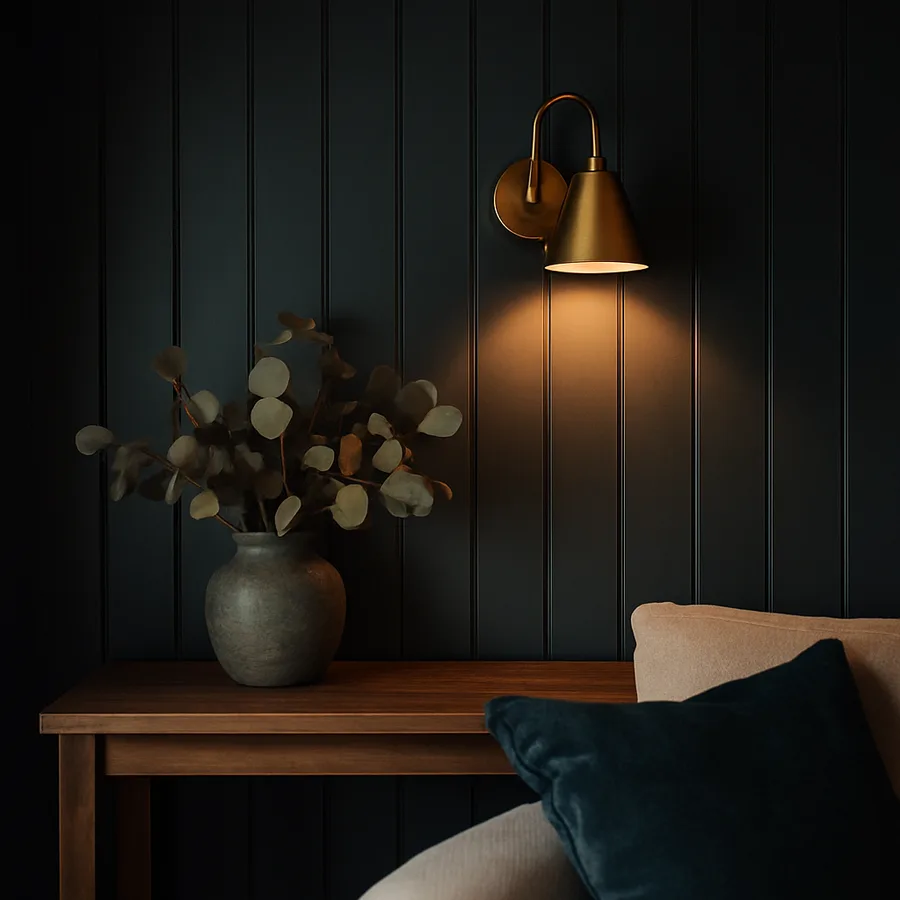
Accent walls have become one of the most reliable tools in interior design for creating visual drama without overwhelming an entire room. For the past decade, shiplap has dominated this space, thanks in large part to its popularization on home renovation television programs and social media feeds. However, a growing number of homeowners and professional designers are turning to V-groove paneling as a compelling alternative that delivers a similar aesthetic at a fraction of the cost and installation complexity. According to the National Association of Home Builders, paneling installations have increased by 22 percent in residential remodeling projects, signaling a shift toward more versatile wall treatment options. The appeal of V-groove lies in its clean, subtle channeling that creates visual texture without the pronounced shadow lines that define traditional shiplap. This guide explores why V-groove paneling deserves serious consideration for your next accent wall project and how it compares to shiplap across every metric that matters.
What Sets V-Groove Apart from Traditional Shiplap
V-groove paneling consists of flat planks or sheets milled with a small V-shaped channel at each joint, creating the appearance of individual boards without the overlapping rabbeted edges that characterize shiplap. Where shiplap relies on each board physically overlapping the one below it, V-groove achieves its line definition through a routed groove that sits flush on the surface. This fundamental structural difference means V-groove panels can be manufactured as large four-by-eight-foot sheets with the grooves pre-cut at regular intervals, dramatically reducing the number of individual pieces that need to be measured, cut, and nailed during installation. The result is a wall treatment that reads as planked from across the room but installs more like a single panel operation.
The visual distinction between the two products becomes most apparent when you examine them up close under raking light. Shiplap produces a pronounced horizontal shadow line where each board overlaps the next, creating depth that can range from an eighth of an inch to nearly a quarter inch depending on the profile. V-groove, by contrast, produces a crisp, narrow channel that catches light in a more refined and geometric pattern. The American Institute of Architects notes that V-groove profiles have gained particular traction in contemporary and transitional design schemes where the rustic character of deep shiplap shadows feels tonally mismatched. For homeowners who appreciate the rhythm of horizontal lines but want a cleaner, more modern execution, V-groove occupies a sweet spot that shiplap cannot easily reach.
Material composition represents another key differentiator. While shiplap is almost always solid wood, typically pine, cedar, or poplar, V-groove paneling is available in solid wood, medium-density fiberboard (MDF), and even moisture-resistant PVC for wet environments. MDF V-groove panels accept paint beautifully because their smooth, grain-free surface eliminates the bleed-through and raised grain issues that plague painted solid wood. This material flexibility means designers can specify V-groove in bathrooms, laundry rooms, and below-grade spaces where solid wood shiplap would risk warping, cupping, or developing mildew over time. The engineered options also tend to be more dimensionally stable, resisting the seasonal expansion and contraction that can open unsightly gaps in solid wood installations.
Cost is perhaps the most persuasive argument for many homeowners considering V-groove over shiplap. A typical shiplap accent wall using individual pine boards runs between four and seven dollars per square foot for materials alone, before accounting for the labor-intensive process of leveling, nailing, and spacing each board individually. Sheet-format V-groove paneling from manufacturers like Georgia-Pacific or Weyerhaeuser typically costs between two and four dollars per square foot, and the sheet format cuts installation time roughly in half. When you factor in both materials and labor, a V-groove accent wall can cost 30 to 40 percent less than an equivalent shiplap installation while achieving a remarkably similar finished appearance.
Choosing the Right V-Groove Profile and Spacing
Not all V-groove paneling is created equal, and selecting the right groove width and spacing is essential for achieving the look you envision. Standard V-groove profiles are available with groove spacing ranging from approximately three inches apart, which mimics narrow beadboard, all the way to eight inches apart, which replicates the appearance of wide plank shiplap. The most popular spacing for accent wall applications falls between six and eight inches, as this range creates the familiar horizontal rhythm that homeowners associate with modern farmhouse and coastal design without making the wall feel overly busy. Narrower spacing at three to four inches works exceptionally well in smaller powder rooms and entryways where the finer scale feels proportionally appropriate.
The depth of the V-groove channel itself also affects the final aesthetic significantly. Shallow grooves of about one-sixteenth of an inch create an extremely subtle line that only becomes visible when light rakes across the surface at an angle. Deeper grooves of one-eighth inch or more produce a more assertive shadow line that reads clearly from across a large room. For accent walls that will serve as the backdrop to a television or large piece of art, shallower grooves often work better because they provide texture without competing with the focal object. Walls intended to stand on their own as a design feature, such as a fireplace surround or the head wall of a bedroom, benefit from deeper grooves that command attention and create more dynamic light play throughout the day.
Orientation is another variable worth exploring before committing to a purchase. While horizontal installation is the default and the most direct shiplap substitute, vertical V-groove installation creates a dramatically different mood that draws the eye upward and makes ceilings feel taller. Diagonal installations at 45 degrees produce a bold, contemporary statement that works particularly well in small accent zones like the inside of built-in shelving or a stairway landing wall. The design community on Houzz has documented a notable rise in mixed-orientation installations where vertical V-groove on the lower two-thirds of a wall meets horizontal V-groove on the upper third, separated by a chair rail, for a layered effect that feels custom and architectural.
Have you thought about how your room's natural light conditions will interact with the groove direction you choose? Grooves running perpendicular to the primary light source will cast the strongest shadows and make the paneling texture most visible. Grooves running parallel to the light source will appear softer and more uniform. Walking through your space at different times of day with a sample board held against the wall is the simplest way to preview how the finished installation will look under real-world lighting conditions. This five-minute experiment can prevent weeks of regret after the panels are permanently installed.
Installation Methods for a Professional Finish
One of V-groove paneling's greatest practical advantages is its relatively forgiving installation process, which makes it accessible to confident DIY enthusiasts while still producing results that look professionally executed. The foundation of any successful V-groove accent wall is a flat, clean substrate. If your existing wall has significant bumps, dips, or texture from old drywall mud, these imperfections will telegraph through the thin paneling and create visible undulations that catch light unevenly. Running a straightedge or laser level across the wall before starting will reveal any areas that need skim-coating or shimming. Taking an extra hour to prepare the substrate properly saves enormous frustration during panel installation and produces a noticeably cleaner finished product.
For sheet-format V-groove panels, the standard installation approach involves applying construction adhesive to the back of each panel in a serpentine pattern and then securing the panel to the wall with finishing nails or a brad nailer. Nails should be placed in the groove channels wherever possible so they virtually disappear once the wall is caulked and painted. When working with full four-by-eight sheets, having a helper is essential because the panels are unwieldy to position accurately while simultaneously applying pressure for the adhesive bond. Cutting panels to fit around electrical outlets, switches, and windows requires precise measurements, but the cuts themselves are straightforward with a circular saw or even a sharp utility knife scored along a straightedge for thinner MDF panels.
Individual plank-format V-groove panels install more like traditional shiplap, with each board being nailed individually from the bottom of the wall upward. This method takes longer than sheet installation but offers the advantage of easier handling, simpler waste management on walls with many cutouts, and a slightly more authentic plank appearance because each board has its own subtle variation in seating. Using a pneumatic 18-gauge brad nailer speeds the process dramatically and produces smaller nail holes than hand-nailing. Regardless of format, always acclimate your panels in the room where they will be installed for at least 48 hours before beginning work, allowing the material to adjust to the space's temperature and humidity levels and minimizing post-installation movement.
The finishing stage is where a V-groove accent wall truly comes to life. After all panels are secured, fill nail holes with lightweight spackle, caulk the perimeter joints where panels meet adjacent walls, ceiling, and trim, and apply a high-quality primer followed by two coats of paint. Semi-gloss or satin sheens tend to highlight the groove shadows most attractively, while flat or matte finishes create a softer, more understated effect. The color choice matters enormously: white and off-white remain the most popular options because they maximize shadow definition and integrate easily with any decorating scheme, but deep colors like navy, forest green, or charcoal can produce a stunning moody accent wall where the grooves add subtle dimension to an already dramatic backdrop.
Design Applications Beyond the Living Room
While living room accent walls represent the most common application for V-groove paneling, limiting the material to a single room underestimates its design versatility. Bedrooms benefit enormously from a V-groove head wall behind the bed, where the horizontal lines create a sense of width and calm that complements the restful purpose of the space. Painting the V-groove wall a tone or two darker than the surrounding walls adds depth without introducing a jarring color contrast. The paneling also serves a practical function in bedrooms by protecting the wall behind the headboard from scuffs and marks that painted drywall accumulates over time, making it simultaneously decorative and functional.
Kitchens present another compelling opportunity, particularly on the wall behind open shelving or as a backsplash zone above the countertop. PVC V-groove panels rated for wet areas can be installed directly behind a sink or stove without concern about moisture damage, and they wipe clean as easily as tile. The paneled texture adds warmth and character that balances the hard surfaces of countertops and cabinetry, softening the overall kitchen aesthetic without introducing clutter. Several manufacturers now offer V-groove panels in colors matched to popular cabinet paint lines, enabling a seamless tonal flow from cabinetry to wall surface that makes the kitchen feel larger and more intentionally designed.
Bathrooms, mudrooms, and laundry rooms are increasingly featuring V-groove as a wainscoting treatment on the lower third to half of the wall. This application protects the most vulnerable wall zone from splashes, bumps, and general wear while adding architectural detail to rooms that are often treated as purely utilitarian afterthoughts. In bathrooms, moisture-resistant MDF or PVC V-groove installed with waterproof adhesive and finished with a mold-resistant paint creates a durable, attractive surface that outperforms standard drywall in humid conditions. The National Association of Home Builders reports that wainscoting and wall paneling treatments in secondary rooms correlate with higher perceived home value during appraisals, making these installations a worthwhile investment beyond their immediate aesthetic benefit.
What about exterior-to-interior transitions like covered porches, screened sunrooms, and three-season rooms? V-groove paneling on porch ceilings has been a Southern architectural tradition for generations, often finished in the iconic "haint blue" believed to ward off insects and spirits alike. Modern composite and PVC V-groove products rated for exterior use bring this tradition into contemporary construction without the maintenance demands of painted wood that peels and rots in exposed conditions. Using the same V-groove profile that appears inside the home on the porch ceiling creates a visual connection between indoor and outdoor living spaces that enhances the flow and coherence of the overall design.
Comparing Cost and Long-Term Value
Making an informed material decision requires honest examination of both upfront costs and long-term performance characteristics. As noted earlier, V-groove sheet paneling typically runs between two and four dollars per square foot for materials, while individual V-groove planks in solid wood range from three to six dollars per square foot. Shiplap, by comparison, ranges from four to seven dollars per square foot for standard pine and can climb significantly higher for premium species like white oak or reclaimed barn wood. Installation labor for V-groove sheets averages 30 to 40 percent less than for individual shiplap boards because the larger panel format covers more wall area per piece, requiring fewer cuts, fewer nails, and less time spent leveling and spacing. For a typical 12-by-10-foot accent wall of 120 square feet, the total installed cost difference can range from $300 to $600 in savings by choosing V-groove over shiplap.
Long-term maintenance considerations further favor V-groove in many scenarios. MDF and PVC V-groove products resist the warping, splitting, and gap formation that plagues solid wood shiplap in environments with significant humidity fluctuation. A painted MDF V-groove wall requires nothing more than periodic dusting and occasional touch-up painting over its lifetime, while solid wood shiplap may need re-caulking of expanding gaps, spot-priming of bleed-through knots, and attention to boards that cup or twist away from the wall. In climate-controlled interior spaces, these maintenance differences are modest, but in bathrooms, kitchens, and other moisture-prone areas, the engineered options deliver meaningfully less ongoing hassle.
The National Association of Realtors 2024 Remodeling Impact Report indicates that interior wall paneling projects, including both shiplap and V-groove, recover approximately 70 percent of their cost at resale. Importantly, the report does not distinguish between shiplap and V-groove in terms of buyer perception, suggesting that most home buyers respond to the overall paneled aesthetic rather than the specific profile type. This finding reinforces the value proposition of V-groove: if buyers cannot distinguish between the two treatments and the resale recovery is equivalent, spending less on V-groove produces a better return on investment than spending more on shiplap for an indistinguishable result. Real estate agents consistently report that accent walls in neutral colors photograph well and help listings stand out in crowded online markets.
Should you choose V-groove or shiplap if budget is not a constraint? The answer depends entirely on the design language of your home. Shiplap's deeper shadow lines and rustic associations make it the natural choice for farmhouse, cottage, and coastal styles where a bit of ruggedness is part of the charm. V-groove's cleaner lines and smoother profile align better with contemporary, Scandinavian, transitional, and mid-century modern interiors where visual noise should be minimized. Neither product is inherently superior; they are different tools serving different aesthetic goals, and the best projects use each where its strengths are most relevant.
Avoiding Common Mistakes with V-Groove Projects
Even the most straightforward home improvement projects can go sideways when common pitfalls are not anticipated, and V-groove paneling installations are no exception. The single most frequent mistake is failing to account for the panel thickness when planning trim transitions. Standard V-groove sheets are typically a quarter inch to three-eighths of an inch thick, and this added dimension means that existing door and window casings will appear to recess into the wall rather than sitting proud of the surface. The solution is to install the paneling first and then add new casing that bridges the thickness difference, or to use a reveal strip that creates an intentional shadow line at the transition. Planning these details before the first panel goes up prevents the frustrating rework that comes from discovering misaligned trim after the wall is finished.
Another frequent error involves electrical boxes and outlet covers. When V-groove paneling adds a quarter inch to the wall surface, existing electrical boxes become recessed by that same amount, and standard outlet covers will not sit flush against the finished wall. Box extenders, available at any hardware store for under a dollar each, bring the electrical box forward to match the new wall surface and ensure that outlet covers, switch plates, and junction box covers sit flat and secure. Skipping this step creates visible gaps around electrical devices that not only look unprofessional but can violate electrical code requirements for proper box enclosure.
Moisture management is a concern that many DIY installers underestimate, particularly in bathrooms, kitchens, and exterior-adjacent walls. Even moisture-resistant MDF can swell and degrade if water gets behind the panels through an unsealed edge or an inadequately waterproofed wall cavity. Priming all six sides of each panel, including the back and edges, before installation creates a moisture barrier that significantly extends the material's lifespan. In wet areas, adding a vapor barrier or moisture-resistant membrane behind the paneling provides an additional layer of protection that is inexpensive to install at the outset but extremely costly to retrofit later.
Finally, do not underestimate the importance of color selection and sheen for the finished wall. A V-groove wall painted in the exact same color and sheen as the adjacent walls will virtually disappear, defeating the purpose of creating an accent feature. Creating contrast does not require a bold color; even a subtle shift of two or three shades lighter or darker, or a change from matte walls to a satin paneled surface, provides enough differentiation to make the accent wall register as intentional and special. Test paint colors directly on a sample panel rather than on a flat swatch, because the grooves interact with color and light in ways that a flat sample cannot predict. Ready to start planning your accent wall project? Gather measurements, order samples in two or three groove spacings, and live with them against your wall for a few days before committing to a final selection.
Bringing It All Together for a Standout Accent Wall
V-groove paneling has earned its place as a legitimate and often preferable alternative to shiplap for accent walls throughout the home. Its combination of lower cost, faster installation, broader material options, and cleaner visual profile makes it adaptable to a wider range of design styles than its more famous cousin. The key to a successful project lies in matching the groove spacing and depth to your room's proportions and design language, preparing the wall substrate thoroughly, and finishing with a paint color and sheen that create just enough contrast to let the paneling shine as a deliberate design choice.
Whether you are tackling a single bedroom head wall or planning a whole-house paneling scheme that flows from living areas to bathrooms to the porch ceiling, V-groove provides the consistency and versatility to carry the look seamlessly across different environments and moisture conditions. The material flexibility alone, spanning solid wood, MDF, and PVC, means there is a V-groove product engineered for virtually every interior and sheltered exterior application. This adaptability is something shiplap, with its solid-wood-only tradition, simply cannot match without significant compromise.
The decision between V-groove and shiplap ultimately comes down to the specific mood and style you want your accent wall to communicate. If you crave the rustic depth and textural weight that deep shadow lines provide, shiplap remains an excellent choice. If you prefer a more refined, contemporary treatment that adds architectural interest without visual heaviness, V-groove is almost certainly the better fit. Both products transform flat, featureless drywall into surfaces with character and warmth, and either one will make your room feel more finished, more intentional, and more distinctly yours.
Take the next step by visiting a building supply store to see and feel both products in person. Hold a sample against your wall, study it under your room's natural and artificial light, and trust what your eyes tell you. The right paneling choice is the one that makes your space feel exactly the way you imagined it could. Contact a local finish carpenter or interior designer if you want professional guidance tailored to your home's architecture and your personal aesthetic goals, and transform that blank wall into the statement piece your room has been waiting for.
More Articles You May Like



Comments
Post a Comment