Outdoor TV Weatherproof Cabinet Installation on Covered Patios
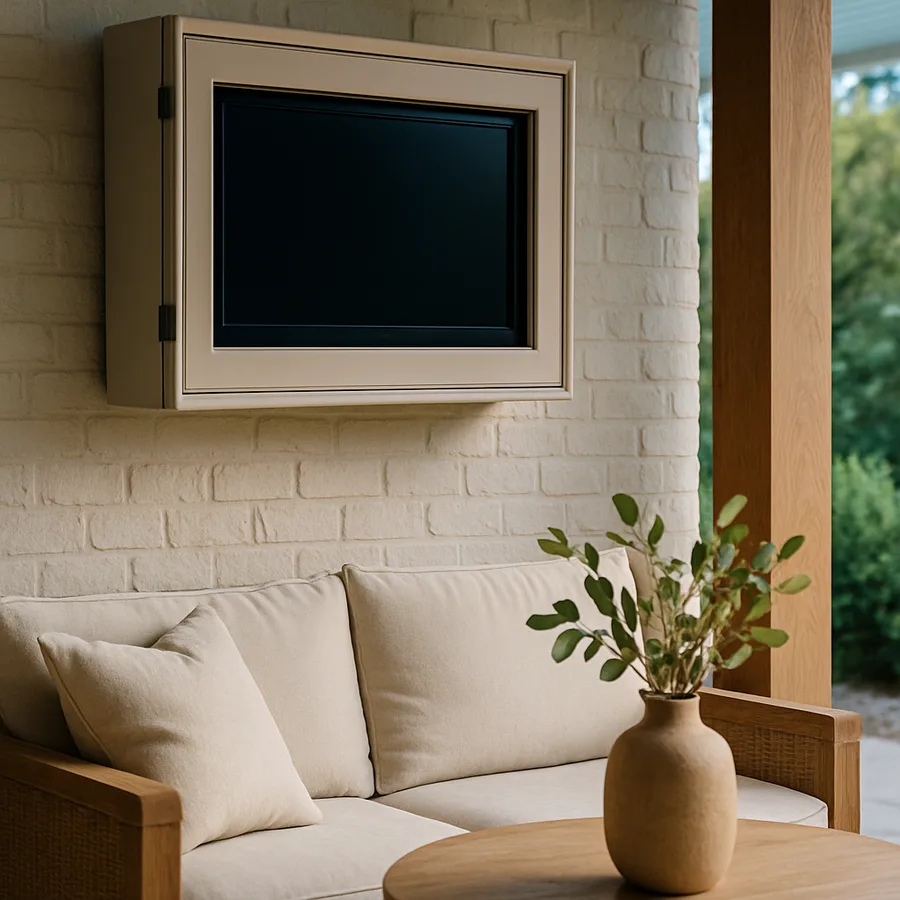
Outdoor entertainment has moved from a curiosity to a standard expectation in residential design. Sports gatherings spill onto the patio, weekend movies migrate to the screened porch, and the kitchen-to-deck pour of guests now includes a glance at whatever screen happens to be playing. Yet the marriage of electronics and outdoor air has always been uneasy. Humidity, pollen, insect intrusion, dust from the lawn, and wide swings between morning dew and afternoon heat conspire to shorten the life of any television not properly housed. A weatherproof cabinet, properly installed on a covered patio, solves most of these problems and turns the TV into a long-term fixture rather than an annual replacement. The Consumer Technology Association reports that outdoor television sales have grown rapidly as homes invest more deeply in covered outdoor living spaces.
Why a Cabinet Is Different From a Standard Mount
An outdoor-rated TV mounted directly to a covered patio wall solves only half the problem. The screen itself is sealed against splash, but the input ports, the rear vent, and the wall-side cable entry remain vulnerable to spider webs, condensation, and wasp nests. A weatherproof cabinet wraps the entire unit in a ventilated enclosure with a hinged front, which is typically a polycarbonate panel or a powder-coated aluminum door fitted with a UV-resistant gasket. The inside of the cabinet stays cleaner, the ports stay accessible without contortion, and the entire assembly looks intentional rather than improvised.
Cabinets also accept indoor televisions in some configurations, which is a significant cost advantage. Outdoor-rated TVs run two to four times the price of comparable indoor models because of their reinforced screens and weatherized boards. A high-quality outdoor cabinet rated for the local climate can host a standard indoor TV on a covered patio that does not face direct rain, dramatically reducing the up-front investment. The trade-off is that the cabinet itself becomes the protective system, so its sealing, ventilation, and structural mounting all become consequential. Have you checked whether your patio actually qualifies as a fully covered space under the cabinet manufacturer's spec, or only partially covered?
Reading the Patio Before Picking the Spot
Location matters more for an outdoor TV than for an indoor one because environmental factors shift dramatically across a single patio. The first consideration is direct and reflected sunlight. Even a partially covered patio will see slanting morning or evening sun reach the screen for parts of the year, which causes glare, washout, and accelerated degradation of the polarizing layer. A north-facing wall under a deep porch ceiling is the friendliest location; an east- or west-facing wall demands either a deeply recessed cabinet or a screen designed for high-brightness viewing.
The second consideration is splash. Wind-driven rain on a covered patio can travel surprising distances laterally, especially under a hip roof or open-trussed pergola with a translucent roof. A simple test is to stand at the proposed cabinet location during a moderate storm and watch where droplets actually settle. The third consideration is heat exposure: ceiling fans, propane heaters, and grill smoke all impact the air around the cabinet. The National Fire Protection Association and most appliance manufacturers recommend at least 36 inches of horizontal clearance between a TV cabinet and any open-flame heat source. Have you mapped the prevailing wind and the path of grill smoke before committing to the spot?
Sizing the Cabinet to the Television and the Sight Lines
Outdoor viewing distances tend to run longer than indoor ones because seating clusters spread across a deeper space. A 65-inch screen that feels right above a fireplace at twelve feet often disappears on a patio with seating at sixteen to twenty feet. The general rule is to multiply seating distance in feet by 4 to estimate a comfortable diagonal screen size in inches. A patio with a primary viewing couch at eighteen feet from the screen wall benefits from a 70- to 75-inch display, with cabinet exterior dimensions running roughly four to six inches larger on every side to accommodate ventilation and door framing.
Cabinet Dimension Reference
- 55-inch TV: cabinet exterior typically 53 by 33 inches, depth 7 to 9 inches
- 65-inch TV: cabinet exterior typically 62 by 38 inches, depth 7 to 9 inches
- 75-inch TV: cabinet exterior typically 71 by 44 inches, depth 8 to 10 inches
- 85-inch TV: cabinet exterior typically 80 by 49 inches, depth 9 to 11 inches
Cabinet depth matters because most outdoor enclosures are designed around a standard VESA mount and need at least one inch of clearance behind the TV for cable bend radius and air circulation. Anything less starts to compress HDMI cables and stress the rear ports. Confirm the actual depth of the TV including any wall-mount-side bulges, then add the manufacturer's recommended clearance for both ventilation and cable management.
Mounting, Anchors, and Structural Backing
A cabinet for a 65-inch TV plus the TV itself can weigh 100 to 150 pounds. That weight bears on a relatively small footprint, and any installation must be anchored into solid wood framing or a properly engineered steel-stud assembly. On a typical covered patio, the wall is either a structural exterior wall sheathed in plywood and clad in lap siding or stucco, or a light-frame curtain wall that does not carry significant load. Locating the studs with a high-quality magnetic or AC-aware stud finder is the starting point; some installers cut a small inspection hole behind the cabinet outline to confirm the framing pattern before drilling.
Lag bolts of 5/16 inch diameter and 3 inches long, sunk into solid framing, are the standard fastener. Where the wall surface is masonry or hollow block, threaded sleeve anchors or epoxy-set studs are appropriate; lightweight drywall anchors are not. The cabinet should be plumb and level within an eighth of an inch across its width, both for aesthetic reasons and because a tilted cabinet drains water improperly through any gasket gap. Most quality cabinets include adjustable mounting brackets that allow the installer to fine-tune the position after the bolts are set. Outdoor wall fixtures and connections must follow the National Electrical Code for any electrical penetration through the same wall.
Electrical, Cabling, and Signal Path
The cabinet needs at minimum a single GFCI-protected weather-resistant receptacle behind it, fed by a circuit appropriate for the TV's power draw plus any additional devices. A 75-inch outdoor-rated TV typically draws 200 to 300 watts, well within a 15-amp circuit, but planning the installation as if a streaming device, a soundbar, and a small powered subwoofer might also live in or near the cabinet is prudent. Code requires that all outdoor outlets in this category use weather-resistant tamper-resistant receptacles inside an in-use weatherproof cover, and the entire circuit must be GFCI protected.
For signal cabling, HDMI runs longer than 25 feet should use either an active optical HDMI cable or an HDBaseT extender pair driven over Cat6a. Outdoor-rated cabling that resists UV embrittlement and rodent chewing is worth the small premium on any run that touches a wall cavity, attic, or under-deck channel. A streaming device housed inside the cabinet itself usually outperforms a long cable run because it eliminates one failure point and one heat source. The cabinet should include at least one ventilation grille, often a passive top vent with insect screening; high-end models add a thermostat-controlled fan that engages above a setpoint. Have you verified that the manufacturer's stated ventilation rating matches the wattage of the TV you intend to install?
Sound, Sun Glare, and the Final Tuning of the Space
A flat panel under a covered patio rarely sounds the way the homeowner expects, because the surrounding hard surfaces and open air absorb high frequencies and let bass dissipate. The internal speakers on most TVs simply do not have the output to project across a patio gathering. A dedicated outdoor soundbar mounted directly below the cabinet, paired with a covered subwoofer placed against a wall corner for boundary reinforcement, is the most cost-effective fix. For larger patios, a pair of in-eave or pillar-mounted outdoor speakers driven by a small two-channel amplifier improves coverage and reduces the volume the soundbar needs to push.
Sun glare deserves a final look. Even a perfectly oriented cabinet can pick up reflected glare from a pool surface, light-colored deck stain, or a pale exterior wall opposite the TV. Anti-reflective films exist but rarely outperform a strategically placed planter or shade screen that breaks the reflection path. The Consumer Technology Association publishes outdoor display brightness guidance, with recommended nit ratings of 700 to 1,000 for shaded patios and 2,000 or more for partial-sun installations. For outlet and wiring details, the National Electrical Code remains the authoritative reference for any wet- or damp-location work.
Maintenance and the Long-Term Performance Curve
An outdoor TV cabinet rewards a quarterly inspection routine. Open the cabinet, wipe down the interior with a dry microfiber cloth, check the gasket for cracking or compression set, and confirm that the ventilation grilles remain clear of dust, pollen, and small insect debris. The screen itself should be cleaned with a manufacturer-approved electronics solution, never with ammonia-based glass cleaner that can fog the polarizing layer. Annually, check torque on the cabinet anchors, since seasonal wood movement in the host wall can loosen even properly set lag bolts.
The cabling deserves attention too. HDMI connectors corrode in humid environments, especially near saltwater or chlorinated pool environments. A small wipe of dielectric grease on the connector pins during the annual inspection slows that corrosion meaningfully. The remote control and any external streaming devices stored inside the cabinet should be removed during long absences, since the cabinet interior, while protected, can still reach humidity levels that shorten battery and circuit life. A simple desiccant pack inside the cabinet, replaced once or twice a year, helps stabilize the interior environment during shoulder seasons.
Households with multiple seasonal residences should also think about insurance coverage and theft risk. Modern outdoor TV cabinets can be locked, but a determined thief with a ratchet and an hour can still make off with the entire assembly if the property is uninhabited for months. A small dedicated security camera aimed at the cabinet, recording locally to a network video recorder rather than to a cloud service vulnerable to internet outages, addresses most of the realistic threat models without imposing a monthly subscription cost on the homeowner.
Conclusion: Building a Patio That Earns Its Screen
An outdoor TV cabinet is one of those projects that looks deceptively simple from the showroom floor and reveals its complexity only during installation. Choosing the right cabinet, mounting it into solid framing, feeding it from a properly protected circuit, and routing the signal cabling cleanly are each individually achievable; doing all four at once on a fixed schedule is what separates a polished installation from a frustrating Saturday. Homeowners who plan the project as a small system rather than a single purchase consistently report higher satisfaction over the long run.
The most successful installations share a few traits. They sit on a fully covered patio with predictable shade and minimal lateral splash. They are sized to the actual seating distance, not to the largest TV the budget can absorb. They are mounted to structural framing with appropriate fasteners. They include a properly protected outlet, a clean cable path, and a soundbar or external speaker pair that frees the TV from doing acoustic work it cannot do. And they receive a quarterly check-in that catches small problems before they become expensive replacements.
Cost-wise, a complete installation of cabinet, indoor television, soundbar, mounting hardware, and electrical work generally lands somewhere between 1,500 and 4,000 dollars depending on screen size and finish level. That figure rises to 3,500 to 8,000 dollars when the budget includes an outdoor-rated TV, premium cabinet, and integrated streaming infrastructure. Either approach delivers a usable life of seven to ten years when the cabinet does its job.
For patio owners ready to move forward, the next step is a careful site walk: confirm coverage, identify wind and splash patterns, and verify the structural backing on the proposed wall. Bring those notes plus the planned TV size to a local AV installer or knowledgeable home-theater retailer, and ask for a quote that includes the cabinet, the electrical work, and the cable path. With one good Saturday of installation, the patio becomes a year-round room that earns the screen attached to it.
More Articles You May Like



Comments
Post a Comment