Curtain Pleat Styles From Pinch Pleat to Grommet Compared
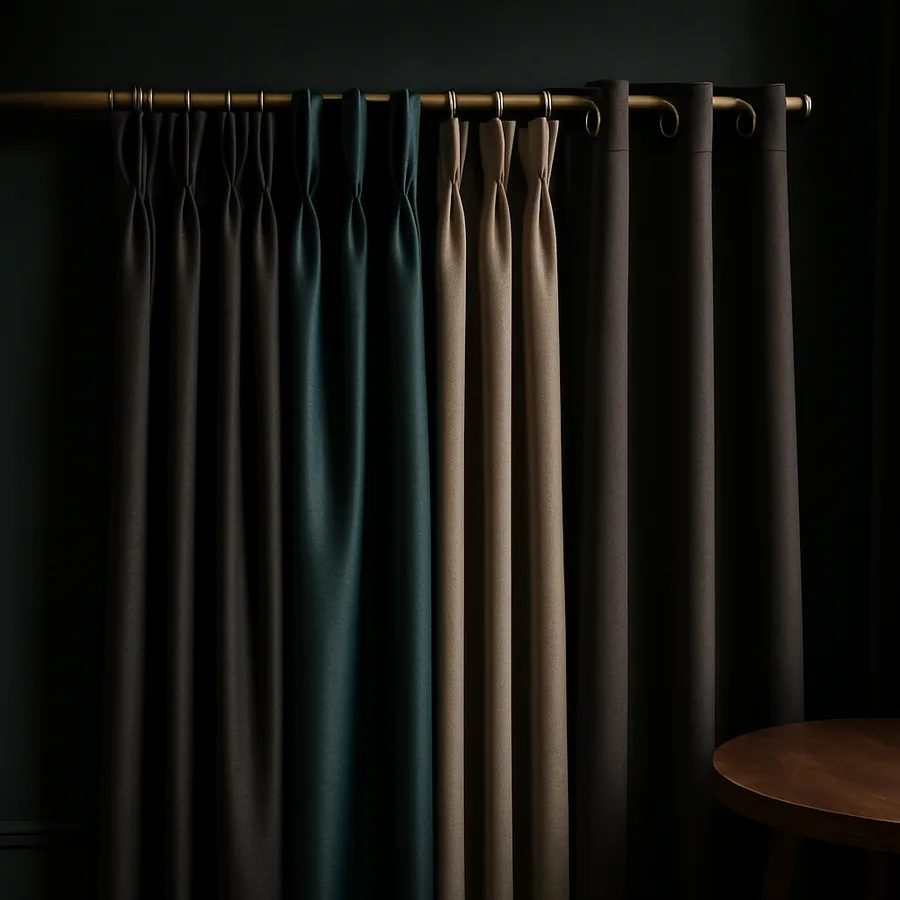
Pleat style is one of the most consequential decisions in any drapery project, and one of the least understood. Buyers often choose by appearance alone, picking a style from a magazine without knowing how it will hang on their specific rod, with their specific fabric, in their specific room. The result is panels that look fine in the catalog and disappointing once installed, because pleat style determines fabric fullness, hardware compatibility, formality of the finished look, and even how easily the panels operate day to day. The differences are not subtle once you know what to look for.
This guide walks through the seven pleat styles that account for nearly every residential drapery installation: pinch pleat, goblet pleat, inverted box pleat, French pleat, grommet, rod pocket, and ripple-fold. Each section explains what the style looks like, what fabric and hardware it demands, where it works best, and what it costs relative to the others. By the end you should be able to specify the right pleat for any window in your home with confidence.
Pinch Pleat, the Traditional Workhorse
The pinch pleat, sometimes called a French pinch pleat or a three-finger pleat, is the most common pleat style in custom drapery and the standard against which all other styles are measured. Each pleat is formed by gathering a fixed amount of fabric, typically four inches, into three vertical folds and stitching them together at the base. The result is a crisp, uniform vertical line that descends from the rod to the floor, with each pleat separated by a flat panel of fabric.
Pinch pleat panels demand 2.0 to 2.5 times fullness, meaning the flat fabric width before pleating is two to two and a half times the rod length. They typically use rings sewn or clipped to the back of each pleat, allowing the panel to slide along a traverse rod or a decorative pole. The American Society of Interior Designers, drawing on materials available through ASID's professional resources, identifies pinch pleat as the appropriate default for transitional, traditional, and most formal interiors.
The two-finger and four-finger variants of pinch pleat occupy slightly different territory. Two-finger pleats are smaller, more relaxed, and well suited to lightweight fabrics or shorter panels. Four-finger pleats are bulkier, more formal, and best reserved for heavy lined fabrics on tall, grand windows. The standard three-finger pleat is the safest default and the one your fabricator will produce unless you specify otherwise.
Goblet Pleat, the Formal Statement
A goblet pleat, sometimes called a champagne pleat, takes the basic pinch pleat geometry and replaces the flat triple fold with a stuffed cylindrical pleat that resembles the shape of a wine goblet. The pleats are typically stuffed with batting or stiff interlining to maintain their cylindrical shape over years of use, which is what gives goblet drapery its distinctive sculpted appearance.
Goblet pleats are unmistakably formal. They appear in dining rooms of historic homes, in primary suites of high-end residences, and in hospitality settings such as ballrooms and fine restaurants. They demand heavy decorator fabrics, typically silk, silk-blend, or heavy lined cotton, with full lining and often interlining. Lighter fabrics fail to hold the goblet shape and produce a flaccid, drooping pleat that ruins the entire effect.
The cost premium for goblet pleats is significant, typically 30 to 50 percent above pinch pleat in the same fabric, because of the additional stuffing labor and the heavier fabric requirements. Have you visited the room you are treating at different times of day to confirm it actually deserves a formal pleat style, or are you choosing goblet because it photographs well? The Better Homes and Gardens design guidance for formal rooms recommends matching pleat formality to the room's actual use rather than to its potential use.
Inverted Box Pleat and French Pleat Variations
The inverted box pleat is the modern alternative to traditional pinch pleat. The fold is hidden behind the panel rather than displayed on the front, so the visible face of the panel reads as a smooth, flat surface with a subtle vertical break at each pleat location. The look is cleaner and more contemporary than pinch pleat, and works particularly well in transitional and modern interiors where the goal is restrained elegance rather than visible craftsmanship.
French pleat is technically a synonym for pinch pleat in much of the trade, but some workrooms use the term to describe a smaller, tighter, more refined pinch with shorter pleat depth. If you order French pleat from a custom workroom, confirm exactly what they mean before approving a sample, because the term carries genuinely different meanings across the industry.
Both styles use 2.0 to 2.5 times fullness and traditional ring or hook hardware. They are interchangeable from a hardware standpoint, which means you can specify either style without changing the rod, brackets, or rings. This flexibility makes them the safest contemporary alternatives to traditional pinch pleat and a popular choice when designers want a slightly cleaner look without leaving the formal-pleat category entirely.
Grommet, the Casual Modern Choice
The grommet panel uses metal or plastic rings punched directly through the top hem of the curtain, with the rod passing through the grommets. The fabric falls in soft, alternating folds rather than crisp pleats, producing a relaxed wave-like silhouette. Grommet panels are inexpensive, easy to operate, and well suited to casual modern, industrial, and contemporary interiors.
Grommet panels demand 1.5 to 2.0 times fullness, which is less than traditional pleated panels. The grommets themselves are available in finishes ranging from brushed nickel to oil-rubbed bronze, antique brass, and matte black, so they can match nearly any decorative rod. Grommet inner diameter typically ranges from 1.5 to 2 inches, which limits rod diameter to about three-eighths inch smaller than the grommet to ensure smooth sliding.
The trade-offs are real. Grommet panels do not stack as compactly as pleated panels because the soft folds spread wider when drawn open. They also reveal the rod itself as a visual element between every grommet, which is fine when the rod is intentional and decorative but distracting when it is meant to disappear. The Window Coverings Association of America's WCAA professional guidance classifies grommet panels as semi-formal at best, and recommends them for family rooms, casual bedrooms, and home offices rather than for formal living or dining rooms.
Rod Pocket and Tab Top, the Budget Casual Options
The rod pocket panel has a sewn channel along the top hem, through which the rod is threaded directly. The fabric gathers along the rod in soft, irregular folds, producing the most informal silhouette in the category. Rod pocket panels are the standard offering at big-box home stores, the cheapest pleat option in custom drapery, and the right choice for cottage, casual, and budget-conscious applications where formality is not a goal.
The trade-offs of rod pocket panels are operational rather than aesthetic. The panels do not slide easily along the rod, which means they are usually decorative panels that stay in place rather than functional curtains that open and close daily. For windows that need real operation, choose pinch pleat or grommet rather than rod pocket. The American Furniture Hall of Fame Foundation, through the AHFA industry resources, has noted that rod pocket panels are the highest-volume drapery style sold in North America by unit count, but the lowest-rated style by long-term homeowner satisfaction.
Tab top panels use loops of fabric sewn to the top hem rather than grommets or a continuous pocket. The look is similar to grommet but with fabric loops instead of metal rings, which reads softer and more handcrafted. Tab tops slide more easily than rod pockets but less easily than rings, and they work best with decorative rods where the loops are intentionally visible. Country, cottage, and craft-influenced interiors are the natural home for tab top panels.
Ripple Fold, the Contemporary Standard for Wide Walls
The ripple fold, sometimes called S-fold or wave-fold, is a contemporary pleat style that produces a continuous, uniform wave along the entire length of the panel rather than discrete vertical pleats. Each fold is the same depth as the next, and the panel reads as a smooth undulating surface rather than a series of separated pleats. The style emerged from European commercial design in the 1990s and has since become the dominant style for wide wall-to-wall installations in modern residential interiors.
Ripple fold demands special hardware. Each fold attaches to a snap-on carrier that runs in a ceiling-mounted track or a heavy-duty rod, and the carriers are spaced at fixed intervals to produce the uniform wave. You cannot retrofit ripple-fold panels to a traditional rod without replacing the hardware. Fullness is typically 2.0 times, and the style works best with medium-weight fabrics that have enough body to maintain the wave but enough drape to avoid stiffness.
The visual benefit of ripple fold on long walls is hard to overstate. Where pinch pleat panels read as a series of vertical lines, drawing attention to the rod and to each individual pleat, ripple fold reads as a single continuous fabric surface that flows uniformly from one end of the wall to the other. For walls of 12 feet or more, ripple fold is now the design industry default, and the OSHA OSHA workplace standards on commercial drapery installations have largely shifted to ripple fold for the same reason.
Choosing Between Styles for Your Specific Room
The simplest decision framework starts with formality. For formal rooms with traditional or transitional decor, choose pinch pleat or goblet pleat. For formal-modern rooms, choose inverted box pleat or pinch pleat in a clean fabric. For casual modern rooms with long walls, choose ripple fold. For casual contemporary rooms with single windows, choose grommet. For budget cottage or country rooms, choose rod pocket or tab top.
The second factor is fabric weight and pattern. Heavy fabrics like silk, velvet, and lined linen demand pleat styles that can support and shape that weight, which means pinch pleat, goblet, or inverted box pleat. Light fabrics like sheers, voiles, and unlined cottons fall better in grommet, ripple fold, or rod pocket styles that allow the fabric to drape rather than trying to force it into structured pleats.
The third factor is operational frequency. Panels that you draw open and closed daily need pleat styles with good ring or carrier hardware, which means pinch pleat, ripple fold, or grommet. Panels that stay in fixed decorative positions can use rod pocket or tab top without operational penalty. Are your drapery panels decorative or functional in your room, and does your hardware match that intent?
Conclusion
The seven pleat styles, pinch pleat, goblet, inverted box pleat, French pleat, grommet, rod pocket, and ripple fold, cover essentially every residential drapery scenario, but they are not interchangeable. Pleat style determines fabric fullness, hardware compatibility, formality, operability, and cost. Choosing well requires understanding all five of those dimensions for your specific room rather than picking from photographs alone.
If you are unsure, default to pinch pleat for formal and transitional rooms, ripple fold for modern rooms with long walls, and grommet for casual rooms with single windows. These three styles cover the majority of residential applications and rarely look out of place in the rooms where they are appropriate. The other four styles are excellent in their specific niches but riskier when used outside those niches.
Whatever style you choose, request a fabric sample sewn into the actual pleat configuration before you commit to a full set of panels. A flat fabric swatch tells you almost nothing about how the finished panel will look once pleated and hung. A sample pleat, perhaps 18 inches wide and 24 inches long, costs almost nothing relative to the project total and prevents the most expensive mistakes in the category.
Visit a workroom or showroom this week, ask to see actual sewn samples of pinch pleat, ripple fold, and grommet in fabrics close to what you intend to order, and take photographs of each in normal room light. Compare those photographs at home, against your existing furniture and wall colors, before you place a single order. The hour you spend will produce panels that fit the room as intended rather than panels you tolerate for a decade.
More Articles You May Like



Comments
Post a Comment