Bidet vs Bidet Toilet Sprayer Hose Side-by-Side Comparison
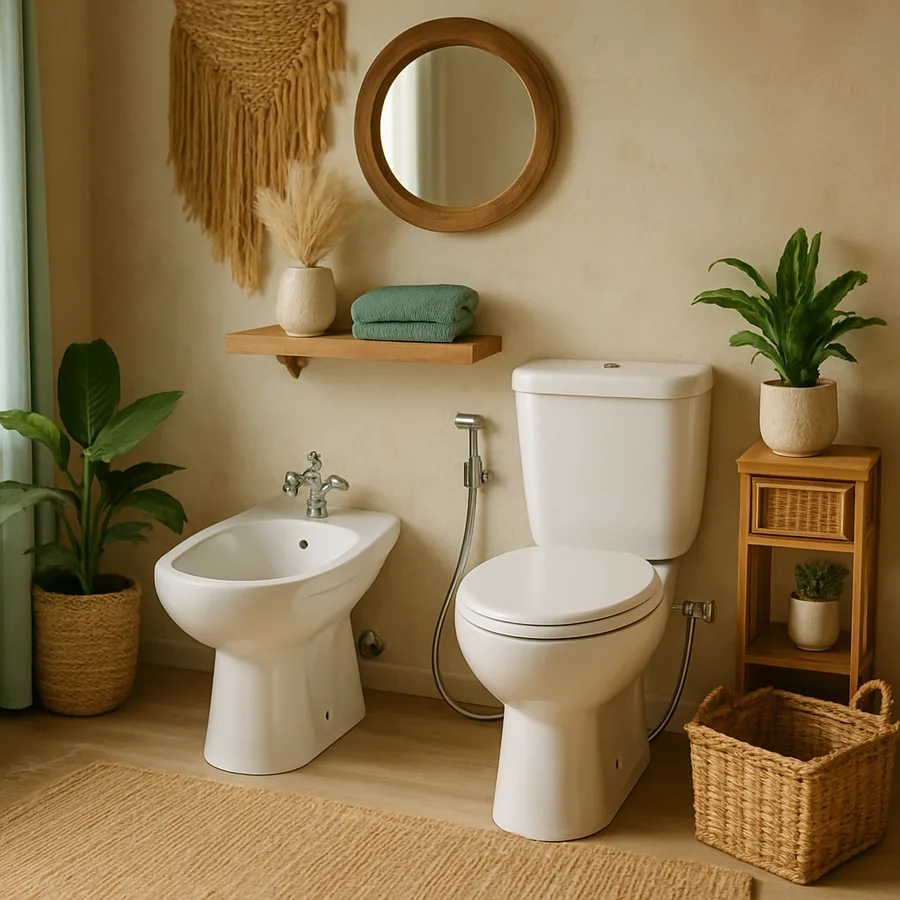
The bidet has had a long, slow renaissance in North American bathrooms, and the term now refers to two completely different products that are easily confused. The first is a standalone fixture or seat attachment that delivers a metered, often warmed, often electronically controlled stream from a fixed nozzle. The second is a handheld sprayer connected by a flexible hose to the toilet's water supply, operated like a kitchen sink sprayer and aimed by the user. Both are called bidets in casual conversation, but they are different products with different installs, different costs, and different use patterns.
This article compares them side by side. It covers how each works, what installation looks like, the water and electrical considerations, hygiene and ergonomics, cost over a decade of use, plumbing code questions, and the scenarios where each one is the better choice. The framing is practical: most readers want to know which to specify in a remodel or which to retrofit into a working bathroom, and the answer depends on a small number of decisions that this article will help make.
How Each Product Actually Works
A standalone bidet, in current North American usage, almost always means an electronic seat attachment that replaces a standard toilet seat or, less commonly, a standalone porcelain fixture next to the toilet. The seat version draws cold water from the toilet's existing supply line through a tee fitting and, in heated models, runs that water through an internal warming reservoir or instantaneous heater. A small motorized nozzle extends from beneath the seat when activated, sprays a metered stream at a user-selected angle and pressure, and retracts when finished. Controls live on a side panel or remote.
A handheld bidet sprayer is a flexible stainless-steel braided hose connected through a tee at the toilet's supply line, terminating in a thumb-trigger sprayer wand mounted in a holster on the toilet tank or wall. The user lifts the wand, points it where needed, and squeezes the trigger to spray. Water temperature is whatever the cold supply delivers, which means roughly tap-cold year round; some installs add a hot water tee from a nearby sink supply to deliver tempered water, but that adds plumbing complexity and creates a small risk of cross-contamination if the install is not done correctly.
The fundamental product difference is automation. The seat bidet is a controlled appliance with metered output, optional water heating, optional air drying, and pre-programmed wash cycles. The handheld sprayer is a hose with a trigger. Both deliver water to similar zones for similar purposes; the experience and the install complexity diverge sharply.
Installation Effort and What Each One Requires
Installing a non-electric bidet seat is a 30-minute task for a homeowner with basic tools. The existing toilet seat unbolts, the new seat bolts in its place, the supply line is disconnected from the toilet's fill valve, a tee fitting is added, the toilet's fill valve is reconnected to one branch of the tee, and the seat's supply hose connects to the other branch. No drilling, no electrical, no permits in most jurisdictions. The seat is shipped with everything needed.
An electric heated bidet seat adds one important requirement: a GFCI-protected outlet within reach of the seat's power cord, typically within 36 inches of the toilet. Most older bathrooms do not have a GFCI outlet near the toilet because the standard layout puts outlets at the vanity. Adding a new outlet involves cutting drywall, fishing a new branch circuit or extending an existing one, and installing a GFCI receptacle, which usually means hiring an electrician for half a day. The installation effort jumps from 30 minutes to most of a day.
A handheld bidet sprayer install is similar to the non-electric seat in plumbing complexity. A tee at the toilet supply, a flexible hose, and a wall- or tank-mounted holster. No electrical, no permit in most jurisdictions, and a homeowner can complete the install in 30 minutes with adjustable wrenches and plumber's tape. The catch is the holster mounting: a wall-mounted holster requires drilling through tile or drywall, while a tank-mounted holster slips over the tank rim without permanent installation. Both work, and the choice depends on tank geometry and homeowner preference.
Water Control, Pressure, and Temperature
The seat bidet wins decisively on water control. Pressure is regulated internally and adjustable through the controller, typically across 5 to 7 settings. Temperature on heated models is also adjustable, usually across 3 to 5 settings, and reaches steady-state warmth within seconds on instantaneous units or within a minute on tank-warmed units. Spray angle is adjustable on better units, allowing front-wash and rear-wash modes and sometimes oscillating or pulsing patterns. Water volume per cycle is metered and consistent, generally between 0.10 and 0.20 gallons per use.
The handheld sprayer offers no internal pressure regulation; the wand simply delivers whatever pressure the supply provides, which is typically the home's static water pressure throttled by the trigger. Temperature is whatever the cold supply delivers, which in winter can be uncomfortably cold in northern climates. A few high-end handheld systems add a small thermostatic mixing valve that taps both hot and cold supplies, but most installs are cold-only. Spray pattern is whatever the wand head produces, with no adjustment beyond the trigger position.
Have you considered which level of control matters in your household? For users who want a consistent, hands-free, repeatable experience, the seat bidet wins. For users who want a simple, occasional rinse and prefer manual control over precise aiming, the handheld sprayer wins. Both are hygienic when used correctly; the difference is ergonomic.
Hygiene, Cleaning, and Maintenance
Hygiene comparisons between the two product types come down to nozzle and wand cleanliness. Modern bidet seats include self-cleaning nozzle cycles that rinse the nozzle before and after each use, and many include a stainless-steel nozzle housing that prevents biofilm buildup. The mechanical nozzle retracts behind a shielded enclosure when not in use, protecting it from splash. Most manufacturers recommend a simple monthly wipe-down of the nozzle and seat with a mild cleaner, plus annual filter replacement on units with built-in filters.
Handheld sprayer wands sit in the open on a holster, which means they are exposed to bathroom moisture and aerosol from toilet flushing. The trigger and wand head should be wiped down weekly, and the hose should be inspected for kinks or wear. The tee fitting and the supply line should be checked for leaks during routine bathroom cleaning. The wand head can develop mineral buildup in hard-water regions and may benefit from periodic vinegar soaking, similar to a kitchen faucet aerator.
Both systems benefit from a hose with a built-in thermal-shutoff or auto-close feature, particularly for handheld sprayers, where a stuck trigger or a damaged hose can flood the bathroom. The single most common bidet sprayer failure in residential use is a slow leak at the trigger or supply tee, often caught only by water staining or a moisture meter. Inspect the install during the first week, again at three months, and annually after that.
Cost Over a Decade and Water Use
A handheld bidet sprayer kit costs 25 to 80 dollars at most plumbing supply retailers, and the install is essentially free if the homeowner does it. A non-electric bidet seat costs 50 to 200 dollars and installs almost as easily. An electric heated bidet seat costs 250 to 1,200 dollars depending on features, and adding a GFCI outlet for the install adds 200 to 500 dollars in electrician labor and parts. A standalone porcelain bidet fixture, the kind common in older European bathrooms, costs 400 to 2,000 dollars plus a full plumbing rough-in, easily another 1,500 to 3,000 dollars in retrofit installations.
Water use favors both products over toilet paper consumption when measured fairly. A bidet uses roughly 0.10 to 0.20 gallons per use; the toilet paper it displaces required several gallons of water during paper manufacturing, plus the embedded energy of pulp processing and shipping. The U.S. Environmental Protection Agency's WaterSense program does not certify bidets specifically, but the agency's resources on water-efficient bathroom fixtures consistently identify low-flow upgrades as among the highest-value water savings households can make.
Operating cost over a decade for an electric heated seat is modest. A typical heated seat draws about 50 watts during heating cycles and far less in standby, with annual electricity use averaging 50 to 150 kilowatt-hours. At 16 cents per kilowatt-hour, that is 8 to 24 dollars per year, or 80 to 240 dollars over a decade. The handheld sprayer has zero ongoing electricity cost. Both have negligible ongoing water cost compared to the household's other water uses.
Plumbing Code, Backflow, and Safety
Both product types fall under the residential plumbing code in most jurisdictions, with the IAPMO Uniform Plumbing Code and the International Plumbing Code being the two most common base codes adopted by states and municipalities. The key code question for any device that delivers water for personal cleansing is backflow prevention: water from the device must not be able to siphon back into the potable supply, even under fault conditions like a sudden drop in supply pressure.
Modern bidet seats and handheld sprayers ship with backflow prevention built into the supply tee and the device itself. Confirming this on the product spec sheet before purchase is worth the two minutes it takes; older or budget products from unfamiliar manufacturers occasionally lack proper backflow prevention and fail inspection. In jurisdictions that require permits and inspections for plumbing modifications, the product must be listed by an accepted standards body, typically with an ASSE 1070 or similar designation.
Electrical code for heated seats follows the same pattern as any other bathroom appliance. Class A GFCI protection on the supply circuit, listed cord and plug, and minimum clearances from tubs and showers per local amendments to the National Electrical Code. NEC Article 210 covers branch circuits in dwelling unit bathrooms, and a competent electrician will install the GFCI outlet to that standard without needing reminding.
Which Product Wins for Which Bathroom
The handheld sprayer wins for renters, for guest bathrooms, for bathrooms without electrical service near the toilet, and for households that want a simple supplemental rinse without a full appliance. The install is reversible, the cost is trivial, and the failure modes are easy to inspect. The product is also a household favorite for parents with potty-training children, where the manual control allows precise aiming during cleanup tasks that automated nozzles cannot match.
The non-electric bidet seat wins for households that want a hands-free experience without the cost or installation burden of electrical work. The install is similar in complexity to the handheld sprayer, the cost is moderate, and the experience is closer to the heated electric version than to the handheld. For bathrooms where adding an outlet is impractical or expensive, the non-electric seat is the highest-value upgrade available.
The electric heated bidet seat wins for primary bathrooms in cold climates, for users with mobility limitations, and for any household willing to budget for the GFCI outlet and the higher product cost. The combination of warm water, adjustable pressure, self-cleaning nozzle, and air drying transforms the bathroom experience in a way the handheld and non-electric options cannot match. Industry retailers report that heated bidet seats are increasingly common in U.S. bathroom remodels, with adoption climbing year over year as awareness grows.
Conclusion
The bidet decision is really a question of how much automation, comfort, and install effort the household wants. A handheld sprayer is fast, cheap, and reversible, ideal for renters and guest bathrooms and for households that want a basic rinse without a full appliance. A non-electric bidet seat is the middle path: hands-free, easy to install, no electrical work, with most of the user experience of a heated seat at a fraction of the cost. A heated electric bidet seat is the premium path, requiring a GFCI outlet but delivering warmth, control, and self-cleaning that no other option matches.
For a remodel of a primary bathroom, specify the heated electric seat and budget the GFCI outlet as part of the electrical scope. The cost difference over a decade is small relative to the rest of the bathroom budget, and the daily user experience is meaningfully better than any of the alternatives. Pair the install with a plumbing inspection that confirms backflow prevention is in place, document the install for warranty purposes, and the system will deliver reliable service for the life of the toilet it sits on.
For a guest bathroom, a powder room, a rental, or any scenario where simplicity and reversibility matter, choose the handheld sprayer. The install is straightforward, the cost is negligible, and the system works in any climate without electrical considerations. Mount the holster solidly, inspect the supply tee for leaks during the first month, and the sprayer will quietly serve for years without thought.
Whichever path you take, confirm that the product carries proper standards listings, install backflow prevention if it is not built into the product, and have any electrical work for heated seats handled by a licensed electrician on a GFCI-protected circuit. The bidet upgrade is one of the highest-value bathroom additions available in a remodel, and a small amount of attention to install details means the system delivers comfort and hygiene for decades without complication.
More Articles You May Like



Comments
Post a Comment