Bar Cart Drinks Tray Styling Glass Decanter Display Rules
Bar Cart Drinks Tray Styling Glass Decanter Display Rules
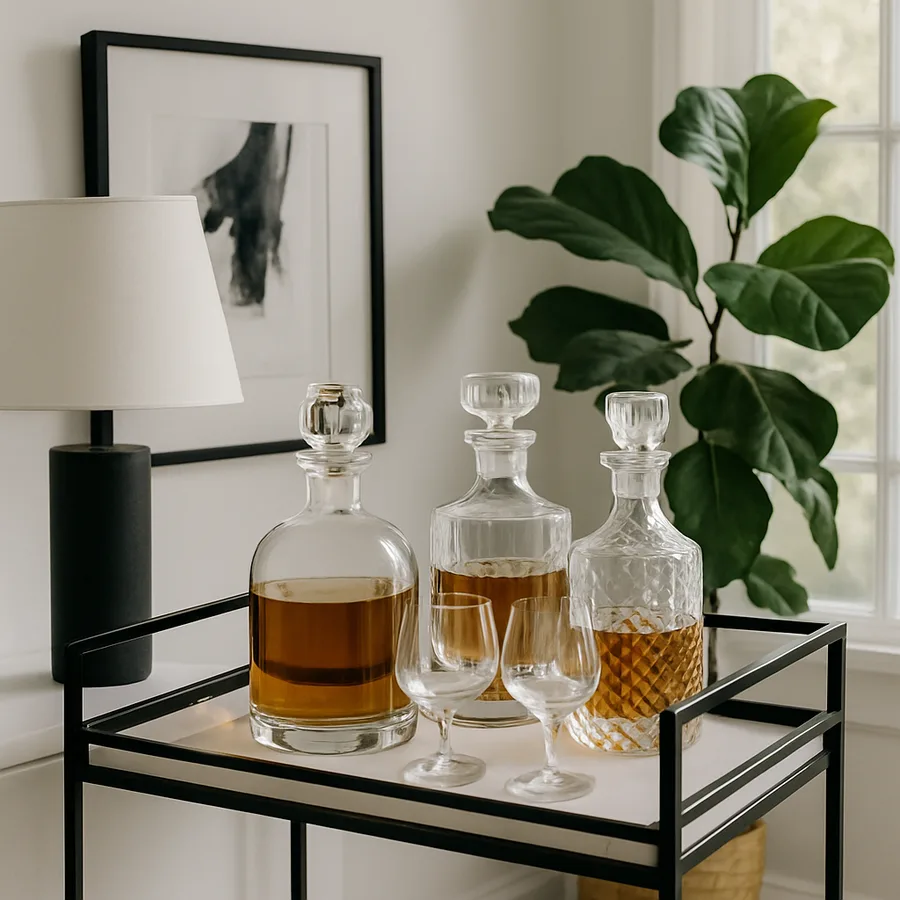
A well-styled bar cart is one of those small details that quietly signals an entire approach to entertaining. A poorly styled one looks like a cluttered shelf with bottles on it. The difference between the two is not budget or square footage; it is composition, restraint, and a handful of well-known rules about how glass decanters and serving pieces should sit together on a tray. Once you see the rules, you cannot unsee them.
This guide walks through the styling principles that interior designers actually use, whether they are setting up a permanent home bar or staging a cart for an evening of guests. The recommendations here draw on published design columns from Architectural Digest and Better Homes and Gardens, plus interviews with ASID-credentialed designers who specialize in residential entertaining spaces. The goal is to make your bar cart look intentional rather than accidental.
The Foundational Rule Of A Single Anchoring Tray
The history of the styled tray traces back to the formal butler's tray of nineteenth-century English country houses, where servants delivered bottles, glasses, and ice in a single carry. The functional ancestry shows in the proportions of contemporary serving trays, which still tend toward a roughly two-to-three width-to-depth ratio that fits a standard household carry. When you look at a beautiful modern tray and feel that it just looks right, you are often responding to dimensions that have been refined over centuries of practical use.
Every well-styled bar cart starts with a tray on the top surface. The tray defines the bar zone, contains spills, and provides a visual anchor that pulls the composition together. Without a tray, the items on the cart float and read as clutter no matter how beautiful each piece is individually. The tray converts a collection into a vignette.
The right tray is roughly two-thirds the depth and three-quarters the width of the cart's top surface. Too small and the items spill off the edges; too large and the tray itself becomes the dominant element rather than the supporting framework. Good materials include lacquered wood, polished brass, mirrored glass, and natural marble. Each material brings a different character: brass reads warm and traditional, marble reads heavy and luxurious, mirrored glass reads light and reflective.
One often-cited rule from NKBA-credentialed designers is that the tray should contrast with the cart's surface in either color or material. A brass tray on a glass cart, a marble tray on a wood cart, a black lacquer tray on a brass cart. The contrast is what allows the eye to read the tray as a distinct surface rather than blending into the cart itself.
Decanter Placement And The Rule Of Three Heights
Beyond the rule of three heights, advanced styling adds a fourth principle: the triangle of attention. Designers arrange three focal pieces so the lines between them form an irregular triangle rather than a straight row. This subtle geometry reads as more dynamic to the eye than a perfectly aligned arrangement and is one reason intentionally styled vignettes feel alive while accidentally arranged objects feel static. Practice this by sliding pieces a few inches one way or the other and watching the composition come into focus.
A core principle of any styled vignette is the rule of three heights: the eye reads a composition more easily when three distinct vertical levels are present. On a bar cart this typically means a tall element, a medium element, and a short element grouped together. The tall element is usually a glass decanter, the medium element might be a bottle or a brass ice bucket, and the short element is often a stack of glasses or a small bowl.
The decanter itself should be the visual hero. A crystal decanter catches light and creates the small flash of luxury that elevates the whole arrangement. Quality decanters from manufacturers like Waterford, Baccarat, Schott Zwiesel, and Riedel range from $80 to several hundred dollars, but a single beautiful decanter does more visual work than a dozen ordinary bottles.
Place the tallest decanter at the back of the tray to anchor the composition, with medium-height pieces forward and slightly to the side, and the shortest pieces at the front edge. The eye then climbs from front to back through the heights, which creates depth and visual interest. Symmetrical placement of two matching decanters reads more formal; asymmetrical placement of mismatched heights reads more curated and modern.
Glassware Selection And Storage On The Cart
Stem versus stemless is a quiet decision that affects the entire visual character of the cart. Stemmed glasses elongate the silhouette and add elegance, particularly when grouped together in matching sets. Stemless glasses sit closer to the tray surface and read as more casual and contemporary. Some carts succeed by mixing both styles deliberately for visual variety, but the more common approach is to commit to one style and execute it consistently. Choose based on the formality of your typical entertaining rather than the formality of the rare dinner party.
The glassware displayed on the cart should match the drinks it will serve. A cocktail-focused bar cart needs lowball (rocks) glasses, highball glasses, and perhaps a few coupes. A wine-focused cart needs wine glasses in two sizes plus perhaps a few stemless options for casual pouring. A spirits cart serving brown liquors neat needs tasting glasses or small lowballs. Mismatched glassware that does not align with the cart's purpose reads as collected rather than curated.
Display glassware in small clusters of four to six glasses rather than long rows. A neat stack of four lowball glasses reads intentional. A row of twelve mixed glasses reads like a kitchen cabinet. For carts with a lower shelf, that shelf is the right place for the bulk of the glassware, with only a representative few on the top tray as part of the styled composition.
Crystal versus standard glass is a quiet but important choice. Lead-free crystal from manufacturers like Schott Zwiesel and Spiegelau brings the visual sparkle of crystal without the lead-content concerns of older crystal. The price premium over standard glass is real, typically two to four times the cost, but the visual impact on a styled cart is significant. Architectural Digest has noted that even one or two crystal pieces among standard glassware can elevate the entire setup.
Bottle Selection Labeling And Visual Editing
If you are uncertain whether a bottle earns its display spot, apply the five-foot test: stand five feet from the cart and look at the bottle. If the label is busy, the typography is generic, or the glass color clashes with surrounding pieces, the bottle belongs in a cabinet. If the bottle has the kind of designed presence that makes you pause and look closer, it earns its spot on the cart. This same test, ruthlessly applied, can reduce a fifteen-bottle clutter to a five-bottle composition in less than five minutes.
The honest secret of a well-styled bar cart is aggressive editing. Most home bars accumulate fifteen to twenty bottles over time, and putting all of them on display creates visual chaos. A styled bar cart shows only four to six bottles, chosen for label aesthetics as much as for what they contain. The remaining bottles live in a cabinet or pantry and come out only when needed.
Look for bottles with strong typography, beautiful glass color, or distinctive shapes. Hendrick's gin in its dark apothecary bottle, Macallan whisky in its sculpted decanter-style bottle, St-Germain elderflower liqueur in its art deco bottle, and Lillet Blanc in its slim French bottle are all examples of liquor packaging designed to be seen. A cart of six bottles like these looks composed; a cart of fifteen ordinary bottles looks crowded.
For bottles whose labels do not earn display status, decanting into beautiful crystal decanters solves the problem entirely. A single crystal decanter holds a bottle of whisky or rye that would otherwise look ordinary. The decanter elevates the spirit visually and lets you display three bottles' worth of liquor in three matching decanters that read as a single coordinated set.
Adding Greenery Texture And Small Decorative Objects
The choice of greenery has surprising consequences for ongoing maintenance. Fresh-cut flowers look beautiful for three to seven days and then need replacement, which is a real time commitment. A small low-maintenance succulent or air plant survives months with almost no attention and provides similar visual softness. Dried botanicals like preserved eucalyptus, dried hydrangea, or pampas grass last for years and offer texture without the maintenance burden. The right choice depends on whether you want the cart to feel constantly fresh or simply finished.
A styled bar cart almost always includes a small organic element: fresh herbs in a tiny vase, a small succulent, a single stem in a bud vase, or a curl of dried botanical. The organic element softens the hard edges of glass and metal and adds the small bit of life that prevents the cart from reading as a static still life.
Other styling additions worth considering: a small stack of cocktail napkins in a coordinating color, a brass or wood cocktail tool set displayed in a small vessel, a beautiful book about cocktails or wine angled against the back of the tray, and a small bowl of citrus or olives for both function and color. Each addition should serve a purpose rather than merely fill space; if you cannot articulate why an item is on the cart, it probably should not be there.
The color palette should be tight. Most successful bar carts work within a three-color scheme: a metal tone (brass, chrome, or black), a glass tone (clear, smoke, or amber), and a single accent color from greenery, napkins, or a small floral element. Adding a fourth or fifth color usually fragments the composition and makes it read as cluttered.
Seasonal Adjustments And Practical Maintenance
The styled bar cart is not a static installation; it changes with the seasons and with what you are actually drinking. In summer, the cart might display lighter spirits, a clear glass pitcher for a mixer or sangria, and bright citrus fruit. In winter, the same cart might shift to whisky decanters, rich amber spirits, and warmer accent colors in the napkins and greenery. The seasonal rotation keeps the cart feeling current rather than fossilized.
Practical maintenance matters too. Glass items collect dust visibly, and a dusty bar cart loses all of its visual appeal. A weekly wipe-down of every glass surface keeps the cart photo-ready. Polish brass elements monthly with a dedicated brass polish; tarnish develops gradually but obviously, and unpolished brass makes the whole cart look neglected. Have you ever seen a beautifully styled bar cart in a magazine and wondered why your own does not look like that? Often the difference is simply the level of cleaning.
For more on entertaining setups and styling principles, see resources at Better Homes and Gardens and design inspiration at Architectural Digest. Both publish regular features on home bar styling that are worth bookmarking.
Conclusion And Building Your Own Signature Cart
A well-styled bar cart is a small daily luxury that costs surprisingly little to achieve. The components are not expensive in isolation; a tray, a few good glasses, one beautiful decanter, a small piece of greenery, and four or five carefully chosen bottles together cost less than a single piece of mid-range furniture. What transforms these components into something elegant is the discipline of editing and the application of a few simple composition rules.
Start with the tray. Add the tallest decanter. Build heights around it. Edit the bottle count down to what fits comfortably. Add a single organic element. Step back and remove anything that does not justify its presence. This iterative process is how every designer styles a vignette, and the same logic applies whether the surface is a bar cart, a coffee table, or a console.
The final test is whether the cart invites use. A cart that is too precious to touch fails as functional furniture. The styling should make people want to pour a drink, not feel that they would disturb a museum display. A small visible cocktail tool, a half-empty decanter, and a glass left out from the previous evening all signal that the cart is alive rather than staged.
Take the next step. Clear your bar cart down to the bare surface tonight and rebuild it with three or four chosen pieces using the rule of three heights. The transformation from cluttered shelf to styled vignette takes less than an hour and requires no shopping. The cart you end up with will pour better drinks, photograph better, and quietly elevate every gathering it serves.


Comments
Post a Comment