Wide Plank White Oak Floors: Why Designers Keep Choosing Them
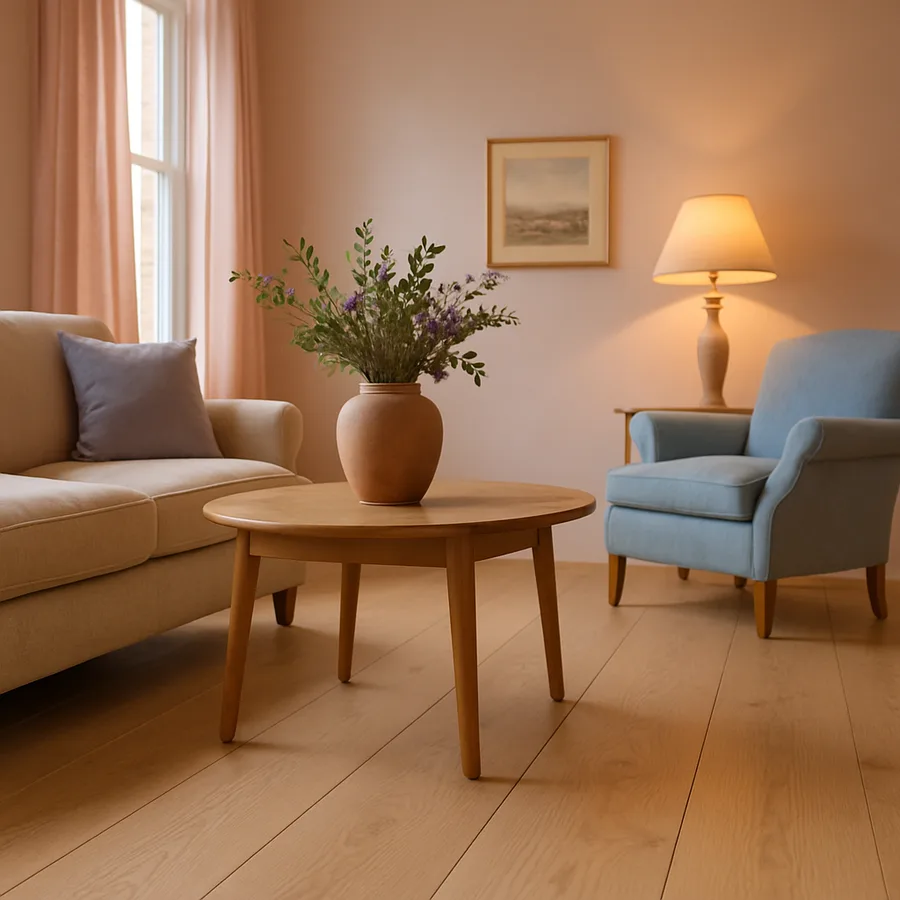
The Enduring Dominance of White Oak in Professional Design
Among the hundreds of flooring materials available to residential designers, wide plank white oak continues to appear in project after project, portfolio after portfolio, with a consistency that no competing product has managed to displace. This is not a matter of habit or inertia. Designers return to white oak because it solves a remarkably broad range of aesthetic and functional problems simultaneously, adapting to farmhouse kitchens and minimalist lofts with equal conviction. The wood's neutral undertone, prominent grain structure, and responsiveness to different finishing techniques give it a versatility that few natural materials can match, and the wider plank format amplifies these qualities by revealing more of the wood's character in each individual board.
The National Wood Flooring Association (NWFA) reports that white oak accounts for more than 50 percent of all new hardwood floor installations in residential projects, a market share that has remained stable or grown over the past decade even as engineered alternatives, luxury vinyl plank, and imported exotic species have expanded the competitive field. That level of dominance in a category with hundreds of options speaks to something deeper than trend following. It reflects a material that has earned the trust of the professionals who specify flooring for a living and the homeowners who walk on it every day.
Wide plank formats, typically defined as boards measuring five inches or wider, have become the preferred expression of white oak in contemporary residential design. Where narrow strip flooring creates a busy, linear pattern that can make rooms feel smaller and more formal, wide planks slow the visual rhythm and allow each board's grain, color variation, and individual character to register as a deliberate design element rather than a background texture. The effect is a floor that feels substantial, confident, and connected to the natural material in a way that narrow strips, however beautifully installed, rarely achieve. What is it about seeing the full breadth of a single board that makes a room feel more grounded and intentional?
The practical case for wide plank white oak is equally compelling. Fewer boards per square foot means fewer seams, faster installation, and a floor surface with greater visual continuity. Wide planks also accommodate the rift-and-quartersawn cuts that produce the most stable and visually refined grain patterns, because the wider the board, the more clearly these cuts display the characteristic ray fleck and straight-grain patterns that distinguish premium white oak from standard flat-sawn lumber. For designers who care about grain selection and visual consistency across a room, wide plank format provides the canvas they need to curate the floor's appearance with precision.
Grain Character and Why White Oak Outperforms Red Oak
The visual distinction between white oak and red oak is immediately apparent to anyone who places the two species side by side, and that distinction explains much of white oak's dominance in contemporary design. White oak grain is tighter, more uniform, and less prone to the dramatic cathedral patterns that make red oak look busy and dated in modern interiors. The medullary rays in white oak are longer and more pronounced, creating the subtle ray fleck patterns that catch light at different angles and give the floor a dimensional quality that flat, consistent materials lack. These rays are not merely decorative; they represent the tree's radial nutrient transport structure, and their presence in the finished floor is a reminder that this is a natural material with genuine biological history.
Color is the other decisive factor. White oak's heartwood ranges from light straw to warm honey, with a cool undertone that keeps it compatible with gray, white, and cool-toned interior palettes that dominate contemporary design. Red oak, by contrast, carries a distinctly pink-to-salmon undertone that clashes with the cool neutrals most residential designers specify for walls, cabinetry, and soft furnishings. The Architectural Digest flooring trend analysis consistently identifies warm neutrals with cool undertones as the dominant floor color preference in designer-led projects, a description that maps precisely to white oak's natural color profile and explains why it has displaced red oak so thoroughly in the professional design market.
The grain difference becomes particularly important when stains and finishes are applied. White oak's tighter pore structure absorbs stain more evenly than red oak, producing consistent color across the floor surface without the blotchy, uneven absorption that plagues red oak staining, especially in lighter tones. This matters enormously for the gray-toned and whitewashed finishes that have become staples of coastal, Scandinavian, and transitional design. When a designer specifies a light gray-washed floor, they need the stain to penetrate uniformly so that the natural grain pattern shows through without patches of darker or lighter absorption disrupting the effect. White oak delivers that consistency; red oak does not.
Tyloses, the cellular growths that block white oak's pore vessels, provide a functional advantage that extends beyond aesthetics. These natural plugs make white oak significantly more resistant to moisture penetration than red oak, whose open pores allow water to wick into the wood much more readily. This is why white oak has historically been the preferred species for boat building, wine barrels, and exterior applications where water resistance matters. In flooring applications, the closed pore structure means that white oak withstands kitchen spills, pet accidents, and wet footprints from entryways with less risk of staining, warping, or fiber damage than more porous species. For a wide plank floor where each board represents a larger area of exposed surface, this inherent moisture resistance provides meaningful insurance against the realities of daily life.
Finish Options That Define the Final Aesthetic
The finish applied to wide plank white oak transforms the raw wood into the specific aesthetic statement the designer envisions, and the range of available finishes is broad enough to take the same species from rustic warmth to stark minimalism. Matte and ultra-matte penetrating oils have become the finish of choice in designer-led projects, favored for the way they enhance the wood's natural texture and color without adding surface sheen. European hardwax oils from manufacturers like Rubio Monocoat and Osmo penetrate the wood fibers and cure within the cell structure, leaving the surface touchable and natural rather than coated and plasticky. The result is a floor that looks and feels like real wood rather than a sealed surface over wood, which aligns with the authenticity that contemporary design prioritizes.
The maintenance characteristics of oil-finished floors differ substantially from polyurethane-finished alternatives, and understanding this difference prevents disappointment. Oil finishes can be spot-repaired by lightly sanding the affected area and reapplying oil, which means scratches and wear marks can be addressed locally without refinishing the entire floor. This is a significant practical advantage for wide plank floors in kitchens and high-traffic hallways where localized wear is inevitable. The trade-off is that oil finishes require periodic recoating, typically every two to five years depending on traffic, to maintain their protective qualities. The Hardwood Flooring Manufacturers Association notes that oil-finished floors in residential settings last as long as polyurethane-finished floors when properly maintained, but they demand a different kind of attention: regular, modest maintenance rather than the neglect-then-refinish cycle that polyurethane encourages.
Wire-brushed and hand-scraped textures add a tactile and visual dimension to wide plank white oak that smooth-sanded finishes cannot replicate. Wire brushing removes the softer earlywood grain while leaving the harder latewood ridges intact, creating a subtle relief texture that you can feel underfoot and that catches light in ways that accentuate the grain pattern. Hand scraping introduces gentle, irregular undulations across the plank surface that evoke the look of antique flooring without the structural compromises of actual reclaimed wood. Both treatments pair beautifully with oil finishes and are particularly effective in wide plank formats where the larger surface area of each board gives the texture room to express itself.
For homeowners who prefer lower maintenance, matte water-based polyurethane provides a durable surface film that protects the wood without the high-gloss appearance that makes traditional polyurethane floors look dated. Modern matte polyurethanes have improved dramatically in clarity and touch, producing a finish that appears almost as natural as oil while offering superior resistance to scratches, water, and daily wear. Three to four coats of a quality matte polyurethane will protect a white oak floor for ten to fifteen years before requiring a full sand-and-refinish cycle. The Houzz professional directory shows that approximately 55 percent of new white oak floor installations specify some form of polyurethane finish, with matte and satin sheens accounting for the vast majority of that segment. Does the floor you are envisioning call for the natural tactility of oil or the set-and-forget durability of polyurethane?
Engineered Versus Solid: Making the Right Structural Choice
The decision between solid and engineered wide plank white oak involves structural considerations that affect performance, longevity, and installation options in ways that go well beyond personal preference. Engineered white oak consists of a thick wear layer of genuine white oak bonded to a multi-ply or high-density fiberboard core that provides dimensional stability across temperature and humidity changes. This construction allows engineered planks to be installed over concrete slabs, over radiant heating systems, and in below-grade spaces where solid wood would expand, contract, and ultimately cup or gap to an unacceptable degree. For modern homes with open floor plans, slab-on-grade construction, or in-floor heating, engineered wide plank is not a compromise but the technically correct choice.
The wear layer thickness of an engineered plank determines how many times it can be sanded and refinished over its lifespan, which directly affects its long-term value proposition. Premium engineered white oak planks feature wear layers of 4 to 6 millimeters, thick enough to support two to three full sand-and-refinish cycles over the floor's life. This means a quality engineered floor installed today could be refinished in 2040 and again in 2055, giving it a functional lifespan of 50 or more years. Budget engineered products with wear layers of 2 millimeters or less can be refinished once at most, and some cannot be sanded at all, limiting their lifespan to whatever the factory finish can endure. The NWFA recommends a minimum wear layer of 4 millimeters for any engineered product intended for long-term residential use, and this specification should be treated as a non-negotiable minimum when evaluating products.
Solid white oak planks offer the longest possible lifespan because the entire board thickness, typically 3/4 inch, is available for sanding and refinishing. A solid wide plank floor can theoretically be refinished five or more times over its life, giving it a potential service span measured in generations rather than decades. Solid planks also produce a subtly different feel and sound underfoot, with more resonance and a sense of substantial material that some homeowners and designers find irreplaceable. The limitation is environmental sensitivity: solid wood expands across its width when humidity rises and contracts when humidity drops, and wider planks amplify this movement proportionally. A 7-inch wide solid plank moves nearly twice as much as a 3.5-inch strip, which means that seasonal gaps between boards are more visible and that the installation requires adequate expansion room at all perimeters.
Climate control is the mediating factor between these two options. In homes with consistent year-round humidity between 35 and 55 percent, maintained by HVAC systems with humidification and dehumidification capability, solid wide plank white oak performs beautifully and rewards the investment with unmatched longevity. In homes without humidity control, in regions with extreme seasonal swings, or over any concrete substrate, engineered construction provides the dimensional stability that solid wood cannot guarantee. The honest answer to which construction type is better is that both are excellent when installed in the conditions they were designed for, and both will underperform if those conditions are ignored. Which description matches your home's environment more closely?
Styling Versatility Across Design Movements
One of the most remarkable qualities of wide plank white oak is its ability to participate convincingly in design styles that appear to have nothing in common. In a modern farmhouse kitchen, wide planks in a warm natural oil finish complement shaker cabinetry, apron sinks, and open shelving with a grounded, unpretentious warmth that anchors the room's pastoral references without tipping into costume. The grain is visible and celebrated, the boards carry the slight color variation between heartwood and sapwood that signals natural material, and the wide format echoes the broad timber floors found in actual historic farmhouses. This application works because farmhouse design is fundamentally about authentic materials used honestly, and white oak delivers that authenticity without artifice.
In a Scandinavian minimalist living room, the same wood species takes on an entirely different character when finished with a white-washed or bleached oil that pushes the color toward pale straw. The grain remains visible but subdued, reading as texture rather than pattern, and the light tonality amplifies natural daylight in a way that darker floors absorb. Wide planks in this context emphasize the clean, open floor planes that Scandinavian design prizes, with fewer seams creating the visual quiet that the style demands. The American Society of Interior Designers has documented the sustained influence of Scandinavian design principles on American residential interiors, and white oak's adaptability to this palette is a significant factor in its specification rate among designers working in this vocabulary.
Industrial loft conversions represent yet another context where wide plank white oak performs with distinction. Fumed or smoked finishes, which darken the wood through a chemical reaction between ammonia vapor and the tannins naturally present in white oak, produce deep chocolate and espresso tones that pair dramatically with exposed brick, steel structural elements, and concrete surfaces. The fuming process darkens the wood from the inside out, creating a color change that is permanent, consistent, and fundamentally different from surface staining. Wide planks in fumed white oak make a bold material statement that holds its own against the heavy industrial elements typical of loft spaces, providing warmth and organic texture in environments that would otherwise feel cold and institutional.
Transitional and contemporary interiors, which constitute the largest segment of new residential design, find in white oak a flooring material that neither competes with nor retreats from the other elements in the room. A mid-tone white oak floor in a satin finish provides a neutral foundation that supports bold art, colorful upholstery, and mixed-metal hardware without asserting its own agenda. This chameleon quality is perhaps the deepest reason designers keep choosing wide plank white oak: it gives them a reliable foundation that works with whatever design direction the project takes, reducing floor selection from a high-stakes aesthetic gamble to a confident, repeatable decision. When a single material can support farmhouse warmth, Scandinavian restraint, industrial drama, and contemporary neutrality, it earns its place as the default specification through sheer range.
Practical Durability and the Long View on Value
White oak's Janka hardness rating of 1360 pounds-force places it in the upper tier of domestic hardwood species, harder than walnut at 1010, cherry at 950, and the red oak it has displaced at 1290. This hardness translates directly to resistance against dents, scratches, and wear from daily foot traffic, pet claws, furniture movement, and the general physical demands that residential floors endure. For a wide plank floor where each board is more prominently visible and individual damage is more noticeable than in a narrow strip installation, that hardness advantage provides meaningful protection against the kind of surface damage that forces premature refinishing.
The financial case for wide plank white oak strengthens substantially when evaluated over its full lifespan rather than at the point of purchase alone. A quality engineered wide plank white oak floor costs between $8 and $16 per square foot installed, depending on plank width, wear layer thickness, and finish specification. Solid wide plank ranges from $10 to $22 per square foot installed. These numbers are higher than luxury vinyl plank at $4 to $8 or standard laminate at $3 to $6, but the comparison is misleading without accounting for longevity. A white oak floor that lasts 50 years and is refinished twice costs less per year of service than a vinyl plank floor that is replaced every 15 years, even before considering the superior aesthetic and the contribution to home resale value.
Resale value is where wide plank white oak delivers a return that few other flooring investments can match. The National Association of Realtors (NAR) has consistently identified hardwood flooring as one of the top features buyers seek in existing homes, with surveys showing that 54 percent of home buyers are willing to pay more for a home with hardwood floors. White oak specifically carries additional premium because of its association with designer-quality interiors and its broad compatibility with the most popular current design styles. Real estate professionals report that homes with wide plank white oak floors photograph better for listings, show better during walkthroughs, and command offers that reflect the perceived quality of the finishes throughout the home.
The environmental profile of white oak also aligns with the growing priority that homeowners and designers place on responsible material sourcing. White oak is abundant in North American forests, harvested under sustainable forestry management plans, and certified by the Forest Stewardship Council (FSC) and the Sustainable Forestry Initiative (SFI) across thousands of acres of managed timberland. Unlike imported exotic hardwoods that carry significant transportation carbon costs and may originate from poorly regulated forests, domestic white oak offers a genuinely sustainable flooring choice that supports local forestry economies. For designers responding to clients who care about the environmental impact of their material selections, white oak's sustainability credentials provide a straightforward, defensible answer to the sourcing question.
Conclusion: A Material That Earns Its Reputation
Wide plank white oak floors persist at the center of residential design not because of marketing or momentum but because the material genuinely outperforms its alternatives across the criteria that matter most to both designers and homeowners. The grain is beautiful without being distracting, the color is neutral without being boring, the hardness is protective without being brittle, and the responsiveness to different finishes allows a single species to serve design intentions that span from rustic to refined. These are not subjective opinions but measurable qualities that explain a market share exceeding 50 percent in an industry with no shortage of competition.
The wide plank format elevates these inherent qualities by giving each board the visual space to express its individual character, reducing seam frequency for a cleaner floor plane, and accommodating the premium grain cuts that display white oak at its most refined. Whether finished with a natural oil that celebrates the raw wood or a fumed treatment that transforms it into something dark and dramatic, wide plank white oak provides the design flexibility that professionals need and the lasting performance that homeowners deserve from a significant investment in their home.
If you are planning a renovation or new build and have not yet committed to a flooring material, visit a showroom that stocks wide plank white oak samples in multiple finishes and widths. See how the grain changes under different lighting conditions, feel the difference between oil and polyurethane surfaces, and compare the visual weight of six-inch planks against eight-inch or ten-inch alternatives. The material will speak for itself, and you will understand immediately why the designers who specify flooring for a living keep writing the same species on their specification sheets.
More Articles You May Like



Comments
Post a Comment