The Future of Interior Design: Embracing AI for Personalized Spaces
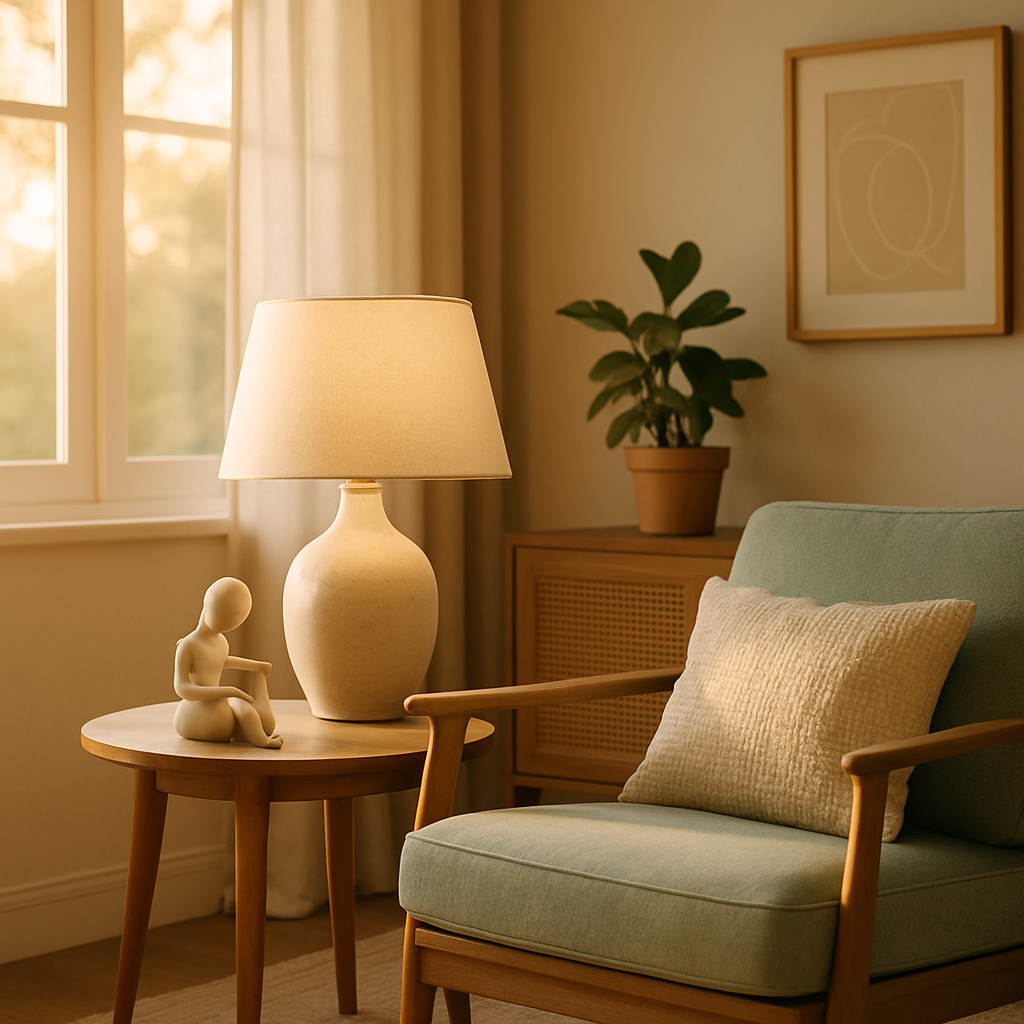
Imagine walking into your living room and having the lighting, temperature, music, and even the artwork on your digital walls adjust automatically to match your current mood. This scenario, once confined to science fiction, is rapidly becoming achievable through the convergence of artificial intelligence and interior design. The American Society of Interior Designers (ASID) has identified AI-driven personalization as the single most transformative force shaping the future of residential design, predicting that adaptive environments will become standard in new construction within the coming decade. The fusion of computational intelligence with human-centered design principles promises to create living spaces that are not merely static arrangements of furniture and decoration but dynamic environments that evolve with the needs, preferences, and emotional states of their occupants. This article explores the frontier where artificial intelligence meets interior design, examining how data-driven personalization, adaptive technologies, and machine creativity are redefining what it means to feel at home. Whether you are a design professional or a homeowner curious about the possibilities ahead, the developments covered here will reshape your understanding of what interior spaces can become.
The Rise of Hyper-Personalized Living Environments
Personalization in interior design has historically been limited to selecting colors, furnishings, and layouts that reflect individual taste, a process that produces a single static result that remains unchanged until the next renovation. AI-powered personalization shatters this limitation by enabling environments that continuously adapt to the people within them. Smart sensors embedded in walls, floors, and furniture collect real-time data about occupancy patterns, movement habits, and environmental preferences, feeding this information to AI systems that adjust lighting, climate, and acoustic conditions accordingly. The International Interior Design Association (IIDA) has published extensive research on adaptive environments, concluding that spaces capable of responding to occupant behavior consistently outperform static environments on measures of comfort, productivity, and emotional well-being. This shift from designing for a hypothetical average occupant to designing for the actual, dynamic individual represents a paradigm change in the profession.
The depth of AI-driven personalization extends far beyond automated lighting and temperature adjustments. Advanced systems can learn and anticipate individual preferences with remarkable specificity, recognizing that one household member prefers cooler temperatures and brighter light while another favors warmth and dimness. When multiple occupants share a space, AI mediation algorithms negotiate compromises that optimize comfort for everyone present, adjusting conditions dynamically as people enter and leave rooms. Some experimental systems even monitor biometric indicators such as heart rate variability and skin temperature through wearable devices, using physiological data to infer stress levels and adjust environmental conditions proactively. While these capabilities raise important questions about privacy and data ownership, they also suggest a future where our homes actively support our physical and emotional health in ways that were previously impossible.
The aesthetic dimension of AI personalization is equally compelling. Digital art displays and programmable surfaces allow wall art, patterns, and even virtual textures to change based on time of day, season, or occupant mood. A living room wall that displays calming nature photography during evening hours might transition to energizing abstract compositions during morning routines, creating an environment that actively supports the emotional rhythms of daily life. Have you ever wished your home could reflect your changing moods rather than presenting the same fixed backdrop regardless of how you feel? This responsive aesthetic capability transforms walls and surfaces from passive boundaries into active participants in the occupant experience. Designers featured on AD PRO have begun experimenting with these technologies in high-end residential projects, creating interiors that feel more like living organisms than static constructions.
AI-Assisted Design Process: From Concept to Completion
The design process itself is being fundamentally restructured by artificial intelligence at every stage, from initial concept development through material specification to project management and installation coordination. AI concept generation tools allow designers to explore vastly more creative territory in less time, producing hundreds of design variations based on client briefs, site conditions, and budget parameters. Professional designers with NCIDQ certification are increasingly incorporating these tools into their practices, not as replacements for their creative judgment but as idea amplifiers that expand the range of possibilities considered for each project. A designer who might manually develop three or four concept directions can now evaluate fifty AI-generated alternatives, selecting and refining the most promising options with the benefit of broader creative exploration.
Material specification, one of the most time-consuming aspects of professional interior design, is being streamlined through AI databases that match design intent with available products across thousands of manufacturers simultaneously. Rather than browsing individual catalogs and showrooms, designers can describe desired material characteristics in natural language and receive curated recommendations that match their specifications for color, texture, durability, sustainability credentials, and price point. These AI-powered specification tools integrate with supply chain data to provide real-time information about lead times, stock levels, and shipping logistics, reducing the delays and substitutions that frequently plague design projects. For clients paying professional fees of $150 to $500 per hour, the efficiency gains translate directly into cost savings without any sacrifice in design quality or material selection rigor.
Project management and coordination represent another area where AI is delivering measurable improvements to the design process. Construction and installation schedules involve complex interdependencies between multiple trades, material deliveries, and client decisions, a web of relationships that AI scheduling tools can optimize far more effectively than manual planning. These tools predict potential delays based on historical data, suggest alternative sequencing strategies when disruptions occur, and maintain clear communication channels between all project stakeholders. The result is shorter project timelines, fewer cost overruns, and a smoother overall experience for homeowners navigating the often stressful process of home renovation. How much stress and expense could you save on your next design project if an intelligent system were managing the logistics while your designer focused exclusively on creative decisions?
Adaptive Architecture and Responsive Interiors
The boundary between interior design and architecture is blurring as AI enables building elements themselves to become responsive and adaptive. Motorized partition walls that reconfigure floor plans based on time of day or activity type are already available in luxury residential markets, transforming open-plan living areas into private bedrooms or home offices at the touch of a button. AI takes this concept further by automating the reconfiguration process based on learned occupancy patterns, anticipating when a home office needs to emerge from a guest room or when a dining area should expand to accommodate entertaining. The Houzz design community has documented growing interest in these flexible architectural systems, with searches for movable walls and adaptive floor plans increasing significantly among homeowners planning new construction or major renovations.
Smart glass technology represents one of the most visually striking applications of adaptive architecture in residential design. Electrochromic and thermochromic glass can transition from transparent to opaque on demand, controlled by AI systems that balance privacy, natural light, and thermal performance throughout the day. A bathroom window might automatically frost when someone enters the room, while a living room wall of glass gradually tints during afternoon hours to prevent overheating without blocking the view. These technologies integrate seamlessly with biophilic design principles by maintaining visual connections to outdoor environments while managing the practical challenges of glare, heat gain, and privacy that conventional windows impose. The result is a more fluid relationship between interior and exterior spaces, mediated by intelligence rather than fixed barriers.
Acoustic adaptation is an often-overlooked dimension of responsive interior design that AI is beginning to address with sophisticated precision. Sound quality profoundly affects how comfortable and functional a space feels, yet most residential interiors treat acoustics as an afterthought if they address them at all. AI-powered acoustic management systems use microphone arrays and digital signal processing to monitor and modify the sound environment in real time. They can suppress unwanted noise from street traffic or appliances while enhancing desired sounds such as music or conversation. In open-plan homes where acoustic privacy is a persistent challenge, these systems create virtual sound zones that allow one family member to listen to music in the living area while another enjoys quiet conversation in the adjacent dining space. This invisible layer of environmental intelligence transforms the acoustic experience of home in ways that conventional sound-absorbing materials and room dividers cannot achieve.
Data-Driven Design Decisions and Predictive Analytics
The increasing availability of data about how people actually use their homes is enabling a new paradigm of evidence-based interior design. Traditional design decisions rely on the designer's experience, client interviews, and aesthetic judgment, all valuable inputs but inherently subjective and limited by the breadth of individual experience. AI analytics tools supplement these human insights with objective data about traffic patterns, furniture usage frequencies, lighting preferences, and thermal comfort zones gathered from smart home sensors and connected devices. ASID has encouraged the profession to embrace this data-driven approach, arguing that empirical evidence about occupant behavior should inform design decisions alongside aesthetic and creative considerations. The combination of human intuition and machine analysis produces designs that are both beautiful and functionally optimized.
Predictive analytics takes data-driven design a step further by anticipating future needs based on current patterns and demographic trends. An AI system analyzing a young family's home usage data might predict the need for a dedicated homework space as children approach school age, or suggest reconfiguring a nursery into a play area as toddlers become more mobile. These forward-looking recommendations help homeowners plan proactive design updates rather than reacting to changing needs after they become urgent. For aging-in-place design, predictive analytics is particularly valuable, identifying opportunities to introduce accessibility features such as wider doorways, grab bars, and level transitions before they become medically necessary. This anticipatory approach to design reduces the disruption and expense of retrofitting while ensuring that homes remain safe and comfortable through every stage of life.
The ethical dimensions of data-driven interior design deserve thoughtful consideration as these technologies mature. Questions about who owns the data generated by smart home sensors, how it is stored and protected, and whether it might be used for purposes beyond design optimization are not merely academic concerns but practical issues that homeowners must navigate. What level of surveillance are you comfortable accepting in exchange for a more responsive and personalized living environment? Responsible AI implementation requires transparency about data collection practices, clear user controls over data sharing, and robust security measures that protect sensitive information about household routines and behaviors. The interior design profession, guided by organizations like IIDA and ASID, has an opportunity and a responsibility to establish ethical standards for data use that protect client interests while enabling the genuine benefits that data-driven design can deliver.
The Evolving Role of the Human Designer
As AI assumes responsibility for an expanding range of technical and analytical tasks, the role of the human interior designer is evolving rather than diminishing. Freed from routine tasks such as product sourcing, dimensional planning, and specification management, designers can devote more attention to the aspects of their work that require uniquely human capabilities: empathy, cultural sensitivity, narrative storytelling, and the intuitive understanding of how spaces make people feel. NCIDQ-certified professionals bring a depth of aesthetic knowledge, historical awareness, and interpersonal skill that no algorithm can replicate, and the most successful design practices of the future will be those that leverage AI to amplify these human strengths rather than attempting to replace them. The designer's role is shifting from executor to curator and strategic advisor, a transition that elevates the profession's value proposition even as technology handles its more mechanical functions.
The emotional intelligence that human designers bring to their work remains irreplaceable in the age of AI. Understanding a client's unspoken aspirations, reading the emotional dynamics of a family, and translating complex psychological needs into tangible spatial solutions are skills that require empathy, life experience, and interpersonal sensitivity that machines do not possess. A skilled designer can discern that a client requesting a minimalist aesthetic is actually seeking a sense of control and calm in a chaotic life, or that a couple's disagreement about style preferences reflects deeper questions about identity and compromise within their relationship. These insights inform design decisions that go beyond surface aesthetics to address the fundamental human needs that living spaces must serve. The quiet luxury movement, which prioritizes emotional resonance over visual spectacle, exemplifies the kind of nuanced, psychologically informed design that human professionals deliver with unmatched expertise.
Collaboration between human designers and AI systems is producing results that neither could achieve independently. Designers who embrace AI tools report higher client satisfaction, faster project completion, and greater creative confidence because the technology handles data processing and option generation while the human provides judgment, editing, and emotional calibration. This collaborative model mirrors successful human-AI partnerships in other creative fields such as music composition, architectural design, and graphic arts, where the most compelling work emerges from the synergy between human intuition and computational power. Have you considered how your own creative processes might benefit from intelligent technological collaboration? The future of interior design is not a contest between human and machine but a partnership that combines the best capabilities of both, producing living spaces that are simultaneously more personalized, more functional, and more emotionally resonant than either approach could create alone.
Preparing Your Home for the AI-Integrated Future
Homeowners interested in preparing for AI-integrated interior design can begin with practical steps that lay the foundation for future capabilities without requiring immediate investment in cutting-edge technology. The most fundamental preparation is ensuring robust wireless connectivity throughout the home, as AI systems depend on reliable network infrastructure to communicate between sensors, controllers, and cloud-based processing platforms. Mesh networking systems that provide consistent coverage across every room and floor create the connective tissue that future AI applications will require. Additionally, selecting smart home devices and platforms that use open communication protocols rather than proprietary closed systems ensures compatibility with AI tools as they emerge, protecting your technology investments against premature obsolescence.
Infrastructure planning during renovations presents an ideal opportunity to embed the physical components that AI-integrated design will eventually require. Running additional electrical circuits, installing structured wiring for data and power, and pre-wiring locations for sensors and motorized fixtures are relatively inexpensive additions during construction but costly and disruptive to retrofit later. Consult with an electrician or smart home integrator about future-proofing strategies specific to your home's layout and your anticipated technology roadmap. According to a report from Houzz, homes with pre-installed smart infrastructure sell at premiums of 3 to 5 percent above comparable properties without these features, suggesting that future-proofing investments deliver financial returns in addition to lifestyle benefits. This dual value proposition makes smart infrastructure one of the most strategically sound investments available to homeowners planning renovations.
Perhaps the most important preparation for the AI-integrated future of interior design is cultivating an openness to experimentation and iterative change. Traditional interior design treats the completed project as a fixed endpoint, a finished room that remains unchanged until the next renovation cycle. AI-enabled design operates on a fundamentally different model of continuous optimization, where spaces evolve gradually based on accumulating data and changing preferences. This shift requires a willingness to view your home as an ongoing project rather than a finished product, embracing small adjustments and technological additions as part of an evolving relationship between you and your living environment. The designers and homeowners who thrive in this new paradigm will be those who approach their spaces with curiosity and flexibility, treating change not as disruption but as refinement. What aspect of your home would you most like to see respond intelligently to your daily life?
Conclusion
The future of interior design is being written at the intersection of human creativity and artificial intelligence, producing a new vocabulary of adaptive, personalized, and data-informed living environments. From hyper-personalized lighting and climate systems that respond to individual occupants to generative design tools that create bespoke furniture and predictive analytics that anticipate evolving household needs, AI is expanding the possibilities of residential design far beyond what static, conventional approaches could achieve. This transformation does not diminish the value of human design expertise but elevates it, freeing professionals to focus on the empathetic, narrative, and aesthetic dimensions of their craft while intelligent systems handle technical optimization. Organizations like ASID, IIDA, and the NCIDQ continue to guide the profession through this transition, establishing standards that ensure AI serves human well-being rather than merely technological novelty. As homeowners, the opportunity before us is extraordinary: to create living spaces that know us, respond to us, and evolve with us in ways that previous generations could only imagine. The journey toward AI-integrated design begins with a single step, whether that is installing a smart lighting system, experimenting with an AI visualization tool, or simply opening your mind to the possibility that your home can be so much more than walls and furniture. Take that step today and discover what intelligent design can do for the way you live.
More Articles You May Like


Comments
Post a Comment