Unlocking the Secrets of Interior Design: Essentials for Every Homeowner
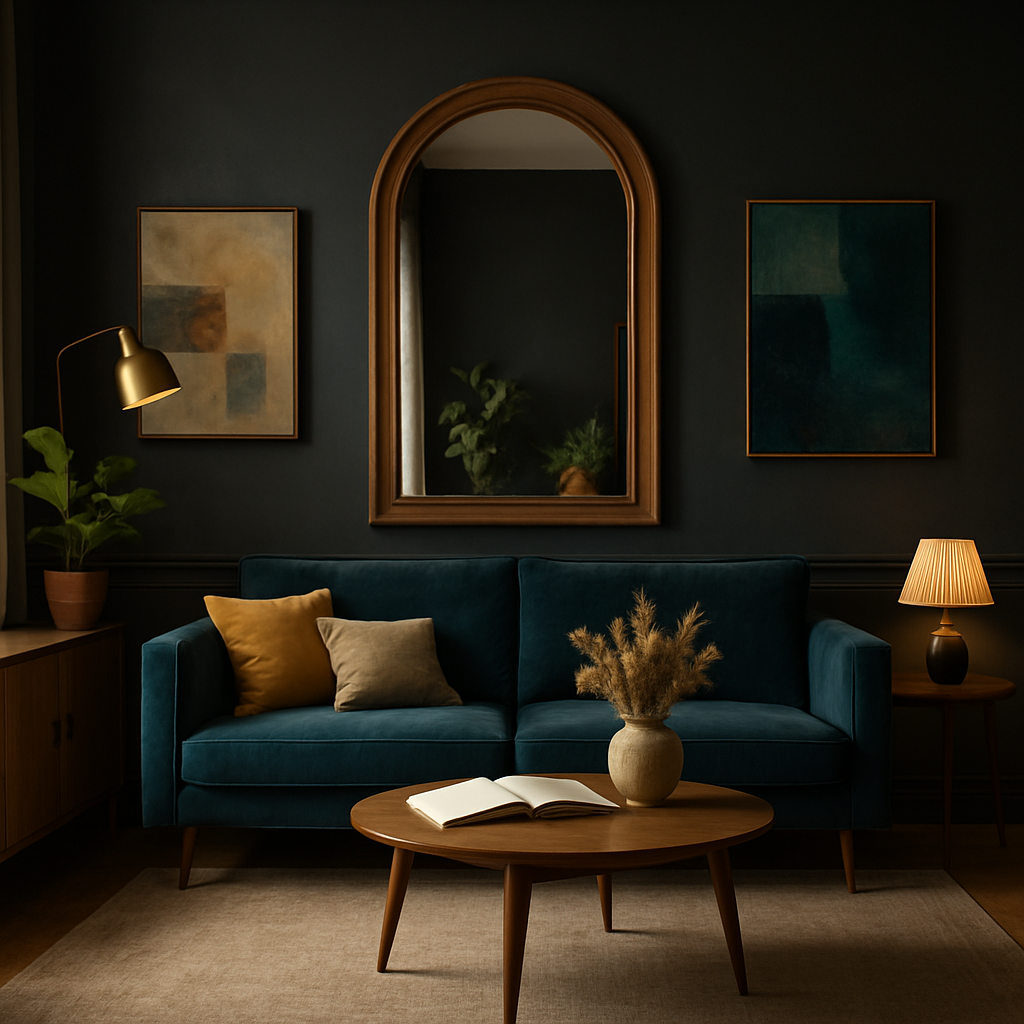
Interior design is often perceived as a profession reserved for those with formal training and an instinctive eye for aesthetics. The reality is more democratic than that perception suggests. While professional designers bring specialized knowledge and trade access that justify their fees, every homeowner benefits from understanding the foundational principles that govern how spaces look, function, and feel. The American Society of Interior Designers (ASID) has long advocated for design literacy among homeowners, recognizing that informed clients make better decisions, communicate more effectively with professionals, and achieve results that truly reflect their needs. This article unpacks the essential design concepts that shape every successful interior, from the physics of color and light to the psychology of spatial proportion and the practical realities of material selection. Whether you plan to hire a professional or tackle design decisions on your own, these fundamentals will sharpen your judgment and help you create rooms that work as well as they look. Understanding these principles transforms you from a passive consumer of design into an active participant with the vocabulary and confidence to shape your own living environment.
Color Theory Applied to Residential Spaces
Color is the most immediately impactful element of any interior, yet it is also the element homeowners struggle with most. The anxiety around choosing paint colors and coordinating palettes stems from a misunderstanding of how color actually works in three-dimensional space. A color swatch held in your hand at a paint store behaves differently when it covers an entire wall, interacts with the light sources in your room, and sits adjacent to your flooring, furniture, and textiles. Professional designers trained through NCIDQ-accredited programs spend significant time studying color theory precisely because its application is more complex than simple personal preference.
The 60-30-10 rule provides a reliable starting framework for residential color planning. Sixty percent of the room's visual weight comes from a dominant color, typically applied to walls and large upholstered pieces. Thirty percent comes from a secondary color that provides contrast and visual interest, often appearing in curtains, accent chairs, and rugs. The remaining ten percent is reserved for accent colors that add energy through accessories, artwork, and decorative objects. This ratio creates a sense of visual hierarchy that the eye finds naturally comfortable. Online design platforms like Houzz feature extensive color planning tools that let you experiment with these ratios virtually before committing to purchases.
Undertones are the hidden variable that makes or breaks most color schemes. Every paint color contains undertones of other hues, and when those undertones clash with the fixed elements in your room such as flooring, countertops, or cabinetry, the entire palette feels discordant even if you cannot immediately identify why. A gray paint with blue undertones will fight against a hardwood floor with warm amber tones, creating a visual tension that no amount of accessorizing can resolve. Designers at firms listed in AD PRO directories are trained to identify and manage undertones across every material in a scheme, ensuring harmony between elements that homeowners often select independently. Have you ever painted a room only to feel that something was off without being able to pinpoint the problem? The answer almost always lies in conflicting undertones between the paint and the room's existing finishes. Color creates the emotional foundation of a room, but the way furniture is arranged within that color envelope determines how the space actually functions.
Spatial Planning and Furniture Arrangement Fundamentals
The arrangement of furniture within a room has a more profound effect on daily comfort than most homeowners realize. Professional designers approach furniture placement as a spatial engineering exercise, balancing traffic flow, conversation distances, visual weight distribution, and functional access before considering aesthetic composition. The International Interior Design Association (IIDA) emphasizes that spatial planning is the discipline's most fundamental skill, one that requires both analytical thinking and an intuitive sense of human behavior within enclosed environments.
Traffic flow is the first consideration in any furniture layout. Primary pathways through a room should be at least 36 inches wide to allow comfortable passage without requiring people to navigate around obstacles. Secondary pathways can be narrower, but they should never require someone to squeeze between furniture pieces to reach a seat, a window, or a doorway. Conversation groupings should place seating no more than eight feet apart, which is the maximum distance at which comfortable spoken exchange occurs. These measurements are not arbitrary design rules. They are derived from ergonomic research and building code standards that NCIDQ-certified designers learn as part of their professional training.
Visual weight distribution is the aesthetic dimension of spatial planning. Every piece of furniture carries visual weight determined by its size, color, material, and position within the room. A large dark sofa against a light wall has significant visual weight, and the room feels unbalanced if the opposite side of the space contains only small, light-colored pieces. Designers create equilibrium by distributing visual weight across the room, not necessarily through symmetry, but through a balanced arrangement where no single area feels disproportionately heavy or empty. Online design tools that generate floor plans with dimensioned furniture blocks make this process more accessible to homeowners, but the underlying principle requires practice and observation to master fully. Spatial planning determines how you move through and use your rooms, but lighting determines how you perceive everything within them, which is the subject of the next section.
The Architecture of Light in Interior Spaces
Lighting is the element that most dramatically separates amateur from professional interiors, and it is consistently the area where homeowners underinvest both financially and intellectually. A room with thoughtful lighting feels warm, spacious, and inviting at every hour of the day. The same room with a single overhead fixture feels flat and institutional after sunset, regardless of how beautiful the furnishings are. ASID's residential design guidelines recommend a minimum of three distinct light sources in every room, layered to serve different functions and moods throughout the day.
The three layers of residential lighting are ambient, task, and accent. Ambient lighting provides overall illumination and typically comes from ceiling fixtures, recessed cans, or cove lighting concealed in architectural details. Task lighting targets specific activities like reading, cooking, or working, delivered through desk lamps, under-cabinet fixtures, and pendant lights positioned directly over work surfaces. Accent lighting creates drama and focal points by highlighting architectural features, artwork, or display shelves. When all three layers are present and independently controlled through dimmers, you can adjust the room's character from bright and energetic for morning activity to warm and subdued for evening relaxation.
Natural light management is equally important and often overlooked in lighting discussions. The orientation of your windows determines the quality and color temperature of daylight at different times, with north-facing windows providing consistent cool light and south-facing windows delivering warmer, more variable illumination. Window treatment selection, whether curtains, blinds, or architectural shades, should balance light control with privacy needs and aesthetic preferences. Smart home integration has revolutionized lighting design by enabling automated scenes that adjust multiple light sources simultaneously based on time of day, occupancy, or activity. Designers working through online platforms increasingly specify smart lighting systems as part of their standard proposals, with circadian lighting that follows biophilic design principles gaining particular traction among health-conscious homeowners. Understanding how light shapes perception leads naturally to the question of what materials and finishes those light sources reveal, which is the focus of the next section.
Material Selection and the Language of Texture
Materials and textures communicate as powerfully as color in interior spaces, though their messages are more subtle and often subconscious. The surface quality of every element your eye and hand encounters, from the grain of a hardwood floor to the weave of a throw pillow, contributes to the room's overall sensory character. Professional designers curate material palettes with the same care that a chef balances flavors, seeking variety within coherence and contrast within harmony. This is one of the areas where professional guidance delivers the most value, because material selection involves not only aesthetics but also durability, maintenance requirements, environmental impact, and budget management.
Sustainable materials have become a central consideration in current design practice, driven by both homeowner demand and professional responsibility. FSC-certified woods, recycled metals, low-VOC finishes, and organic textiles are no longer specialty items that require extensive sourcing. They are available through mainstream vendors and increasingly competitive in price with conventional alternatives. The shift toward sustainable materials aligns naturally with the biophilic design movement, as many sustainable options, such as reclaimed wood, natural stone, and plant-based fibers, carry the organic textures and warm imperfections that biophilic interiors require. Online design platforms have made sustainable sourcing more transparent by including certification information and environmental impact data in product listings.
Texture contrast is the tool designers use to prevent a room from feeling monotonous even when the color palette is deliberately restrained. A quiet luxury scheme in warm neutrals, for example, maintains visual interest through the juxtaposition of smooth plaster walls, rough linen upholstery, polished marble surfaces, matte ceramic accessories, and the soft pile of a hand-knotted wool rug. Each texture reflects and absorbs light differently, creating subtle variation that the eye reads as richness and depth. When selecting materials for your own projects, aim to include at least three distinct texture categories: something smooth and reflective, something matte and absorptive, and something with dimensional grain or weave. This simple discipline prevents the visual flatness that plagues rooms where every surface has a similar sheen and finish. Materials engage the senses directly, but the proportional relationships between architectural elements and furnishings create the spatial framework that holds everything together.
Proportion, Scale, and the Mathematics of Beautiful Rooms
Proportion and scale are the invisible architecture of interior design, governing the relationships between objects, between objects and the room that contains them, and between the room and the humans who inhabit it. Designers often reference classical proportional systems like the golden ratio, which describes a mathematical relationship of approximately 1:1.618 that appears throughout nature and has been used in architecture and art for millennia. While you do not need to calculate ratios for your living room, understanding proportional sensitivity, the ability to recognize when something feels too large, too small, or awkwardly placed, is an essential design skill that improves with practice and observation.
Scale errors are among the most common mistakes in residential interiors, and they typically result from purchasing furniture without considering the room's proportions. A sectional sofa that looked perfectly sized in a furniture showroom with twelve-foot ceilings will overwhelm a room with eight-foot ceilings, not because the sofa is objectively too large but because its proportional relationship to the room creates visual compression. Designers working through online platforms address this challenge by creating dimensioned floor plans that show furniture in accurate scale relative to the room, allowing clients to evaluate proportion before purchasing. Platforms like Houzz offer 3D visualization tools that make scale relationships even more intuitive by rendering proposed furniture within photographs of your actual space.
The proportional relationship between furniture height and ceiling height is particularly important in residential design. As a general guideline, the tallest furniture piece in a room should reach no more than two-thirds of the ceiling height, preserving a visual buffer that allows the eye to travel upward and perceive the full volume of the space. Artwork placement follows a similar logic, with the center of a framed piece or gallery arrangement ideally positioned at 57 to 60 inches from the floor, which corresponds to average eye level. These guidelines are not rigid rules, and experienced designers deviate from them intentionally to create specific effects. But for homeowners developing their proportional sense, they provide a reliable starting point. Does a particular corner of your home feel uncomfortable despite having nice furnishings? The issue is almost certainly proportional, and adjusting the scale relationships between objects can resolve it without replacing anything. Proportion governs visual comfort, but the final essential element, the personal stamp that makes a space uniquely yours, requires a different kind of design thinking entirely.
Personalizing Your Space Without Losing Design Coherence
The most technically accomplished interior means nothing if it does not feel like home to the people who live in it. Personalization is the element that transforms a well-designed room into a meaningful space, and it is the area where professional guidance and personal instinct must work together most carefully. ASID research consistently shows that homeowner satisfaction correlates more strongly with how well a space reflects personal identity than with the objective quality of the design. Yet personalization without design discipline produces clutter and visual noise, which is why finding the balance between self-expression and coherence is one of design's genuine challenges.
Effective personalization operates within the structure that good design provides rather than against it. Travel souvenirs, family photographs, inherited furniture, and collected objects all carry personal meaning, but they need a framework to coexist without competing. Professional designers create this framework by establishing a material and color palette that accommodates personal items as deliberate elements rather than afterthoughts. A collected ceramic vase becomes a focal point when placed on a shelf with intentional negative space around it. The same vase disappears into clutter when crowded among a dozen other objects on an overstuffed bookcase. Online designers often request a list of personal items their clients want to incorporate, then design the surrounding environment to feature those pieces effectively.
The Japandi approach to personalization offers a particularly useful model for homeowners who struggle with curation. Its principle of displaying only objects that are either functional or deeply meaningful, and storing everything else out of sight, provides a clear editing criterion that prevents accumulation from overwhelming a space. This does not mean your home should feel like a gallery or a catalog photograph. It means that every visible object earns its place through either practical utility or genuine personal significance. Online designers who work within fee structures of ,000 to ,000 per room typically include a curation and styling session as part of their deliverable, helping you arrange personal items and accessories within the completed design framework. Are you holding onto objects out of habit rather than genuine attachment? Honest assessment of what you actually value is one of the most liberating steps in any design process.
Interior design proficiency is not a talent reserved for professionals with advanced degrees and trade accounts. It is a learnable discipline built on principles that anyone can understand and apply. Color theory, spatial planning, lighting design, material selection, proportional awareness, and thoughtful personalization form the foundation of every successful interior, whether executed by a homeowner with a keen eye or a NCIDQ-certified designer billing per hour. The difference professional guidance provides is efficiency, trade access, and the pattern recognition that comes from solving hundreds of design problems across diverse spaces and budgets. If your project's scope warrants professional involvement, the investment typically ranges from per hour for consultation to 10 to 25 percent of total project costs for full-service design management. But regardless of whether you hire a professional, understanding these essentials equips you to make better decisions, ask better questions, and create a home that serves your life as effectively as it pleases your eye. Take one room in your home today, evaluate it against the principles outlined here, and identify the single change that would make the most significant improvement to how that space looks and functions.
More Articles You May Like


Comments
Post a Comment