Two-Tier Drawer Inserts That Double Your Flatware Storage
How a Second Layer Transforms a Single Drawer
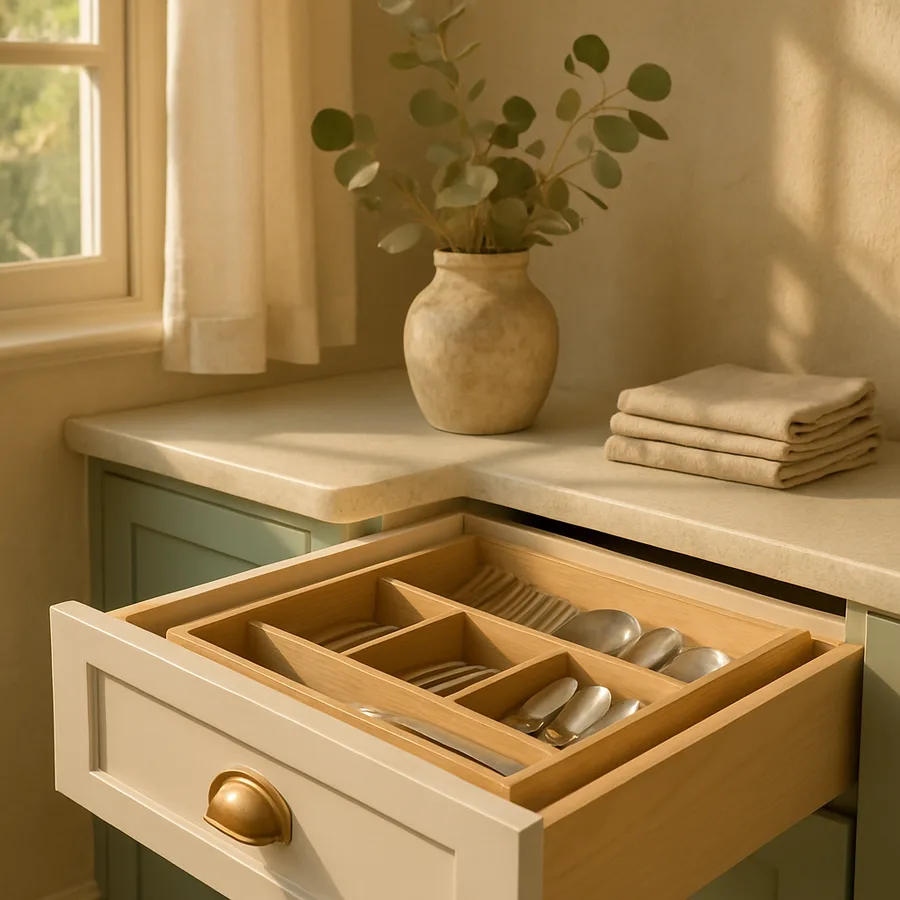
The average kitchen flatware drawer holds one set of utensils in a single-layer organizer, but most households own far more cutlery than one tray can accommodate. Guest sets, specialty utensils, children's flatware, and everyday pieces compete for the same limited space, resulting in overstuffed compartments where items tangle and jam. Two-tier drawer inserts solve this problem by adding a sliding upper tray that sits above the main organizer, effectively doubling the usable storage volume of a single drawer without requiring any additional kitchen real estate. The upper tray slides forward or lifts out to reveal the contents below, giving you full access to both levels in seconds.
The concept is elegantly simple. A standard kitchen drawer has between three and five inches of vertical clearance between the top of a typical flatware tray and the underside of the countertop. That unused airspace represents wasted storage potential that a second tier reclaims completely. The National Kitchen and Bath Association (NKBA) identifies vertical space utilization as one of the most overlooked opportunities in kitchen design, estimating that the average kitchen wastes approximately 30 percent of its available drawer volume by using single-layer organizers in drawers deep enough for two tiers. Recapturing that space with a two-tier insert is one of the most cost-effective storage upgrades available.
Two-tier systems come in two primary configurations: sliding and stacking. Sliding inserts feature an upper tray mounted on rails that allows it to glide forward over the lower tray, providing simultaneous visibility of both levels. Stacking systems use a removable upper tray that lifts out entirely, which is simpler but requires you to set the upper tray on the counter while accessing the lower level. Both designs work well, but the sliding configuration is generally preferred because it keeps both layers accessible without removing any components. The smooth glide action of a well-made sliding insert adds a small but genuine touch of satisfaction to the routine act of retrieving a fork.
For households that entertain regularly, two-tier inserts provide a practical separation between everyday and formal flatware. The upper tray holds your daily utensils, the ones you reach for at every meal, while the lower tray stores the silver-plated set reserved for dinner parties and holiday gatherings. This arrangement protects the finer pieces from the wear and tarnish that comes with daily handling while keeping them within easy reach when occasions arise. It also eliminates the common problem of having formal flatware buried in a separate cabinet or sideboard where it gets forgotten and tarnishes from disuse.
Measuring Your Drawer for Two-Tier Compatibility
Before purchasing a two-tier insert, you need to verify that your drawer has sufficient depth to accommodate two layers of flatware plus the insert structure itself. The critical measurement is the interior height from the drawer bottom to the lowest point beneath the countertop when the drawer is closed. For a two-tier system to function properly, you need a minimum of four inches of interior height, though five inches or more provides a more comfortable fit with room for taller items like serving spoons in the lower tier. Standard kitchen drawers in homes built after the mid-1990s typically provide five to six inches of clearance, which is more than adequate.
Width and depth measurements are equally important. Two-tier inserts are available in standard sizes that correspond to common drawer dimensions, but the fit needs to be snug enough to prevent sliding while leaving just enough clearance for the tray to glide smoothly. Measure the interior width from left sidewall to right sidewall, and the interior depth from the front panel to the back panel, at the bottom of the drawer rather than at the top. Drawer interiors often taper slightly, and measuring at the bottom ensures the insert will sit flat without rocking. A tolerance of one-quarter to one-half inch on each side is ideal.
Check the weight capacity of your drawer slides before committing to a two-tier system loaded with a full flatware collection. A complete twelve-place-setting set of stainless steel flatware weighs approximately eight to twelve pounds, and doubling that for two tiers means your slides need to handle at least twenty pounds comfortably. Most modern soft-close drawer slides are rated for 75 pounds or more, so this is rarely an issue in newer kitchens. However, older homes with side-mounted roller slides may have weight limits as low as 25 pounds, which could be marginal with a fully loaded two-tier insert. Upgrading to modern undermount slides is a straightforward project that any handy homeowner or cabinet installer can complete in under an hour per drawer.
Consider the handle or knob clearance as well. When the drawer is closed, the upper tier of the insert must clear the back of the drawer front panel, including any hardware that protrudes inward. Some drawer pulls are mounted with bolts that extend an inch or more into the drawer interior, which can interfere with the front edge of the upper tray. If this is the case, you may need to reposition the pull hardware or select a two-tier insert with a slightly shorter upper tray that clears the obstruction. This is a minor detail, but overlooking it leads to the frustrating experience of a drawer that almost closes but catches at the last half inch.
Material Options and What They Mean for Daily Use
The material of your two-tier insert affects its durability, appearance, weight, and maintenance requirements. Bamboo is the most popular choice for residential flatware organizers, offering a warm natural look, antimicrobial properties, and excellent durability at a moderate price point. Bamboo two-tier inserts typically cost between twenty-five and fifty dollars and will last for years with minimal care. The natural grain adds visual warmth to the drawer interior, and bamboo's inherent moisture resistance prevents warping in the humid environment created by utensils that are occasionally put away before they are completely dry.
Acacia wood and walnut represent the premium tier of natural material options. Acacia is exceptionally hard and dense, with a rich, varied grain pattern that gives each insert a unique appearance. Walnut offers a darker, more refined look that complements modern and transitional kitchen designs. Both materials cost more than bamboo, typically in the forty to eighty dollar range for a two-tier configuration, but they also provide a noticeably more upscale feel and sound. The subtle thud of a walnut compartment when you set a fork down is qualitatively different from the lighter sound of bamboo, and that sensory difference contributes to the perceived quality of the kitchen as a whole.
Molded plastic and silicone inserts occupy the budget end of the market, usually priced below twenty dollars. While they are functional, they lack the visual refinement and longevity of natural materials. Plastic inserts can become discolored over time, especially when exposed to oils or strongly pigmented foods, and the compartment walls tend to be thinner and more flexible than wood alternatives. Silicone inserts offer the advantage of being dishwasher-safe, but their flexible walls allow utensils to lean and overlap between compartments. For a two-tier system where structural rigidity is essential to maintain the sliding mechanism, natural materials consistently outperform synthetic options. Research from the American Society of Interior Designers (ASID) indicates that homeowners rate natural material organizers significantly higher in long-term satisfaction compared to plastic alternatives.
Stainless steel two-tier inserts are less common in residential settings but deserve mention for their exceptional durability and hygienic properties. Steel does not absorb odors, stains, or bacteria, and it can be sanitized with a simple wipe-down. The industrial aesthetic works well in contemporary kitchens with stainless appliances and hardware, creating a cohesive metallic theme throughout the workspace. The primary drawbacks are higher cost, increased weight, and the noise factor, as metal utensils against a metal tray create more clatter than the softer sound profile of wood or bamboo. Felt-lined stainless steel inserts address the noise issue but add to the price and maintenance requirements.
Organizing the Upper and Lower Tiers Strategically
The way you distribute items between the two tiers determines how well the system works in daily practice. The upper tray should contain the items you use most frequently, since it is the first layer you see and reach when opening the drawer. For most households, this means everyday forks, knives, and spoons in the upper tier, with serving utensils, specialty flatware, and backup sets in the lower tier. This arrangement minimizes the number of times you need to slide or lift the upper tray, since the majority of meal-related utensil retrieval involves the everyday pieces.
Within each tier, organize compartments from left to right in the order you set a table. Starting from the left: forks, then knives, then spoons, with a wider section on the right end for larger items. This sequencing mirrors the standard table setting layout and creates a muscle memory pattern that speeds up both table setting and emptying the dishwasher. After a week of using this arrangement, you will find yourself reaching for the correct compartment without looking, which saves cumulative minutes every day that add up to hours over the course of a year.
The lower tier is the ideal location for items that you need regularly but not at every meal. Steak knives, butter knives, dessert forks, grapefruit spoons, and cocktail forks all fit this category. These items are used often enough that they should be easy to access, but not so frequently that they justify top-tier placement. The lower tier is also excellent for storing flatware accessories like napkin rings, chopstick rests, and small serving utensil sets that would clutter the upper tray if mixed in with the everyday pieces. By maintaining clear category boundaries between tiers, you prevent the gradual mixing that turns an organized drawer back into chaos over time.
Resist the temptation to fill every compartment to maximum capacity. Overstuffed compartments make it difficult to grab a single utensil without disturbing the others, and they put unnecessary stress on the sliding mechanism of the upper tray. A good rule of thumb is to fill each compartment no more than three-quarters full, leaving enough space for easy retrieval and for air circulation that prevents moisture buildup. If you find that both tiers are consistently overfull, it may be time to audit your flatware collection and donate or discard duplicate pieces that you genuinely never use. A Houzz organization feature found that the average American kitchen contains 35 percent more utensils than the household actually uses on a regular basis.
Common Mistakes That Undermine Two-Tier Drawer Systems
The most frequent mistake is selecting a two-tier insert based on external dimensions without verifying the internal compartment sizes. An insert may fit perfectly inside the drawer while having compartments that are too narrow for your flatware. European-style flatware, which tends to have thicker handles and wider bowls than American-style pieces, requires wider compartments than what many standard inserts provide. Before purchasing, compare the compartment width against the widest piece in your collection. If the compartment cannot hold a serving spoon flat without the handle catching on the compartment wall, it is too narrow for practical use.
Another common error is ignoring the sliding mechanism quality. Inexpensive two-tier inserts often use simple wooden rails with no lubrication or bearing surfaces, which means the upper tray requires noticeable force to slide and develops a grinding feel over time as the wood surfaces wear against each other. Higher-quality inserts use grooved rails with wax or polymer coatings that maintain a smooth, effortless glide over years of use. Some premium models incorporate ball-bearing slides similar to those used in the drawer itself, providing a buttery smooth action that makes accessing the lower tier genuinely pleasant rather than a chore. The difference between a cheap and quality sliding mechanism becomes apparent within the first month of daily use.
Placing heavy items in the upper tray is a structural mistake that can cause the tray to sag or the slide rails to wear prematurely. Keep the heavier items, such as serving utensils and specialty tools, in the lower tier where they rest on the solid drawer bottom rather than on the elevated upper tray. The upper tray is designed to hold lightweight everyday flatware, not a collection of heavy stainless steel tongs and ladles. Distributing weight properly between the two tiers extends the life of the insert and maintains the smooth sliding action of the upper tray.
Failing to clean between the tiers is a maintenance mistake that many people make without realizing it. Crumbs, dust, and small debris naturally accumulate on the lower tier surface beneath the upper tray, where they are hidden from view but still present. Every month or two, remove the upper tray entirely and wipe down both the exposed surface of the lower tier and the underside of the upper tray. This takes less than two minutes and prevents the buildup of grime that can attract pests, create odors, and eventually interfere with the sliding mechanism. Set a recurring reminder on your phone until this cleaning step becomes an automatic habit.
Alternatives When a Standard Two-Tier Insert Does Not Fit
Some kitchens have drawers that are too shallow for a conventional two-tier insert but still have wasted vertical space above a single-layer organizer. In these situations, a partial two-tier solution may work, where a smaller secondary tray covers only half or two-thirds of the drawer area, leaving a section of the lower tier permanently accessible. This hybrid approach provides some of the storage benefits of a full two-tier system while accommodating drawers with limited height clearance. Several manufacturers offer half-width upper trays specifically designed for this scenario, and they typically cost less than full-width versions.
Custom-built two-tier inserts are another option for non-standard drawer sizes. A local woodworker can build an insert tailored to your exact drawer dimensions and flatware collection, incorporating features like angled compartments, integrated knife slots, or specific compartment widths that off-the-shelf products do not offer. Custom inserts cost more than mass-produced alternatives, typically in the range of sixty to one hundred fifty dollars, but the fit and functionality are unmatched. The Architectural Digest kitchen design section has featured several examples of bespoke drawer inserts that demonstrate how custom solutions can elevate kitchen organization from functional to exceptional.
For renters who cannot modify their kitchen drawers or install permanent hardware, freestanding two-tier organizers that simply sit inside the drawer offer a no-commitment alternative. These typically use rubber feet on the bottom of the lower tier to prevent sliding and a friction-fit or magnetic connection between the upper and lower layers. The lack of rail-mounted slides means the upper tray must be lifted rather than slid, which is slightly less convenient but still far more organized than a single overflowing tray. When you move to your next apartment, the organizer comes with you, and the drawer is left in its original condition with no holes or marks to explain to the landlord.
Finally, consider whether your flatware storage problem might be better solved by using two separate drawers rather than a two-tier system in one drawer. If your kitchen has an underutilized drawer near the dining area, assigning it as a secondary flatware drawer for formal or guest settings eliminates the need for a two-tier solution entirely. This approach gives each set of flatware a single-layer organizer with generous compartment space, making both sets easier to access than they would be in a stacked configuration. The best organizational solution is not always the most clever one; sometimes it is simply a matter of reassigning existing space to better match your actual storage needs.
Conclusion
Two-tier drawer inserts address one of the most common kitchen organization complaints: not enough room for all of your flatware in a single drawer. By reclaiming the unused vertical space above a standard organizer tray, a two-tier system doubles your storage capacity without requiring additional drawers, cabinet modifications, or counter space. The sliding upper tray keeps everyday utensils immediately accessible while the lower tier provides organized storage for secondary sets, serving pieces, and specialty flatware that would otherwise end up in a cluttered overflow drawer.
Success with a two-tier system depends on three factors: accurate measurement to ensure compatibility with your drawer dimensions, thoughtful tier assignment that puts frequently used items on top, and sufficient quality in the materials and sliding mechanism to withstand years of daily use. Bamboo and hardwood inserts consistently outperform plastic alternatives in durability, aesthetics, and user satisfaction. Investing in a quality insert with a smooth sliding mechanism transforms the mundane act of setting the table into something approaching effortless.
How many minutes do you spend each week searching through an overcrowded flatware drawer? That cumulative time, along with the daily micro-frustration of tangled utensils, adds up in ways that most people do not consciously track. Measure your primary flatware drawer today, check the interior height, and discover whether a two-tier insert is the straightforward upgrade that finally brings order to your most-used kitchen drawer.
More Articles You May Like



Comments
Post a Comment