Top 10 Must-Have Elements for an Eclectic Interior Design Style
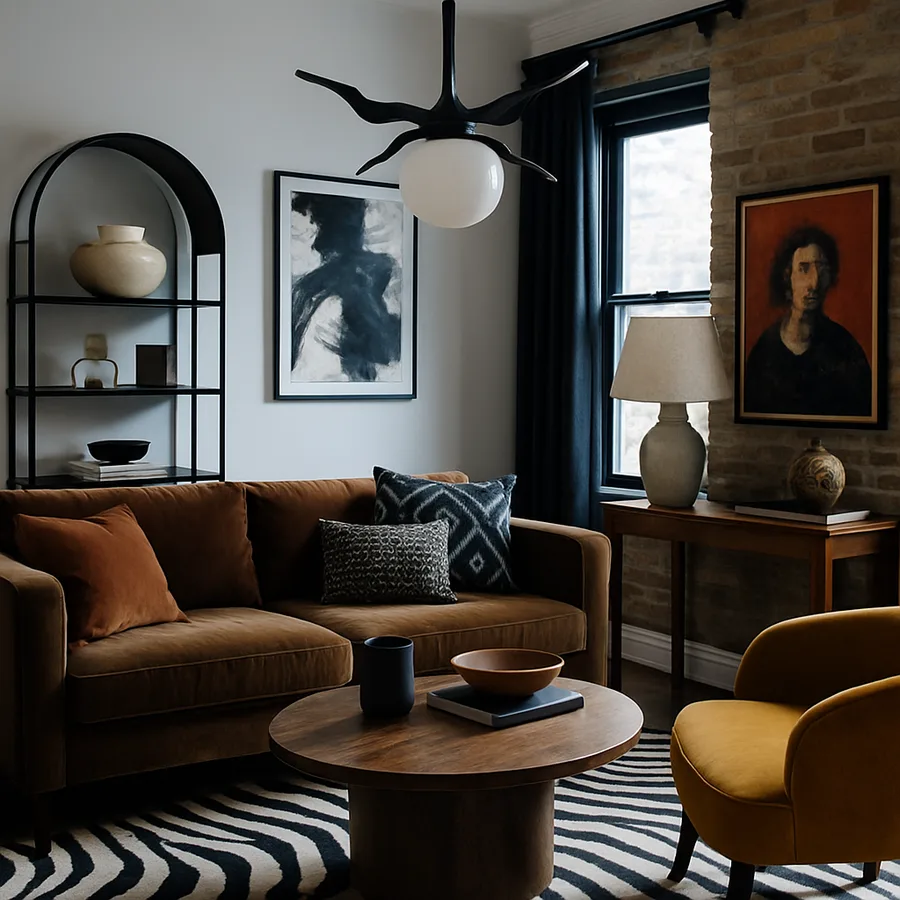
Element One: A Statement Lighting Fixture That Commands Attention
Every eclectic room needs at least one element that immediately draws the eye and announces the personality of the space. Statement lighting serves this purpose brilliantly because it occupies a position of natural prominence, typically at or near the center of the room, and because the sheer variety of available lighting designs spans virtually every aesthetic tradition imaginable. A Murano glass chandelier, a brutalist metal pendant, a hand-woven rattan shade, or a sleek minimalist track system, each establishes a different mood while signaling that this room defies easy categorization.
The American Society of Interior Designers (ASID) identifies lighting as the single most underutilized design element in residential interiors. According to an ASID member survey, approximately 78 percent of homeowners use builder-grade or basic lighting fixtures throughout their homes, missing an opportunity to inject personality and visual interest at relatively modest cost. In eclectic design, where every element carries communicative weight, accepting generic lighting is especially counterproductive. The fixture overhead is often the first thing visitors notice, and it sets the expectation for everything else in the room.
When selecting a statement light for an eclectic interior, prioritize pieces that create productive tension with the other dominant elements in the room. If your furniture leans contemporary, a vintage or antique light fixture provides the era contrast that eclectic design thrives on. If your color palette is restrained, a fixture in a bold finish like brushed brass, matte black, or hand-painted ceramic introduces visual punctuation without disrupting the overall harmony. The goal is not merely decoration but dialogue, a conversation between the light fixture and the room it illuminates.
Element Two: Collected Art That Tells a Personal Story
Nothing distinguishes an eclectic interior from a merely decorated one more decisively than the art on the walls. Eclectic spaces demand art collections that feel accumulated over time rather than purchased as a coordinated set. The gallery wall, that carefully arranged constellation of framed pieces in varying sizes, styles, and media, has become virtually synonymous with eclectic design, and for good reason. It externalizes the eclectic principle of harmonious diversity in its most visible and personal form.
The pieces themselves matter less than the sense of genuine connection they convey. An original oil painting acquired on a memorable trip, a vintage poster discovered at a flea market, a photograph taken by a friend, a print by a favorite emerging artist, these heterogeneous elements create a visual autobiography that no curated collection of matching prints can replicate. The International Interior Design Association (IIDA) notes that personalized art displays consistently rank among the top three features that make interiors feel distinctive and memorable to visitors.
Arrangement is equally critical. The most successful eclectic gallery walls balance formal and informal qualities. Maintain consistent spacing between frames for visual order, but vary frame styles, sizes, and orientations for eclectic energy. Anchor the arrangement with one larger piece and surround it with smaller works that vary in scale. This approach creates a focal point within the collection while allowing the eye to wander and discover individual pieces at leisure.
What does your current wall art say about you? If the answer is not much, or if every piece was chosen to match the sofa rather than to reflect a genuine aesthetic response, consider this an invitation to begin collecting with intention. Eclectic art displays are built piece by piece over months and years, making them one of the most accessible and rewarding elements of eclectic design to pursue.
Element Three: Mixed Textiles That Layer Comfort and Visual Depth
Textiles are the connective tissue of eclectic interiors, the element that ties disparate furniture and accessories into a cohesive sensory experience. In eclectic design, the textile strategy goes far beyond simply selecting throw pillows that match the curtains. It involves layering multiple fabrics of varying weight, texture, pattern, and origin to create a rich, tactile environment that invites both looking and touching.
The layering begins with the largest textile surfaces, typically rugs, curtains, and upholstery, and progresses through throws, cushions, and table linens to small accents like napkins and bookshelf runners. Each layer adds depth and complexity to the room while providing an opportunity to introduce new patterns, colors, or cultural references. A Turkish kilim on the floor might coexist with Indian block-print cushions on a Victorian settee draped with a contemporary wool throw. The combination sounds potentially chaotic, but when unified by a shared color palette, it produces an environment of extraordinary warmth and character.
Houzz reports that searches for mixed textile styling have increased by 55 percent over the past three years, reflecting growing consumer confidence in pattern mixing and a desire for interiors that feel lived-in rather than staged. This trend aligns perfectly with the eclectic ethos of embracing variety as a virtue. Professional designers recommend maintaining a maximum of four to five distinct fabric patterns in a single room, with solid-colored textiles providing visual breathing room between them.
Element Four: Furniture from Multiple Eras Arranged with Purpose
The furniture in an eclectic room is its structural vocabulary, the most visually dominant expression of the design philosophy. Mixing furniture from different eras is not merely permitted in eclectic design but required. A room furnished entirely with pieces from a single period, no matter how beautiful those pieces may be, is by definition not eclectic. The magic happens when a mid-century modern armchair sits beside an ornate Victorian side table, when a rustic farmhouse bench serves as seating at a sleek contemporary dining table.
Successful era mixing requires attention to proportion and scale more than to style. A delicate Queen Anne chair will appear overwhelmed next to a massive industrial coffee table, not because of stylistic incompatibility but because of physical imbalance. The NCIDQ examination includes spatial planning modules that address this principle, recognizing that visual weight and physical proportion are foundational to successful interior composition regardless of style. When selecting furniture for an eclectic room, step back from questions of period and style to evaluate whether each piece is proportionally appropriate for the space and for its neighbors.
Consider also the practical dimension of furniture mixing. Different eras produced furniture optimized for different living patterns. Contemporary seating tends toward deep, low profiles suited to casual lounging. Mid-century pieces often feature more upright postures and firmer cushioning. Antique chairs may prioritize visual elegance over extended comfort. An eclectic room that accommodates multiple seating types actually serves its occupants better than a uniform suite, because different activities and moods call for different physical support. The variety that looks interesting also functions thoughtfully.
Element Five Through Seven: Natural Elements, Bold Color Accents, and Vintage Accessories
The middle register of eclectic design, the elements that fill the space between major furniture pieces and small decorative accents, is where a room gains much of its character. Three categories of elements are particularly essential at this scale: natural materials that ground the space, bold color accents that energize it, and vintage accessories that give it historical depth.
Natural elements include houseplants, wood objects, stone accessories, woven baskets, and botanical prints. These bring organic texture and living energy into interiors that might otherwise feel like static compositions. The biophilic design movement, which the ASID has championed extensively, demonstrates that the presence of natural elements in interior spaces measurably improves occupant wellbeing, reducing stress and increasing reported satisfaction with the environment. In eclectic interiors, natural elements also serve as neutral bridges between disparate design styles, since a potted fern or a driftwood sculpture belongs to no particular design era or cultural tradition.
Bold color accents provide the punctuation marks in an eclectic room. These might take the form of a brightly upholstered accent chair, a vividly colored vase, a collection of colored glass bottles on a windowsill, or a painted interior door that pops against neutral walls. The key is restraint in frequency if not in intensity. A few strategically placed bold colors create excitement and focal points. Too many competing bright colors create visual chaos. Aim for two to three bold accent colors distributed asymmetrically through the space, with the largest concentrations of color balanced by neutral breathing room.
Vintage accessories, the flea market finds, inherited curiosities, and antique shop treasures that no contemporary retailer can replicate, are the elements that give eclectic rooms their sense of authenticity and history. A vintage globe, an antique clock, a collection of old books, a set of apothecary bottles, these objects carry the patina of time and use that new objects simply cannot fake. They also introduce conversation opportunities, as visitors are naturally drawn to objects with visible history and want to learn their stories.
Element Eight Through Ten: Unexpected Materials, Personal Collections, and Intentional Imperfection
The final three essential elements of eclectic interior design push beyond the conventional and into territory that distinguishes truly memorable spaces from competent but forgettable ones. These elements, unexpected material choices, displayed personal collections, and deliberate embrace of imperfection, are what elevate eclectic design from a decorating style into a design philosophy.
Unexpected materials mean using objects and surfaces in ways that defy their conventional applications. A section of reclaimed barn door becomes a headboard. Industrial pipe fittings serve as curtain rods or shelving supports. A collection of vintage suitcases stacks into a side table. An old window frame becomes a picture display. These material subversions are profoundly eclectic because they refuse to accept that objects have only one valid use. They demonstrate the creative vision that sees potential where convention sees only function, and they produce one-of-a-kind design moments that catalog shopping can never deliver.
Personal collections, whether of pottery, vinyl records, cameras, globes, minerals, or anything else that inspires genuine passion, deserve prominent display in eclectic interiors. Collections represent sustained engagement with a specific aesthetic domain, and that depth of knowledge and appreciation enriches the entire room. According to a study referenced by interior design professionals, rooms that include visible personal collections are rated as significantly more interesting and more reflective of their owner personality than rooms without them. The display method matters: grouped collections have more visual impact than scattered individual pieces, and dedicated display furniture such as open shelving or glass-front cabinets elevates collections from clutter to curation.
Do you have a collection that currently sits boxed in a closet or scattered across multiple rooms? Gathering it together and creating a dedicated display can transform both the collection itself and the room that houses it. This single change often catalyzes a broader eclectic transformation, as the confidence gained from proudly displaying what you love extends to bolder choices throughout the home.
Intentional imperfection, the final essential element, is perhaps the most philosophically significant. Eclectic interiors are not showrooms. They are living spaces that bear the marks of the lives lived within them. A slightly worn leather armchair, a hand-thrown ceramic bowl with an irregular rim, a gallery wall that is deliberately not perfectly level, these qualities signal authenticity and human presence. The IIDA has long advocated for design approaches that prioritize lived experience over photographic perfection, and eclectic design embodies this philosophy more fully than any other style. Embrace the imperfections in your home and in your objects, for they are not flaws but evidence of genuine life and genuine taste.
Ready to begin building your eclectic space? Start by selecting just one element from this list that resonates most strongly with your personal aesthetic and your current room. Implement it fully and well, then move to the next. Eclectic design rewards patience and accumulation over hasty transformation. Consult with an NCIDQ-certified designer for guidance on scaling and placement, and let your space evolve into the layered, personal, endlessly interesting environment that eclectic design at its best can deliver.
More Articles You May Like



Comments
Post a Comment