Top 10 Interior Designers You Need to Follow
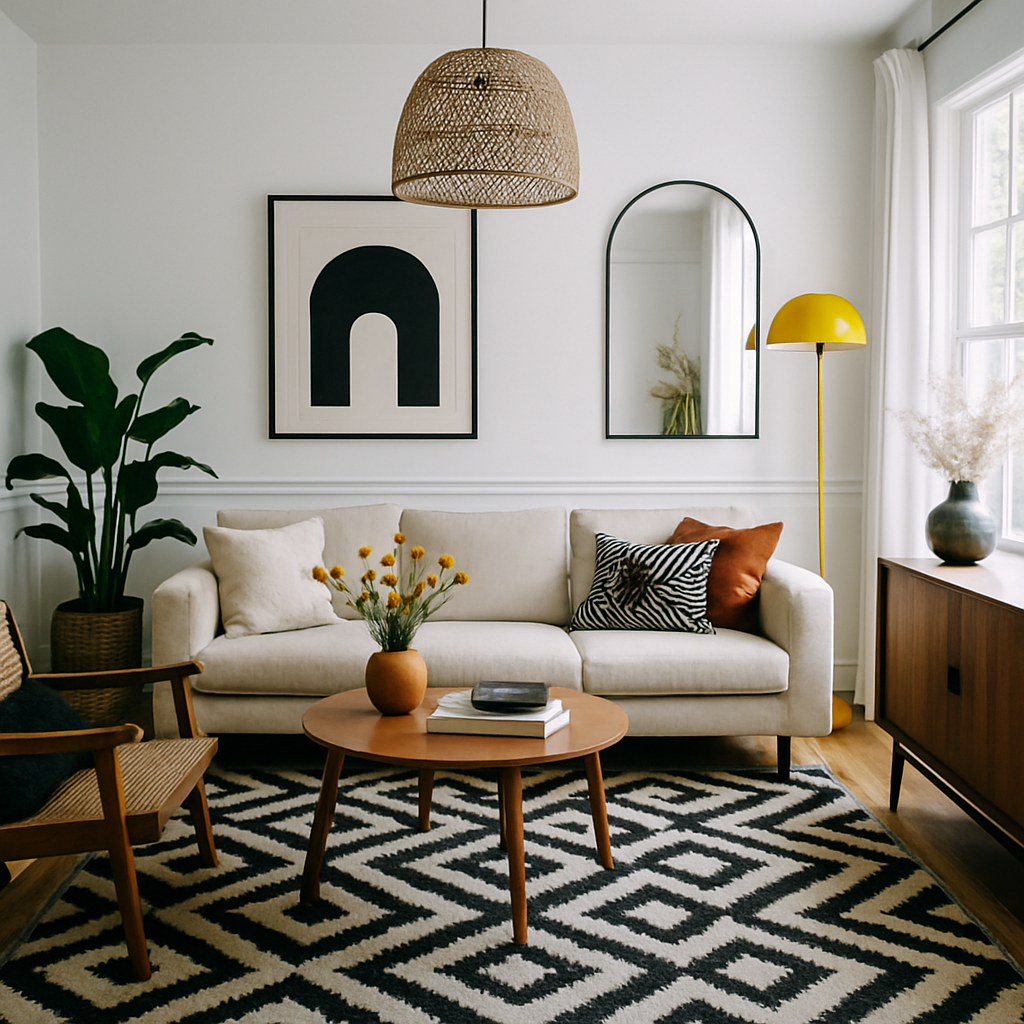
Following the work of accomplished interior designers is one of the most effective ways to develop your own aesthetic sensibility and stay current with professional-grade trends. The designers featured here represent a cross-section of styles, scales, and philosophies, from biophilic specialists who blur the boundary between indoors and out, to technology-forward practitioners who embed smart home integration into every project. Each has earned recognition from organizations like the American Society of Interior Designers (ASID), the International Interior Design Association (IIDA), or AD PRO, and their work appears regularly in major publications and on platforms like Houzz. Understanding what sets each designer apart can help you articulate your own preferences when hiring a professional, whether at the standard consultation rate of $150 to $500 per hour or through a project percentage arrangement of 10 to 25 percent. What qualities matter most to you in a designer: their visual style, their problem-solving ability, or their communication approach? The answer to that question should guide your search as much as any portfolio image.
Designers Who Champion Biophilic and Sustainable Practice
The first cluster of designers worth following are those who have made biophilic design and sustainable materials central to their practice rather than optional add-ons. Oliver Heath, based in the United Kingdom, has built an entire consultancy around evidence-based biophilic design, working with both residential and commercial clients to integrate nature into built environments. His projects frequently feature living walls, natural ventilation systems, and materials selected for their full lifecycle environmental impact. Heath's firm publishes research alongside their design work, providing clients with quantifiable data on how biophilic interventions affect wellbeing, a level of rigor that ASID has highlighted as a model for the profession.
Ilse Crawford, founder of Studioilse, approaches sustainability through the lens of humanistic design. Her philosophy begins with how people actually use spaces rather than how spaces should look, and this people-first approach naturally leads to durable, timeless interiors that resist the cycle of trend-driven replacement. Crawford's projects for brands like Ikea have demonstrated that sustainable, thoughtfully designed spaces are achievable at every price point, not just the luxury tier. Her influence extends through her teaching at the Royal College of Art and her documentary work, making her one of the most accessible voices in high-end design. IIDA has recognized her contributions to expanding the profession's understanding of wellbeing and space.
A third designer in this category is Jamie Durie, an Australian landscape and interior designer whose work consistently dissolves the barrier between indoor and outdoor living. Durie's residential projects in tropical and temperate climates incorporate courtyards, green roofs, and retractable glass walls that allow homes to breathe with their surroundings. His fee structure typically follows the project percentage model at around 15 to 20 percent, reflecting the complexity of integrating landscape and interior design into a single cohesive vision. For anyone interested in how nature and architecture can become inseparable, these three designers offer distinct but complementary approaches. Their work also demonstrates how sustainability principles naturally complement the minimalist ethos embraced by another influential group of designers.
Minimalist and Japandi-Influenced Voices
The Japandi aesthetic has produced several designers whose work deserves close attention. Keiji Ashizawa, a Tokyo-based architect and designer, creates residential interiors that embody the Japanese side of the Japandi equation: extreme restraint, reverence for natural materials, and spatial compositions that feel almost meditative. His furniture designs for brands like Karimoku have brought Japanese craft sensibility to an international audience. Each piece demonstrates the principle that thoughtful reduction can create more emotional resonance than accumulation. NCIDQ-certified designers in the West frequently cite Ashizawa's work as an influence on their own approach to editing and simplification.
On the Scandinavian side, Norm Architects, the Copenhagen-based studio led by Jonas Bjerre-Poulsen, has defined what contemporary Nordic design looks like in residential contexts. Their projects use muted palettes, natural stone, and warm wood to create spaces that feel both minimal and deeply comfortable. Norm Architects' approach to quiet luxury, spaces that communicate quality through material and proportion rather than ornamentation, has been featured extensively on AD PRO and in architectural publications worldwide. Their residential projects typically fall in the $10,000 to $15,000 per room range, reflecting the premium placed on material quality and custom fabrication.
Bridging both traditions is John Pawson, the British architect-designer whose career-long pursuit of minimum has produced some of the most serene residential interiors ever built. Pawson's work strips away everything unnecessary until only the essential relationship between light, material, and space remains. His influence on the Japandi movement is profound even though his practice predates the term by decades. Following Pawson's projects and writings offers a masterclass in the discipline of subtraction. His rigor provides a useful counterpoint to another group of designers who embrace maximalism and bold expression while maintaining equally high standards of craft and intentionality.
Bold Voices Redefining Color and Pattern
Not every influential designer subscribes to restraint. India Mahdavi, the Iranian-French designer known for her fearless use of color, creates interiors that are joyful, layered, and unmistakably personal. Her residential projects feature custom-colored furniture, hand-painted tiles, and unexpected material combinations that challenge the dominance of neutral palettes. Mahdavi's work demonstrates that bold color choices, when executed with precision, can feel as sophisticated as any monochrome scheme. Her signature approach has earned features in every major design publication and a loyal following among homeowners who want their spaces to reflect personality rather than convention. ASID panels frequently reference her work when discussing the psychological impact of color in residential settings.
Kelly Wearstler occupies a similar space in the American design landscape, blending maximalist instincts with rigorous material knowledge. Her residential projects layer textures, patterns, and art with a confidence that has influenced an entire generation of designers. What distinguishes Wearstler from less disciplined maximalists is her understanding of composition: every bold element is balanced by quieter moments that allow the eye to rest. Her firm charges at the premium end of the market, with project fees often structured as a percentage in the 20 to 25 percent range, reflecting the intensive custom work involved. Houzz features hundreds of her projects, making her portfolio one of the most studied in residential design.
Justina Blakeney, founder of Jungalow, brings a different kind of boldness rooted in global influences, sustainable sourcing, and the celebration of handcraft from diverse traditions. Her work is more accessible in price point than Mahdavi's or Wearstler's, and her books and product lines have made pattern-rich, plant-filled interiors achievable for a broad audience. Blakeney's influence is especially visible on social media platforms where her aesthetic has inspired millions of homeowners to embrace color and texture without fear. Have you noticed how the homes that resonate most on platforms like Houzz and Instagram tend to reflect genuine personality rather than catalog perfection? These three designers prove that authenticity and professional excellence are not at odds. Their willingness to push boundaries also extends to how designers are incorporating technology into both their process and their final designs.
Technology-Forward Designers Shaping the Future
Smart home integration and digital visualization tools have created a new category of designer: one equally fluent in material culture and technological systems. Yves Behar, the Swiss-born designer and founder of fuseproject, exemplifies this hybrid expertise. His work spans product design, technology, and interiors, and his residential projects seamlessly embed connected devices, adaptive lighting, and sensor-driven systems into spaces that feel warm and human rather than clinical. Behar's philosophy that technology should be invisible when not in use and intuitive when activated has become the gold standard for smart home design. His collaboration with Samsung, Herman Miller, and other technology-forward brands gives him access to systems that most designers only read about.
Gensler, though primarily known as an architecture firm, has developed a residential practice that leads the industry in AR and VR visualization. Their designers use immersive virtual reality walkthroughs to let clients experience proposed designs at full scale before construction begins. This technology eliminates much of the uncertainty that traditionally accompanied major renovations and allows for more confident decision-making. NCIDQ has incorporated technology competency into its certification requirements partly in response to firms like Gensler demonstrating how much value these tools add. A VR-enabled design process typically adds 10 to 15 percent to the design fee but often saves multiples of that amount by reducing change orders during construction.
At a more intimate scale, designer Colin King has built a practice around styling and spatial composition that leverages digital tools for client communication while maintaining a deeply tactile, hands-on approach to the final result. King's work, frequently featured in AD PRO and Architectural Digest, demonstrates that technology is most powerful when it serves craft rather than replacing it. His styling compositions, whether for a living room or a tabletop, reflect an understanding of proportion and materiality that no algorithm can replicate. The most effective technology-forward designers share this quality: they use digital tools to enhance human judgment, not substitute for it. Understanding how these professionals leverage technology is also useful context for evaluating how industry organizations set standards and credentials for the profession at large.
How Industry Organizations Elevate the Profession
The designers featured here did not develop their skills in isolation. Professional organizations play a critical role in establishing standards, providing continuing education, and connecting practitioners with clients who value credentialed expertise. ASID, the largest professional organization for interior designers in the United States, requires members to meet education and experience benchmarks and to maintain active engagement with current best practices. Their annual conference and research publications keep members informed about trends in sustainability, technology, and client expectations. When hiring a designer, ASID membership is a meaningful indicator of professional commitment.
NCIDQ certification represents the highest standard of competency in interior design. The exam covers building codes, construction documents, programming, and project coordination, ensuring that certified designers can manage not just aesthetics but the technical and safety dimensions of interior projects. Many U.S. states and Canadian provinces require NCIDQ certification for licensed practice, making it the profession's equivalent of a bar exam or medical board certification. Designers who hold this credential typically command higher fees, often at the $300 to $500 per hour range, because their technical knowledge reduces project risk and speeds regulatory approvals.
IIDA focuses on advancing the profession through research, advocacy, and community building. Their annual awards programs highlight exceptional projects across residential, commercial, and institutional categories, providing a valuable resource for homeowners seeking designers whose work has been peer-reviewed. AD PRO and Houzz complement these organizations by providing platforms where both professionals and homeowners can discover and evaluate design work. Together, these organizations and platforms create an ecosystem that rewards quality and accountability. Knowing which credentials and affiliations to look for can save you significant time and money when beginning your search for the right designer, a process that itself benefits from a strategic approach.
How to Choose the Right Designer for Your Project
Following inspiring designers on social media is enjoyable, but translating that inspiration into a successful collaboration requires practical evaluation. Start by clarifying your project scope and budget before contacting anyone. Are you redesigning a single room or an entire home? Is your budget in the $5,000 to $15,000 per room range, or are you working with a more modest or more ambitious figure? Knowing these parameters helps you identify designers whose typical project scale matches yours. A designer accustomed to million-dollar renovations may not be the right fit for a single-room refresh, regardless of how much you admire their portfolio. ASID's "Find a Designer" tool allows you to filter by location, project type, and budget range.
During initial consultations, pay attention to listening skills as much as visual compatibility. The best designers ask probing questions about how you live, what frustrates you about your current space, and what daily routines the design needs to support. They should be transparent about their fee structure, whether hourly at $150 to $500, flat fee, or percentage-based at 10 to 25 percent. Ask for references from projects similar to yours in scale and style, and follow up with those references. Inquire specifically about communication frequency, decision-making process, and how the designer handled unexpected challenges. These operational details matter as much as aesthetic alignment for a successful outcome.
Finally, trust your instincts about personal chemistry. A design project is an intimate collaboration that may span months, and mutual respect and clear communication are non-negotiable. If a designer dismisses your preferences, speaks primarily in jargon, or seems more interested in their portfolio than your life, move on. The right designer will make you feel heard and will translate your aspirations into spatial reality with skill and sensitivity. Which of the designers profiled here aligns most closely with how you want your home to feel? Use that answer as a starting point, then find a local professional who shares that sensibility and can bring it to life within your specific context and budget. Reach out to three designers this month for introductory conversations and take the first step toward a home that truly reflects who you are.
More Articles You May Like


Comments
Post a Comment