The Ultimate Guide to Eclectic Room Interior Design Styles You'll Love
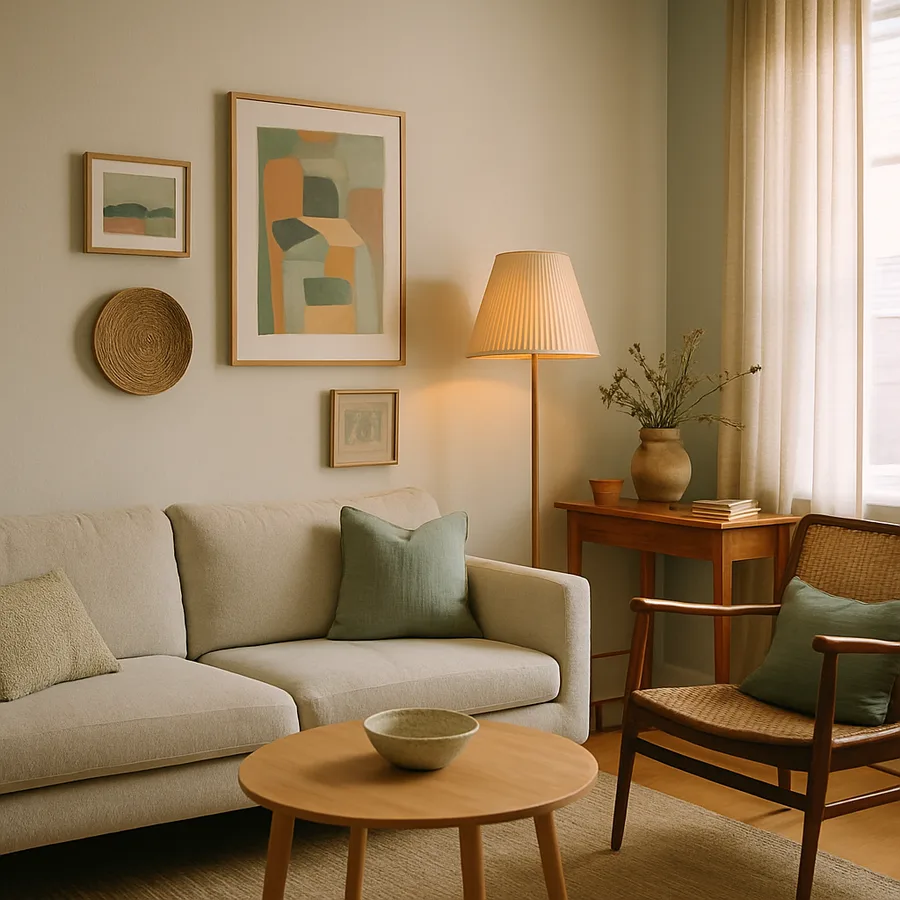
What Makes Eclectic Design Different From Everything Else
Eclectic interior design is frequently misunderstood as a polite term for having no style at all, a random accumulation of unrelated objects in a single room. Nothing could be further from the truth. Eclectic design is one of the most demanding approaches to interior decoration because it requires the ability to identify the invisible threads that connect seemingly disparate pieces and weave them into a space that feels deliberate, cohesive, and alive. Where a minimalist room succeeds through restraint and a traditional room succeeds through consistency, an eclectic room succeeds through curated contrast.
The American Society of Interior Designers (ASID) defines eclecticism in interior design as the thoughtful combination of elements from different periods, styles, and origins, unified by a shared sensibility rather than a shared rulebook. A Victorian mirror above a mid-century modern credenza, an industrial pendant light illuminating a hand-knotted Persian rug, a contemporary sofa flanked by carved wooden side tables from Rajasthan: these combinations work not because the pieces match, but because the person who assembled them has an eye for balance, proportion, and harmony across difference.
The philosophical roots of eclectic design stretch back to the 19th century, when European designers and architects began deliberately borrowing elements from multiple historical styles to create something new. The term itself comes from the Greek eklektikos, meaning "choosing the best." Today, that principle of selective combination has expanded to embrace global influences, handmade and industrial objects, vintage and contemporary pieces, and high-end and budget-friendly items all in the same space. The result is an approach to design that is inherently personal, because no two people would make the same selections.
Have you ever walked into a room and felt immediately that it belonged to someone specific, that it could not have been decorated by anyone else? That quality of irreducible individuality is the hallmark of successful eclectic design. It cannot be achieved by purchasing a complete room set from a single retailer or by following a prescriptive style guide. It emerges from a lifetime of collecting, traveling, learning, and paying attention to what moves you. This guide will show you how to channel that accumulated sensibility into a room that tells your story.
The Five Unifying Principles of Eclectic Rooms
The first principle is color cohesion. In an eclectic room, the pieces themselves may come from wildly different origins, but they must share a color relationship. This does not mean everything needs to be the same color; it means the overall palette should feel intentional. Choose a dominant color family, whether warm neutrals, cool blues, or earthy terracottas, and ensure that at least 60% of the room's visual weight falls within that family. The remaining 40% can introduce accent and contrasting colors, but even these should relate to the dominant palette rather than fighting against it.
The second principle is scale balance. Mixing styles often means mixing sizes, and an eclectic room needs a range of scales to feel dynamic without feeling chaotic. Pair a large, commanding piece like an oversized bookshelf or a substantial sofa with smaller, more delicate items like a slender side table or a collection of small framed prints. Avoid clustering all the large pieces on one side of the room and all the small ones on the other; distribute visual weight evenly so the eye moves smoothly around the space rather than getting stuck in one zone.
The third principle is era mixing with intent. The magic of eclecticism comes from temporal contrast, placing objects from different decades or centuries in dialogue with each other. A rule of thumb used by many professional designers is the "three eras" guideline: include pieces from at least three distinct time periods to prevent the room from reading as a single-style room with one odd piece thrown in. A room with contemporary, mid-century, and antique elements feels deliberately curated; a room with all contemporary pieces and one antique feels like a mistake.
The fourth principle is texture layering, and the fifth is repetition of motifs. Texture layering, combining smooth, rough, soft, hard, matte, and glossy surfaces, creates tactile richness that makes a room feel inviting and complex. Motif repetition provides subtle visual continuity: if you have a geometric pattern on a throw pillow, echo it in a rug or a piece of wall art so the eye registers the connection subconsciously. These five principles are not restrictive rules; they are the invisible architecture that holds an eclectic room together. The International Interior Design Association (IIDA) teaches similar frameworks in its continuing education programs, affirming that even the most free-spirited design benefits from underlying structure.
Global Eclectic: Weaving World Cultures Into Your Home
Global eclectic is perhaps the most popular expression of eclectic design, drawing from the art, craft, and textile traditions of multiple cultures to create a space that feels well-traveled and richly layered. Moroccan tile patterns, Japanese ceramic vessels, Indian block-printed textiles, Mexican Talavera pottery, and Scandinavian wooden furniture can coexist beautifully when the principles of color cohesion and scale balance are respected. The key is approaching each culture's contribution with respect and genuine appreciation rather than superficial appropriation.
Start with textiles, which are the most accessible entry point into global design. Kilim rugs from Turkey and Iran, kantha quilts from India, mudcloth from Mali, and ikat fabrics from Uzbekistan are all widely available through fair-trade retailers and online marketplaces. Each of these textile traditions carries centuries of cultural significance and features distinctive patterns that add visual complexity to any room. Layering multiple textile traditions, a kilim on the floor, kantha pillows on the sofa, and mudcloth curtains, creates a tapestry effect that feels collected over time rather than purchased in a single shopping trip.
Ceramics and pottery offer another layer of global influence. A collection of hand-thrown vessels from different traditions, grouped on a shelf or mantel, creates a display that is both visually compelling and narratively rich. The imperfections inherent in handmade objects, the slight asymmetry of a wheel-thrown pot, the variation in a hand-painted glaze, provide the human warmth that mass-produced decor cannot replicate. Organizations like Ten Thousand Villages and Global Goods Partners source artisan-made items through fair-trade supply chains, ensuring that your design choices benefit the makers whose traditions inspire them.
A word of caution: global eclectic design works best when it reflects genuine interest and engagement with the cultures represented. Purchasing a Navajo-inspired rug from a discount retailer and placing it next to a mass-produced Buddha statue does not constitute meaningful cultural engagement. Instead, invest in authentic pieces when possible, learn about their origins and significance, and display them in a context that honors their craftsmanship. The ASID has published guidelines on culturally sensitive design that encourage thoughtful sourcing and attribution. A room that tells honest stories about the objects it contains is infinitely more interesting than one that trades in shallow aesthetics.
Bohemian Eclectic: Organized Freedom and Artistic Expression
Bohemian eclectic design embraces maximalism, warmth, and creative expression in a way that feels relaxed rather than chaotic. Where global eclectic focuses on geographic diversity, bohemian eclectic emphasizes artistic personality and a willingness to break conventional design rules. Plants cascade from shelves and hang from ceiling hooks. Bookshelves overflow with a mix of art books, novels, vintage cameras, and ceramic figurines. Walls are covered in a salon-style arrangement of paintings, prints, photographs, and woven textiles. The overall effect is a space that feels abundantly alive.
The bohemian palette tends toward warm, saturated colors: deep burgundy, mustard yellow, burnt orange, olive green, and rich plum. These colors appear in layers, with multiple patterns and textures competing for attention yet somehow coexisting harmoniously. The secret is that bohemian rooms typically share a warm undertone across their diverse elements; everything leans toward amber, gold, or earth tones, even when the specific colors vary widely. This shared warmth provides the invisible cohesion that prevents the room from feeling like a thrift store exploded.
Furniture in a bohemian eclectic room is typically low-profile and comfort-oriented. Floor cushions, daybeds, pouffes, and low sofas encourage lounging and informal gathering. Vintage and repurposed furniture is preferred over new; a painted antique dresser, a reclaimed wood coffee table, or a salvaged door repurposed as a headboard all carry the patina of previous lives that bohemian design celebrates. According to a survey by Apartment Therapy, bohemian is consistently among the top three most-searched interior design styles, reflecting its broad appeal to people who value self-expression and comfort over polish and formality.
The challenge of bohemian eclectic design is knowing when to stop. Without discipline, maximalism becomes clutter, and creative expression becomes visual noise. The solution is periodic editing: step back regularly, remove anything that feels redundant, and ensure that every item contributes to the overall composition. A useful test is to photograph the room and review the image on your phone; the camera's flat perspective often reveals imbalances and clutter that the naked eye, accustomed to the space, has learned to overlook. How does your room look through a camera lens versus in person?
Modern Eclectic: Clean Lines Meet Collected Character
Modern eclectic is the style for people who appreciate the clean architecture of contemporary design but find all-modern rooms cold and impersonal. It starts with a contemporary foundation, think clean-lined furniture, neutral base colors, and uncluttered layouts, and then introduces carefully selected pieces from other eras and traditions to add warmth, history, and personality. The contemporary elements provide the room's structure, while the eclectic additions provide its soul.
A typical modern eclectic living room might feature a sleek contemporary sofa in a solid neutral fabric, anchored by a vintage Persian rug whose rich colors and intricate patterns provide all the visual warmth the room needs. A pair of mid-century modern armchairs flanking a reclaimed wood side table, a contemporary abstract painting above an antique fireplace mantel, a brass arc floor lamp casting warm light over an industrial metal bookshelf: each pairing creates a conversation between eras that makes the room feel both current and timeless.
The editing discipline required for modern eclectic is strict. Because the contemporary foundation values negative space and visual clarity, every eclectic addition must earn its place. One statement antique is more effective than five minor vintage pieces scattered around the room. One bold textile pattern against a neutral backdrop creates impact; three competing patterns create confusion. The ratio that many designers recommend for modern eclectic is roughly 70% contemporary to 30% collected, though this is a guideline rather than a rigid formula. The point is that the modern bones should remain visible and dominant, with the eclectic elements serving as punctuation rather than the main text.
Color in modern eclectic rooms typically follows a restrained palette with strategic moments of intensity. A base of white, gray, or warm beige allows a single bold element, a cobalt blue vintage vase, a vermillion abstract painting, a richly patterned kilim, to command attention without competing against the background. This approach is particularly effective in smaller spaces where visual calm is essential for comfort. The Houzz design galleries contain thousands of examples of modern eclectic rooms that demonstrate how a single well-chosen statement piece can define an entire space's personality.
How to Build Your Eclectic Room Step by Step
Building an eclectic room is a sequential process, not a single shopping trip. Begin by defining your non-negotiables: the pieces you already own that you love and intend to keep. These anchoring pieces, whether a family heirloom, a sofa you saved for, or a rug you brought back from a trip, become the fixed points around which everything else orbits. Identify the colors, materials, and era of each anchor piece, and use these attributes as the starting parameters for your room's overall direction.
Next, establish your color palette by pulling three to five colors from your anchor pieces. If your favorite rug contains navy, rust, cream, and touches of gold, those four colors become your room's vocabulary. Every subsequent addition should speak this language, even if it introduces new textures, patterns, or forms. This palette discipline is what separates curated eclecticism from haphazard accumulation. Write down or photograph your palette and refer to it before every purchase. If a potential addition introduces a color outside your palette, it does not belong in this particular room no matter how beautiful it may be.
Then, fill gaps systematically. Identify what the room needs functionally, such as seating, storage, lighting, and surface area, and source each piece individually from the appropriate era, style, or origin to build the desired contrast. Do not rush this process. A well-curated eclectic room often takes months or even years to assemble because the right pieces need to be found rather than simply ordered. This patience is a feature, not a bug; a room that evolves over time develops a layered quality that a room furnished all at once can never achieve.
Finally, style and refine. Once the major furniture is in place, add the textiles, art, objects, and plants that complete the composition. Group objects in odd numbers, which the eye finds more visually interesting than even groupings. Vary heights within displays to create dynamic sightlines. Leave some surfaces empty to provide visual rest between areas of complexity. Step back frequently, photograph the room, and edit anything that feels forced or redundant. The goal is a room that appears effortlessly assembled, even though the effort behind it was considerable and deliberate.
Conclusion: Your Story, Told Through Objects
Eclectic interior design is ultimately an act of autobiography. The objects you choose, the cultures you engage with, the eras you draw from, and the colors that speak to you collectively tell a story that no other person could replicate. Unlike prescriptive style categories that ask you to conform to a predefined aesthetic, eclecticism asks you to explore, collect, and compose. The result is not a room that belongs to a style; it is a room that belongs to you.
The principles outlined in this guide, color cohesion, scale balance, era mixing, texture layering, and motif repetition, are tools for channeling your personal vision into a space that functions visually as well as emotionally. They prevent common pitfalls like visual chaos, dominant clutter, and incoherent compositions without constraining your creative freedom. Think of them as the grammar of a language in which you choose the vocabulary. The grammar ensures your room makes sense; the vocabulary ensures it makes meaning.
Research by the Environmental Design Research Association (EDRA) has shown that people report higher psychological well-being in spaces they perceive as personally meaningful, compared to spaces that are merely well-designed by objective standards. Eclectic rooms, by their nature, tend to score high on personal meaning because every piece was individually selected for reasons that resonate with the inhabitant. This finding validates what eclectic design enthusiasts have always intuited: a room filled with objects you love feels fundamentally different from a room that merely looks good.
Begin your eclectic journey by identifying the three objects in your home that you would never part with. Examine them closely: what colors do they share? What materials? What era or origin do they represent? These three objects contain the DNA of your personal style. Use them as the foundation for a room that grows organically, piece by piece, trip by trip, year by year, into a space that could not belong to anyone else. That irreducible individuality is the greatest achievement any interior can aspire to, and it is available to everyone willing to look, choose, and compose with intention.
More Articles You May Like



Comments
Post a Comment