The Psychology of Color: How Room Interior Design Influences Mood
The Science Behind Color and Emotion
Color is not merely a visual experience. It is a physiological and psychological event that begins the moment light enters the eye and continues as the brain interprets signals that can alter heart rate, blood pressure, and hormone production. Research from the University of British Columbia has demonstrated that exposure to certain colors can measurably affect cognitive performance, with red environments enhancing attention to detail and blue environments boosting creative thinking. These findings have profound implications for how we design the rooms where we spend the majority of our waking hours.
The relationship between color and emotion has been studied across cultures for over a century, and while individual responses vary based on personal experience and cultural context, broad patterns emerge consistently. Warm colors such as red, orange, and yellow tend to stimulate and energize, while cool colors like blue, green, and violet tend to calm and focus. The American Psychological Association (APA) has published extensively on color perception, noting that these tendencies appear across diverse populations, suggesting a biological basis that underlies cultural variation.
Interior designers have long understood intuitively what researchers now quantify. The American Society of Interior Designers (ASID) incorporates color psychology into its professional education curriculum, recognizing that a designer's color palette can significantly affect a client's daily experience of their home. Selecting wall colors, textiles, and accent pieces is not simply an aesthetic exercise; it is a decision about the emotional atmosphere of a space. A room designed without attention to color psychology is leaving one of the most powerful tools in the designer's toolkit unused.
Understanding color psychology does not mean rigidly following a formula. Rather, it means approaching color choices with awareness of their likely effects and making informed decisions about the atmosphere you want to create. A home office might benefit from colors that promote focus, a bedroom from those that encourage relaxation, and a dining room from tones that stimulate conversation and appetite. The goal is alignment between the room's purpose and the emotional response its colors produce. What emotions do the colors in your current living space evoke, and do they match the activities you perform there?
Warm Tones: Energy, Comfort, and Connection
The warm color family, encompassing reds, oranges, yellows, and their intermediate shades, is associated with stimulation, warmth, and social energy. Red, the most physiologically activating of all colors, has been shown by researchers at the University of Rochester to increase heart rate and respiration. In interior design, red is used sparingly and strategically: a red accent wall in a dining room can stimulate appetite and conversation, while an entirely red bedroom would likely produce restlessness rather than relaxation. The key with red is restraint and context.
Orange occupies a middle ground between red's intensity and yellow's cheerfulness. It evokes warmth, creativity, and enthusiasm without the aggressive edge that large amounts of red can produce. Terracotta, burnt sienna, and peach are softer variations that have surged in popularity for living spaces, particularly as part of earth-tone palettes that feel grounded and welcoming. The International Interior Design Association (IIDA) has highlighted the growing use of warm earth tones in residential design as a response to the desire for spaces that feel nurturing and connected to the natural world.
Yellow, often described as the happiest color, brings brightness and optimism to a space. Soft buttery yellows work beautifully in kitchens and breakfast nooks, where they create a sense of morning warmth and positivity. However, saturated or neon yellows can produce anxiety and visual fatigue over extended exposure. Studies conducted at the Scandinavian Colour Institute found that infants cry more frequently in bright yellow rooms, suggesting that the stimulating properties of intense yellow can tip from energizing into overwhelming. Muted, warm yellows are almost universally positive, while brighter shades require careful calibration.
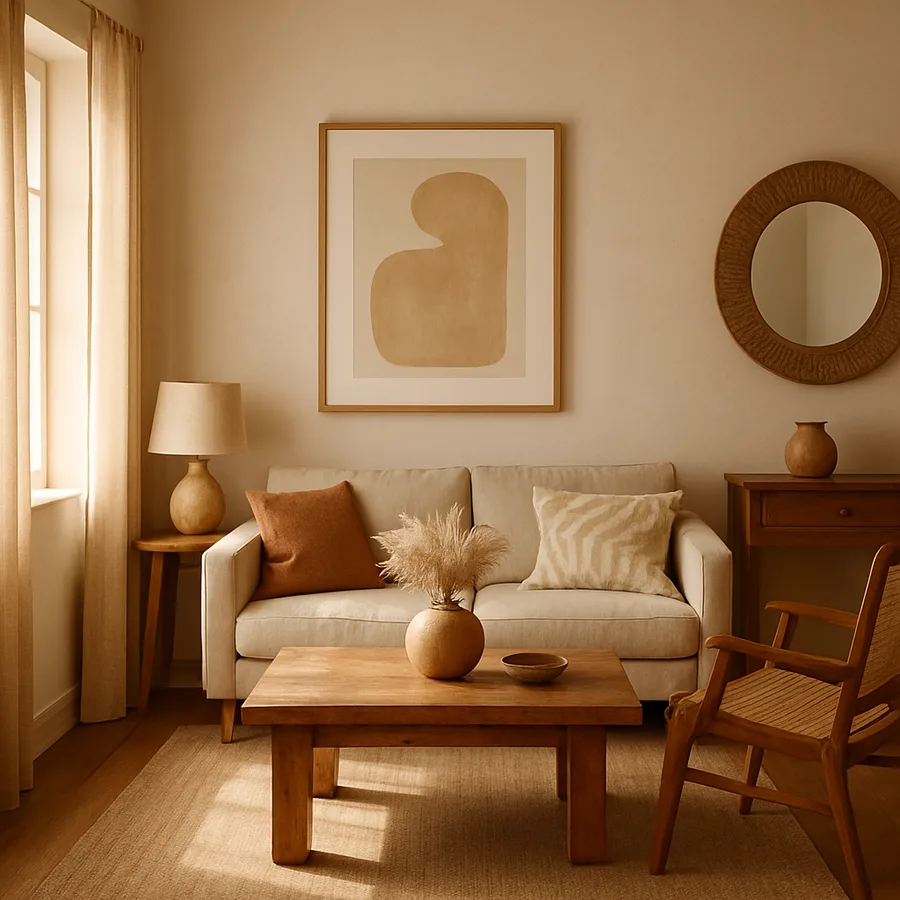
Warm neutrals such as beige, cream, caramel, and warm gray serve as the connective tissue of most residential color schemes. They provide a calm, approachable backdrop that allows accent colors to stand out without competing for attention. These tones are particularly effective in open-plan spaces where a single color must unify multiple functional zones. Warm neutrals avoid the sterility of pure white while maintaining the spatial openness that lighter colors provide. They are the workhorses of interior color design, and their subtlety is precisely what makes them so versatile.
Cool Tones: Calm, Focus, and Restoration
Blue is the most universally preferred color across cultures and genders, according to research published by Joe Hallock in a widely cited color preference study. Its associations with sky, water, and open space make it a natural choice for rooms intended to promote calm and mental clarity. Light blues are ideal for bedrooms, where their soothing quality supports relaxation and sleep. Deeper blues, such as navy and indigo, add sophistication and depth to living rooms and studies without sacrificing the calming foundation that blue inherently provides.
Green occupies a unique position in the color spectrum as the hue that the human eye processes most easily. This physiological ease translates into a psychological experience of balance and restoration. The biophilic design movement, which emphasizes connections between built environments and the natural world, frequently uses green as a primary palette color. Sage, olive, and forest green bring the restorative qualities of nature indoors, making them excellent choices for rooms where occupants need to decompress after demanding days. Green is equally effective in home offices, where its balancing properties support sustained concentration.
Violet and lavender inhabit the boundary between warm and cool, combining blue's calm with red's energy to produce a color associated with creativity, contemplation, and luxury. Light lavender is a popular choice for bedrooms and meditation spaces, where its gentle quality promotes introspection without heaviness. Deeper purples, used as accents rather than dominant wall colors, add richness and drama. According to a survey conducted by Houzz, purple accents in the form of throw pillows, artwork, and textiles ranked among the top choices for homeowners seeking to add personality to otherwise neutral rooms.
Cool neutrals including gray, slate, and blue-white provide a contemporary backdrop that pairs well with virtually any accent color. Gray has been the dominant neutral in interior design for over a decade, valued for its sophistication and flexibility. However, an entirely gray room can feel cold and uninviting if not balanced with warm textures such as wood, wool, and warm-toned metals. The lesson is that cool tones thrive when complemented by warm elements, just as warm-dominant rooms benefit from cool accents. Balance, rather than purity, produces the most emotionally satisfying environments.
The Role of Saturation and Value
Color psychology discussions often focus on hue, the named color itself, while overlooking two equally important dimensions: saturation (intensity) and value (lightness or darkness). A pale, desaturated blue and a vivid cobalt blue share a hue but produce entirely different emotional responses. The pale version feels peaceful and airy, while the saturated version feels bold and energetic. Understanding this distinction allows for much more precise control over a room's atmosphere than hue selection alone.
Highly saturated colors demand attention and create visual weight. A single saturated accent, such as a cobalt blue vase on a neutral shelf, draws the eye and creates a focal point. An entire room painted in that same cobalt would feel intense and potentially overwhelming for extended occupancy. The ASID recommends the 60-30-10 rule as a starting framework: 60% of the room in a dominant neutral, 30% in a secondary color, and 10% in a bold accent. This ratio ensures that saturated colors contribute energy without dominating the space.
Value, the lightness or darkness of a color, directly affects the perceived size and weight of a room. Light values open a space up, making ceilings feel higher and walls feel farther apart. Dark values draw surfaces inward, creating intimacy and coziness at the expense of perceived spaciousness. Neither is inherently better; the choice depends on the room's size and intended function. A small bedroom painted in a deep, warm color can feel like a luxurious cocoon, while the same color in a small kitchen might feel oppressive. Context determines whether a given value works.
How would your home feel if you adjusted only the saturation and value of your existing color choices without changing a single hue? Experimenting with lighter or deeper versions of colors you already love is one of the least risky ways to shift a room's emotional character. Paint samples applied directly to the wall and observed under different lighting conditions throughout the day provide far more reliable information than small color chips viewed under store lighting. This simple practice can prevent costly mistakes and reveal surprising preferences.
Cultural and Personal Dimensions of Color Response
While broad patterns in color psychology hold across populations, individual and cultural variation is substantial and must be respected in any honest discussion of the topic. White, for example, represents purity and cleanliness in many Western cultures but is associated with mourning in parts of East and South Asia. Red symbolizes luck and prosperity in Chinese culture, danger and stop signals in Western contexts, and mourning in South Africa. A globally aware approach to color design acknowledges these differences and prioritizes the specific cultural context of the people who will inhabit the space.
Personal color associations shaped by individual experience can override general psychological patterns entirely. A person who spent happy childhood summers in a yellow kitchen may find yellow profoundly comforting, even if studies suggest it can be overstimulating. Conversely, someone who associates a particular blue with a hospital room may find it unsettling despite its generally calming properties. Effective color consultation begins with listening: understanding a client's personal history with color before recommending a palette based on generalized principles.
Age and life stage also influence color preferences. Research published in the journal Color Research and Application indicates that children tend to prefer bright, saturated primary colors, while adults increasingly favor muted, complex tones as they age. This has practical implications for family homes where multiple generations share common spaces. A living room that needs to serve both young children and adults might use a muted base palette with pops of brighter color in easily changeable elements like cushions, artwork, and rugs that can evolve as the family's composition shifts.
The intersection of color psychology with design also extends to accessibility. Approximately 8% of men and 0.5% of women experience some form of color vision deficiency, according to the National Eye Institute. Designing rooms that rely solely on color distinction to differentiate zones or convey information can inadvertently exclude a significant portion of the population. Combining color with texture, pattern, and spatial cues ensures that a room's design communicates effectively to all its occupants. Inclusive design is good design, and it produces richer, more layered environments.
Applying Color Psychology Room by Room
The bedroom is where color psychology arguably matters most, as it directly influences sleep quality. Cool blues, soft greens, and muted lavenders promote the relaxation response that precedes sleep. A study by the hotel chain Travelodge, which surveyed over 2,000 British households, found that people sleeping in blue bedrooms averaged nearly eight hours of sleep per night, the highest of any color group. Avoiding highly stimulating colors like bright red and electric orange on bedroom walls is a straightforward application of color psychology that can yield measurable benefits.
Home offices and studies benefit from colors that support concentration without inducing drowsiness. Soft greens and muted blues hit this balance well, providing enough calm to reduce stress while maintaining sufficient visual engagement to keep the mind alert. Adding warm accent elements such as a wooden desk, a warm-toned desk lamp, or a few plants prevents the cool palette from feeling clinical. The goal is an environment that sustains focus over multi-hour work sessions without feeling sterile or oppressive.
Kitchens and dining areas are social spaces where warm, appetite-stimulating colors traditionally perform well. Warm whites, creamy yellows, and terracotta accents create a welcoming atmosphere that encourages gathering and eating. Restaurant designers have applied these principles for decades, and the same logic translates directly to residential kitchens. Even in a predominantly neutral kitchen, warm-toned backsplash tiles, wooden cutting boards, and copper or brass hardware introduce warmth that makes the space feel inviting rather than surgical.
Living rooms, which must accommodate the widest range of activities from entertaining to reading to watching films, benefit from flexible, moderate palettes. Warm neutrals with varied accent colors allow the room to shift mood through lighting and accessory changes rather than permanent paint colors. The living room is also the space most likely to be seen by visitors, so it often reflects the homeowner's personality and aesthetic values most directly. Choosing a palette that genuinely resonates with you, rather than following a trend, ensures that the room remains satisfying long after a particular color fashion has passed.
Conclusion: Designing with Emotional Intelligence
Color is one of the most accessible and affordable tools available for shaping the emotional character of a home. Unlike structural changes, furniture purchases, or technology investments, a fresh coat of paint or a new set of textiles can transform a room's atmosphere in a single afternoon and for a modest budget. The research consistently shows that color affects mood, cognition, and even physical responses, making it far too powerful a variable to leave to chance or fleeting preference alone.
The most emotionally intelligent approach to color design balances general psychological principles with personal and cultural specificity. It acknowledges that broad patterns exist while respecting the fact that you are designing for particular people in a particular context. It uses saturation and value as carefully as hue, and it considers how colors interact with light, texture, and each other across the full day-night cycle. This layered understanding produces results that feel intuitively right because they are grounded in both science and sensitivity.
Approaching color with this level of intentionality does not require a design degree. It requires willingness to observe, experiment, and reflect. Pay attention to how you feel in differently colored environments, both in your own home and in spaces you visit. Note which colors energize you and which ones calm you. Over time, you will develop a personal color intuition that is more reliable than any generic color chart because it is calibrated to your unique nervous system and life experience.
Begin your color transformation by selecting one room that feels emotionally misaligned with its purpose, and test two or three new color options using large paint samples observed over a full week of different lighting conditions. Consult resources from organizations like ASID and IIDA for professional guidance, and remember that the best color for any room is the one that makes the people in it feel exactly as they want to feel. Your walls are not just surfaces; they are the emotional envelope of your daily life, and they deserve thoughtful, informed attention.
More Articles You May Like



Comments
Post a Comment