The Future of Home Decor: Embracing AI in Interior Design Strategies
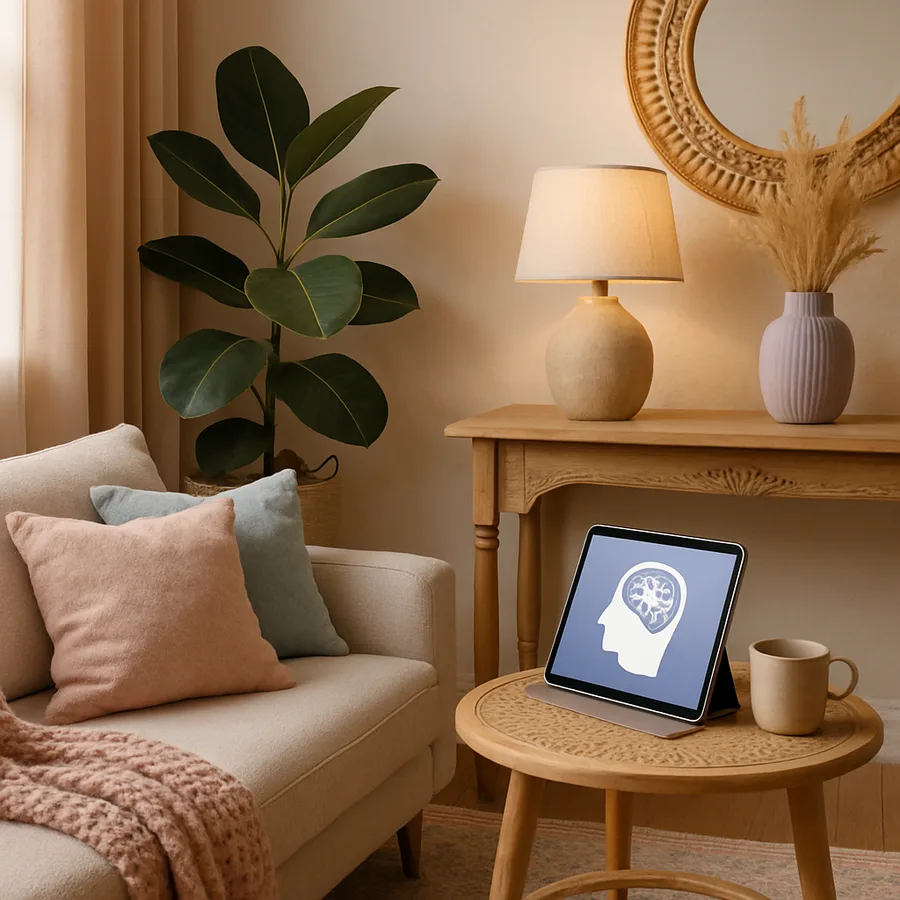
How Artificial Intelligence Is Reshaping the Design Process
The interior design industry has entered an extraordinary period of transformation, driven largely by advances in artificial intelligence. What once required weeks of consultations, mood boards, and in-person showroom visits can now be accelerated through sophisticated algorithms that analyze spatial dimensions, lighting conditions, and personal preferences. Designers and homeowners alike are discovering that AI does not replace creative intuition but rather amplifies it, providing data-driven insights that inform better decisions. The result is a more efficient, accessible, and personalized approach to shaping the spaces where we live and work.
According to the American Society of Interior Designers (ASID), over 35 percent of design professionals reported integrating some form of digital technology into their workflow as of their most recent industry outlook survey. This statistic underscores a broader cultural shift: technology is no longer an optional add-on but a foundational element of modern design practice. From generative floor plans to AI-curated material palettes, the tools available to professionals and amateurs have grown remarkably powerful in a short span of time. The question is no longer whether AI belongs in interior design, but how best to harness its capabilities.
For homeowners who have felt overwhelmed by the sheer volume of choices available in furnishings, textiles, and finishes, AI offers a welcome filter. Rather than scrolling through thousands of options on retail sites, intelligent recommendation engines narrow selections based on room measurements, existing furniture, and stated style preferences. This targeted approach saves time and reduces the decision fatigue that often accompanies major home projects. It also opens the door for people who previously felt priced out of professional design services to access high-quality guidance at a fraction of the cost.
Have you ever wondered what your living room would look like with a completely different color scheme but hesitated to commit? AI-powered visualization tools now allow you to see photorealistic renderings of proposed changes before a single paint can is opened. These tools analyze natural light patterns, adjacent room tones, and even the undertones of your existing furniture to suggest harmonious palettes. The technology bridges the gap between imagination and execution, giving homeowners the confidence to make bold choices they might otherwise avoid.
Smart Space Planning and Layout Optimization
Space planning has traditionally been one of the most challenging aspects of interior design, requiring an understanding of traffic flow, ergonomics, and proportional balance. AI-driven layout tools are changing this dynamic by processing room dimensions and generating multiple arrangement options in seconds. These platforms consider factors that even experienced designers might overlook, such as the optimal distance between seating areas for conversation or the ideal placement of a dining table relative to kitchen access points. The computational power behind these tools allows for hundreds of permutations to be evaluated almost instantaneously.
The International Interior Design Association (IIDA) has highlighted the growing role of computational design in its annual reports, noting that firms leveraging AI-assisted space planning report higher client satisfaction scores. This makes intuitive sense: when clients can visualize multiple layout options side by side, they feel more involved in the decision-making process and more confident in the final outcome. The collaborative nature of these tools transforms the designer-client relationship from one of trust-based deference to one of informed partnership. Clients become active participants rather than passive recipients of professional judgment.
One particularly compelling application is in small-space design, where every square foot matters. AI algorithms can identify opportunities for dual-purpose furniture placement, hidden storage solutions, and sight-line optimization that maximize the perceived size of a room. For apartment dwellers in dense urban markets, these capabilities can be transformative. A 500-square-foot studio that feels cramped under a conventional layout can feel surprisingly spacious when every element is positioned with mathematical precision.
Beyond residential applications, commercial interior design has embraced AI space planning with particular enthusiasm. Offices, restaurants, and retail environments all benefit from layouts optimized for specific behavioral goals, whether that means encouraging collaboration in a coworking space or guiding customer flow through a boutique. The data-driven nature of AI planning allows designers to test hypotheses about human behavior before committing to expensive buildouts, reducing costly mistakes and improving the end-user experience from day one.
Personalized Style Recommendations Through Machine Learning
One of the most exciting frontiers in AI-assisted design is the ability of machine learning models to develop a nuanced understanding of individual taste. Unlike static style quizzes that slot users into broad categories like "modern" or "traditional," advanced recommendation engines analyze patterns across thousands of data points. They consider which images a user lingers on, which products they save, which color combinations recur in their selections, and even how their preferences shift over time. The result is a style profile that evolves alongside the homeowner.
Platforms like Houzz have been at the forefront of this movement, using visual recognition technology to help users identify products that match items they have photographed in their own homes or discovered in inspiration galleries. This "visual search" capability collapses the frustrating gap between seeing something you love and finding where to buy it. When combined with spatial analysis tools, the technology can even suggest whether a particular piece will work in a specific room, considering scale, proportion, and existing design elements.
The personalization extends beyond product recommendations to encompass entire design schemes. AI can now generate cohesive mood boards that balance color theory, texture contrast, and stylistic consistency based on a homeowner's unique profile. These generated schemes often include specific product suggestions at multiple price points, making professional-quality design accessible across a range of budgets. What might have cost thousands of dollars in consultant fees a decade ago can now be approximated through intelligent software for a modest subscription fee.
Does the idea of an algorithm understanding your aesthetic sensibility feel unsettling or exciting? For many homeowners, the answer is surprisingly positive once they experience the results. The key insight is that AI personalization works best as a starting point rather than a final answer. It surfaces options you might never have discovered on your own, expanding your creative horizons while still leaving the ultimate decisions in human hands. The technology serves as a creative collaborator, not a replacement for personal judgment and emotional connection to your space.
Virtual and Augmented Reality as Design Testing Grounds
The convergence of AI with virtual reality (VR) and augmented reality (AR) has created powerful new ways to experience proposed designs before implementation. AR applications allow homeowners to point their smartphone cameras at an empty room and see furniture, artwork, and lighting fixtures rendered in place with remarkable accuracy. These tools use AI to understand spatial geometry, ensuring that virtual objects are scaled correctly and positioned on actual surfaces. The gap between digital preview and physical reality has narrowed to the point where these renderings are genuinely useful for decision-making.
According to research published by the National Kitchen and Bath Association (NKBA), projects that incorporated VR or AR visualization during the planning phase experienced 28 percent fewer change orders during construction. This statistic reveals a practical economic benefit beyond the novelty factor: when clients can truly see and experience a design before committing, they make fewer costly mid-project revisions. For contractors and designers, this translates to smoother timelines, happier clients, and healthier profit margins. The technology pays for itself through the mistakes it prevents.
Full VR walkthroughs represent the most immersive end of this spectrum. Using a headset, homeowners can move through a proposed renovation at full scale, opening cabinets, sitting at countertops, and evaluating sight lines from different positions within the room. This level of experiential testing was previously available only through expensive physical mockups built by high-end design firms. AI makes these walkthroughs possible by automatically generating three-dimensional environments from two-dimensional floor plans and specification sheets, democratizing access to a tool that was once reserved for luxury projects.
The practical applications extend to material selection as well. AI-enhanced AR can simulate how different flooring materials will look under the specific lighting conditions of your room at various times of day. It can show how a marble countertop will age over years of use or how a particular wood stain will interact with your existing cabinetry. These simulations remove much of the guesswork from material choices, which are often the most expensive and difficult-to-reverse decisions in any renovation project. The confidence gained from seeing realistic previews is invaluable.
Sustainable Design Powered by Intelligent Analysis
Sustainability has moved from a niche concern to a central priority in interior design, and AI is accelerating this shift in meaningful ways. Intelligent analysis tools can evaluate the environmental footprint of design choices across multiple dimensions simultaneously, considering factors like material sourcing, transportation emissions, manufacturing processes, and end-of-life recyclability. This holistic view allows designers to make informed trade-offs rather than relying on simplified green certifications that may not capture the full picture.
The American Society of Interior Designers has championed the integration of sustainability metrics into design practice through its IMPACT platform and ongoing research initiatives. AI tools complement these efforts by making complex environmental data accessible and actionable. A designer can now input a proposed material specification and receive instant feedback on its carbon footprint relative to alternatives, along with suggestions for lower-impact substitutes that maintain the desired aesthetic. This kind of real-time environmental analysis was simply impossible with manual research methods.
Energy modeling represents another area where AI excels in supporting sustainable design. By analyzing a room's orientation, window placement, insulation properties, and local climate data, AI can recommend lighting designs, window treatments, and HVAC configurations that minimize energy consumption while maintaining comfort. These recommendations go beyond generic best practices to provide solutions tailored to the specific conditions of each space. The potential for cumulative energy savings across millions of homes makes this application particularly significant from an environmental perspective.
Material waste reduction during renovation projects is yet another benefit of AI-assisted planning. Traditional renovation projects often generate significant waste due to over-ordering, cutting errors, and design changes mid-construction. AI planning tools can calculate precise material quantities needed for each phase of a project, optimize cutting patterns for tiles and other modular materials, and flag potential waste points before construction begins. For homeowners concerned about both their environmental impact and their renovation budget, these capabilities deliver on both fronts simultaneously.
Navigating the Limitations and Ethical Considerations
While the potential of AI in interior design is enormous, a responsible assessment requires acknowledging its current limitations. AI recommendation engines are only as good as the data they are trained on, and biases in training data can lead to narrow or culturally homogeneous design suggestions. If an algorithm has been primarily trained on images of Western contemporary interiors, it may struggle to produce compelling recommendations for homeowners seeking traditional Asian, African, or Middle Eastern design aesthetics. Awareness of these limitations is essential for both developers and users of AI design tools.
Privacy concerns also merit careful consideration. Personalized design recommendations require access to significant personal data, including room photographs, purchase histories, and sometimes even behavioral patterns within the home. Homeowners should understand what data they are sharing, how it will be stored, and whether it may be used for purposes beyond their immediate design project. The International Interior Design Association has called for clear ethical guidelines around data use in design technology, a conversation that is still evolving across the industry.
There is also the question of what might be lost when algorithmic efficiency replaces the serendipity of human creativity. Some of the most beloved spaces in design history emerged from unexpected combinations, happy accidents, and the intuitive leaps of gifted designers. While AI excels at optimization within defined parameters, it is less adept at the kind of rule-breaking innovation that produces truly iconic interiors. The most effective approach likely involves using AI to handle the analytical heavy lifting while preserving space for human creativity to flourish in areas where it adds the most value.
The economic implications for design professionals deserve attention as well. As AI tools make basic design services more accessible to consumers, some entry-level design work may become automated. However, history suggests that technology tends to reshape professions rather than eliminate them. Designers who embrace AI as a tool in their practice will likely find that it frees them to focus on the higher-level creative and interpersonal aspects of their work that clients value most. The designers who thrive will be those who learn to collaborate with technology rather than compete against it.
Conclusion: Designing Tomorrow's Spaces with Intelligent Tools
The integration of artificial intelligence into interior design represents a fundamental evolution in how we conceive, plan, and execute changes to our living environments. From space planning algorithms that optimize every square foot to machine learning models that understand personal taste with surprising nuance, these tools are making thoughtful design more accessible, affordable, and sustainable than ever before. The technology is not a distant promise but a present reality that is already reshaping the industry from the ground up.
What makes this moment particularly exciting is the democratizing effect of AI on design quality. Homeowners who could never afford to hire a professional designer can now access sophisticated guidance through intelligent platforms. Small design firms can compete with larger competitors by leveraging computational tools that amplify their capabilities. And experienced designers can push the boundaries of their craft by offloading routine analysis to algorithms, freeing their creative energy for the work that matters most. The result is a more vibrant, diverse, and innovative design landscape for everyone.
The path forward requires balance: embracing the efficiency and insight that AI provides while maintaining the human creativity, cultural sensitivity, and ethical awareness that technology alone cannot supply. The best outcomes will emerge from partnerships between human intuition and machine intelligence, where each contributes its unique strengths. As these tools continue to mature, the possibilities for personalized, sustainable, and beautiful living spaces will only expand.
Ready to explore how AI can transform your next design project? Start by experimenting with one of the many free AR visualization apps available for your smartphone. Place a few virtual furniture pieces in your room, test a new wall color, and experience firsthand how technology can inform and inspire your design decisions. The future of home decor is already here, and it is waiting for you to engage with it.
More Articles You May Like


Comments
Post a Comment