Revolutionizing Spaces: How AI Is Transforming Interior Design
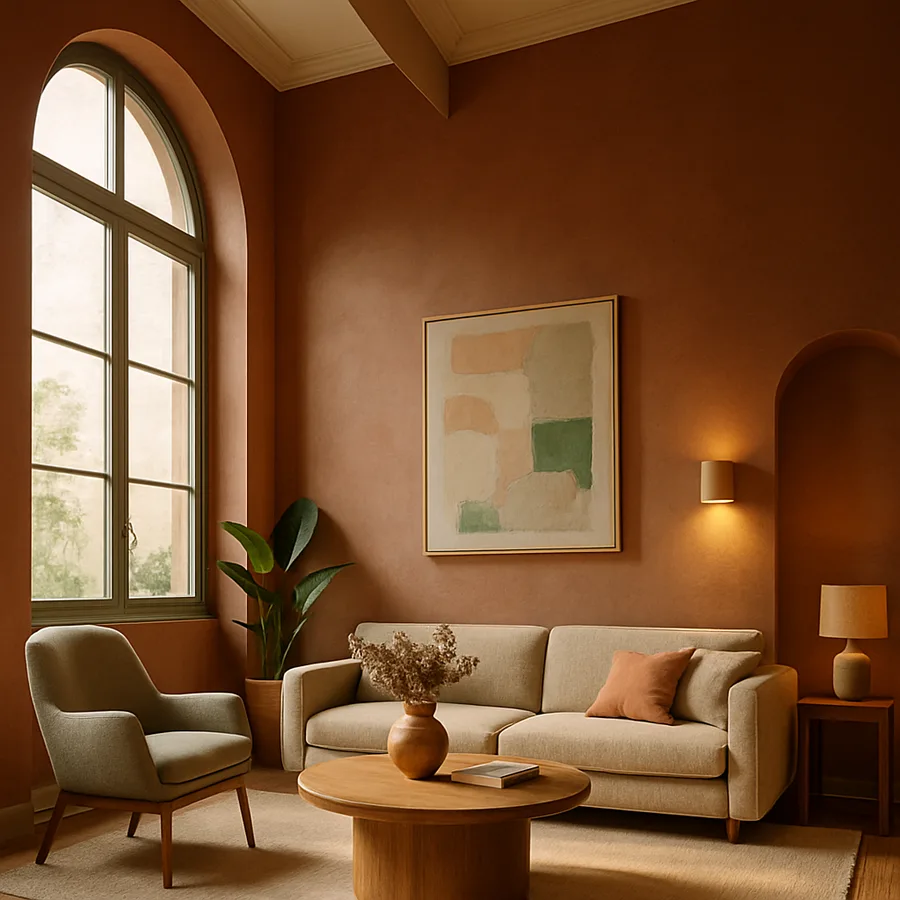
A New Partner in the Design Process
Artificial intelligence has entered the interior design industry not as a replacement for human creativity but as a powerful collaborative tool that is reshaping how designers work and how homeowners make decisions. From AI-generated room visualizations to intelligent space planning algorithms, the technology is addressing some of the most persistent friction points in the design process: the difficulty of imagining changes before committing to them, the challenge of optimizing complex spatial constraints, and the gap between professional design services and the budgets of everyday homeowners. The result is a field that is simultaneously more accessible and more capable than ever before.
The scale of AI adoption in design-adjacent industries is striking. According to a report by McKinsey and Company, AI tools in the architecture, engineering, and construction sectors have seen adoption rates increase by over 40% since their initial introduction to mainstream platforms. Interior design, though smaller in scale, is following the same trajectory. Major furniture retailers, design platforms, and independent studios are all integrating AI capabilities into their workflows, and the technology is evolving rapidly enough that tools considered cutting-edge months ago are already being superseded by more sophisticated successors.
What makes AI particularly well-suited to interior design is the visual and spatial nature of the discipline. Design involves imagining arrangements of objects in three-dimensional space, predicting how light will interact with surfaces, and balancing dozens of aesthetic and functional variables simultaneously. These are precisely the kinds of complex, multi-variable optimization problems at which modern AI excels. Human designers bring taste, emotional intelligence, cultural understanding, and creative vision. AI brings processing power, pattern recognition, and the ability to generate and evaluate thousands of options in seconds. Together, they form a partnership greater than either could achieve alone.
This article examines the specific ways AI is currently being used in interior design, the benefits and limitations of these tools, the ethical questions they raise, and the likely direction of the technology in the coming years. Whether you are a professional designer, a homeowner considering a renovation, or simply curious about the intersection of technology and aesthetics, understanding AI's role in design is becoming increasingly relevant to how we shape our living environments.
Virtual Staging and Visualization Tools
One of the most immediately practical applications of AI in interior design is virtual staging and room visualization. Traditional room visualization required either expensive 3D rendering software operated by skilled professionals or the limited imagination of a homeowner staring at paint chips and furniture catalogs. AI-powered tools now allow users to upload a photograph of their existing room and see it transformed with different paint colors, furniture arrangements, flooring materials, and decorative elements in seconds. The quality of these visualizations has improved dramatically, with current tools producing photorealistic results that are nearly indistinguishable from professional photography.
The American Society of Interior Designers (ASID) has acknowledged the growing role of visualization technology in client communication, noting that the ability to show clients realistic previews of proposed changes significantly reduces misunderstandings and increases client confidence in design decisions. Before AI visualization, the phrase "trust me, it will look great" was a standard part of the designer-client relationship. Now, clients can see exactly what "great" looks like before a single piece of furniture is ordered or a single wall is painted. This transparency benefits both parties and leads to higher satisfaction with completed projects.
Real estate has been an early and enthusiastic adopter of AI staging tools. Empty properties that previously required physical staging, an expensive and logistically demanding process, can now be virtually staged with photorealistic furniture and decor at a fraction of the cost. The National Association of Realtors reports that staged homes sell faster and for higher prices than unstaged ones, and AI staging makes this advantage accessible to sellers at all price points. The same technology that stages a home for sale can help a buyer visualize how their own furniture and preferences would look in a space they are considering purchasing.
The limitations of current visualization tools are worth noting honestly. While AI excels at generating appealing images, it can struggle with accurate spatial proportions, realistic lighting physics, and the subtle material qualities that distinguish a premium finish from a budget one. A rendered image may show a beautiful sofa in a room without accurately representing whether that sofa would physically fit through the doorway or leave adequate circulation space. These practical dimensions still require human judgment, measurement, and spatial understanding that AI supplements but does not yet replace.
Personalized Design Recommendations and Space Planning
AI-driven recommendation engines are transforming how homeowners discover products and styles that match their preferences. Platforms like Houzz use machine learning algorithms trained on millions of user interactions to suggest furniture, materials, and design ideas tailored to individual taste profiles. These systems analyze the images a user saves, the products they click on, and the styles they linger over to build an increasingly accurate model of their aesthetic preferences. The result is a curated shopping and inspiration experience that feels personal without requiring a personal relationship with a designer.
Space planning, the process of determining optimal furniture placement and room layout, is another area where AI demonstrates remarkable capability. Traditional space planning is a skill that requires years of training to master, involving the simultaneous consideration of traffic flow, sight lines, focal points, natural light, scale, proportion, and functional adjacencies. AI space planning tools can process these variables computationally, generating multiple layout options that satisfy specified constraints and allowing the user or designer to select from optimized alternatives rather than starting from scratch.
The International Interior Design Association (IIDA) has explored the implications of AI space planning tools for professional practice, concluding that they are most valuable as starting points that accelerate the early phases of a project rather than as finished solutions. A designer using AI to generate an initial set of layout options can spend less time on spatial logistics and more time on the creative, emotional, and relational dimensions of design that require human sensitivity. In this model, AI handles the computational heavy lifting while the designer provides the vision, taste, and client understanding that no algorithm can replicate.
How might your approach to furnishing a room change if you could instantly see twenty optimized layout options based on your room's exact dimensions and your stated priorities? This capability, once available only to clients of high-end design firms with sophisticated software, is increasingly accessible through consumer-facing applications. The democratization of space planning knowledge through AI tools is one of the most practically significant developments in residential design, reducing the risk of costly mistakes and empowering homeowners to make more informed decisions about their spaces.
The Democratization of Professional Design
Historically, professional interior design services have been accessible primarily to affluent clients. The cost of hiring a designer, combined with minimum project fees and markups on furnishings, placed comprehensive design assistance beyond the reach of most homeowners. AI is disrupting this dynamic by offering design guidance at a fraction of traditional costs. AI-powered design platforms now provide room assessments, style recommendations, product suggestions, and even complete room plans for monthly subscription fees that cost less than a single hour of traditional design consultation.
This democratization raises complex questions about quality and depth. An AI tool can recommend a color palette based on thousands of successful precedents, but it cannot sit in your living room at different times of day observing how the light changes, notice that the family dog always lies in a particular spot that should remain unobstructed, or sense that your expressed preference for modern design conflicts with the emotional attachment to your grandmother's traditional armchair. The contextual richness that a skilled human designer brings to a project, drawn from observation, conversation, and empathic understanding, remains beyond the reach of current AI systems.
The ASID has positioned AI as a complement to rather than a competitor with professional design services, arguing that AI tools serve as an effective entry point that may ultimately increase demand for professional designers by helping clients understand what professional design can achieve. A homeowner who uses an AI tool to visualize possibilities may become more motivated to hire a professional to execute a comprehensive vision, having seen the potential that expert design holds. In this view, AI expands the market rather than cannibalizing it.
For homeowners in underserved markets, whether rural areas with few local designers or communities where design services have traditionally been scarce, AI tools provide access to design knowledge that was previously unavailable at any price. A homeowner in a small town can now access the same visualization technology, product databases, and layout optimization tools as someone in a major metropolitan area. This geographical leveling effect is one of the most unambiguously positive outcomes of AI's entry into the design field, and it has the potential to improve living environments on a broad scale.
Ethical Questions and the Limits of Automation
The integration of AI into interior design raises ethical considerations that the industry is still grappling with. One concern is the potential homogenization of design. AI systems learn from existing data, and if that data overrepresents certain styles, cultures, or economic demographics, the AI's recommendations will reflect and reinforce those biases. A recommendation engine trained predominantly on Western, contemporary interiors may struggle to serve clients whose aesthetic roots lie in other traditions. Ensuring that AI design tools are trained on genuinely diverse datasets is a responsibility that developers and the industry must take seriously.
Intellectual property and attribution present another ethical frontier. When an AI tool generates a room design, it draws on patterns learned from millions of existing designs, many created by professional designers who did not consent to their work being used as training data. The legal and ethical frameworks for AI-generated creative work remain unsettled, and the interior design community has a stake in shaping those frameworks. Organizations like ASID and IIDA are actively engaging with these questions, advocating for policies that protect designers' creative contributions while allowing beneficial technological development to continue.
Environmental considerations intersect with AI design tools in both positive and negative ways. On the positive side, AI can optimize material usage, reduce waste in manufacturing and construction, and help consumers make sustainable choices by highlighting eco-friendly alternatives. On the negative side, the ease of AI visualization can accelerate the cycle of redecorating, encouraging frequent changes that generate waste. A balanced approach uses AI to make better initial design decisions that endure, rather than to make rapid-fire changes driven by novelty and algorithmic suggestion.
The question of emotional authenticity may be the deepest ethical issue of all. A home designed entirely by an algorithm, however optimized and aesthetically pleasing, may lack the personal meaning and emotional resonance that comes from human creative engagement with a space. The process of choosing objects, arranging them, living with them, and adjusting them over time is itself a source of attachment and satisfaction. If AI automates this process entirely, the resulting space may be beautiful but emotionally thin. Preserving the human creative role in home design is not merely a professional concern; it is a question about what makes a house a home.
The Professional Designer's Evolving Role
Rather than making professional designers obsolete, AI is redefining what designers spend their time on. Tasks that were previously time-consuming but largely mechanical, such as creating initial mood boards, sourcing products from catalogs, generating floor plan options, and producing photorealistic renderings, can now be accelerated or partially automated. This frees designers to focus on the aspects of their work that require distinctly human capabilities: understanding client needs through conversation and observation, making nuanced aesthetic judgments, managing the emotional dynamics of design decisions, and providing the creative leadership that transforms a functional space into an inspiring one.
The skillset required of a successful interior designer is expanding. In addition to traditional competencies in spatial design, color theory, materials knowledge, and project management, designers increasingly need fluency with AI tools, data interpretation, and technology integration. Design education programs are adapting accordingly. Several leading design schools have introduced AI-focused coursework, and professional organizations offer continuing education in technology skills. The designer of the future is not a choice between human and digital but a hybrid professional who leverages both.
Client expectations are also evolving. Homeowners who have used AI visualization tools arrive at design consultations with clearer ideas about what they want, more sophisticated visual vocabulary, and higher expectations for seeing options before committing. This can be challenging for designers accustomed to clients who defer to professional judgment, but it also creates opportunities for richer collaboration. A client who can articulate their vision clearly is a better collaborator than one who cannot, and AI tools are helping more clients reach that level of clarity before the first meeting.
Do you think the best interior design outcomes will come from pure human creativity, pure AI optimization, or a collaboration between the two? The evidence strongly favors collaboration. AI excels at processing constraints, generating options, and visualizing possibilities. Humans excel at understanding context, making value judgments, and infusing spaces with meaning. The most promising future for interior design is one where these capabilities are combined deliberately, with each contributing what it does best and neither attempting to replace the other.
Conclusion: Technology in Service of Human Flourishing
AI is not transforming interior design by replacing the human elements that make a home meaningful. It is transforming interior design by removing barriers, accelerating workflows, democratizing access, and expanding the range of what is possible to imagine and execute. The technology is a tool, and like all tools, its value depends entirely on how it is used. In the hands of thoughtful designers and informed homeowners, AI can produce living environments that are more functional, more beautiful, and more personally resonant than either human creativity or machine intelligence could achieve independently.
The pace of change is rapid, and staying informed about new capabilities while maintaining a critical perspective on their limitations is increasingly important for anyone involved in designing or furnishing a home. Not every AI tool delivers on its promises, and the gap between marketing claims and actual capability can be significant. Approaching AI design tools with the same discernment you would apply to any other design resource, testing them, evaluating their output critically, and integrating them into a broader decision-making process that includes human judgment, produces the best outcomes.
The interior design industry has always evolved alongside technology, from the introduction of CAD software to the rise of social media platforms that transformed how design trends spread. AI represents the latest and perhaps most significant technological shift, but the core purpose of interior design remains unchanged: creating spaces that support and enrich human life. Technology that serves this purpose is welcome. Technology that distracts from it is not. The distinction lies not in the tool itself but in the intentionality with which it is applied.
Explore one AI-powered design tool this week, whether a room visualization app, a style recommendation platform, or an AI space planner, and evaluate its suggestions against your own instincts and knowledge of your space. Use the output as a starting point for conversation with family members or a professional designer, and notice where the AI's suggestions align with your vision and where they fall short. That gap between algorithmic output and personal truth is where the most important design decisions live, and it is a gap that only you can bridge.
More Articles You May Like



Comments
Post a Comment