Polished Nickel vs Brushed Nickel Faucets: Telling Them Apart
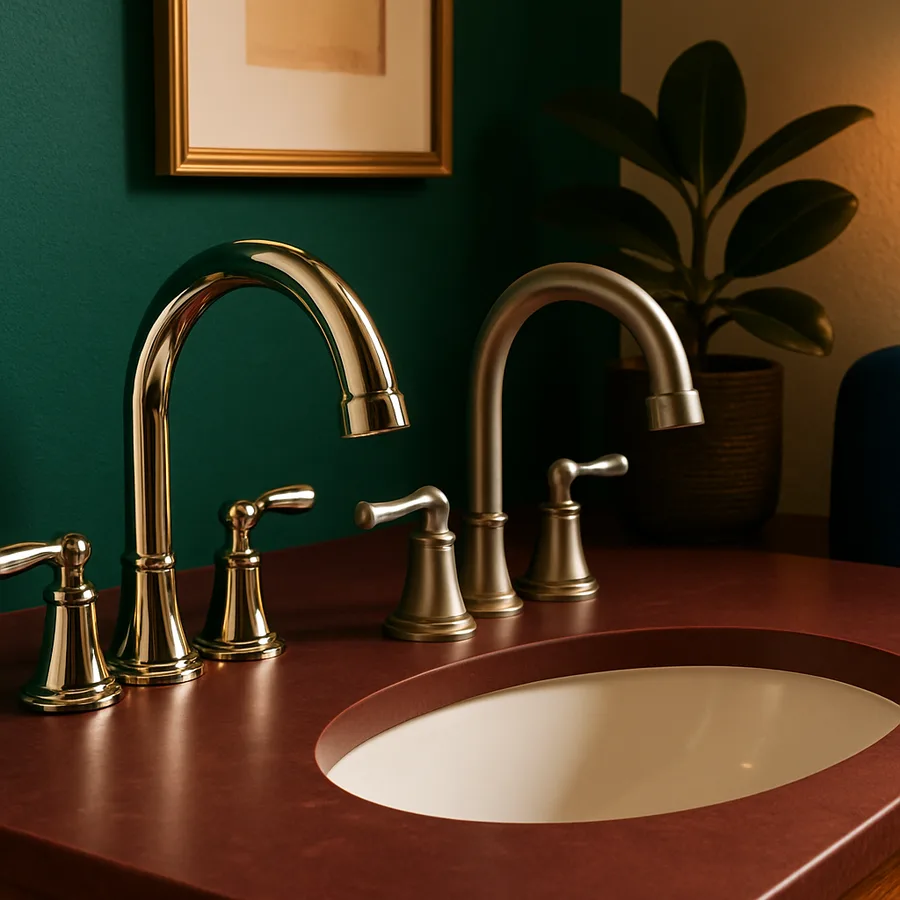
Standing in a showroom aisle with two nickel faucets side by side, many homeowners struggle to articulate what exactly separates polished nickel from brushed nickel. Both share the same base metal, both carry a silvery warmth that sits between the cool brightness of chrome and the golden glow of brass, and both appear in the product lines of every major faucet manufacturer. Yet the distinction between them affects everything from how they interact with your lighting to how often you will need to wipe them down. A study by Houzz found that nickel finishes collectively account for nearly 34 percent of all faucet selections in kitchen and bathroom renovations, making the polished-versus-brushed decision one of the most common finish choices homeowners face. This article breaks down the visual, practical, and financial differences so you can identify each finish confidently and choose the one that serves your space best.
The confusion is understandable. Both finishes share a similar colour family, and under certain lighting conditions, they can appear nearly identical from a distance. The differences reveal themselves at close range and over time, as each finish interacts differently with light, water, cleaning products, and daily contact. By the end of this guide, you will be able to distinguish them at a glance and understand why one might be a better match for your particular project than the other.
The Visual Difference Explained in Detail
Polished nickel has a smooth, reflective surface that functions almost like a soft mirror. Light bounces off it in a concentrated, directional manner, producing visible reflections of nearby objects and light sources. The colour tone is a warm silver with subtle golden undertones, distinguishing it from the cooler, bluer reflection of polished chrome. This warmth makes polished nickel a natural companion for traditional, transitional, and formal design schemes. In a well-lit bathroom with a crystal chandelier or decorative sconces, polished nickel fixtures pick up and amplify the light, adding a layer of luminous elegance to the space.
Brushed nickel, by contrast, has a surface that has been mechanically abraded with fine grit to create a pattern of tiny, parallel lines. These lines scatter incoming light in multiple directions rather than reflecting it back in a single plane. The result is a softer, more muted appearance with a satin-like quality that does not produce sharp reflections. Brushed nickel tends to read as slightly greyer and less golden than its polished counterpart, though the exact tone varies by manufacturer. This diffused quality gives brushed nickel a more casual, contemporary feel that integrates seamlessly into modern, industrial, and relaxed design settings.
One reliable way to tell them apart in a store is to hold your hand about six inches from the faucet surface. With polished nickel, you should be able to make out the general shape and colour of your hand in the reflection. With brushed nickel, your hand will appear as a vague, shapeless shadow or will not be visible at all. This reflection test works consistently across brands and lighting conditions, giving you an instant identification method that does not depend on reading product labels.
Colour temperature of the surrounding light also affects perception. Under warm incandescent or LED lighting, polished nickel takes on a richer, more golden cast, while brushed nickel appears warmer grey. Under cool fluorescent lighting, polished nickel can lean slightly blue-silver, and brushed nickel may look almost pewter-like. If you plan to install nickel faucets in a space with specific lighting, bring a fixture sample home or request a sample chip from the manufacturer to evaluate the finish under your actual conditions before committing.
Durability and Maintenance Compared Side by Side
Polished nickel's smooth, reflective surface makes it more prone to showing fingerprints, water spots, and minor scratches. Every smudge and mineral deposit is amplified by the mirror-like finish, meaning polished nickel faucets require more frequent wiping to maintain their lustrous appearance. In a busy family kitchen where multiple hands touch the faucet throughout the day, polished nickel demands a level of upkeep that not every household is prepared to sustain. The American Society of Interior Designers (ASID) has noted that maintenance expectations are one of the top three factors influencing finish selection among their members' clients.
Brushed nickel, thanks to its textured surface, is significantly more forgiving. The fine abrasion lines disguise fingerprints, minor scratches, and water spots, allowing the faucet to look presentable even without daily polishing. This practical advantage has made brushed nickel the most popular overall faucet finish in the United States for more than a decade. For high-traffic fixtures, secondary bathrooms, and rental properties, brushed nickel's low-maintenance character makes it the default recommendation from most plumbers and contractors.
Both finishes share the same underlying corrosion resistance, as the nickel plating provides excellent protection against rust and tarnishing regardless of the surface texture. However, the way they age differs. Polished nickel may develop a soft patina over many years, especially if exposed to certain chemicals or hard water, which some homeowners appreciate as adding character. Brushed nickel's texture tends to mask any subtle patina development, maintaining a more consistent appearance over its lifespan. Neither finish is inherently more durable than the other at the material level; the perceived durability difference stems entirely from how visible wear is on each surface type.
When it comes to scratch repair, brushed nickel holds a distinct advantage. Minor scratches on a brushed surface can often be blended into the existing texture using a fine Scotch-Brite pad rubbed in the direction of the grain. On polished nickel, a scratch disrupts the smooth reflective surface and typically requires professional polishing or buffing to restore. This repairability factor is worth considering if you have young children, pets, or simply prefer fixtures that forgive the occasional mishap.
Design Context and Where Each Finish Works Best
Polished nickel thrives in spaces designed to convey formality, refinement, or historical authenticity. It is a staple in traditional and transitional kitchen and bathroom designs, pairing beautifully with marble countertops, raised-panel cabinetry, and ornate mirror frames. Designers frequently specify polished nickel for powder rooms, where the faucet serves as a decorative statement piece seen by guests. The reflective quality amplifies ambient light, making small powder rooms feel brighter and more spacious. In a formal dining room with a wet bar, polished nickel fixtures complement crystal glassware and fine china, reinforcing the elevated atmosphere.
Brushed nickel, on the other hand, is the workhorse of contemporary and transitional design. Its understated quality allows it to blend into a space without competing for attention, making it ideal for kitchens and bathrooms where the focus should be on the overall design composition rather than individual fixtures. Brushed nickel coordinates effortlessly with stainless steel appliances, which share a similar colour tone and matte quality, creating a cohesive metallic palette that feels intentional without being overly matched. This compatibility is one reason designers at firms affiliated with the International Interior Design Association (IIDA) frequently default to brushed nickel in open-concept kitchen designs.
Mixing polished and brushed nickel within the same room is a subject of ongoing debate among design professionals. The prevailing consensus is that mixing them works best when done with clear intentional hierarchy: one finish dominates as the primary choice for plumbing fixtures, while the other appears in secondary roles such as cabinet hardware or light fixture accents. Using both finishes at equal visual weight in the same space can create a sense of inconsistency, as though the selection was accidental rather than deliberate. If you want to mix, choose one for faucets and showerheads and the other for knobs and pulls, maintaining each in its designated role consistently.
Regional design preferences also influence which finish feels more at home. Polished nickel appears more frequently in East Coast and Southern design traditions, where historical and formal aesthetics have strong cultural roots. Brushed nickel dominates in Pacific Northwest, Midwest, and Mountain West designs, where casual, natural, and modern sensibilities prevail. These are tendencies rather than rules, but they offer useful guidance when designing a home that feels connected to its geographic and cultural context.
Price Differences and What Drives Them
Brushed nickel faucets are generally less expensive than their polished nickel equivalents, and the price gap typically ranges from 10 to 30 percent for comparable models from the same manufacturer. The cost difference stems from the finishing process. Polished nickel requires additional steps: after the nickel plating is applied, the surface must be buffed and polished to achieve the mirror-like reflectivity, and in many cases, a protective clear coat or lacquer is applied to maintain the shine. These extra production steps add time and labour cost, which is passed on to the consumer.
Brushed nickel's finishing process is simpler. After plating, the surface is run through an abrasive brush or wheel that creates the characteristic grain pattern. This single mechanical step is faster and less labour-intensive than the multi-stage polishing process, resulting in lower production costs. The absence of a clear coat on most brushed nickel faucets also reduces material costs. However, some premium brands apply a clear sealant to brushed nickel as well, narrowing the price gap with polished nickel models.
At the entry level, brushed nickel kitchen faucets from brands like Glacier Bay and Pfister can be found for 80 to 150 dollars, while comparable polished nickel models start at 100 to 200 dollars. In the mid-range, Moen and Delta brushed nickel options typically fall between 200 and 400 dollars, with polished nickel versions of the same models running 250 to 500 dollars. At the premium tier, Kohler and Rohl polished nickel faucets can reach 800 to 1,500 dollars, particularly for their unlacquered polished nickel options that develop a natural patina over time.
When budgeting for a full bathroom or kitchen renovation, the cumulative impact of the polished nickel premium becomes significant. A bathroom with a faucet, showerhead, towel bars, robe hooks, and a toilet paper holder in polished nickel could cost 200 to 500 dollars more than the same accessories in brushed nickel. For homeowners managing tight renovation budgets, brushed nickel offers an attractive combination of visual warmth, proven durability, and cost efficiency that is difficult to beat.
How to Match Nickel Finishes with Other Fixtures and Hardware
Coordinating nickel faucets with cabinet hardware, light fixtures, and bathroom accessories requires attention to both colour tone and surface texture. The safest approach is to stay within the same finish family: if your faucet is brushed nickel, select cabinet pulls, towel bars, and showerheads in brushed nickel as well. This creates a unified metallic story that reads as deliberate and cohesive. Most major hardware manufacturers, including Amerock, Liberty Hardware, and Top Knobs, offer brushed nickel options calibrated to match common faucet brands, though slight tone variations between manufacturers are normal and generally imperceptible once installed.
Cross-matching nickel with other metals has become increasingly accepted in contemporary design. Brushed nickel pairs well with matte black for a modern, high-contrast look, with the nickel serving as the warm neutral and the black providing graphic punctuation. Polished nickel, with its warmer golden undertone, can coexist with brass and gold accents in transitional spaces, creating a layered metallic palette that feels curated rather than mismatched. The key to successful metal mixing is limiting the palette to two, at most three, finish types within a single room and distributing them with visual balance.
Light fixtures deserve special mention because they often serve as the visual bridge between faucet hardware and the broader room design. A brushed nickel faucet with a brushed nickel pendant light or vanity sconce creates an immediate sense of coordination that anchors the room's metallic identity. If your preferred light fixture comes only in polished nickel, the tonal similarity between the two nickel finishes is usually close enough to work harmoniously, especially when the light fixture is positioned at a distance from the faucet rather than directly adjacent.
What happens if you cannot find an exact match? Minor variations between nickel finishes from different manufacturers are the rule, not the exception, because each company uses its own proprietary plating process and colour standard. In practice, these slight differences are far more noticeable when products are held side by side on a display table than when they are installed in their final positions around a room. Natural and artificial lighting, the colours of surrounding surfaces, and the viewing distance all soften the perception of minor tone differences, making exact cross-brand matching less critical than many homeowners fear.
Making the Final Decision for Your Space
Choosing between polished and brushed nickel ultimately comes down to three factors: design style, maintenance tolerance, and budget. If your space leans traditional, formal, or vintage-inspired, and you are willing to invest the time in regular wiping and occasional polishing, polished nickel rewards that effort with a luminous, jewel-like quality that brushed nickel cannot replicate. It elevates a space in a way that feels luxurious and intentionally detailed.
If your design sensibility is contemporary, casual, or function-first, and you prefer fixtures that look good with minimal maintenance effort, brushed nickel is the clear choice. Its forgiving surface, lower price point, and universal compatibility with stainless steel appliances make it the most practical and versatile nickel finish for everyday living spaces. There is no shame in choosing the easier path when the aesthetic result is equally beautiful in its own right.
For homeowners who genuinely cannot decide, consider using both finishes in different rooms. Polished nickel in the guest powder room and master bath, where visual impact matters most, and brushed nickel in the kitchen and secondary bathrooms, where daily durability takes priority. This approach respects both the aesthetic and practical demands of each space without forcing a single finish to serve roles it may not be best suited for.
Take the time to see both finishes in person before committing. Online photographs, regardless of quality, cannot fully convey the difference in reflectivity and texture that defines each finish. Visit a showroom, perform the hand-reflection test described earlier, and evaluate how each finish interacts with the lighting and materials you plan to use. A confident finish selection at this stage prevents second-guessing after installation, when changes become costly and disruptive. Which finish speaks to your space? The answer becomes clear the moment you see them side by side in real light.
Conclusion
Polished nickel and brushed nickel share a metal family but occupy distinct roles in interior design. Polished nickel delivers reflective warmth and formal elegance, making it ideal for spaces where visual refinement is the priority. Brushed nickel offers practical durability and understated versatility, serving as a reliable foundation in contemporary and high-traffic settings. The differences in appearance, maintenance, price, and design compatibility are real and meaningful, even if they can seem subtle at first encounter.
Understanding what drives each finish's performance, from the surface texture that defines its light behaviour to the production process that determines its cost, empowers you to make a selection that aligns with both your aesthetic vision and your daily habits. Neither finish is objectively superior; each excels in the context for which it was designed. The right choice is the one that matches your space, your lifestyle, and your willingness to maintain it.
Whether you gravitate toward the mirror-like sophistication of polished nickel or the quiet dependability of brushed nickel, the most important step is experiencing them firsthand. Bring a sample of your countertop material, note your lighting type, and spend a few minutes with each finish at the showroom. That brief investment of time yields confidence that lasts the lifetime of your faucet. Go see them in person and let the finishes speak for themselves.
More Articles You May Like



Comments
Post a Comment