Plantation Shutters Cost Breakdown by Window Size and Material
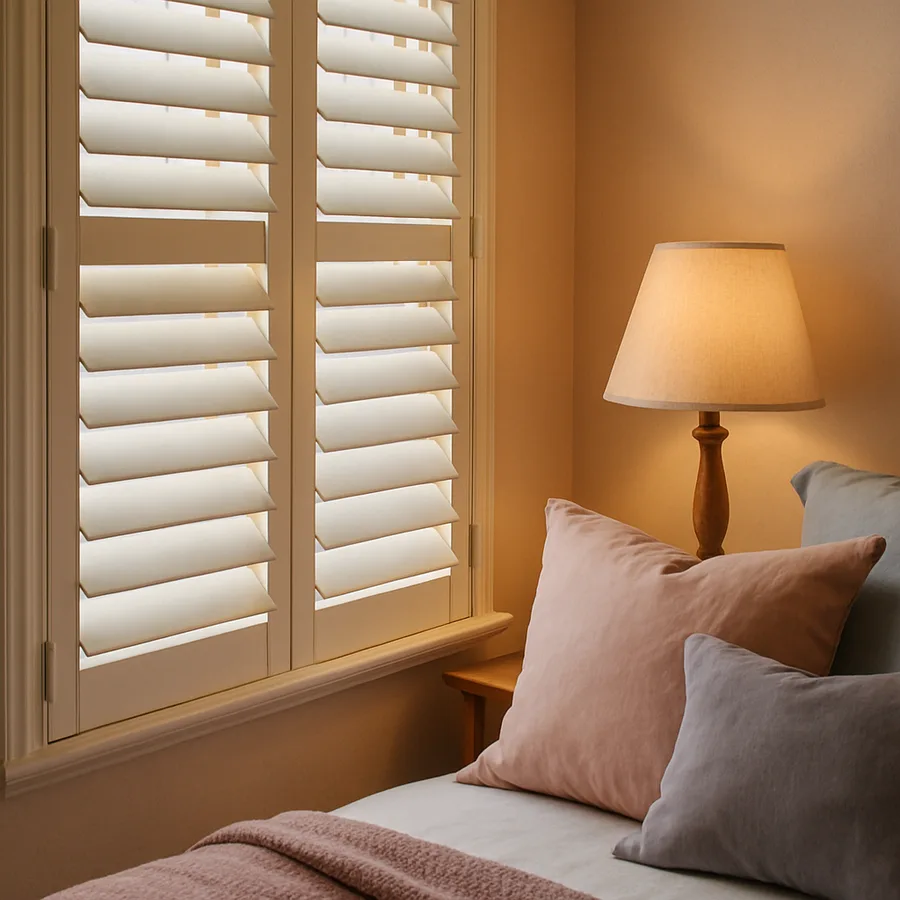
Why Plantation Shutters Command a Premium Among Window Treatments
Plantation shutters sit at the top of the window treatment price hierarchy, and understanding why helps frame the cost discussion that follows. Unlike blinds, shades, or curtains that attach to the window frame as accessories, plantation shutters are built into the window architecture itself, functioning as permanent fixtures that become part of the home's structure. They mount within or around the frame using a rigid panel-and-louver system constructed from solid wood, engineered wood, or polymer composites, and they operate on hinges that allow the panels to swing open like small doors. This construction complexity, combined with the precise custom sizing that every installation requires, drives costs well above what flexible soft treatments command.
The investment pays dividends that cheaper treatments cannot match. The National Association of Realtors (NAR) consistently identifies plantation shutters as one of the few window treatments that add measurable resale value to a home, with real estate professionals estimating a return of 70 to 85 percent of the original cost at the time of sale. No roller blind, roman shade, or curtain panel commands that kind of return because buyers perceive shutters as architectural improvements rather than decorative additions. That distinction matters when you are weighing the upfront cost against the long-term financial impact on your home's value.
Plantation shutters also outlast every other category of window treatment by a wide margin. A quality wood or composite shutter installed properly will last 20 to 30 years with minimal maintenance, whereas blinds and shades typically need replacement every 7 to 12 years. The Window Covering Safety Council notes that plantation shutters are inherently cordless, making them the safest option for homes with young children without requiring any special mechanism or additional cost for child-safe operation. Over a 25-year ownership period, the total cost of ownership for shutters often equals or undercuts the cumulative cost of replacing cheaper treatments two or three times.
The cost of plantation shutters varies enormously depending on four primary factors: window size, material choice, louver width, and installation complexity. A single standard window can cost as little as 150 dollars with a basic vinyl shutter or as much as 1,200 dollars with a premium hardwood shutter in a custom configuration. Whole-home installations for a three-bedroom house with 15 to 20 windows typically range from 3,000 to 15,000 dollars, a spread wide enough to make detailed cost analysis essential before committing to a purchase. The sections that follow break down each cost factor so you can build an accurate budget for your specific situation.
Material Options and Their Price Ranges Per Square Foot
Basswood is the traditional gold standard for plantation shutters and remains the most popular natural wood choice among interior designers and custom shutter manufacturers. Basswood is lightweight, fine-grained, dimensionally stable, and takes paint and stain beautifully, producing a finish that looks and feels unmistakably like real wood because it is. Basswood shutters cost between 20 and 35 dollars per square foot of window opening, depending on the manufacturer, finish, and louver configuration. A standard 36-by-60-inch window in basswood shutters with a painted finish runs approximately 300 to 525 dollars for the shutter panels alone, before installation. Stained finishes typically add 10 to 15 percent to the base price because the staining process requires wood selection for consistent grain appearance, which increases material waste.
Poplar and paulownia represent the mid-range solid wood tier, offering the authenticity of real wood at a lower price point than basswood. Poplar is slightly heavier and harder than basswood, with a less uniform grain that paints well but does not stain as attractively. Paulownia is an ultralight hardwood that Asian shutter manufacturers favor for its combination of low weight and good stability. Both materials cost between 15 and 25 dollars per square foot, positioning them 20 to 30 percent below basswood while delivering comparable performance in painted finishes. The Houzz professional directory shows that many mid-market shutter companies use poplar as their standard wood option, reserving basswood for their premium tier.
Composite and engineered wood shutters use a core of MDF (medium-density fiberboard) or extruded wood fiber wrapped in a vinyl or painted coating. These products look remarkably similar to painted wood shutters from a normal viewing distance, and they offer superior moisture resistance that makes them suitable for bathrooms, kitchens, and humid climates where solid wood can warp over time. Composite shutters cost between 12 and 22 dollars per square foot, making them the sweet spot for homeowners who want the shutter aesthetic without the premium wood price. The trade-off is weight: composite shutters are significantly heavier than basswood, which stresses hinges more and can be problematic on very large windows where the panel weight exceeds what standard hinge hardware can support reliably.
Vinyl and PVC shutters occupy the budget tier at 8 to 15 dollars per square foot, and they have improved dramatically in appearance and durability over the past decade. Modern vinyl shutters use hollow polypropylene or solid PVC construction with UV stabilizers that resist yellowing and warping, and the best products feature embossed wood-grain textures that approximate the look of painted wood. Vinyl shutters are completely waterproof, making them the definitive choice for shower windows, pool houses, and coastal environments with salt air exposure. According to the American Society of Interior Designers, vinyl shutters now account for approximately 35 percent of the residential shutter market, driven by their combination of low cost, zero maintenance, and steadily improving aesthetics.
Window Size and Configuration: How Dimensions Drive Cost
Plantation shutter pricing starts with the square footage of the window opening, but the relationship between size and cost is not strictly linear. Small windows under six square feet (such as a 24-by-36-inch bathroom window) carry a disproportionately high per-square-foot cost because the manufacturer incurs the same setup, cutting, and assembly overhead regardless of the shutter's size. A small bathroom window in basswood might cost 250 to 350 dollars, which works out to 42 to 58 dollars per square foot, well above the typical 20-to-35-dollar range for standard-size windows. Medium windows between six and fifteen square feet hit the cost sweet spot, where economies of scale bring the per-square-foot price into the standard range. Very large windows above fifteen square feet sometimes require additional structural reinforcement, heavier hinge hardware, or a center divider rail, which adds components that push the total cost up even as the per-square-foot rate remains steady.
The number of panels required to cover the window significantly affects the price because each panel is an independent framed unit with its own louvers, hinge hardware, and tilt mechanism. A narrow window covered by a single pair of panels (one left, one right) costs less than the same total width covered by three or four panels because each additional panel adds frame material, hinge sets, and assembly labor. The general rule is that shutter panels should be between 12 and 20 inches wide for optimal proportion and easy operation. Windows wider than 40 inches typically require three or four panels to maintain attractive proportions and prevent individual panels from becoming too heavy to swing smoothly.
Specialty window shapes escalate costs dramatically because they require custom engineering that standard rectangular shutters do not. Arched windows need curved frames that are shaped to match the specific radius of the arch, adding 40 to 60 percent to the cost of an equivalent rectangular window. Triangular windows, octagonal windows, and other geometric shapes require even more custom fabrication and typically cost 50 to 100 percent more than rectangular equivalents. French doors and sliding glass doors can be fitted with plantation shutters that mount directly to the door, but the requirement for lightweight construction, narrow frames that clear the door handle, and precise alignment during operation makes these installations among the most expensive per-unit configurations available, often running 400 to 800 dollars per door panel.
Have you measured all your windows precisely, or are you estimating from memory? The difference between a 34-inch-wide window and a 36-inch-wide window can shift the shutter from a two-panel to a three-panel configuration, adding 100 to 200 dollars to the cost. Accurate measurements are critical for budgeting, and most reputable shutter companies offer free in-home measuring as part of their sales process. Take advantage of this service even if you plan to compare quotes from multiple vendors, because the professional measurements will give you a reliable baseline for cost calculations that eyeball estimates cannot provide.
Louver Width, Frame Style, and Hardware Selections
The width of the louver, which is the individual horizontal slat that tilts to control light and privacy, affects both cost and aesthetics in ways that homeowners frequently underestimate. Plantation shutters are distinguished from traditional shutters by their wider louvers, typically ranging from 2.5 inches to 4.5 inches. Wider louvers at 3.5 to 4.5 inches provide a more open view when tilted open, create a more contemporary appearance, and actually cost less per shutter because fewer louvers are needed to span the window height. Narrower louvers at 2.5 to 3 inches use more material and more assembly labor per panel, increasing the cost by 10 to 20 percent while producing a more traditional, detailed appearance with finer horizontal lines. The Architectural Digest shutter guide recommends matching louver width to window height: 2.5-inch louvers for windows under 36 inches tall, 3.5-inch for windows 36 to 60 inches, and 4.5-inch for windows taller than 60 inches.
The frame style that surrounds the shutter panels and attaches them to the window opening comes in several configurations that range from minimal to decorative. An L-frame is the simplest and least expensive option, consisting of a flat board that covers the edge of the window opening and provides a mounting surface for the hinges. A Z-frame adds a decorative lip that overlaps the window casing, providing a more finished appearance at a modest cost increase of 10 to 15 dollars per window. A full decorative frame with bullnose or ogee profile molding matches the architectural trim in the room and creates the most polished look, but adds 30 to 60 dollars per window. Some manufacturers offer frameless installations that mount the shutter panels directly into the window jamb using concealed hinges, eliminating the frame entirely for the cleanest possible aesthetic at a premium cost that reflects the precision required.
Tilt mechanisms control how the louvers open and close, and the two primary options carry different price tags and maintenance profiles. Traditional tilt bars are the vertical rods visible on the front of the shutter panel that connect all louvers mechanically, allowing them to tilt in unison when the bar is pushed up or down. Tilt bars are included in the base price of virtually all shutters and provide reliable, intuitive operation that requires no instruction. Hidden tilt systems eliminate the visible bar by connecting the louvers with a rear-mounted tension mechanism or individual gear system, producing a cleaner front face that shows only the louvers and frame. Hidden tilt adds 15 to 40 dollars per panel and is worth considering for homeowners who prefer the uncluttered aesthetic, though it does reduce the maximum tilt range by approximately five degrees compared to a traditional tilt bar.
Hinge hardware is a small cost component that has an outsized impact on long-term satisfaction. Standard hinges in zinc-plated steel work adequately for most installations, but stainless steel hinges are recommended for coastal or high-humidity locations where corrosion can cause staining and stiffness. Specialty hinges that allow the shutter panels to fold completely flat against the wall beside the window, rather than projecting into the room at a 90-degree angle, cost 10 to 20 dollars more per hinge pair but make a meaningful difference in rooms where open shutters would obstruct furniture, walkways, or adjacent windows. The hardware cost for a standard window with two panels and four hinges ranges from 20 to 80 dollars depending on the hinge type and finish.
Installation Costs: DIY vs Professional and What Affects the Price
Professional installation by a certified shutter installer typically costs between 50 and 150 dollars per window, with the price varying based on window accessibility, wall material, and whether the installation is an inside mount or outside mount. Inside mounts, where the shutter sits within the window frame, require tighter tolerances and more precise shimming to ensure the panels swing freely without rubbing against the frame, which takes more time than outside mounts that attach to the wall surface surrounding the window. Most shutter companies include basic installation in their quoted price, rolling the labor into the per-square-foot cost, but it is important to confirm this before comparing quotes because some companies quote panels only and add installation as a separate line item.
DIY installation is feasible for handy homeowners with basic tools, accurate measurements, and patience. Most plantation shutter manufacturers provide detailed installation guides, pre-drilled mounting holes, and all necessary hardware with their products. A confident DIYer can install a standard rectangular window in 30 to 60 minutes after the first learning-curve window, which might take 90 minutes. The tools required are a drill, a level, a tape measure, and a shim kit, all standard items in a home toolkit. The National Kitchen and Bath Association recommends professional installation for any shutter wider than 60 inches, any specialty shape, any installation into masonry or tile surrounds, and any motorized shutter system, because these scenarios involve complications that can result in damaged products or compromised operation if not handled by experienced installers.
Removal and disposal of existing window treatments adds a small but often overlooked cost to the installation budget. If your windows currently have blinds, shades, or old shutters, the installer will need to remove them and patch any mounting holes before the new shutters go in. Most professional installers include removal in their service at no extra charge, but patching and repainting the frame after removal is sometimes excluded and quoted separately at 15 to 30 dollars per window. If you are handling the project yourself, budget two to three hours for removing old treatments, patching, and touching up paint across a full home before the new shutters arrive.
What happens when your installer discovers that a window frame is not square or that the wall material cannot hold standard screws? Structural surprises during installation can add unplanned costs that blow a tight budget. Windows that appear square sometimes reveal themselves to be significantly out of plumb or level when measured precisely, requiring custom shimming or frame modification that adds time and material costs. Plaster walls in older homes can crumble when drilled, necessitating toggle bolts or backing plates instead of standard screws. Aluminum window frames in some mid-century homes require specialized mounting hardware that costs more than standard wood-frame mounting. A reputable installer will identify these issues during the measuring visit and include any additional costs in the initial quote, but bargain installers sometimes quote for standard conditions and then add surcharges on installation day. Ask explicitly about what conditions could trigger additional charges before signing any agreement.
Building Your Budget: Sample Costs for Common Scenarios
A single standard bedroom window measuring 36 by 60 inches costs approximately 200 to 350 dollars in vinyl, 300 to 500 dollars in composite, and 400 to 700 dollars in basswood, including basic professional installation. These ranges assume a rectangular inside-mount configuration with 3.5-inch louvers, a standard L-frame, and a traditional tilt bar. Upgrading to hidden tilt adds 30 to 80 dollars. Upgrading to a decorative frame adds 30 to 60 dollars. Choosing 2.5-inch louvers instead of 3.5-inch adds 10 to 20 percent. Each upgrade is individually modest but they compound quickly across multiple windows.
A full home installation for a typical three-bedroom, two-bathroom house with 15 windows breaks down as follows for mid-range composite shutters. Ten standard bedroom and living room windows at approximately 400 dollars each total 4,000 dollars. Two large living room or family room windows at approximately 600 dollars each total 1,200 dollars. Two bathroom windows at approximately 300 dollars each total 600 dollars. One specialty-shape or oversized window at approximately 800 dollars adds 800 dollars. The total lands between 6,600 and 8,000 dollars for composite, or 9,000 to 12,000 dollars for the same home in basswood. Vinyl brings the total down to 4,000 to 6,000 dollars. These estimates align with data from the National Kitchen and Bath Association, which tracks average window treatment budgets as a percentage of total home renovation spending.
Strategies for reducing cost without sacrificing the plantation shutter look include mixing materials across rooms based on visibility and conditions. Use basswood or premium composite in high-visibility rooms like the living room and primary bedroom where guests see the shutters up close and the wood quality is most appreciated. Use vinyl in bathrooms where moisture resistance matters more than material prestige. Use composite in secondary bedrooms and utility spaces where the shutters are functional but not focal points. This tiered approach can reduce a whole-home budget by 20 to 30 percent compared to using the same premium material throughout, with no visible compromise in the rooms that matter most to daily living and resale presentation.
Consider whether you truly need shutters on every window, or whether a mixed treatment strategy serves your home better. Plantation shutters make the strongest design impact on street-facing windows, large picture windows, and windows in rooms where the shutters will be visible from the primary seating position. Windows that are mostly covered by furniture, hidden behind doors, or located in closets and utility areas may not benefit from the shutter investment. Redirecting those savings toward premium materials or wider louvers on the windows that do get shutters elevates the overall quality of the installation while keeping the total budget manageable. A smart allocation of your window treatment budget produces better results than spreading a limited budget thin across every opening in the house.
Conclusion: Spending Wisely on a Treatment That Lasts Decades
Plantation shutters represent one of the larger investments in a home's interior, but they are also one of the most enduring. The cost breakdown across material, size, configuration, and installation reveals a product category with enormous range, from budget vinyl at under 5,000 dollars for a full home to premium basswood exceeding 15,000 dollars. Knowing where each dollar goes allows you to make intentional trade-offs rather than defaulting to the cheapest option or the most expensive option without understanding what you gain or sacrifice at each price point.
The material choice is the single largest cost driver and should be guided by your climate, your rooms' moisture exposure, your aesthetic sensitivity to material quality, and your budget boundaries. Basswood delivers the finest finish and lightest weight. Composite offers the best balance of appearance, durability, and value. Vinyl provides waterproof practicality at the lowest price. None of these materials is wrong; each serves a specific set of priorities, and mixing them across rooms is a pragmatic strategy that most shutter professionals endorse.
Get quotes from at least three shutter companies, ensure each quote specifies the same material, louver width, frame style, and installation scope, and compare on an apples-to-apples basis. Ask every vendor what conditions could trigger additional charges, what warranty they provide on both materials and installation, and how long the lead time is from measurement to installation. Armed with the cost framework in this guide and competitive quotes from qualified vendors, you can commit to a plantation shutter investment with confidence that you are paying a fair price for a product that will serve your home beautifully for decades to come.
More Articles You May Like



Comments
Post a Comment