Motorized Blinds Worth the Splurge: Brands and Install Tips
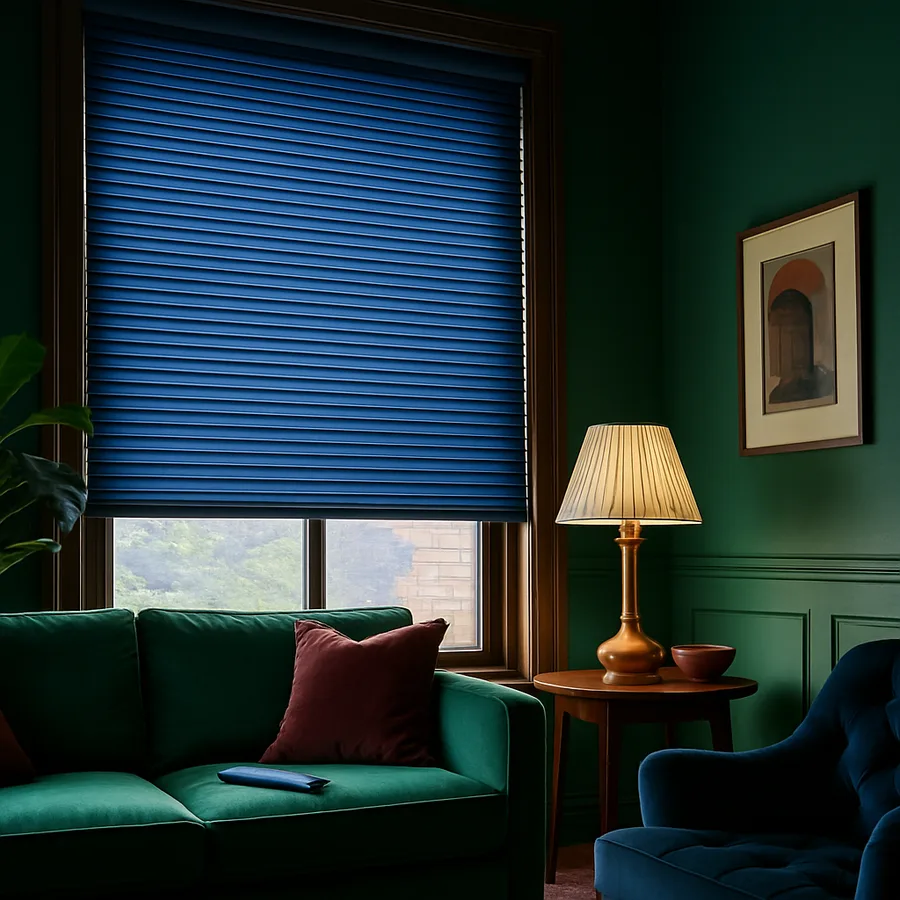
What Makes Motorized Blinds Different From Standard Window Treatments
Motorized blinds replace the manual cord, chain, or wand that operates conventional window treatments with a small electric motor housed inside the headrail or roller tube. That motor responds to commands from a remote control, a wall switch, a smartphone app, or a voice assistant, raising and lowering the blinds without any physical contact. The technology itself is not new; motorized window treatments have existed in commercial buildings and luxury homes for over three decades. What has changed dramatically is the price, the ease of installation, and the integration with smart home platforms that now make motorized blinds accessible to a much broader range of homeowners than the wealthy few who could afford them a decade ago.
The functional advantages go beyond convenience, though convenience alone justifies the upgrade for many households. Motorized blinds eliminate dangling cords entirely, which the Consumer Product Safety Commission (CPSC) identifies as a leading cause of strangulation injuries among young children. The CPSC's mandatory safety standard effective since 2018 requires all corded window treatments to include cord-shortening or tensioning devices, but motorized blinds bypass the issue completely by having no cords at all. For families with small children, the safety benefit is not a luxury; it is a primary reason to choose motorized operation over any manual alternative.
Energy savings represent another practical benefit that accumulates over years of use. Motorized blinds connected to a smart home system can be programmed to respond automatically to sunrise and sunset times, temperature sensor readings, or occupancy status, adjusting throughout the day to minimize solar heat gain in summer and maximize passive solar heating in winter. A study conducted by the Lawrence Berkeley National Laboratory found that automated window shading reduced cooling energy consumption by 10 to 20 percent in test homes, with the savings most pronounced in homes with large south- and west-facing glass areas. Manual blinds can theoretically provide the same thermal management, but they depend on the occupant remembering to adjust them at the right times, which rarely happens with consistency.
The psychological shift that comes with motorization surprises most new users. Windows that previously stayed in one position all day because adjusting them felt like a chore suddenly become dynamic elements of the room. Homeowners who install motorized blinds report adjusting their window treatments five to ten times more frequently than they did with manual blinds, optimizing light, glare, and privacy throughout the day rather than accepting a static compromise. This increased engagement with natural light has measurable effects on mood, productivity, and circadian rhythm, benefits that are difficult to quantify in a cost analysis but that many users cite as the most valuable outcome of the upgrade.
Brand Comparison: From Budget to Premium Motorized Systems
Lutron occupies the premium tier of the motorized blind market and is widely considered the industry benchmark for reliability, quiet operation, and smart home integration. The Lutron Serena line offers roller shades, honeycomb shades, and wood blinds with battery-powered or hardwired motors that communicate via Lutron's proprietary Clear Connect RF protocol. Serena shades integrate natively with Apple HomeKit, Amazon Alexa, Google Home, and the Lutron app, providing the broadest ecosystem compatibility of any motorized blind brand. Pricing for Lutron Serena starts at approximately 350 dollars per shade for a standard window in a basic fabric, with most installations landing between 400 and 700 dollars per shade including the motor and power source. The Lutron Caseta and RadioRA3 systems support centralized control of multiple shades with scene programming and sunrise/sunset automation.
Hunter Douglas offers motorization through its PowerView system, which is available across nearly the entire Hunter Douglas product line including Duette honeycomb shades, Silhouette shadings, Pirouette shadings, and Designer Roller Shades. PowerView uses a rechargeable battery pack or hardwired power, and the shades communicate via Bluetooth and Wi-Fi through the PowerView hub. The system integrates with Amazon Alexa, Google Home, Apple HomeKit (via the hub), and several third-party smart home platforms. Hunter Douglas shading with PowerView motorization typically costs 400 to 900 dollars per window depending on the product line and fabric, positioning it at the upper end of the market alongside Lutron. The Architectural Digest editors' choice list has featured Hunter Douglas PowerView repeatedly for its combination of premium fabrics and seamless automation.
IKEA disrupted the motorized blind market with its FYRTUR and KADRILJ smart blinds, priced between 100 and 170 dollars per shade depending on size. These battery-powered roller blinds communicate via Zigbee through the IKEA DIRIGERA hub and integrate with Apple HomeKit, Amazon Alexa, and Google Home. The fabric options are limited to blackout and light-filtering in a small selection of neutral colors, and the maximum width is approximately 48 inches, which excludes larger windows. The motors are noticeably louder than Lutron or Hunter Douglas, and the build quality reflects the budget price point with plastic components where premium brands use metal. Despite these compromises, IKEA's smart blinds have introduced motorized window treatments to hundreds of thousands of households that would never have considered a 500-dollar-per-window product.
Tilt and Soma represent the retrofit category, offering motorization devices that attach to existing manual blinds and convert them to smart operation. The Soma Smart Shades 2 is a solar-powered motor unit that clamps onto the beaded chain of an existing roller blind or roman shade, automating the lift mechanism without replacing the entire treatment. At approximately 100 to 130 dollars per device, Soma allows homeowners to motorize their current blinds at a fraction of the cost of purchasing new motorized shades. The trade-off is that retrofit motors are generally louder, slower, and less elegant than purpose-built motorized blinds, and they add a visible hardware unit to the top of the window frame. For homeowners who love their current blinds but want motorization, or who want to test the concept before investing in a full replacement, retrofit solutions offer a practical and reversible entry point.
Power Options: Battery, Hardwired, and Solar Considerations
Battery-powered motors are the most common power source for residential motorized blinds because they require no electrical work during installation. Most battery-powered systems use a rechargeable lithium-ion battery pack that slides into the headrail or mounts discreetly behind the shade. A full charge typically lasts three to six months with average daily use of two to four open/close cycles, and recharging takes two to four hours via a USB cable. The convenience of battery power is significant: any homeowner can install battery-powered motorized blinds with nothing more than a drill, a level, and the mounting brackets included with the product. No electrician, no wall wiring, no permit.
The downside of battery power is the maintenance obligation. A home with 15 motorized blinds that each need recharging quarterly means 60 individual recharging events per year, each requiring you to unplug the battery pack, connect it to a charger, wait for a full charge, and reinstall it. For hard-to-reach windows above staircases, in vaulted ceilings, or behind furniture, this recharging routine becomes genuinely inconvenient. Some homeowners solve this by running a permanent USB charging cable from a nearby outlet to the shade's battery connection, which converts a battery-powered shade into a quasi-hardwired installation without the cost of proper hardwiring.
Hardwired motors connect to the home's electrical system through low-voltage wiring (typically 12V or 24V DC) run from a central power supply to each shade location. Hardwired systems never need battery changes or recharging, operate with consistent speed and torque regardless of charge level, and support the most powerful motors capable of driving very large or very heavy window treatments. The installation cost is the primary barrier: running low-voltage wiring to each window location during new construction costs 50 to 100 dollars per window, but retrofitting wiring into finished walls in an existing home costs 150 to 400 dollars per window for the electrical work alone, on top of the shade cost. Hardwiring is most practical during a renovation when walls are already open, or in new construction where the wiring can be planned alongside the electrical layout.
Solar-powered motors, used in products like the IKEA KADRILJ and the Soma Smart Shades, harvest energy from a small photovoltaic panel mounted on the window glass. Solar power eliminates both battery maintenance and hardwiring costs, making it an appealing middle ground. The limitation is that solar panels depend on adequate light exposure to charge, which means north-facing windows, windows shaded by trees or overhangs, and windows in climates with extended overcast periods may not receive enough solar energy to keep the motor charged for daily operation. Most solar systems include a backup USB charging option for these situations, but if you find yourself USB-charging the "solar" blinds regularly, the solar benefit is largely theoretical. Is your window's solar exposure strong enough to keep a small panel charged year-round, or would battery or hardwired power be more honest choices for your climate? Evaluate your specific window's solar exposure before committing to solar-powered motorization as your primary power strategy.
Smart Home Integration and Automation Scenarios
The true value proposition of motorized blinds emerges when they are connected to a smart home ecosystem that enables automation beyond simple remote-control operation. Scheduled automation is the most basic and most universally useful feature: programming the blinds to open at your wake-up time and close at sunset so that light management happens automatically without any daily input. Most smart home platforms support time-based schedules with sunrise/sunset tracking that adjusts automatically as day length changes through the seasons, ensuring your blinds always respond to actual lighting conditions rather than fixed clock times that drift out of sync with the sun.
Sensor-based automation adds intelligence that schedules alone cannot provide. A light sensor mounted on the window can trigger the blinds to close partially when direct sunlight exceeds a brightness threshold, preventing glare on screens and furniture fading without blocking all daylight. A temperature sensor can close the blinds when the glass surface temperature rises above a set point, reducing solar heat gain before the air conditioning system has to compensate. An occupancy sensor can open the blinds when someone enters the room and close them when the room has been empty for a set period, optimizing privacy and energy use based on actual room usage patterns rather than assumptions about when the room is occupied.
Would you like your blinds to respond to weather forecasts, closing automatically before a predicted thunderstorm hits your neighborhood or before a heat wave drives up your cooling bill? Advanced automation platforms like Apple Home, Samsung SmartThings, and Home Assistant support conditional logic that connects motorized blinds to weather data, geofencing (closing when you leave the house), HVAC system status, and even your calendar. A "movie time" scene can close the blinds, dim the overhead lights, and turn on the TV with a single voice command or tap. A "good morning" routine can open the bedroom blinds gradually over ten minutes, simulating a natural sunrise that wakes you gently before your alarm sounds. These multi-device automations transform motorized blinds from a standalone convenience into an integrated component of a responsive home environment.
Compatibility between your motorized blinds and your chosen smart home platform is the most important technical specification to verify before purchasing. Not all brands work with all platforms, and the integration depth varies from basic on/off control to full position control with scene support. Lutron products offer the broadest native compatibility and the most reliable connection stability. Hunter Douglas PowerView requires its dedicated hub but integrates smoothly once connected. IKEA smart blinds require the DIRIGERA hub and work well within the Apple HomeKit ecosystem but have had inconsistent performance with Google Home and Alexa in some user reports. The Houzz smart home forum is a useful resource for real-world compatibility reports from homeowners using specific combinations of platforms and motorized blind brands.
Installation Tips That Prevent Common Mistakes
Measure every window individually and never assume that windows that look the same size are actually the same size. In most homes, window openings vary by a quarter inch to a full inch even within the same room, and motorized blinds are custom manufactured to the exact dimensions you provide. An error of half an inch can result in a shade that does not fit the opening, and custom motorized products are typically non-returnable because they are built to order. Measure the width at three points (top, middle, bottom of the opening) and the height at three points (left, center, right), then use the smallest width measurement and the largest height measurement for inside-mount orders. This approach ensures the shade fits within the narrowest point of the opening while covering the full height.
Plan your power strategy before ordering the shades, not after they arrive. If you are choosing battery-powered shades, identify where you will route USB cables for convenient recharging and consider whether a nearby outlet can support a permanent cable run for hands-free charging. If you are choosing hardwired shades, schedule the electrician before ordering the product and have the wiring in place before the shades are delivered. If you are choosing solar-powered shades, test the solar exposure of each window by placing a small solar device (such as a solar phone charger) on the glass for a week and monitoring its charge performance. These preparatory steps prevent the frustrating discovery on installation day that your power plan does not work as expected.
Mount the shade brackets level and at the correct depth within the window frame, using a laser level rather than a bubble level for the most accurate alignment. Motorized roller blinds are less forgiving of misaligned brackets than manual blinds because the motor drives the roller at a consistent rate from both ends, and if one bracket is higher than the other, the fabric tracks unevenly and can jam. Leave at least a quarter inch of clearance between the shade fabric and the nearest obstruction on each side to prevent rubbing that causes noise and fabric wear. The National Kitchen and Bath Association publishes recommended clearance specifications for motorized window treatments that are available free on their website and that installers should follow for warranty compliance.
Test the full range of operation before finalizing the installation. Run each shade through ten complete open and close cycles while observing for uneven tracking, motor hesitation, unusual noise, or fabric bunching. Program the upper and lower travel limits according to the manufacturer's instructions, setting the lower limit so the shade fully covers the glass without over-extending and the upper limit so the shade retracts completely without straining the motor against the stop. Pair the shade with your smart home platform and test all automation routines before the installer leaves or before you put your tools away. Identifying issues during installation is far easier than troubleshooting them after the window treatment is in regular use and the installation hardware is packed away.
Maintenance, Troubleshooting, and Long-Term Reliability
Motorized blinds require less physical maintenance than manual treatments because there are no cords to fray, no chains to lubricate, and no spring mechanisms to fatigue from daily winding. The motor itself is a sealed unit designed for a lifespan of 10,000 to 25,000 open-close cycles, which translates to roughly 7 to 17 years at four cycles per day. The fabric or slat material wears at approximately the same rate as it would on a manual blind, so the motorization does not accelerate or decelerate the cosmetic lifespan of the treatment. Most premature failures in motorized blinds are electrical rather than mechanical, caused by battery neglect, power supply issues, or wireless connectivity dropouts rather than motor burnout.
Battery health is the most common maintenance concern for wirelessly powered shades. Lithium-ion battery packs lose capacity over time, and after three to five years the charge duration that originally lasted six months may shrink to two or three months. Replacement battery packs cost 25 to 60 dollars depending on the brand and are designed for user installation without tools. Keeping the battery above 20 percent charge and avoiding full discharge extends the pack's useful life, much like the battery management practices recommended for smartphones and laptops. The Consumer Technology Association advises replacing lithium-ion battery packs in smart home devices every four to five years as a preventive measure, even if they still hold a partial charge, because aging batteries can swell and damage the device housing.
Wireless connectivity issues account for the majority of user complaints about motorized blind systems, and most are resolved through straightforward troubleshooting. If a shade stops responding to app or voice commands but still operates from its physical remote, the issue is almost always a Wi-Fi or hub connectivity problem rather than a shade malfunction. Restarting the smart home hub, moving it closer to the shades, or adding a Wi-Fi range extender typically resolves the issue. If the shade does not respond to any control input including the physical remote, the most likely cause is a depleted battery or a dislodged power connection, both of which are resolved by recharging or reseating the battery pack. True motor failures are rare within the first decade of use and are typically covered by manufacturer warranties that range from five years for budget brands to a lifetime limited warranty from Lutron on its Serena line.
Fabric cleaning for motorized blinds follows the same guidelines as manual blinds: regular dusting with a soft cloth or vacuum brush attachment, spot cleaning with a damp cloth for marks and smudges, and professional ultrasonic cleaning every two to three years for fabric shades that accumulate embedded dust. The one additional consideration for motorized shades is to avoid getting the motor housing, battery compartment, or any electronic components wet during cleaning. Use a barely damp cloth near the headrail and keep all spray cleaners directed at the fabric surface well below the motor unit. If you hire a professional cleaning service for your window treatments, inform them that the shades are motorized so they can take appropriate precautions with the electronic components that manual blinds do not have.
Conclusion: Calculating Whether the Splurge Makes Sense for Your Home
Motorized blinds cost two to five times more than equivalent manual treatments, and that premium is the central question every prospective buyer must answer honestly. The cost is justified when motorized blinds solve a specific, recurring problem in your home: hard-to-reach windows that you cannot operate manually, large glass expanses that require daily adjustment for glare and heat management, a household with young children where cord safety is paramount, or a strong commitment to smart home automation that benefits from integrated window control. In these scenarios, motorized blinds deliver practical returns that you will experience every day, making the premium feel like money well spent rather than money overspent.
The cost is harder to justify when the primary motivation is novelty or the perception that motorized equals better. If your windows are easily reachable, if you do not mind the 10-second task of pulling a cord or chain, if you do not use smart home automation, and if you have no children in the home, the functional benefit of motorization is modest. You are paying a significant premium for the convenience of pressing a button instead of pulling a cord, which may or may not feel worthwhile once the novelty wears off after the first few weeks. Be honest about which category your situation falls into before committing thousands of dollars to motorized treatments throughout the home.
If you decide to proceed, start with one or two rooms rather than outfitting the entire home at once. Install motorized blinds in the bedroom and the room with the most challenging windows, live with them for a month, and evaluate whether the experience justifies expanding to additional rooms. This phased approach limits your initial financial commitment, lets you test the specific brand and power configuration before scaling up, and provides real-world data about battery life, app reliability, and automation usefulness that no amount of online research can replace. The brands and technology will continue improving and likely decreasing in price, so the rooms you outfit later may benefit from better products at lower costs than what is available now.
Start your research by requesting samples and quotes from two premium brands (Lutron and Hunter Douglas) and one budget brand (IKEA or a retrofit solution), comparing not just the per-shade price but the total system cost including hubs, remotes, and installation. That three-way comparison will clarify where your budget and your expectations intersect, and it will position you to make a purchase decision grounded in specific numbers rather than vague impressions of what motorized blinds should cost.
More Articles You May Like



Comments
Post a Comment