How to Achieve a Timeless Home Interior Design on a Budget
The Economics of Timeless Design
There is a pervasive misconception in interior design that timeless aesthetics require unlimited budgets. In reality, the opposite is often true. The most enduring interiors are frequently the most restrained, relying on quality fundamentals rather than expensive trend pieces that will feel dated within a few seasons. The American Society of Interior Designers (ASID) has published research indicating that homeowners who invest in timeless design principles spend an average of 40 percent less on interior updates over a ten-year period compared to those who follow trend-driven approaches.
Timeless design is, at its core, an exercise in discipline and prioritization. It requires the willingness to invest more in fewer, better pieces rather than filling a space with numerous affordable but disposable items. A single well-constructed sofa in a classic silhouette will serve you for decades, while a trendy fast-furniture alternative may need replacement within three to five years. When calculated on a cost-per-year basis, the quality investment almost always proves more economical.
The budget-conscious path to timeless design also demands a clear understanding of where to allocate resources and where to economize. Not every element in a room carries equal visual or functional weight. Learning to distinguish between the pieces that warrant investment and those that can be sourced affordably without compromising the overall quality of the space is a skill that pays dividends throughout a lifetime of homeowning.
Investing in Architectural Bones Over Decorative Trends
The foundation of any timeless interior is its architectural character: the proportions of the rooms, the quality of the trim work, the style of the doors and windows, and the finish of the floors. These elements establish the baseline quality of a space and influence every subsequent design decision. Fortunately, many architectural improvements are surprisingly affordable and deliver outsized impact relative to their cost.
Crown molding, chair rail, and substantial baseboards can transform a builder-grade room into one with genuine character for a fraction of the cost of new furniture. According to Houzz renovation data, trim upgrades rank among the highest-return design investments, with homeowners consistently rating the impact of improved millwork as exceeding their expectations relative to cost. A weekend project installing crown molding in a living room might cost a few hundred dollars in materials but can elevate the perceived quality of the entire space.
Door hardware is another high-impact, relatively low-cost investment. Replacing hollow-core doors with solid-core alternatives and upgrading generic hardware to substantial brass or bronze lever sets creates a tactile quality impression that visitors register immediately, even if unconsciously. The International Interior Design Association (IIDA) identifies hardware selection as one of the most underappreciated elements of residential design, noting that the sensation of operating a well-weighted door handle establishes expectations for the quality of the entire home.
Have you ever walked into a home and immediately sensed its quality before consciously identifying any specific element? That sensation is almost always produced by strong architectural bones rather than expensive furnishings, and achieving it is often more affordable than you might assume.
The Classic Furniture Silhouettes That Never Depreciate
Certain furniture forms have maintained their relevance across decades and even centuries, representing some of the safest investments available to budget-conscious homeowners. A Parsons table, a Lawson sofa, a Windsor chair, a four-poster bed: these silhouettes have proven their staying power through countless design cycles and remain as appropriate today as they were when they first gained popularity.
The National Council for Interior Design Qualification (NCIDQ) curriculum includes the study of furniture history precisely because understanding which forms endure and why equips designers to make sound recommendations regardless of current trends. The common thread among timeless silhouettes is a balance between simplicity and refinement: they are clean enough to work within modern interiors but possess enough detail and proportion to feel intentional rather than generic.
For the budget-conscious homeowner, the secondary market represents an extraordinary resource for acquiring timeless furniture at a fraction of retail cost. Estate sales, consignment shops, and online resale platforms frequently offer well-made pieces from previous decades at prices well below what comparable new items would command. A solid wood dining table from the mid-twentieth century, purchased at an estate sale for a few hundred dollars, will likely outlast and outperform a new table at three times the price from a contemporary mass-market retailer.
The key to successful secondhand shopping is knowing what to look for: solid wood construction rather than veneer over particleboard, traditional joinery rather than staples and glue, and frames made from kiln-dried hardwood rather than softwood or engineered lumber. These quality indicators are straightforward to identify with minimal training and dramatically increase the probability of a successful long-term investment.
Strategic Color and Pattern for Lasting Appeal
Color choices have an outsized influence on whether an interior feels timeless or dated, and they are also among the most affordable elements to get right. The timeless palette centers on warm neutrals, whites with depth, and classic accent tones that have demonstrated multi-generational appeal. Navy blue, hunter green, warm gray, cream, and rich brown form the core of a palette that transcends seasonal color trends without sacrificing sophistication or personality.
ASID color forecasting data reveals a consistent pattern: while trend colors cycle through periods of popularity and decline on roughly five-year intervals, certain hues maintain stable demand regardless of the prevailing fashion. These perennial favorites correspond closely to colors found abundantly in the natural world, suggesting that our attraction to them is rooted in something deeper than taste alone.
Pattern selection follows a similar logic. Stripes, plaids, florals in classical arrangements, and geometric patterns with historical precedent have maintained their appeal across centuries of interior design. A blue-and-white striped pillow, a plaid throw, or a traditional botanical print will feel as appropriate in a decade as it does today, whereas patterns designed to capture a specific moment in design culture will inevitably feel like artifacts of that moment once it passes.
What colors and patterns in your current home still feel as right as they did when you first chose them? Those choices likely align with timeless principles, and they can serve as a reliable foundation for future decisions.
Lighting and Textiles as Affordable Transformation Tools
Lighting represents one of the most cost-effective tools for transforming the quality and atmosphere of a room. Replacing a single overhead fixture with a classic pendant or chandelier in brass, iron, or white ceramic can shift the entire character of a space for an investment of two to three hundred dollars. According to Houzz project cost data, lighting upgrades consistently deliver among the highest satisfaction-to-cost ratios of any interior design investment, with 89 percent of homeowners rating lighting changes as having met or exceeded their expectations.
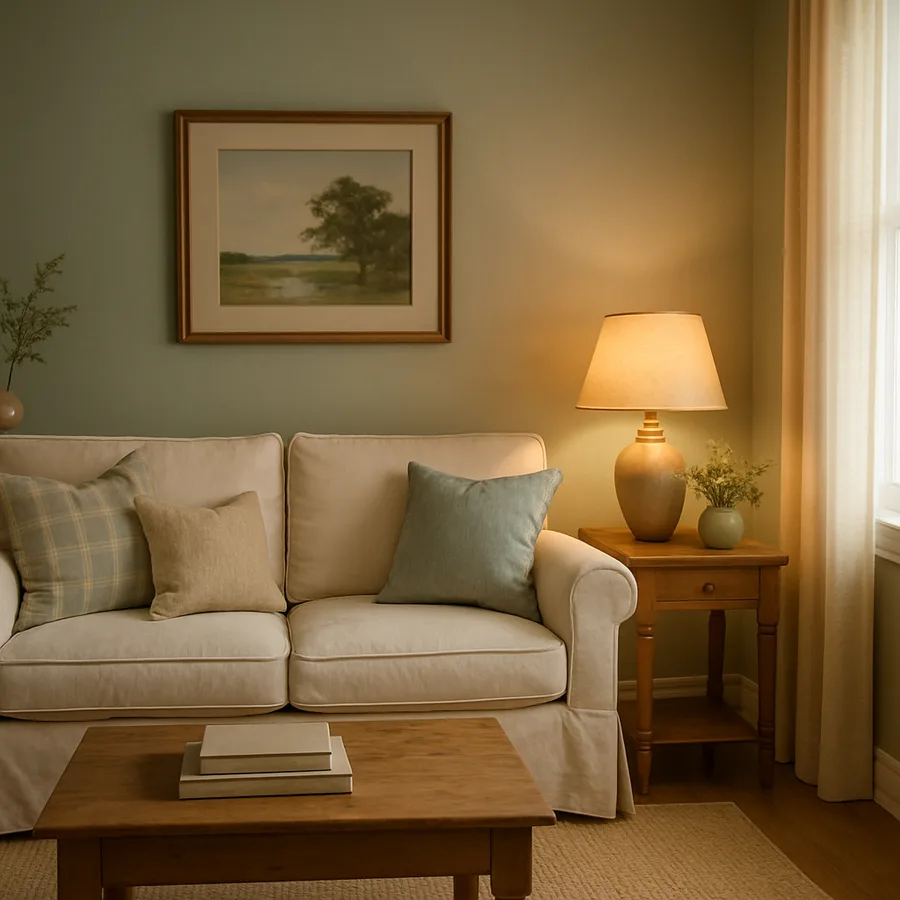
Table lamps and floor lamps offer even greater flexibility at lower cost. A pair of ceramic table lamps with linen shades on either side of a sofa creates the kind of layered, warm illumination that distinguishes a thoughtfully designed room from one that relies solely on overhead lighting. Classic lamp forms, particularly turned wood bases, simple ceramic cylinders, and slender metal columns, have remained in continuous production precisely because their appeal does not fluctuate with trend cycles.
Textiles provide the most accessible and reversible means of introducing warmth, color, and texture into any interior. Quality curtains in a natural fabric such as linen or cotton can dramatically improve the proportions and acoustics of a room while adding a layer of softness that transforms the sensory experience. Throw pillows, blankets, and area rugs offer opportunities to introduce seasonal variation without permanent commitment, allowing a room to evolve gradually without requiring wholesale redecoration.
The principle of quality over quantity applies with particular force to textiles. A single cashmere throw draped over a sofa arm communicates more about the quality of a space than a dozen inexpensive polyester pillows scattered across every surface. IIDA material guidelines emphasize that the hand, or tactile quality, of a fabric contributes as much to the experience of a room as its visual appearance, making material quality a critical consideration even at modest price points.
Building a Timeless Home Through Patient Curation
Perhaps the most important principle of budget-friendly timeless design is patience. The most beautiful and enduring interiors are rarely assembled in a single shopping trip or design sprint. They are curated gradually over months and years, with each addition chosen carefully and given time to demonstrate its value within the evolving composition of the space.
This curatorial approach naturally aligns with budget constraints. Rather than financing a complete room of furniture at once, the patient homeowner can allocate resources to one significant piece at a time, ensuring that each investment receives the consideration it deserves. A quality sofa this year, a vintage dining table next year, and a set of well-made bookshelves the year after that: this cadence of acquisition produces a room with genuine character and depth that cannot be replicated by a single bulk purchase from a showroom.
Living with a space before making permanent decisions also reduces the risk of costly mistakes. Spending a few weeks in a room before committing to a paint color, furniture arrangement, or lighting plan allows you to understand how light moves through the space at different times of day, how traffic patterns actually function versus how you imagined they would, and which areas of the room naturally draw your attention and use. This knowledge, which can only be gained through occupancy, leads to better decisions and fewer regrets.
The NCIDQ professional development resources emphasize that even professional designers benefit from extended observation periods before finalizing design decisions. If seasoned professionals recognize the value of patience in their practice, homeowners can certainly embrace the same principle in theirs. Time is the most valuable and most affordable resource available to anyone pursuing timeless design.
Start your journey toward timeless design today by identifying one room in your home that would benefit most from a considered refresh. Consult with an ASID-certified designer for a single strategy session to establish priorities, and then pursue those improvements at a pace that respects both your budget and the principle of thoughtful curation.
More Articles You May Like



Comments
Post a Comment