How Interior AI is Revolutionizing Home Design
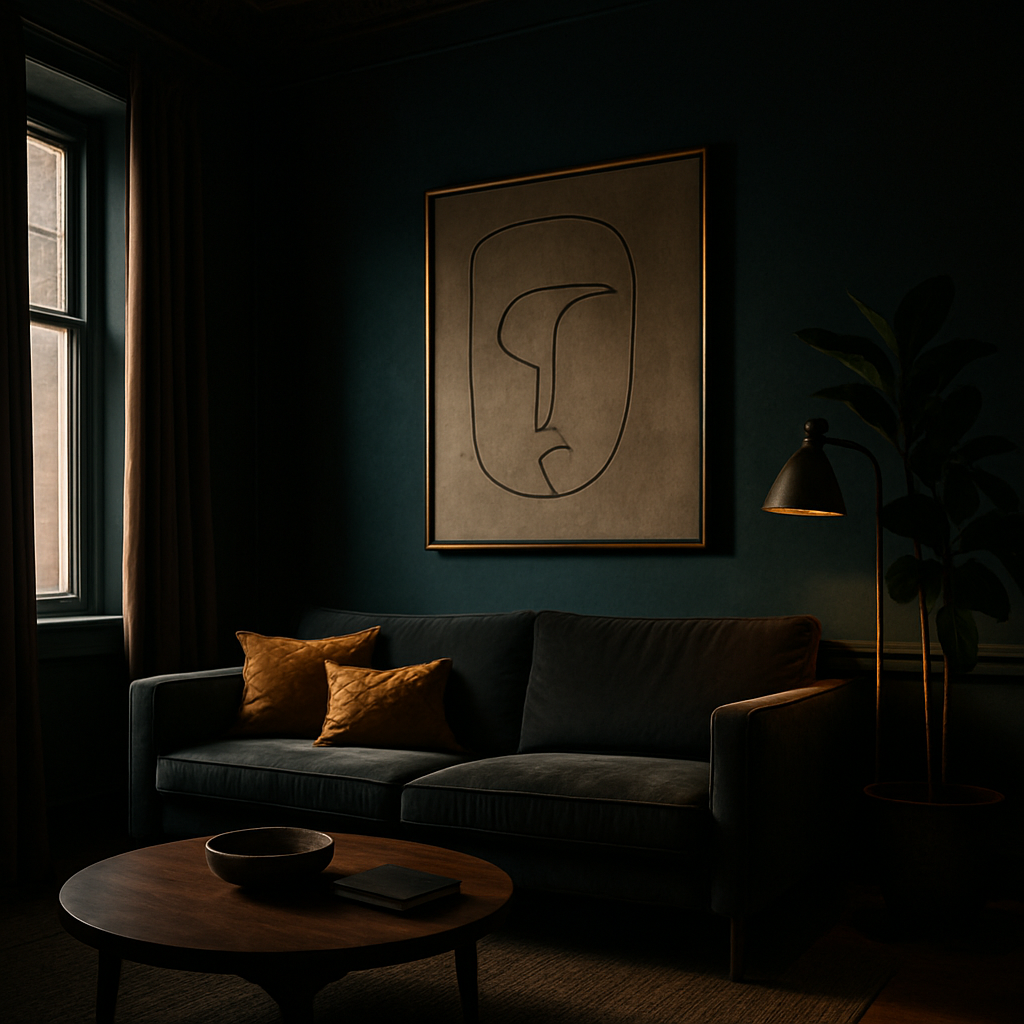
Artificial intelligence has moved from science fiction to your living room in less than a decade, and its impact on interior design is both practical and profound. AI-powered tools now generate room layouts in seconds, suggest color palettes based on psychological research, match furniture styles to personal preferences, and render photorealistic visualizations of proposed designs before a single item is purchased. The American Society of Interior Designers (ASID) reports that over forty percent of member firms have integrated at least one AI tool into their workflow, using it to accelerate the early stages of design development while reserving human creativity for the nuanced decisions that algorithms cannot yet replicate. The National Council for Interior Design Qualification (NCIDQ) has begun addressing AI literacy in its continuing education framework, recognizing that fluency with these tools is becoming a professional baseline. For homeowners, the implications are direct: faster design timelines, fewer costly mistakes, and access to professional-caliber visualization that was previously available only through firms charging to per hour. The six sections that follow examine exactly how interior AI is reshaping the design process from initial concept to final installation.
AI-Powered Room Planning and Space Optimization
Room planning has traditionally been a labor-intensive process involving tape measures, graph paper, and hours of trial-and-error furniture arrangement. AI tools compress this workflow from days to minutes. By analyzing room dimensions, door and window locations, traffic patterns, and user-specified priorities--more seating, a home office zone, a play area for children--these algorithms generate multiple layout options ranked by spatial efficiency, aesthetic balance, and functional flow. Houzz and similar platforms have embedded AI layout tools directly into their consumer apps, allowing homeowners to experiment with arrangements without hiring a designer or physically moving heavy furniture.
The optimization capabilities of AI extend beyond simple furniture placement. Advanced algorithms account for sightlines, natural light distribution, acoustic behavior, and even the ergonomic angles recommended by organizations like the International Interior Design Association (IIDA). A room plan generated by AI can ensure that the television viewing angle falls within the optimal range, that the dining table receives morning light, and that the conversation seating arrangement facilitates eye contact between all participants. These are considerations that experienced designers internalize over years of practice, but AI makes them accessible to first-time homeowners working without professional guidance.
The limitation of AI room planning lies in its inability to account for subjective, emotional factors. An algorithm can optimize traffic flow, but it cannot know that you want the reading chair positioned to overlook the garden because that view calms you after a long day. This is where human judgment remains essential, and it is why most ASID-certified designers use AI as a starting point rather than a final answer. The AI generates the efficient skeleton; the designer adds the soul. That partnership between computational power and human intuition is the defining characteristic of modern interior design practice, and it becomes even more apparent when we examine how AI handles style and aesthetic preferences.
Style Matching and Personalized Aesthetic Recommendations
Describing your personal style in words is notoriously difficult. Terms like "modern," "contemporary," and "transitional" mean different things to different people, and the gap between what a client imagines and what a designer interprets can derail a project before it begins. AI solves this communication problem by analyzing visual preferences directly. Style-matching algorithms present users with pairs of room images and learn from their choices, gradually building a profile that identifies specific patterns: preference for warm wood tones over cool metals, affinity for curved furniture over angular forms, attraction to rooms with high contrast versus those with tonal harmony.
The data behind these systems is substantial. Platforms with millions of saved room images can identify micro-trends and aesthetic clusters that even experienced designers might miss. An AI might discover that a user's preferences align most closely with a specific intersection of Japandi and quiet luxury--two movements that share an emphasis on natural materials and restrained color palettes but differ in their attitude toward ornamentation. This level of precision would require a lengthy consultation with a designer charging to per hour; an AI achieves it in minutes through pattern recognition across a vast dataset.
AD PRO has profiled several design firms that use AI style-matching as a client onboarding tool, replacing the traditional mood board process with a data-driven preference profile. Clients complete the style quiz before the first meeting, giving the designer a concrete starting point rather than vague verbal descriptions. This approach reduces the number of revision cycles--typically the most time-consuming and expensive phase of a design project--and increases client satisfaction because the designer arrives at the first meeting already aligned with the client's aesthetic instincts. From style identification, the next natural step is visualizing how those preferences translate into three-dimensional space.
AR and VR Visualization Transforms Decision-Making
Augmented reality and virtual reality have eliminated the imagination gap that has historically been the greatest source of disappointment in interior design. AR tools overlay furniture, materials, and color onto a live camera view of your room, allowing you to see a proposed sofa in your actual space rather than guessing from a showroom floor. VR goes further, immersing you in a fully rendered version of your redesigned room before any construction begins. The IIDA has endorsed AR and VR as best-practice tools for client presentations, noting that clients who experience their design in virtual space make faster and more confident approval decisions.
The practical impact on purchasing decisions is significant. Houzz reports that users who engage with AR visualization are substantially more likely to complete a purchase and dramatically less likely to return items, because they have already confirmed that the piece fits both the physical space and the overall aesthetic. This reduction in returns benefits both consumers and retailers, reducing waste, shipping emissions, and the frustration of discovering that a ,000 sofa does not fit through the doorway. For design projects budgeted at ,000 to ,000 per room, avoiding even a single major purchasing mistake can save ten to fifteen percent of the total budget.
VR walkthroughs are particularly valuable for renovation projects where structural changes are proposed. Removing a wall, adding a window, or reconfiguring a kitchen layout involves irreversible construction decisions that carry significant financial risk. VR allows clients to stand inside the proposed renovation and evaluate proportions, sightlines, and spatial relationships before demolition begins. Several NCIDQ-certified designers interviewed by AD PRO describe VR as the single most valuable addition to their practice in the last five years, because it builds client confidence and reduces the mid-project change orders that inflate costs and extend timelines. Visualization addresses the question of what a space will look like; the next frontier is how AI generates the content that fills those visualizations.
Generative AI and Automated Design Concepts
Generative AI represents the most controversial and potentially transformative application of artificial intelligence in interior design. These systems can produce complete room concepts--furniture selections, color palettes, material specifications, and spatial arrangements--from a text prompt or a set of parameters. A user might describe a room as "a calm bedroom for two adults who love reading, prefer natural materials, and have a medium budget," and the AI will generate multiple fully rendered concepts complete with specific product recommendations and estimated costs. The speed is remarkable: what takes a human designer days of research and rendering, generative AI accomplishes in seconds.
The quality of these outputs has improved dramatically. Early AI-generated interiors were recognizably artificial, with distorted proportions and physically impossible arrangements. Current systems produce results that professionals find genuinely useful as ideation starting points. ASID has adopted a position of pragmatic engagement, encouraging designers to use generative AI as a brainstorming accelerator while maintaining human oversight over final specifications. The concern is not that AI will replace designers but that it will commoditize the conceptual phase of design, shifting the value proposition toward implementation expertise, project management, and the relational skills that AI cannot replicate.
For homeowners, generative AI democratizes access to design concepts. Someone without the budget to hire a professional designer at the standard 10 to 25 percent project fee can still receive a coherent design direction that respects basic principles of scale, color theory, and spatial organization. The risk is that without professional guidance, homeowners may attempt to execute AI concepts that require structural modifications, specialized materials, or code-compliance knowledge beyond their expertise. NCIDQ certification exists specifically to ensure that design professionals understand building codes, accessibility requirements, and construction detailing--areas where AI suggestions may be aesthetically appealing but technically infeasible. Understanding what AI can and cannot do responsibly leads to the next topic: how professionals are integrating these tools into their existing workflows.
Professional Design Practice Adapts to AI Tools
The integration of AI into professional interior design practice is not a future prospect; it is a present reality that is reshaping business models, pricing structures, and client expectations. Firms that adopt AI tools report reduced time in the schematic design phase--the initial concept development stage--freeing designers to invest more hours in material sourcing, contractor coordination, and the hands-on styling that clients value most. The IIDA has published guidelines suggesting that AI should enhance rather than replace the human elements of practice: empathy, cultural sensitivity, tactile judgment, and the ability to read a client's unspoken preferences.
Pricing models are evolving in response. Some firms now offer AI-assisted design packages at lower price points--,000 to ,000 for a room concept with product links and a basic floor plan--alongside their traditional full-service offerings that range from ,000 to ,000 per room or charge the customary 10 to 25 percent of total project cost. This tiered approach makes professional design accessible to a broader market while preserving the premium service tier for clients who want hands-on guidance through every decision. Houzz marketplace data suggests that this tiered model is expanding the overall market rather than cannibalizing existing revenue, because clients who start with an AI-assisted package often upgrade to full service as their project grows in scope.
Biophilic design and sustainable materials sourcing remain areas where human expertise significantly outperforms AI. Selecting a living wall system that will thrive in a specific room's light and humidity conditions, or verifying that a reclaimed wood supplier's FSC certification is current, requires situational judgment and professional networks that algorithms cannot yet replicate. Designers who position themselves as specialists in these areas--combining AI efficiency with irreplaceable human knowledge--are finding that AI strengthens rather than threatens their practices. The final section looks ahead to where this technology is heading and what homeowners should expect in the near term.
What Comes Next for Interior AI
The trajectory of interior AI points toward increasingly seamless integration between digital planning and physical execution. Current tools require users to move between separate platforms for room scanning, design visualization, product sourcing, and contractor hiring. The next generation of tools will unify these steps into a single workflow: scan your room with a phone, receive AI-generated design options, purchase approved items directly from integrated retail partners, and schedule installation through vetted contractor networks. Houzz, AD PRO, and several venture-backed startups are actively building toward this integrated vision.
Material recognition AI is another advancing frontier. Future tools will identify existing materials in your home--the type of wood in your flooring, the color temperature of your countertops, the fiber composition of your curtains--and suggest new additions that harmonize with what is already there. This capability addresses one of the most common design challenges: integrating new elements into an existing space without starting from scratch. Smart home integration will deepen as AI learns your lighting preferences, temperature habits, and room usage patterns, automatically adjusting environments to match your routines without manual programming.
Privacy considerations will shape the adoption of these technologies. Room-scanning tools that map your home in three dimensions generate sensitive data about your living environment, security systems, and daily patterns. ASID and IIDA have both called for industry standards around data handling, recommending that AI tool providers disclose exactly what data is collected, how it is stored, and whether it is shared with third parties. As a consumer, asking these questions before uploading a room scan is a reasonable precaution. What features would make an AI design tool genuinely useful for your specific situation? Identifying your actual needs--rather than being dazzled by technological capability--will help you choose tools that serve your goals rather than distract from them.
Conclusion
Interior AI is not replacing human designers; it is redefining the partnership between technology and creativity. AI excels at optimization, pattern recognition, visualization, and the rapid generation of options--tasks that consume professional hours without requiring creative judgment. Human designers excel at understanding emotional needs, navigating cultural context, making tactile material assessments, and managing the complex logistics of construction and installation. The most effective approach combines both: use AI tools to accelerate the analytical and visualization phases, then apply human expertise to refine, personalize, and execute. NCIDQ-certified professionals who embrace this model are delivering better results faster, while homeowners who engage directly with AI tools are making more informed decisions even without professional assistance.
Start by experimenting with a free AR visualization tool on your phone. Point it at the room you most want to change and try placing different furniture, colors, and arrangements. Notice what excites you and what falls flat. That emotional response--the instant recognition of "yes, that feels right"--is something no algorithm can replicate, and it is the most valuable design data you possess. Then, whether you proceed independently or engage a professional through ASID or IIDA referral networks at rates from to per hour, you will arrive at the process with clarity about what you want and confidence that the tools exist to help you achieve it. Which room in your home would benefit most from a fresh set of eyes, whether human or artificial? Open the camera, start scanning, and find out.
More Articles You May Like



Comments
Post a Comment