How a 5000-Year-Old Chinese Tomb Inspires Modern Interior Aesthetics
The discovery of elaborately designed burial chambers belonging to the Liangzhu civilization, a Neolithic culture that flourished along China's eastern seaboard around 3300 BCE, has provided interior designers with an unexpected and deeply inspiring source of aesthetic wisdom. These tombs, excavated across multiple sites in what is now Zhejiang Province, reveal design sensibilities so refined that they challenge the assumption that sophisticated interior aesthetics are exclusively modern achievements. The American Society of Interior Designers (ASID) has recognized the growing interest in ancient design traditions among its membership, with cross-cultural and historical design studies becoming an increasingly prominent component of continuing education programs. This article examines the specific ways in which the design principles embedded in these ancient chambers are being translated into contemporary interior aesthetics, providing practical inspiration for homeowners and professionals seeking to create spaces of timeless beauty and meaning.
The Liangzhu culture's achievements in spatial design did not occur in isolation but were part of a broader civilizational accomplishment that included urban planning, hydraulic engineering, agriculture, and some of the most sophisticated jade working the world has ever seen. UNESCO's designation of the Liangzhu Archaeological Ruins as a World Heritage Site specifically cited the culture's "outstanding universal value" in demonstrating early civilizational complexity. For interior designers, the relevance of these achievements lies in the evidence they provide that the principles of effective spatial design, including proportion, balance, material hierarchy, and symbolic color use, are not cultural inventions but human universals that have been discovered and rediscovered across millennia. The International Interior Design Association (IIDA) has incorporated cross-cultural design history into its educational framework, recognizing that exposure to diverse design traditions enriches contemporary practice and guards against the provincialism that can result from studying only Western design history.
As modern homeowners increasingly seek interiors that feel meaningful, rooted, and authentic rather than merely fashionable, the design wisdom of the Liangzhu tombs offers a compelling resource. These ancient spaces were designed not for superficial decoration but for profound purpose, with every element serving both aesthetic and symbolic functions. This integration of beauty and meaning is precisely what distinguishes truly exceptional contemporary interiors from spaces that are merely well-decorated. Have you ever entered a room that felt deeply right in a way you could not quite articulate? The principles that create that ineffable quality of rightness are the same principles that governed the design of these 5000-year-old chambers, and understanding them can transform your approach to creating spaces that nourish the spirit as well as please the eye. According to a Houzz survey, 82% of homeowners stated that creating a home that "feels meaningful" was more important to them than following current design trends.
Jade-Inspired Color Palettes for Contemporary Spaces
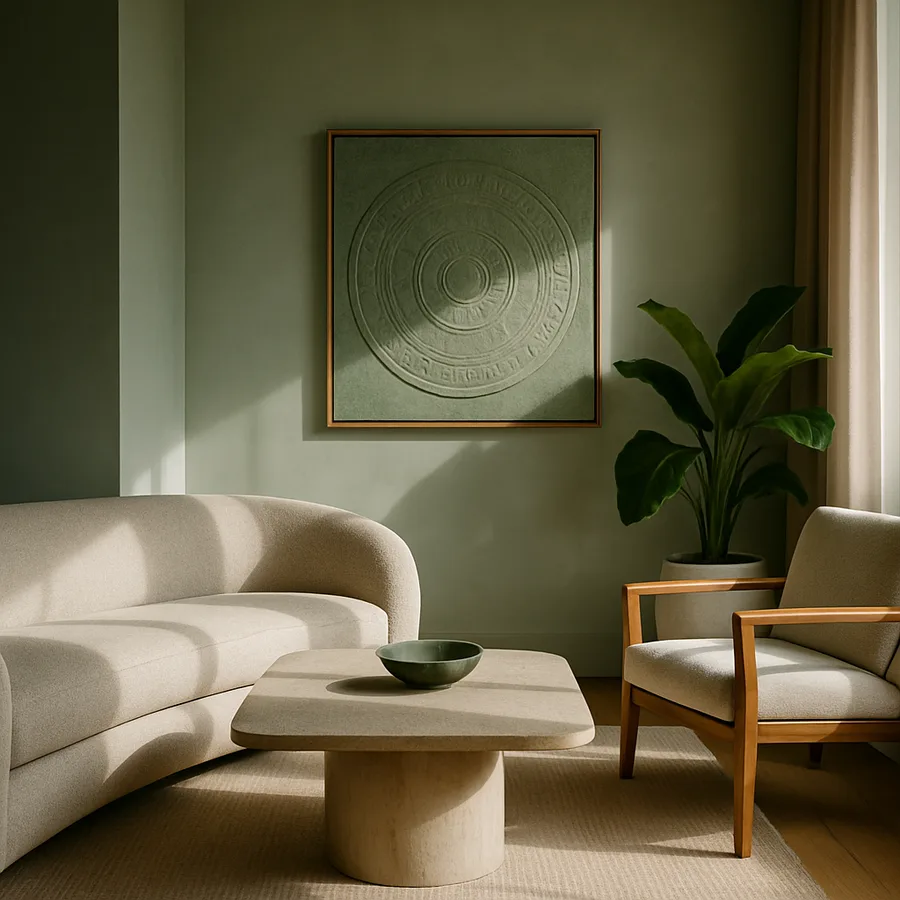
The luminous greens, whites, and greys of Liangzhu jade have inspired a distinctive color palette that modern designers are translating into residential interiors with remarkable success. Nephrite jade, the primary material of Liangzhu artifacts, ranges in color from translucent white through pale celadon to deep sage green, often with subtle mottling and veining that creates a complex, organic surface quality. This natural color range provides a ready-made palette for contemporary interiors: celadon green walls, sage green upholstery, ivory white trim, and grey stone accents create a unified color scheme directly informed by the aesthetic of ancient jade. ASID color consultants have noted increasing client interest in jade-inspired palettes, which they attribute to the colors' combination of sophistication, natural beauty, and historical resonance. The palette feels both timeless and contemporary, avoiding the datedness that can affect more fashion-driven color choices.
The application of jade-inspired colors in modern interiors extends beyond paint to encompass a full range of materials and finishes. Ceramic tiles in celadon green, a glaze color with deep roots in Chinese pottery traditions, create bathroom and kitchen surfaces that echo the luminous quality of polished jade. Velvet upholstery in sage green captures jade's light-absorbing, depth-creating surface character, while linen and cotton in jade-inspired tones offer a more casual, relaxed interpretation for bedrooms and living areas. The NCIDQ material specification guidelines emphasize the importance of selecting colors that work harmoniously across different materials and textures, and jade-inspired greens excel in this cross-material application because their desaturated, grey-inflected character adapts gracefully to both glossy and matte surfaces. The IIDA's trend forecasting has identified what they term "heritage color palettes," drawn from historical artifact collections rather than seasonal fashion trends, as an emerging movement in residential design, with jade-inspired greens among the most popular and commercially successful examples.
Creating a jade-inspired palette in your own home begins with selecting a specific jade reference point, as the color range within the category is broader than many people realize. Visit a museum collection of Chinese jade or browse high-quality photographs to identify the specific shade that resonates most strongly with your aesthetic preferences. Then work outward from that anchor color, selecting complementary neutrals (warm whites, soft greys, sandy beiges) and accent tones (deep terracotta, matte black, burnished gold) that create a balanced and complete palette. Houzz's palette creation tools allow homeowners to upload inspiration images and extract color codes, which can then be matched to specific paint formulations and fabric swatches. ASID professionals recommend limiting your palette to five or six colors total, including neutrals, and applying them consistently across all rooms in the home to create the sense of flow and intentionality that characterizes the best jade-inspired interiors. Does the idea of drawing your color palette from a 5000-year-old artifact collection excite you? This approach offers a depth of meaning and beauty that no seasonal trend forecast can match.
Ritual Symmetry Translated into Modern Room Layouts
The bilateral symmetry that governs the arrangement of objects within the Liangzhu tomb chambers has found direct expression in contemporary interior layouts that prioritize visual order, psychological comfort, and ceremonial grace. In the ancient chambers, pairs of jade cong, bi discs, and ceramic vessels were positioned in mirror-image arrangements along a central axis, creating a sense of stability, intentionality, and sacred order that reflected the cosmological beliefs of the culture. Modern designers translate this ritual symmetry into residential interiors through matched furniture groupings, paired table lamps, balanced artwork arrangements, and symmetrical fireplace compositions that create rooms of quiet, composed elegance. The ASID has documented that symmetrical room layouts consistently receive higher client satisfaction ratings than asymmetrical ones, with homeowners describing symmetrical rooms as feeling "calmer," "more organized," and "more intentional" than their asymmetrical counterparts.
The translation of ritual symmetry into modern interiors requires an understanding of the difference between static and dynamic symmetry. Static symmetry, in which corresponding elements are truly identical, creates a formal, grand effect appropriate for dining rooms, entry halls, and formal living spaces. Dynamic symmetry, in which corresponding elements are similar but not identical, creating balance without rigidity, is more appropriate for family rooms, bedrooms, and casual living areas. The Liangzhu tomb designers employed both types, using static symmetry for the most sacred central arrangements and dynamic symmetry for peripheral zones. The IIDA's residential design framework makes the same distinction, recommending that designers match the formality of their symmetry approach to the intended formality of the space. A pair of identical floor lamps flanking a sofa creates static symmetry; a floor lamp on one side and a stack of books with a table lamp on the other creates dynamic symmetry. Both are balanced; they simply communicate different levels of formality.
Implementing ritual symmetry in your own rooms begins with identifying or creating a central axis. In a living room, this axis might run from the center of a fireplace to the center of the facing sofa. In a bedroom, it typically runs from the center of the headboard to the door. In a dining room, it passes through the center of the table. Once the axis is established, arrange major furniture pieces symmetrically along it, then layer in accessories and decorative objects with dynamic symmetry to prevent stiffness. Houzz's room layout tools provide grid overlays and symmetry guides that simplify this process, and NCIDQ-qualified designers can provide professional guidance for complex or challenging room geometries. The goal is not mechanical perfection but the sense of visual rightness that symmetry creates, the same sense of rightness that the Liangzhu designers achieved in their sacred chambers five thousand years ago. Have you ever rearranged a room and felt an immediate sense of improvement without being able to explain exactly what changed? The answer was likely an unconscious move toward greater symmetry.
Material Hierarchy: From Sacred Jade to Modern Specification
The Liangzhu culture established a clear hierarchy of materials within their tomb interiors, with jade occupying the highest position, followed by finely worked stone, polished ceramics, and utilitarian objects of less refined workmanship. This material hierarchy served both practical and symbolic functions: practically, it directed attention toward the most significant objects; symbolically, it expressed a cosmological order in which different materials corresponded to different levels of spiritual significance. Contemporary interior design practice employs an analogous material hierarchy, though the specific materials and their associated meanings differ. The NCIDQ examination tests designers' ability to specify materials appropriate to different applications and contexts, reflecting the professional understanding that material selection is not merely a technical decision but an aesthetic and experiential one that profoundly shapes the character of a space.
In modern interiors, the concept of material hierarchy manifests in the strategic use of premium materials at focal points and high-touch surfaces, with more economical materials deployed in supporting roles. A marble kitchen island surrounded by standard laminate countertops on perimeter cabinets creates a material hierarchy that directs attention and allocates visual luxury efficiently. A statement light fixture in hand-blown glass hanging above a dining table of solid walnut creates a material hierarchy that elevates the dining experience. ASID budget allocation guidelines recommend investing approximately 60% of material budgets in the 20% of surfaces that have the greatest visual and tactile impact, a strategy that echoes the Liangzhu practice of concentrating their most precious materials, the laboriously worked jade, in the most significant positions within the chamber. This approach ensures that limited resources create maximum effect, a principle that is as relevant to a modern kitchen renovation as it was to a Neolithic burial chamber.
The lesson from Liangzhu material hierarchy extends beyond budget allocation to encompass the broader principle of material intentionality. In the ancient chambers, no material was selected arbitrarily; each was chosen for specific properties, including hardness, color, translucency, workability, and symbolic meaning, that suited its intended role. Modern designers who approach material selection with similar intentionality create spaces that feel more cohesive, purposeful, and satisfying than those assembled from convenient or fashionable choices. The IIDA's material library provides designers with comprehensive data on the aesthetic, functional, and experiential properties of thousands of materials, enabling informed specification decisions that parallel the Liangzhu culture's meticulous material choices. Houzz project reviews that highlight specific material choices and their rationales consistently receive the highest engagement from readers, suggesting that homeowners value and appreciate material intentionality when it is made visible and understandable. What materials dominate your home's most important surfaces, and were they chosen for specific experiential reasons or simply because they were available and affordable?
The Influence of Ancient Spatial Flow on Open-Plan Living
The sequential spatial experience designed into the Liangzhu tomb complexes, in which visitors moved through a series of progressively more sacred zones toward the central chamber, offers a powerful conceptual model for modern open-plan living design. Contemporary open-plan homes face a fundamental challenge: how to create distinct functional areas, zones for cooking, dining, relaxing, working, and entertaining, within a single undivided volume without the benefit of walls. The Liangzhu solution, using changes in floor level, material, object density, and spatial rhythm to define zones without physical barriers, translates directly into modern techniques for organizing open-plan spaces. The ASID has published extensive guidance on open-plan design, and many of the recommended strategies, including floor material transitions, ceiling height variations, furniture grouping, and strategic lighting changes, correspond closely to the zoning techniques observable in the ancient tomb complexes.
The concept of the "threshold moment," the perceptible transition between one zone and another, is particularly relevant to modern open-plan design. In the Liangzhu tombs, transitions between zones were marked by physical features that created a pause in the spatial journey, signaling to the visitor that they were moving from one realm of experience to another. In modern homes, this threshold function can be achieved through area rugs that define seating zones within a larger room, changes in lighting color temperature or intensity between kitchen and dining areas, ceiling beams or soffits that mark transitions without creating full partitions, and even changes in wall color that subtly differentiate adjacent zones. The IIDA's research on spatial cognition demonstrates that humans navigate open spaces more comfortably and efficiently when clear threshold cues are present, even when those cues are subtle. A 12% reduction in self-reported spatial confusion was observed in test subjects navigating open-plan offices with threshold markers compared to identical spaces without them.
For homeowners living in or designing open-plan spaces, the Liangzhu model suggests beginning with a spatial narrative: what sequence of experiences do you want the space to provide as someone moves through it? Just as the ancient tomb designers planned a journey from the mundane to the sacred, modern homeowners can plan a journey from the energetic (cooking, socializing) to the restful (reading, conversation) by positioning functional zones in a deliberate sequence and marking transitions between them. The NCIDQ spatial planning framework provides tools for mapping circulation patterns and zoning open spaces, and Houzz renovation galleries offer abundant photographic examples of successful open-plan zoning strategies. The key insight from the Liangzhu tombs is that spatial flow should feel intentional and narrative, not random and chaotic. Every great space tells a story through the sequence of experiences it provides, and the design of that sequence is one of the most powerful tools available to the modern interior designer. How does the spatial narrative of your home read, and is it the story you want it to tell?
Biophilic Design Principles Hidden in Ancient Tombs
Perhaps the most surprising connection between Liangzhu tomb design and contemporary interior aesthetics lies in the realm of biophilic design, the discipline of incorporating natural elements, patterns, and experiences into built environments to satisfy the innate human need for nature contact. The Liangzhu tomb designers, working in a culture deeply integrated with the natural landscape of wetlands, rivers, and forests, created interior environments that maintained a profound connection to the natural world even within the confines of enclosed chambers. The jade itself, with its organic colors and natural veining, served as a material proxy for the natural world, while the arrangement of objects often followed organic patterns, such as radiating formations reminiscent of flower petals or spiral arrangements echoing natural growth patterns. The ASID has embraced biophilic design as a central principle of contemporary practice, and the Liangzhu tombs demonstrate that the impulse to bring nature into interior spaces is not a modern innovation but an ancient human instinct.
The translation of Liangzhu biophilic elements into modern interiors takes both literal and abstract forms. Literally, the use of jade-green colors, natural stone, organic shapes, and nature-derived patterns in contemporary homes directly echoes the Liangzhu designers' material and color choices. Abstractly, the ancient principle of creating interior environments that reference and honor the natural world translates into modern practices such as maximizing natural light, incorporating living plants, using natural materials, and designing views that connect interior spaces to exterior landscapes. The IIDA's biophilic design framework identifies 14 patterns of biophilic design, including visual connection to nature, non-rhythmic sensory stimuli, thermal and airflow variability, and connection with natural systems, and the Liangzhu tomb interiors demonstrate at least six of these patterns through their material choices, spatial organization, and symbolic content. According to research compiled by IIDA, biophilic design interventions can reduce stress by up to 37% and increase creative thinking by up to 15%, validating the health and wellbeing benefits that the Liangzhu designers seem to have intuitively understood.
Implementing Liangzhu-inspired biophilic design in your home can begin with simple, accessible interventions. Introduce natural materials, such as stone, wood, ceramic, and natural fiber textiles, in place of synthetic alternatives wherever possible. Choose colors drawn from the natural world, particularly the jade-inspired greens, earth tones, and warm neutrals that characterize the Liangzhu palette. Incorporate organic shapes and patterns through furniture, artwork, and decorative objects that reference natural forms without replicating them literally. Position furniture to take advantage of natural light and exterior views, and introduce living plants as a direct connection to the biological world. Houzz's biophilic design galleries provide extensive inspiration, and NCIDQ-qualified designers specializing in wellness-focused interiors can provide professional guidance for more comprehensive biophilic transformations. The Liangzhu designers created spaces of extraordinary natural resonance using only the materials and knowledge available to a Neolithic civilization. With modern resources and the accumulated wisdom of five millennia, you have the potential to create interiors that honor and extend their remarkable achievement.
Conclusion: Bridging Five Millennia of Design Wisdom
The design principles embedded in a 5000-year-old Chinese tomb are not relics of an irrelevant past but living ideas that continue to shape the most compelling and meaningful contemporary interiors. From jade-inspired color palettes and ritual symmetry to material hierarchy, ancient spatial flow, and biophilic design principles, the Liangzhu civilization's approach to interior spaces offers a wealth of practical inspiration for modern homeowners and design professionals. The validation of these ancient principles by ASID, IIDA, NCIDQ, and Houzz confirms that the fundamentals of effective interior design are timeless human universals, rediscovered and refined by each generation but never truly invented by any single era or culture.
The most powerful lesson from the Liangzhu tombs is perhaps the simplest: great interior design begins with intention. Every element in those ancient chambers was placed with purpose, selected with care, and arranged with attention to its relationship with every other element in the space. This quality of deliberate, holistic intentionality is what separates truly exceptional interiors from merely adequate ones, and it is available to any homeowner willing to approach their spaces with the same reverence and thoughtfulness that the Liangzhu designers brought to their most sacred projects. You do not need a designer's credentials or an archaeologist's knowledge to apply these principles; you need only a willingness to pause, observe, and ask yourself whether each element in your home deserves its place and fulfills its role within the larger composition.
Begin your own bridge across five millennia of design wisdom today. Choose one room in your home and evaluate it through the lens of the Liangzhu principles discussed in this article. Is there a clear spatial hierarchy? Does the color palette communicate meaning? Are materials selected with intentionality? Does the spatial flow create a satisfying sequence of experiences? Are objects displayed with curatorial care? Address even one of these questions, and you will begin to experience the transformative power of design principles that have stood the test of five thousand years. Share your discoveries with fellow design enthusiasts, and continue to explore the extraordinary depth and richness of the human design heritage that connects us to our most ancient ancestors.
More Articles You May Like



Comments
Post a Comment