Halloween Front Porch Displays That Wow the Neighborhood
Why the Front Porch Is Your Best Halloween Canvas
Of all the holidays that invite exterior decoration, Halloween offers the widest creative latitude. There are no rigid traditions dictating exactly what must go where, no formal expectations about symmetry or restraint, and no cultural pressure to achieve a specific polished result. A Halloween front porch display can be whimsical, elegant, spooky, humorous, or theatrical, and any of those approaches can succeed brilliantly. The front porch is uniquely suited to this kind of expression because it occupies the threshold between public and private space, visible to every passerby while still belonging entirely to you.
The National Retail Federation (NRF) reported that Americans spent over 12 billion dollars on Halloween in 2024, with home decorations ranking as the second-largest spending category after costumes. That figure reflects something beyond mere consumerism: it reveals how deeply people value the act of transforming their ordinary surroundings into something extraordinary, even temporarily. A well-designed porch display participates in a communal experience that connects neighbors, delights trick-or-treaters, and marks the season with visible enthusiasm. It is public art at the most accessible scale.
Have you ever walked through a neighborhood on an October evening and felt the unmistakable shift in atmosphere when you passed a house with a truly committed porch display? That response is not accidental. Effective Halloween decorating uses the same principles of composition, lighting, scale, and color that professional designers apply to any spatial challenge. The difference is that the stakes feel lower and the permission to experiment feels higher, which makes Halloween an ideal opportunity to flex your design instincts without the pressure of permanent consequences.
The best front porch displays share a common trait: they tell a story. Rather than scattering random Halloween items across every available surface, the most impactful porches create a cohesive scene that draws the viewer in and rewards closer inspection. Whether that scene is an elegant autumn harvest, a haunted Victorian parlor spilling outdoors, or a graveyard rising from the flower beds, the narrative thread is what transforms a collection of decorations into a genuine display. Before buying a single pumpkin, spend a few minutes deciding what story your porch wants to tell this October.
Pumpkins as the Foundation: Varieties, Groupings, and Placement
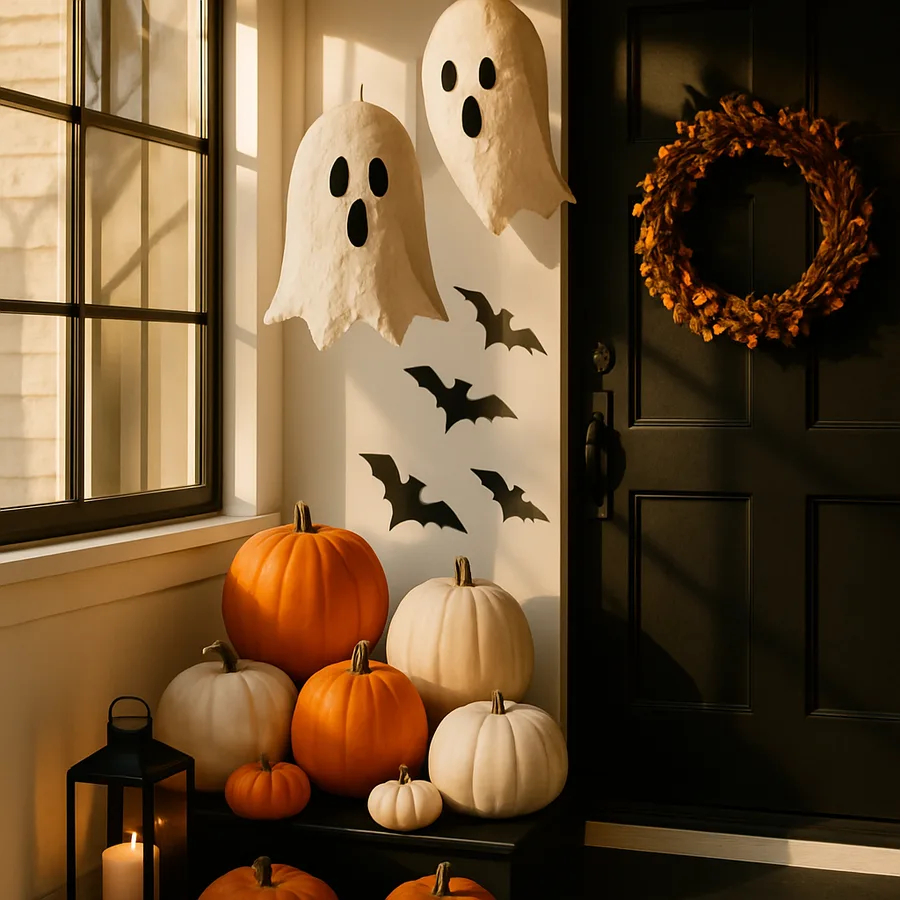
Pumpkins are the non-negotiable foundation of almost every successful Halloween porch display. They are affordable, widely available, endlessly varied in size and color, and they transition seamlessly from early October through Thanksgiving without looking dated. The key to using pumpkins effectively is variety and intentional grouping rather than uniformity. A single jack-o-lantern on the top step is pleasant but predictable. A cascading arrangement of eight to twelve pumpkins in three or four sizes, mixing carved and uncarved, orange and heirloom varieties, creates a display that commands attention and repays repeated viewing.
Heirloom and specialty pumpkins have transformed what is possible in porch displays. Cinderella pumpkins with their flattened, deeply ribbed forms add a fairy-tale quality. White Lumina pumpkins provide striking contrast against traditional orange. Blue-grey Jarrahdale pumpkins bring a sophisticated, muted tone that appeals to decorators who find standard orange too bright. Warty pumpkins in earth tones add textural interest that carved faces cannot match. Better Homes and Gardens has documented the surge in heirloom pumpkin popularity, noting that farmers markets and specialty growers now cultivate dozens of varieties specifically for decorative use.
Grouping pumpkins in odd numbers and at varying heights creates the most visually dynamic arrangements. Place the largest pumpkins at ground level, flanking the bottom of your porch steps or anchoring the corners of the porch floor. Medium pumpkins should occupy the middle ground, sitting on steps, low tables, or overturned crates that provide height variation. The smallest pumpkins and gourds fill in gaps and create transitions between larger pieces. Think of the arrangement as a landscape with peaks and valleys rather than a flat lineup, letting the eye travel up and down through the grouping rather than scanning across a single plane.
Carved pumpkins remain a beloved tradition, but they need not be limited to simple triangle-eyed faces. Intricate patterns carved with linoleum cutters or specialty pumpkin tools create stunning light displays after dark. Drilled pumpkins, where small holes are bored in patterns or constellations, produce a delicate, starry glow when lit from within. For longevity, consider carving only a few feature pumpkins and leaving the rest intact with painted or drawn designs. Carved pumpkins last roughly five to seven days in cool weather before deteriorating, while uncarved ones can hold for six weeks or more if kept dry and shaded during the warmest afternoon hours.
Atmospheric Lighting That Sets the Mood After Dark
A Halloween porch display that looks spectacular at noon but disappears after sunset is only doing half its job. Lighting transforms a daytime arrangement into an evening experience, and the quality of that lighting determines whether your display reads as magical or merely cluttered in the dark. The good news is that effective Halloween lighting requires neither professional equipment nor significant expense. A combination of candlelight, battery-operated LEDs, and strategically positioned existing fixtures can produce results that rival any commercial haunted attraction.
Battery-operated candles and LED tea lights inside carved pumpkins provide the classic warm glow without the fire risk of real candles, which is especially important if your display includes dry corn stalks, hay bales, or fabric elements. Modern LED candles with realistic flicker settings are nearly indistinguishable from real flames at a distance of more than a few feet. Place them inside carved pumpkins, behind translucent fabric draped over railings, inside lanterns, and at the base of plant arrangements to create pools of warm light that reveal and conceal different parts of your display throughout the evening.
String lights in warm white or amber tones add ambient illumination that ties the entire display together. Wrap them along porch railings, weave them through arranged branches or corn stalks, or drape them loosely across the porch ceiling for an overhead canopy effect. Avoid the temptation of multicolored or rapidly flashing lights, which fracture the atmosphere and create visual chaos. A consistent warm-toned glow creates mystery and depth, allowing darker areas of the display to recede while lit elements come forward. The contrast between light and shadow is what gives a Halloween display its atmospheric power. The American Lighting Association suggests that warm-toned lighting between 2200K and 2700K produces the most inviting exterior ambiance for seasonal decorating.
Uplighting is an often-overlooked technique that can dramatically enhance your display. Small battery-operated spotlights positioned at ground level and aimed upward at key elements, a particularly impressive pumpkin, a skeleton figure, or architectural details of the porch itself, create dramatic shadows and highlight forms in ways that overhead lighting cannot achieve. This theatrical technique is standard in professional haunted house design and translates easily to residential porches. Even two or three small uplights can transform a flat-looking display into one with genuine dimensional drama after dark.
Beyond Pumpkins: Supporting Elements That Complete the Scene
Pumpkins and lighting form the core, but supporting elements provide the context and narrative that turn a pumpkin arrangement into a complete display. Corn stalks are among the most effective supporting pieces, offering vertical height, rustling texture, and an unmistakably autumnal presence. Bundled in pairs and secured to porch posts or railing uprights, they frame the display and create a sense of entering a different space when you approach the door. Dried corn stalks are available at most garden centers and farm stands from late September onward and last the entire season with no maintenance.
Hay bales serve as both structural pedestals and atmospheric props. Stacked at different heights, they provide platforms for pumpkins, lanterns, and other decorative elements while adding the warm golden color and rough texture that anchors a rustic harvest aesthetic. If your display leans more gothic or spooky, drape the hay bales with black burlap or cheesecloth to shift their character from farmstead to haunted manor. Be aware that hay bales can attract moisture and, in persistently wet climates, may develop mold during a long display period. Straw bales are a drier alternative that resists moisture better while providing a similar visual effect.
Seasonal wreaths on the front door anchor the display and provide a focal point at eye level that balances the ground-level pumpkin arrangements below. A Halloween wreath does not need to feature plastic spiders or foam tombstones to read as seasonal. Dried grapevine wreaths adorned with preserved leaves, miniature gourds, dried berries, and perhaps a single black ribbon strike a tone that is festive without being garish. For a spookier approach, a wreath of twisted black branches with small LED lights woven through creates an elegant gothic statement that looks especially striking against a painted front door.
Fabric elements add softness and movement to an otherwise static arrangement. Black cheesecloth draped loosely over porch railings, suspended from ceiling hooks, or wrapped around posts creates a cobweb effect that moves with the breeze and catches light in atmospheric ways. Burlap runners on steps or tables introduce a warm, textural counterpoint to smooth pumpkin surfaces. Even a simple black or plaid doormat contributes to the overall composition. Each fabric element should be weather-appropriate and secured against wind; nothing undermines a Halloween display faster than a decoration that has blown halfway across the yard by morning.
Designing for Different Porch Styles and Sizes
Not every home has a grand wraparound porch with ample square footage for an elaborate display. Small stoops, narrow entryways, and apartment doorsteps all present unique constraints that require creative solutions. The principles of good display design, story, composition, lighting, and restraint, apply regardless of scale. In fact, a small porch often benefits from the discipline that limited space imposes, forcing you to choose only your strongest elements and arrange them with precision.
For a small stoop or landing of four by four feet or less, concentrate your display vertically rather than horizontally. Stack two or three pumpkins on an overturned wooden crate, add a single corn stalk bundle secured to the railing or wall, and place a wreath on the door. A single lantern with an LED candle provides lighting without consuming valuable floor space. The National Association of Home Builders (NAHB) notes that the average American home entrance has approximately 20 square feet of covered porch space, which means most displays need to work within tighter constraints than magazine photos suggest. Editing is your most powerful tool.
Medium porches of roughly six to ten feet wide and four to six feet deep can support a more developed scene. Use the steps as tiered display surfaces, placing the largest arrangement at the base and progressively smaller groupings on each ascending step. Keep the walking path clear, leaving at least 30 inches of unobstructed width for safe passage. Flank the door with symmetrical or asymmetrical anchor elements, tall corn stalks on one side and a stacked pumpkin arrangement on the other, to frame the entrance and draw visitors forward through the display.
Large porches offer the luxury of creating distinct vignettes that unfold as visitors approach. Perhaps a graveyard scene occupies one end of the porch, a harvest arrangement flanks the door, and a witch or skeleton figure holds court in a rocking chair at the far end. The danger of a large space is overcrowding; resist the urge to fill every square foot and instead allow open space between vignettes so each one registers independently before contributing to the whole. Think of your large porch as a gallery with multiple stations rather than a warehouse packed floor to ceiling. Negative space is as important as the decorated space in creating a display that feels composed rather than chaotic.
Making It Last: Timing, Maintenance, and Teardown
The lifespan of your Halloween porch display depends on when you install it, how you maintain it, and how gracefully you transition out of it when the season ends. Timing the installation requires balancing enthusiasm with practicality. Most displays look their best if installed during the first or second week of October, giving you approximately three weeks of enjoyment before Halloween night itself. Installing too early risks deterioration of natural elements like carved pumpkins, cut flowers, and fresh corn stalks before the main event arrives. Installing too late sacrifices weeks of pleasure for you and your neighbors.
Maintenance during the display period is minimal but important. Check carved pumpkins every two to three days for signs of collapse or mold, removing any that have deteriorated noticeably. Spray the cut surfaces of carved pumpkins with a light coating of petroleum jelly or a commercial pumpkin preservative to slow decomposition. Reposition any elements that wind or rain has shifted. Replace LED batteries as needed, as dimming lights undercut the evening impact of an otherwise strong display. A five-minute daily inspection keeps your display looking fresh and prevents the gradual slide from festive to neglected that afflicts unattended decorations.
What happens to your display after Halloween night? The most elegant approach is a staged teardown that transitions into Thanksgiving decor. Remove all explicitly Halloween elements, carved faces, spooky figures, cobwebs, and dark fabric, within a day or two of November first. Uncarved pumpkins, corn stalks, hay bales, gourds, and warm-toned elements can remain in place as the foundation of a harvest display that carries through November. Add dried wheat bundles, autumn leaves, or a simple seasonal wreath, and your porch transitions seamlessly from one celebration to the next without the barren gap that a sudden full teardown creates.
Are you ready to create the porch display your neighborhood will be talking about next October? Start a planning folder now, saving images that inspire you, noting pumpkin varieties you want to source, and sketching a rough layout based on your specific porch dimensions. Visit local farmers markets in late September to claim the best heirloom pumpkins before they sell out, and stock up on lighting supplies during pre-season sales. The best Halloween displays are built on weeks of casual planning and a single focused afternoon of installation. For inspiration from professional designers who specialize in seasonal residential exteriors, explore project galleries on Houzz, where homeowners share their own porch transformations each autumn.
More Articles You May Like



Comments
Post a Comment