Greenhouse Window Herb Gardens for Year-Round Indoor Growing
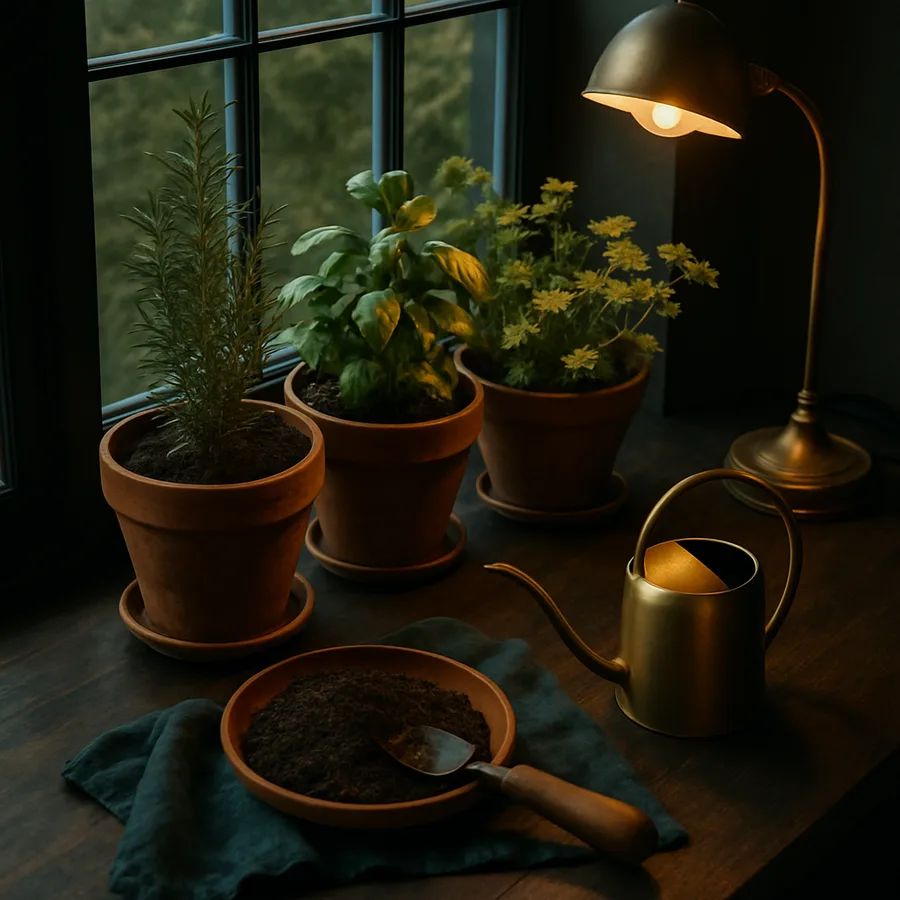
A greenhouse window herb garden is a serious upgrade over a row of pots on a windowsill, and the difference is not just aesthetic. The projecting glass box creates a microclimate. Light arrives from five directions instead of one. Temperature runs a few degrees warmer than the adjoining wall. Humidity is noticeably higher, especially when the kitchen is cooking. All of that adds up to herbs that grow faster, taste better, and survive a Midwestern winter when their windowsill cousins have long since turned to brown sticks.
This guide is the practical horticultural companion to the architectural decisions covered elsewhere. It walks through which herbs thrive in a greenhouse window, how to manage the specific light and water conditions of that environment, which soil and pot combinations work, how to handle the winter low-light season, and how to troubleshoot the pest and disease problems that appear in every indoor garden eventually. According to the National Gardening Association, roughly 35 percent of American households grow at least some food at home, and herbs are the most common starting crop; a greenhouse window is how you move from I keep killing basil to I have more basil than I know what to do with.
Why a Greenhouse Window Grows Herbs Better
The standard indoor herb failure mode is insufficient light. A kitchen countertop pot receives light from one side, usually from a window that clears the horizon only part of the day. Plants lean, leggy growth follows, and flavor suffers because flavor in culinary herbs correlates strongly with total accumulated light, specifically with daily light integral, or DLI, measured in moles per square meter per day. Commercial greenhouse growers aim for DLI of 10 to 20 for leafy herbs. A south-facing greenhouse window in clear June weather can deliver that; a north-facing kitchen counter delivers perhaps 2.
The second advantage is temperature stability. Because the glass enclosure traps heat during the day and sits a few feet from the interior wall at night, the greenhouse window moderates its own climate within a range that most culinary herbs prefer. Basil, which sulks below 55 degrees, stays comfortable. Rosemary, which hates cold damp feet, stays warm and dry. The USDA plant hardiness system is less relevant for indoor growing, but its underlying principle, matching plant to environment, applies, and a greenhouse window is simply a more plant-friendly environment than a windowsill.
The Best Herbs for a Greenhouse Window
Not every herb thrives in glass. Some grow too large, some demand more soil depth than a shelf can offer, and some (looking at you, dill and cilantro) prefer cool conditions that a sunny window cannot provide in summer. The reliable performers, in rough order of ease, are below.
- Basil: fast-growing, heavy feeder, loves warmth and moisture. Sweet, Genovese, Thai, and purple varieties all do well.
- Thyme: low, compact, drought-tolerant. English and lemon thyme are the kitchen standards.
- Oregano: spreading habit; needs occasional pruning. Greek oregano has the strongest flavor.
- Chives: easy, perennial indoors, tolerates some shade. Divide every two years.
- Parsley: biennial grown as annual indoors; flat-leaf (Italian) has better flavor than curly for cooking.
- Rosemary: woody, slow-growing, likes dry feet. Upright varieties suit the vertical shelf better than trailing ones.
- Mint: aggressive; always in its own pot, never sharing a container. Peppermint and spearmint are the standards.
- Sage: silvery, architectural, tolerates dry air. Does well in a south-facing window.
Difficult candidates include cilantro (bolts in heat, prefers cool weather), dill (tall, requires deep pot, bolts quickly), lemongrass (tropical, needs more room than most windows offer), and bay laurel (beautiful but eventually too tall for most window shelves). A reader recently asked whether tarragon can work, and the answer is yes for French tarragon in a four-season window, no for Mexican tarragon outside of very warm climates.
Light: How Much, From Where, and When to Supplement
Direct sun for at least six hours a day is the minimum for most culinary herbs to thrive, and eight to ten hours produces the strongest flavors. A south-facing greenhouse window in clear summer weather provides that easily. An east-facing window provides it in the morning, which is actually ideal because cooler morning light reduces heat stress on the plants. A west-facing window adds hot afternoon sun that can burn tender basil leaves pressed against the glass. A north-facing window does not meet the threshold without supplemental lighting.
Supplemental lighting is the single most transformative upgrade for indoor herb growing. A modest full-spectrum LED grow strip, drawing 20 to 30 watts per linear foot, mounted under the upper shelf of a greenhouse window and run on a timer for 12 hours a day, turns a marginal growing environment into a productive one. Quality products from brands like Soltech, Spider Farmer, and California Lightworks publish PAR (photosynthetically active radiation) output at various distances; read those numbers rather than trusting lumen counts, which measure human-visible light rather than plant-usable light.
Two practical rules. First, put the grow light on a cheap mechanical timer and forget about it; plants need predictable photoperiods, and you will not remember to flip the switch at 6 a.m. every day. Second, mount the light as high in the window as possible to avoid hot spots on tender top leaves; 10 to 14 inches above the canopy is typical.
Soil, Pots, and the Drainage Problem
Ordinary garden soil is wrong for potted herbs. It compacts, it holds too much water, it does not allow oxygen to reach roots, and it brings pest eggs and fungal spores indoors with it. Use a sterile potting mix formulated for containers, ideally one with perlite or pumice for drainage. For most culinary herbs, a mix of 60 percent quality potting soil, 30 percent perlite, and 10 percent coarse sand produces excellent results. Mediterranean herbs (rosemary, thyme, oregano, sage) like the ratio tilted further toward drainage.
Pots must drain, and the water must have somewhere to go. Standing water in a saucer kills more indoor herbs than any other single cause, because the roots suffocate in a day or two. Terra-cotta pots breathe, drying soil faster, and they are the traditional choice for Mediterranean herbs. Plastic pots retain water longer and suit basil, parsley, and chives. Glazed ceramic pots look beautiful and fall between the two in water retention. Whatever you choose, match pot size to plant size: a 4-inch pot for a small herb, a 6-inch for a mature plant, an 8-inch for a large rosemary.
How often do you water? The answer depends on pot size, material, herb species, and room conditions, but the finger test is more reliable than any schedule: push a finger an inch into the soil; if it comes out dry, water. If soil sticks to the finger, wait. Most greenhouse-window herbs want water every 3 to 5 days in summer and every 7 to 10 days in winter.
Winter Care: The Hardest Season
December and January are when the greenhouse window justifies its cost. A bare kitchen windowsill herb garden is dead or dying by Thanksgiving in most of the country; a well-managed greenhouse window can stay productive through the entire winter. But it requires different care than summer growing, and the shift trips up first-year owners.
Three changes happen in winter. Day length shrinks, dramatically: New York goes from 15 hours of daylight in June to 9 hours in December. Solar intensity drops; clear winter sunlight is roughly 40 percent as strong as clear summer sunlight at the same latitude, per NOAA solar radiation data. And indoor humidity plummets as heating systems run, often dropping to 20 or 25 percent in forced-air homes. Each of these requires a response.
For light, extend the photoperiod with supplemental lighting to 12 to 14 hours daily and accept that growth will be slower than summer growth regardless. For water, reduce frequency because slower growth means less water use, but check weekly because dry indoor air pulls moisture from soil surface even when plants are barely growing. For humidity, cluster plants close together to raise the micro-humidity, or set pots on a tray of pebbles with water just below pot level so evaporation raises the humidity around the foliage. A small whole-house humidifier downstream of the furnace helps the entire kitchen, not just the plants.
Winter is also pruning season. Harvest lightly but regularly, taking the top two sets of leaves from basil weekly and a few sprigs of rosemary or thyme each time you cook. Pruning keeps plants compact and signals them to produce new shoots. The Royal Horticultural Society publishes pruning guides for each major culinary herb that are worth bookmarking.
Pests, Diseases, and Troubleshooting
Indoor herbs get fewer pests than outdoor herbs, but the few they do get are stubborn because there are no natural predators indoors to control them. Aphids, spider mites, and fungus gnats are the usual suspects. Inspect the underside of leaves weekly. Aphids cluster on new growth and look like tiny green or black dots. Spider mites leave fine webbing and produce stippled yellow leaves; they thrive in dry air. Fungus gnats hover around pot soil and breed in overly wet soil.
For all three, insecticidal soap (available from any garden center) is the first-line treatment and is safe for culinary herbs. A hard spray of water in the sink also knocks aphids off effectively. For fungus gnats, let the soil dry out more between waterings and add a thin layer of coarse sand on top of the soil to prevent egg-laying. Avoid chemical insecticides indoors, especially on plants you plan to eat; EPA guidance is specific about residue tolerances for food crops, and the conservative approach for a home grower is simply to stay with soaps and mechanical controls.
Diseases are rarer but powdery mildew appears occasionally, especially on basil and mint in humid conditions with poor air circulation. Prevention matters more than treatment: good air flow from a small fan in the kitchen, not watering leaves from above, and removing infected leaves promptly. A common reader question: can I still eat herbs I have sprayed with insecticidal soap? Yes, after washing thoroughly; the label will specify any interval required, typically 24 hours.
Harvesting, Using, and the Productivity Question
Herbs exist to be used, and the harvest strategy matters more than most beginners realize. Regular harvesting produces bushier, more productive plants; letting an herb go unharvested produces leggy growth and eventually flowering, which often reduces leaf flavor. The general rule: harvest no more than one third of a plant at a time, and harvest from the top or the outside edges, never the base.
A well-tended greenhouse window herb garden can produce meaningful quantities. A single mature basil plant in a 6-inch pot yields roughly 1 to 2 ounces of leaves per week during peak season. Six herb plants can easily cover most of a family's culinary herb needs for the warm months, with reduced but real production in winter. In dollar terms, comparing home-grown herbs to supermarket packages of cut fresh herbs (which retail around 2 to 4 dollars per ounce), a productive greenhouse window garden pays back its supplemental lighting and soil costs within a year of active cooking.
Preservation extends the harvest. Freezing basil as pesto cubes, drying oregano and thyme on trays, and hanging bundles of rosemary are all traditional methods that work fine in a home kitchen. The flavor of home-dried herbs is noticeably better than supermarket dried herbs, which are often months or years old by the time they reach the shelf.
Conclusion
A greenhouse window herb garden is one of those small domestic pleasures that compounds over time. The first harvest is a curiosity. The first winter with fresh thyme in December is a revelation. The second year, when you have learned which plants thrive in your specific window and which you should skip, is when the garden becomes a background part of daily cooking rather than a foreground project. Most homeowners who invest in the setup describe it the same way: after the first full season, they cannot imagine the kitchen without it.
The keys to success are choosing the right plants for your light conditions, using a sterile potting mix with strong drainage, supplementing light in winter, and harvesting regularly. None of these steps is difficult individually. The challenge is paying attention consistently, and a greenhouse window rewards that attention more generously than almost any other indoor gardening setup.
Budget-wise, stocking a 48-inch greenhouse window with eight thriving herb plants, good potting mix, quality terra-cotta pots, and a supplemental LED strip runs roughly 150 to 300 dollars. Annual replenishment, including replacement plants for annuals, fresh soil, and occasional pots, runs 40 to 80 dollars. Against that, you get fresh herbs on demand, a visual focal point in the kitchen, and the small but real pleasure of growing some of your own food in the middle of winter.
Your starting move: pick three herbs you actually use in cooking regularly, not three that sound romantic, and buy good-quality starter plants from a local nursery rather than grocery-store herb packages. Grocery herbs are grown for quick sale, not long life, and they rarely survive transplanting. A real nursery starter plant, properly potted and placed in your window, has a 90 percent chance of becoming a productive long-term resident. Start there, see what thrives, and expand the collection next season.
More Articles You May Like



Comments
Post a Comment