Garage Wall Storage Systems: French Cleat vs Pegboard Ranked
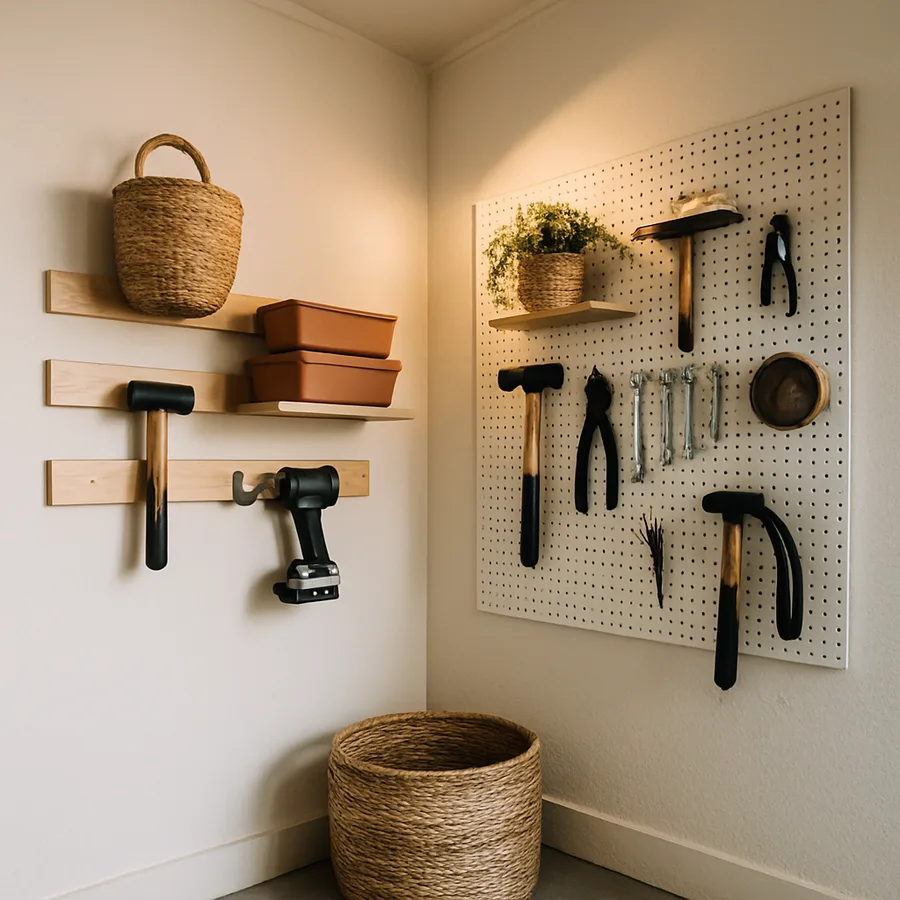
Walk into any cluttered garage and the problem is rarely the floor, the ceiling, or even the shelves. The problem is almost always the walls. Vertical square footage is the single most underused resource in the American garage, and two systems dominate the conversation for anyone serious about solving it: the French cleat and the classic pegboard. Both have devoted fans, both have been around for decades, and both claim to be the definitive answer. But when you rank them head-to-head on the things that actually matter, one system wins on raw strength while the other wins on speed and affordability. The right pick depends on what you hang, how often you rearrange, and how much weight your framing can legally carry. According to the National Association of Home Builders, the average attached two-car garage in the United States measures roughly 440 square feet, which translates to more than 300 square feet of usable wall area once you subtract door openings. That is a lot of territory to cover, and most homeowners cover it badly.
This ranked comparison breaks down six decision points in order of real-world importance, then closes with a recommendation you can act on this weekend. No vendor loyalty, no affiliate nonsense, just a clear look at which system deserves your studs. If you have ever asked yourself whether a pegboard is too flimsy for your impact driver set, or whether a French cleat wall is overkill for hanging a few rakes, you will have a confident answer by the end.
Round One: Load Capacity and Structural Limits
This is where the gap between the two systems becomes a canyon. A properly installed French cleat rail, fastened with 2.5 inch construction screws into every stud it crosses, can routinely carry 75 to 150 pounds per linear foot of rail when the cleat itself is 3/4 inch plywood ripped at a 45 degree angle. Multiple rails stacked vertically distribute loads across many studs, so a fully loaded cleat wall can hold hundreds of pounds of tools, lumber racks, and cabinetry without a groan. That is why professional cabinet installers have trusted the system for generations, and why the NARI (National Association of the Remodeling Industry) routinely features cleat-based storage in its award-winning workshop builds.
Pegboard lives in a different weight class entirely. Standard 1/8 inch tempered hardboard pegboard from a home center is rated for roughly 30 to 50 pounds per square foot across the whole panel, and individual hooks are typically rated for only 5 to 25 pounds depending on style. Upgrade to 1/4 inch pegboard or to a metal panel system like those promoted by This Old House in their garage overhaul features and you can push individual hook ratings to 40 pounds, but you still do not approach the brute capacity of a cleat wall. So ask yourself the honest question: are you hanging screwdrivers and paintbrushes, or are you hanging a 60 pound rolling miter saw stand and a ladder? The answer tells you which system to rank first for your particular garage.
Round Two: Cost Per Square Foot Installed
Here pegboard punches back, and it punches hard. A 4x8 foot sheet of standard tempered pegboard runs between $20 and $35 at most regional home centers, and you can cover a typical 8x16 foot garage wall for under $100 in panel costs. Add furring strips, hooks, and screws and you are still comfortably under $200 for a complete installation. That is remarkable value, and it explains why pegboard has been the default garage wall for nearly a century. The Family Handyman has published multiple cost-per-square-foot breakdowns showing pegboard coming in under $2 per square foot installed, which no other system reliably matches.
French cleat walls cost more because they use more wood and more labor. A single 4x8 sheet of 3/4 inch birch plywood now averages $65 to $95, and a properly built cleat wall often uses two or three sheets for the rails alone, plus additional plywood or MDF for the hooks, bins, and holders you attach to those rails. Hardware, glue, finish, and screws push the material total for a typical two-car garage wall into the $350 to $600 range. You are also investing six to twelve hours of careful cutting on a table saw to get those 45 degree bevels consistent. If your budget is the deciding factor, pegboard wins this round decisively, although the total cost of a cleat wall is still modest compared with off-the-shelf modular steel systems from premium brands.
Round Three: Installation Time and Skill Required
Can you finish a garage wall in a Saturday, or does this become a month-long project that kills your weekends? Pegboard is a genuine one-day job for a patient novice. The only real skills required are measuring, drilling pilot holes for the furring strips that hold the panel off the wall, and driving screws into studs. An experienced DIYer can cover an entire wall in three to four hours, and a first-timer working carefully might take six. The OSHA guidance for homeowner-scale carpentry projects recommends eye protection, hearing protection for power tools, and dust masks for cutting hardboard, all of which are cheap and widely available.
A French cleat wall demands meaningfully more skill. You need a table saw or a track saw capable of making long, accurate 45 degree bevel rips. You need to understand how to lay out horizontal rails at consistent spacing, typically every 10 to 14 inches, so that the accessories you build later will fit every row. And you need to build those accessories, which is where many homeowners stall out. The reward for the extra effort is a system you can reconfigure in seconds for the rest of the time you own the house. Still, if a quick finish matters more than maximum flexibility, pegboard wins round three too.
Round Four: Flexibility and Reconfiguration
Now the cleat system hits back, and this is the round where serious makers tend to throw in with it for life. A French cleat wall is, in effect, a universal mounting grid. Build a new jig for your router, a new holder for your cordless drill charger, or a new bin for a freshly bought tool and you simply cut a matching cleat on the back, hang it anywhere on the wall, and move on. Nothing is permanent, nothing blocks anything else, and you can redesign the entire layout in an afternoon without touching a drill. This is why custom woodworkers and a growing number of home makers profiled by Fine Homebuilding have adopted the system as their default shop wall.
Pegboard flexibility is real but shallower. You can move hooks, and you can buy accessory kits with bins and shelves and tool holders, but you are limited to the shapes the industry sells. Heavy items simply cannot hang. And when you want to add a custom holder for an odd-shaped tool, you either drill new holes in the panel, which weakens it, or you give up and mount that item elsewhere. Have you ever tried to hang a framing square or a cordless grinder on pegboard and watched it wobble against the wall? The cleat wall makes that problem disappear. Cleat wins round four.
Round Five: Durability and Long-Term Appearance
Garages are hostile environments. Humidity swings, temperature swings, dust, and the occasional leak from a gutter all conspire to age any wall treatment. Tempered pegboard handles this better than untreated hardboard, but over five to ten years you will see sagging between furring strips, hook holes enlarging around heavy tools, and the classic bow that develops when the panel absorbs moisture. The American Society for Testing and Materials (ASTM) publishes durability test standards for hardboard products, and tempered pegboard meets only the middle tier of moisture resistance. In a heated, conditioned garage this is fine. In a detached garage in a humid climate, it is a countdown.
French cleat walls built from 3/4 inch cabinet-grade plywood and sealed with a coat of polyurethane age gracefully for decades. The mechanical connection between cleat and rail does not wear out the way hook-in-hole pegboard does, because the contact surfaces are broad and gravity keeps everything tight. I know cleat walls in working cabinet shops that have survived 25 years of constant reconfiguration with no visible wear. That is the kind of longevity that justifies the higher up-front investment. Cleat wins round five, and by a wide margin in tough environments.
Round Six: Safety and Code Considerations
Safety is where homeowners often skip past the fine print, and it matters more than people assume. Any wall storage system that holds significant weight is effectively a structural attachment, and the load path has to end at framing capable of carrying it. The International Residential Code, published by the International Code Council, does not regulate DIY wall storage directly, but local jurisdictions increasingly expect attachments that carry more than 40 pounds to be anchored to studs rather than drywall alone. Both systems require this, and both fail badly when homeowners trust plastic drywall anchors to hold heavy loads.
Pegboard has one specific safety quirk worth flagging: hooks can pop out of holes when you lift a tool upward to free it, sending the tool and sometimes the hook flying. Manufacturers now sell locking hook retainers that solve this, and a well-run garage should use them, especially on any hook holding more than 10 pounds. The American National Standards Institute (ANSI) has standards for workplace tool storage that increasingly recommend positive retention for any hung item above shoulder height. French cleat accessories cannot pop loose the same way because gravity seats them deeper into the rail when you bump them. For families with kids in the garage, or for anyone mounting heavy or sharp tools overhead, that passive safety advantage matters. Call this round a draw with a slight edge to the cleat system.
Conclusion: Which System Deserves Your Wall
Rank the six rounds and the tally comes out almost even, but the weighting depends on you. Pegboard wins cost and speed, which matter enormously if you are a renter, if you are setting up a starter garage, or if your storage needs are light. French cleat wins load capacity, flexibility, durability, and safety, which matter enormously if you are building a shop you intend to use for decades. The honest recommendation is a hybrid: install a French cleat wall across the primary working zone where your benches, drills, and heavy tools live, and use a smaller pegboard panel above a secondary bench for paintbrushes, sandpaper, and the light items that would be overkill to cleat-mount.
Before you buy anything, measure your wall carefully, identify every stud with a reliable electronic detector, and sketch the layout on paper or in a simple drawing app. Many homeowners rush this step and regret it when a door swing, a breaker panel, or a window trim destroys a symmetrical plan. A twenty minute planning session will save you hours of rework. If you have never built a French cleat before, watch two or three careful tutorials, because small errors in the bevel angle or rail spacing compound across a large wall.
Finally, do not let perfection become the enemy of progress. A garage wall that is 70 percent organized this weekend is vastly better than a garage wall that stays a pile of loose tools for another six months while you plan a showroom build. Pick the system that matches your reality, commit to a single Saturday, and get started. Your future self, standing in a clean garage on a rainy Sunday looking for a specific drill bit and finding it in three seconds, will thank you. Ready to take action? Pick one wall, one system, and block out next Saturday on the calendar right now before another weekend slips away.
For further reading on smart garage builds, homeowners frequently consult resources like This Old House, the Family Handyman, and professional guidance from the National Association of the Remodeling Industry. Between those three and a good tape measure, there is no garage wall problem you cannot solve this month.
More Articles You May Like



Comments
Post a Comment