Exploring the Futuristic Interior Design of the Tesla Cybertruck
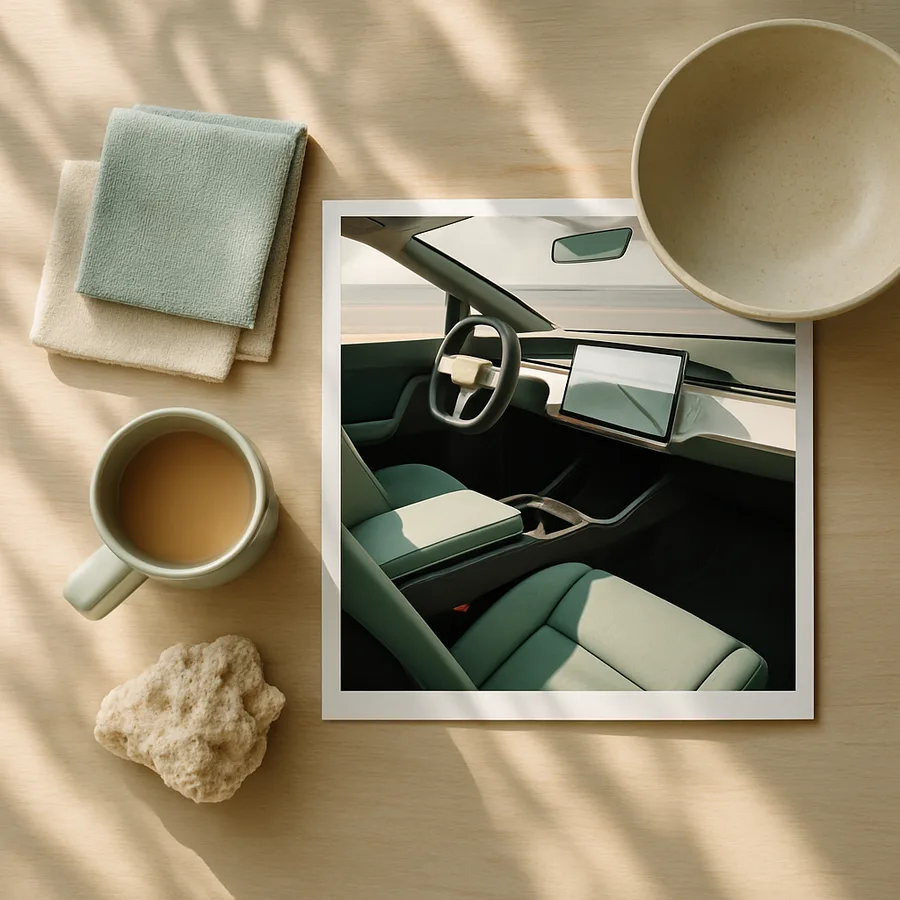
The Philosophy Behind Minimalist Automotive Interiors
The Tesla Cybertruck represents a radical departure from conventional vehicle interior design, drawing on principles that have long defined progressive architecture and industrial design. Where traditional trucks rely on layered dashboards crowded with buttons, knobs, and analog gauges, the Cybertruck strips away virtually every physical control in favor of clean surfaces and digital interfaces. This approach mirrors a broader movement in residential and commercial interior design toward decluttered spaces that prioritize function and visual calm. The American Society of Interior Designers (ASID) has noted that minimalism continues to rank among the most requested design philosophies by clients across multiple sectors. According to a survey conducted by Houzz, approximately 68 percent of homeowners pursuing renovations express a preference for simplified, uncluttered living spaces.
Minimalism in the automotive context is not simply about removing elements but about rethinking how occupants interact with their environment. Every surface inside the Cybertruck serves a deliberate purpose, from the flat dashboard that doubles as a visual horizon line to the absence of a traditional instrument cluster behind the steering wheel. The interior communicates confidence through restraint, a quality that designers certified by the National Council for Interior Design Qualification (NCIDQ) often champion in built environments. The result is a cabin that feels larger than its physical dimensions suggest, an optical effect well understood in architectural design.
This philosophy also carries practical advantages that extend beyond aesthetics. Fewer physical components mean fewer points of mechanical failure, reduced manufacturing complexity, and easier cleaning. The flat surfaces resist dust accumulation and simplify maintenance, concerns that resonate with anyone who has tried to keep a traditional truck interior presentable after daily use. Have you ever considered how much time you spend navigating cluttered dashboards for a single function? The Cybertruck answers that question by consolidating nearly everything into its central touchscreen, a bold gamble that reflects growing consumer comfort with digital interfaces.
Angular Geometry and Its Roots in Brutalist Architecture
The Cybertruck's exterior angles are well documented, but the interior carries those same geometric commitments into the cabin with striking consistency. Flat planes, sharp edges, and exposed stainless steel surfaces create an environment that owes more to Brutalist architecture than to conventional automotive design language. Brutalism, which emerged in the mid-twentieth century, celebrated raw materials and bold structural forms, and those principles translate directly into the Cybertruck's unadorned interior surfaces. The International Interior Design Association (IIDA) has explored how Brutalist influences are resurfacing in contemporary residential and hospitality projects.
Inside the cabin, the dashboard runs as a single unbroken plane from door to door, a design choice that eliminates the visual fragmentation found in most vehicles. The angular door cards and flat ceiling panels reinforce the geometric theme, creating a cockpit that feels deliberately sculptural rather than organically shaped. This approach demands precision in manufacturing because flat surfaces reveal imperfections that curves can hide. Tesla addressed this challenge through the use of ultra-hard 30X cold-rolled stainless steel for structural elements and precision-molded interior panels that maintain tight tolerances across every surface.
The psychological impact of angular interiors is well studied in environmental design. Research published by the National Institute of Building Sciences indicates that sharp geometric environments can evoke feelings of alertness and modernity, while curved environments tend to promote relaxation. The Cybertruck leans fully into that alertness quality, creating a driving environment that feels purposeful and attentive. For occupants accustomed to soft-touch plastics and rounded consoles, the transition can feel dramatic, but it is a deliberate choice that prioritizes architectural integrity over conventional comfort cues.
The Central Touchscreen as a Design Anchor
At the heart of the Cybertruck interior sits an 18.5-inch central touchscreen that serves as the primary interface for virtually every vehicle function. This screen is not merely a technology feature but a fundamental design element that anchors the entire cabin layout. Its placement at the center of the dashboard creates a focal point around which all other interior elements are organized, much like a fireplace anchors a traditional living room. Architectural Digest has featured numerous residential projects where a single commanding element defines the spatial hierarchy of an entire room, and the Cybertruck applies that same principle at automotive scale.
The touchscreen consolidates climate controls, navigation, media, vehicle settings, camera feeds, and even the speedometer into a single interface. This consolidation eliminates the need for secondary displays, physical switches, and redundant controls that clutter traditional dashboards. The screen itself is positioned at a height and angle that allows both driver and front passenger to interact with it naturally, reducing the need to lean or stretch. A study by the Society of Automotive Engineers found that well-positioned central displays can reduce driver distraction by up to 15 percent compared to scattered control layouts, a meaningful safety consideration.
From a design perspective, the touchscreen also serves as the cabin's primary light source after dark, casting a soft glow across the flat dashboard surfaces and creating an ambient atmosphere that changes character depending on the content displayed. This dynamic lighting quality is something that residential interior designers have long exploited with strategically placed screens, backlit panels, and programmable LED systems. The Cybertruck achieves it as a byproduct of its control architecture rather than as a dedicated lighting feature, an elegant convergence of function and ambiance. What role do you think a single commanding screen plays in shaping the emotional character of a space you occupy for hours at a time?
Material Choices That Challenge Automotive Convention
The material palette inside the Cybertruck diverges sharply from the leather, wood trim, and soft-touch plastics that dominate most vehicle interiors. Instead, Tesla selected materials that emphasize durability, industrial honesty, and ease of maintenance. The seats are upholstered in a synthetic textile that resists staining and wear, while hard surfaces feature exposed metal, matte finishes, and minimal decorative treatment. This material strategy aligns with principles that ASID professionals recognize from commercial and hospitality design, where materials must withstand heavy use while maintaining visual appeal over extended periods.
The choice to avoid traditional luxury materials is a statement about what luxury means in a utilitarian vehicle. Rather than imitating the material vocabulary of sedans and SUVs, the Cybertruck defines luxury through toughness, longevity, and low maintenance. The floor surfaces are designed to be hosed down, the seats resist punctures from work gear, and the hard trim panels shrug off scuffs that would scar conventional interiors. This pragmatic material philosophy echoes the industrial design movement that celebrates honest use of materials, exposing what things are made of rather than disguising their construction with decorative veneers.
The acoustic implications of these material choices are also significant. Hard surfaces reflect sound differently than padded, fabric-covered panels, and the Cybertruck interior has a distinct sonic character that some occupants find crisp and others find reverberant. Tesla has addressed this through strategic placement of acoustic dampening materials behind the visible surfaces, a technique borrowed from architectural acoustics where concert halls and recording studios balance reflective and absorptive surfaces to shape sound. The interior achieves a compromise that preserves the visual honesty of hard materials while managing noise levels to acceptable standards for extended driving.
Spatial Design and the Illusion of Expanded Volume
Despite its angular exterior, the Cybertruck interior offers a sense of spaciousness that surprises many first-time occupants. This effect is achieved through deliberate spatial design strategies that interior designers and architects have refined over centuries. The flat dashboard creates an uninterrupted sight line across the cabin, eliminating the visual barriers that traditional dashboards impose. The absence of a center console tunnel in the front seating area opens up the floor space between driver and passenger, creating a sense of openness rarely found in trucks.
The glass roof panel extends the visual volume of the cabin upward, borrowing a technique that residential architects use when installing skylights or clerestory windows to make rooms feel taller than their actual dimensions. Natural light floods the interior through this overhead glass, reducing the cave-like feeling that solid roofs create and connecting occupants visually to the sky above. Houzz research indicates that natural light is the single most valued feature in residential design, outranking even square footage in buyer preference surveys. The Cybertruck translates that residential insight into an automotive context with notable success.
The rear seating area benefits from a fold-flat bench design that transforms the cabin from a five-passenger configuration to a long cargo platform. This adaptability reflects the flexible-use philosophy that IIDA designers apply to commercial spaces where rooms must serve multiple functions throughout the day. A conference room that converts to a dining space, a living room that becomes a guest bedroom: these transformations rely on furniture and spatial elements that reconfigure without compromising either function. The Cybertruck rear seat achieves exactly that kind of dual-purpose flexibility, providing comfortable seating when needed and unobstructed cargo space when the task demands it.
How the Cybertruck Interior Influences Broader Design Trends
The Cybertruck has already begun influencing design conversations far beyond the automotive industry. Its uncompromising geometric language, raw material palette, and technology-centered interface have appeared as reference points in architecture studios, product design firms, and interior design publications. Architectural Digest has noted the growing interest in what it describes as techno-industrial aesthetics, a design vocabulary that the Cybertruck embodies more completely than perhaps any other consumer product currently in production. This crossover influence between automotive and architectural design is not unprecedented, but the Cybertruck has accelerated it significantly.
The vehicle's influence is particularly visible in residential kitchen and bathroom design, where hard surfaces, minimal hardware, and concealed storage have become increasingly popular. Designers are specifying flat-panel cabinetry, integrated appliances, and handle-free doors that echo the Cybertruck's commitment to uninterrupted surfaces. The NCIDQ examination now includes questions about cross-disciplinary design influences, reflecting the profession's recognition that automotive, product, and architectural design are converging in meaningful ways. The boundaries between these disciplines grow thinner with each design cycle, and the Cybertruck stands as a vivid example of that convergence.
For anyone considering how emerging design languages might shape the spaces they inhabit, the Cybertruck offers a compelling case study in committed vision. It demonstrates that bold aesthetic choices, when executed with consistency and attention to function, can redefine expectations across an entire product category. The interior design community will likely continue studying this vehicle not as a truck but as a built environment, a space where people spend meaningful time and where design decisions directly affect experience, comfort, and perception. If you are drawn to this aesthetic, consider how elements of geometric minimalism and industrial materiality might translate into your own living or working spaces.
Ready to rethink your own space with some of these principles? Start by identifying one area in your home or office where you can strip away unnecessary visual clutter, expose honest materials, and let a single functional element serve as the design anchor. The lessons of the Cybertruck interior extend far beyond the road.
More Articles You May Like


Comments
Post a Comment