Easter Tablescape Ideas for a Casual Brunch at Home
Setting the Tone: Casual Does Not Mean Careless
There is a meaningful difference between a table that looks effortless and one that simply looks neglected. A casual Easter brunch tablescape should feel welcoming and lighthearted, but it still benefits from intentional choices about color, texture, and arrangement. The goal is a table that makes guests smile when they sit down, one that says the host cared enough to create something beautiful but relaxed enough to encourage people to actually touch, use, and enjoy everything on it. Casual is a mood, not an excuse to skip the details.
The American Society of Interior Designers (ASID) has noted in its trend forecasts that informal entertaining has grown steadily as a residential design priority, with more homeowners investing in versatile tableware that transitions from daily use to special occasions without looking out of place in either context. This shift reflects a broader cultural movement away from rigid formality and toward gatherings that prioritize conversation and comfort over protocol. An Easter brunch is the perfect occasion to embrace this approach, combining festive seasonal touches with a laid-back atmosphere that puts everyone at ease.
What kind of Easter gathering are you planning? A sit-down brunch for eight, a buffet-style spread for a larger crowd, or an intimate meal for four? The answer shapes every subsequent decision about your tablescape. A sit-down format allows for individual place settings with more detail, while a buffet focuses attention on the serving area and requires a strong visual centerpiece to anchor the space. Even a small family meal benefits from a few deliberate touches that mark the occasion as something worth remembering. Regardless of scale, the principles of casual elegance remain the same: choose a cohesive palette, mix textures freely, and leave room for imperfection.
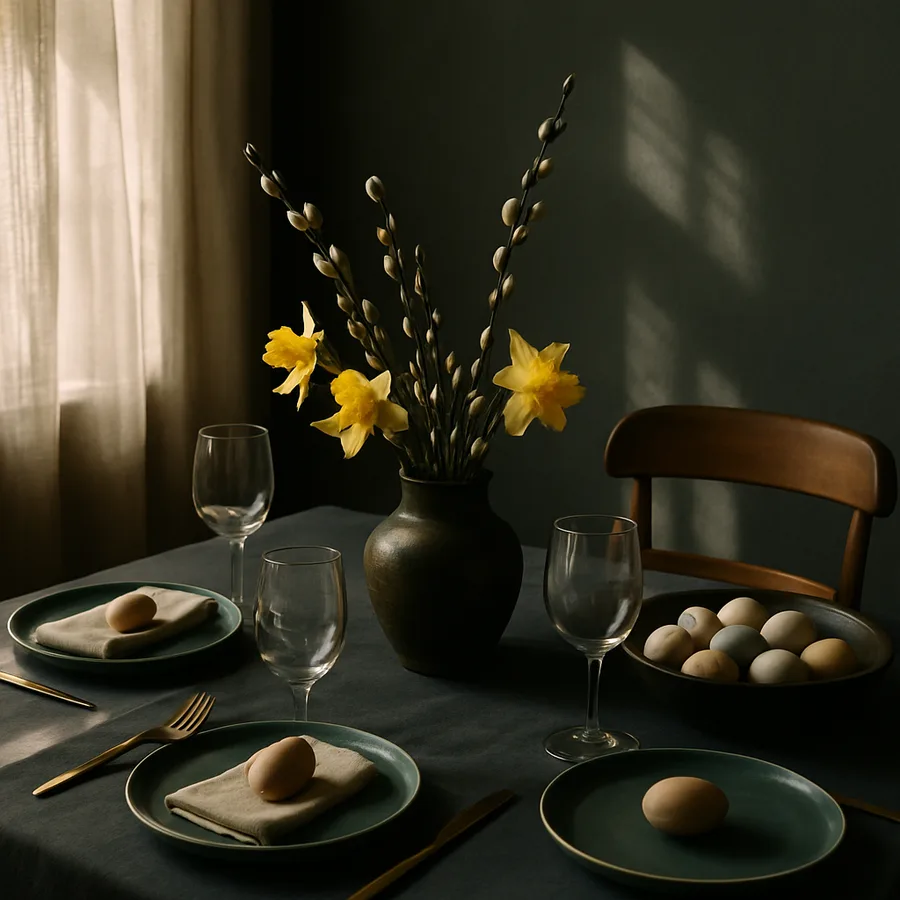
One of the most important aspects of a casual tablescape is restraint. It is tempting to incorporate every Easter element you can think of, from ceramic bunnies to dyed eggs to floral garlands, but too many competing elements create visual noise rather than charm. Select two or three seasonal motifs and use them with consistency. A few speckled eggs nestled in a linen napkin, a small cluster of spring flowers in a simple vessel, and a handwritten place card on kraft paper can accomplish more than a dozen figurines crowded down the center of the table. Let each element breathe.
Choosing Your Color Palette Beyond Predictable Pastels
Pastels are the default Easter palette for good reason: soft pinks, lavenders, mint greens, and butter yellows echo the colors of spring flowers and naturally dyed eggs. But defaulting to pastels does not mean you are limited to a candy-colored table that looks like it belongs in a children's party supply catalog. The key is to ground your pastels with neutral anchors that give the softer tones context and sophistication. A pale pink linen napkin reads very differently when placed on a warm terracotta plate versus a bright white one, and that difference matters.
Consider a palette built around one or two pastel tones combined with natural materials. Soft sage green paired with warm linen, raw wood, and brass creates an Easter table that feels organic and grown-up. Dusty lavender combined with cream ceramics and dried grasses brings a Provencal quality that is both festive and refined. Architectural Digest has highlighted the trend toward muted, nature-inspired Easter palettes as part of a larger movement toward tables that feel collected over time rather than purchased as a matching set.
If pastels genuinely do not appeal to you, there are compelling alternatives. A warm neutral palette of cream, sand, terracotta, and soft gold is festive without being overtly Easter-themed, which works well for hosts who prefer a table that could transition seamlessly from Easter brunch to any spring gathering. An earthy palette of sage, mushroom, and warm white feels grounded and modern. Even a blue-and-white scheme using patterned transferware or Delft-inspired pieces can read as seasonal when combined with spring flowers and natural greenery.
Whatever palette you choose, maintain consistency across the full table. This does not mean everything must match precisely; in fact, a mix of complementary tones and patterns creates more visual interest than a perfectly coordinated set. But every element should feel like it belongs to the same conversation. If your plates are speckled stoneware in warm cream, your napkins should relate in tone or texture rather than introducing a completely unrelated color. The National Home Furnishings Association (NHFA) recommends the 60-30-10 color rule for tablescapes: 60 percent dominant neutral, 30 percent secondary tone, and 10 percent accent color for pops of seasonal interest.
Centerpieces That Invite Conversation, Not Block It
The most common mistake in Easter tablescape design is a centerpiece that is too tall, too wide, or too busy. A beautiful arrangement means nothing if guests cannot see each other across the table, and a brunch atmosphere depends on easy, face-to-face conversation. Keep centerpieces below eye level, roughly eight to ten inches tall for a seated arrangement, and narrow enough that serving dishes can still be passed comfortably. Multiple small arrangements spaced down the center of the table often work better than a single large piece, creating visual rhythm without creating a barrier.
Fresh flowers are the obvious choice for an Easter centerpiece, and they remain effective because they bring genuine life and fragrance to the table. But you do not need a professional arrangement or expensive blooms to make an impact. Grocery store tulips in a simple glass jar, a handful of ranunculus in a vintage pitcher, or branches of flowering quince in a ceramic vase all create a spring statement with minimal effort and cost. The Society of American Florists reports that tulips and mixed spring bouquets are the most popular floral purchases during the Easter season, and their accessibility makes them a practical choice for home entertainers at any budget level.
Non-floral centerpieces offer a distinctive alternative that can be equally beautiful. A wooden bread board piled with whole citrus fruits, small potted herbs in mismatched vessels, or a shallow bowl of naturally dyed eggs each creates a focal point that feels organic and personal. Potted herbs double as both decoration and take-home gifts for guests, adding a functional layer to your tablescape that cut flowers cannot provide. Rosemary, thyme, and small basil plants in simple terracotta pots are inexpensive, fragrant, and perfectly scaled for table use.
Candles can enhance any Easter centerpiece but require careful selection for a brunch setting. Tall tapers in brass or ceramic holders add elegance and height without blocking sightlines, and they work even during daytime meals when they remain unlit, serving as sculptural elements rather than light sources. Choose candle colors that complement your palette: beeswax-toned, soft ivory, or muted pastels integrate seamlessly with most spring tablescapes. Avoid heavily scented candles near food, as competing fragrances can interfere with the aroma of the meal itself.
Tableware and Linens: Mixing Without Matching
The era of the perfectly matched twelve-piece dinnerware set ruling the holiday table is fading, replaced by a more personal approach that values character over uniformity. Mixing tableware is not only acceptable for a casual Easter brunch; it is often preferable. Combining two or three complementary plate styles, perhaps a set of white salad plates layered on stoneware dinner plates in varying earth tones, creates the collected, lived-in quality that defines modern casual entertaining. The table looks like it belongs to someone with taste rather than someone who purchased everything from a single catalog page.
Linen napkins are a worthwhile investment that immediately raises the perceived quality of any table setting. They are more sustainable than paper, more beautiful than polyester, and they soften and improve with every wash. For an Easter brunch, choose linen napkins in a soft seasonal color and fold them simply: a loose rectangle, a casual knot, or a single fold tucked under the plate. Avoid elaborate napkin-folding techniques that read as fussy rather than festive. A sprig of rosemary or a small wildflower tucked into the fold adds a personal touch without requiring any special skill. According to Houzz, searches for linen table textiles surge every spring as hosts prepare for seasonal entertaining.
Glassware deserves more attention than it typically receives in tablescape planning. At minimum, each place setting needs a water glass and a juice or cocktail glass for mimosas, Bellinis, or whatever your brunch beverage menu includes. Mixing glass styles, perhaps vintage coupes for cocktails alongside simple tumblers for water, adds visual variety and sparks conversation. Tinted glassware in amber, sage, or soft blue has surged in popularity and provides an easy way to introduce color at the table without relying on plates or linens to do all the work.
Flatware rounds out the place setting, and here too, a casual approach works best. If you own everyday stainless steel flatware, use it confidently; there is no need for silver or gold-plated sets at a casual brunch. If you want a slight upgrade in appearance, matte-finish flatware in gold-toned or brushed steel offers a modern look that photographs well and feels substantial in hand. Place flatware casually beside the plate rather than in rigid parallel lines, or bundle it in a linen napkin for a bistro-inspired presentation that guests can unwrap at their own pace.
Personal Touches That Make Guests Feel Welcome
The details that guests remember long after the meal are rarely the most expensive or elaborate elements. They are the personal touches that demonstrate thoughtfulness: a handwritten place card, a small wrapped chocolate at each seat, a printed menu on a simple card, or a tiny basket of spring candies. These gestures take minutes to prepare but communicate that each guest was individually considered. In a world where most entertaining happens around generic take-out containers and paper plates, even modest personal touches register as extraordinary.
Place cards serve a practical function at larger gatherings by guiding guests to their seats, but they also offer a creative opportunity. For an Easter brunch, consider writing names on small kraft paper tags tied to a spring flower stem, on smooth river stones with a metallic marker, or on miniature chalkboard stakes tucked into potted herb centerpieces. The place card becomes a small gift in itself, something guests might take home as a memento of the gathering. Handwritten cards feel more personal than printed ones, even if your handwriting is imperfect. The imperfection is part of the charm.
A printed or handwritten menu at each place setting or displayed on a small easel adds a restaurant-quality touch that most guests will not expect at a home brunch. List the dishes you are serving, any notable ingredients, and perhaps a note about the origin of a recipe or an ingredient. This small effort turns the meal into a curated experience and gives guests something to read and discuss as they settle in. The International Association of Culinary Professionals (IACP) has observed that home entertainers increasingly borrow techniques from restaurant hospitality, and a thoughtful menu card is one of the simplest to execute.
Music, lighting, and scent round out the sensory experience beyond the table itself. Create a playlist of light, acoustic, or jazz music at low volume to fill comfortable silences without dominating conversation. If your brunch is indoors, open windows to let in natural spring air and light. If you are using candles, choose unscented options near the food and save any lightly scented candles for adjacent spaces like the entryway or powder room. These ambient details work in concert with your tablescape to create an atmosphere that feels intentionally welcoming from the moment guests walk through the door.
Making It Work for Real Life
The most beautiful Easter tablescape in the world fails if it prevents you from actually enjoying the brunch with your guests. Practical planning is what separates a successful gathering from a stressful one, and it starts with being realistic about your time, budget, and energy level. Set the table the night before if possible, covering it with a clean sheet to protect your work until morning. Prepare any centerpiece arrangements, place cards, and decorative elements in advance so that the morning of the brunch is dedicated entirely to cooking and getting yourself ready.
Build your tablescape around pieces you already own rather than buying everything new. Most households contain the raw materials for a beautiful table: a set of white plates, a few linen napkins, some glass jars or bottles that can serve as vases, and candles left over from other occasions. The spring-specific additions, fresh flowers, a few sprigs of greenery, small seasonal accents, can usually be sourced for under twenty dollars at a grocery store or farmers market. The constraint of working with what you have often produces more creative and personal results than unlimited shopping ever could.
Consider the logistics of serving when arranging your table. If you are passing dishes family-style, leave enough open space on the table for platters and bowls to rest comfortably. If you are plating in the kitchen, you can use more of the table surface for decorative elements. Think about where the coffee pot, juice pitcher, and butter dish will live so that reaching for them does not require guests to navigate an obstacle course of candles and flowers. A beautiful table that functions well is always more successful than a gorgeous table that frustrates everyone trying to eat at it.
Start planning your Easter brunch tablescape now, even if the holiday is still weeks away. Gather your linens, inventory your tableware, and sketch a rough layout on paper. Browse inspiration images to refine your palette, but resist the urge to replicate someone else's table exactly. The best tablescapes reflect the personality of the host and the character of the home. Your Easter brunch table should look like it belongs in your dining room, not in a magazine spread. That authenticity is what makes casual entertaining truly special, and it is what your guests will carry with them long after the last mimosa is poured.
More Articles You May Like



Comments
Post a Comment