Boot Tray and Coat Hook Systems That Keep Entryways Clean
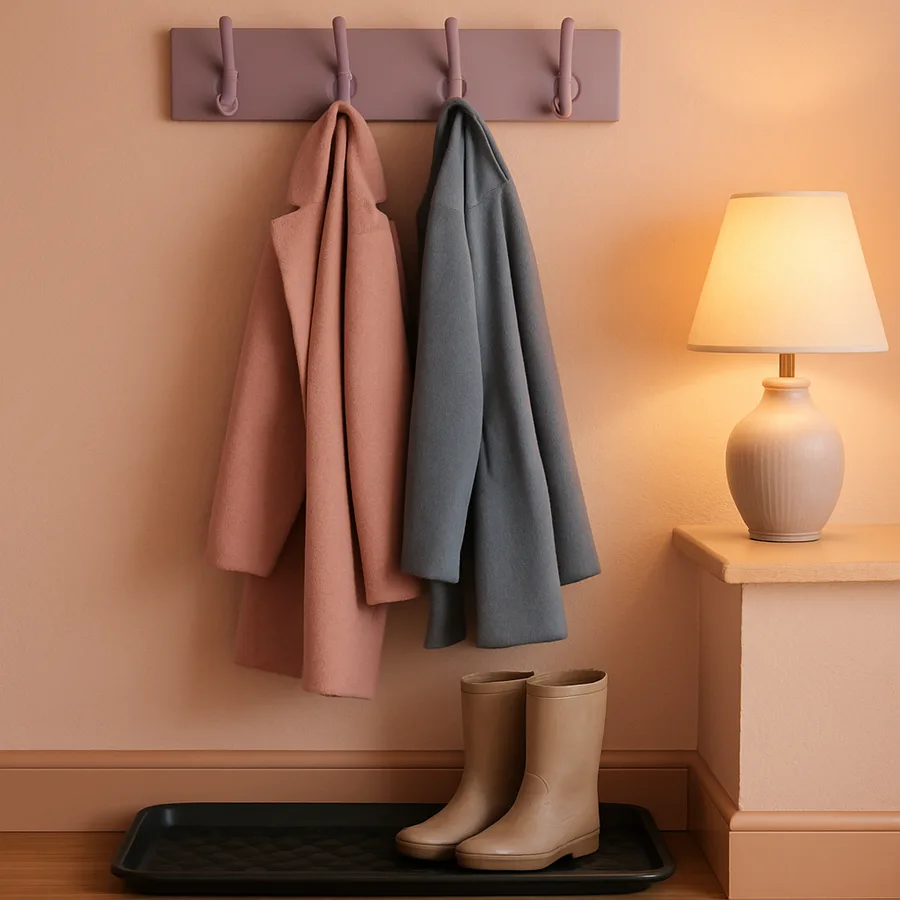
The Hidden Cost of an Unmanaged Entryway
Every pair of shoes that crosses the threshold of your home carries an invisible payload of dirt, moisture, allergens, and bacteria that spreads through the house with each subsequent step. A study conducted by the University of Arizona found that the average shoe sole harbors approximately 421,000 units of bacteria, including E. coli and other harmful organisms, and that these contaminants transfer to indoor flooring at a rate of ninety to ninety-nine percent with each step. An unmanaged entryway without a dedicated boot tray or shoe containment system becomes the distribution hub for this contamination, affecting every room that connects to the entry.
Beyond biological concerns, the physical wear caused by uncontained wet and muddy footwear accelerates the deterioration of entryway flooring at a rate that homeowners consistently underestimate. Hardwood floors exposed to standing water from melting snow develop cupping and staining that requires professional refinishing. Tile grout absorbs moisture and dirt, darkening permanently within a single season of unmanaged boot traffic. Carpet and rugs saturated by repeated wet-shoe contact develop mold growth that may not become visible for months but affects indoor air quality immediately. The National Wood Flooring Association identifies entryway moisture as one of the top three preventable causes of premature hardwood floor failure.
The coat management side of the equation carries a different but equally significant cost. Coats draped over chair backs, piled on stair railings, and dropped on floors create visual clutter that cascades psychologically through the home. Research published in the Personality and Social Psychology Bulletin found that individuals who described their homes as cluttered experienced elevated cortisol levels throughout the day compared to those who described their spaces as organized. A functional coat hook system at the entry point intercepts this clutter before it enters the living space, creating an immediate and measurable improvement in household order and the stress levels it influences.
What makes boot trays and coat hooks particularly valuable as organizational tools is their low cost, zero-maintenance simplicity, and the disproportionate impact they deliver. A thirty-dollar boot tray and a forty-dollar row of hooks represent a seventy-dollar investment that protects thousands of dollars in flooring, eliminates a daily source of household friction, and visually transforms the first impression of the home's interior. No other home improvement delivers this ratio of cost to impact, which is why these two items appear on virtually every professional organizer's essential starter list.
Choosing the Right Boot Tray: Materials, Sizes, and Features
Boot trays are manufactured in four primary materials, each with distinct advantages that suit different entryway conditions and aesthetic preferences. Rubber boot trays with raised ridges or textured surfaces provide the best moisture containment and are virtually indestructible, making them ideal for families with children, heavy winter boot usage, or pet traffic. Copper and galvanized metal trays offer superior visual appeal and natural antimicrobial properties but require occasional polishing and can scratch delicate flooring if dragged. Plastic trays are the most affordable option and work well for light-duty seasonal use. Wooden trays with waterproof liners combine warmth and formality but require liner replacement when seals fail.
Size selection follows a straightforward formula: count the maximum number of shoe pairs that will occupy the tray simultaneously and multiply by six inches of width per pair. A family of four generating two pairs of shoes each needs a tray at least forty-eight inches wide, or two twenty-four-inch trays placed end to end. Depth should accommodate the longest boot in the household plus one inch of clearance on each side, typically eighteen to twenty-two inches for adult tall boots. The American Society of Interior Designers (ASID) recommends measuring actual shoes before purchasing rather than relying on manufacturer sizing labels, which often describe exterior dimensions that differ from usable interior space.
Drainage and moisture management separate effective boot trays from decorative trays that fail under real conditions. The best designs feature a raised grid or ridge pattern that suspends shoes above the collected water, allowing air circulation underneath that accelerates drying. Trays without this elevation leave shoe soles sitting in pooled water, which defeats the purpose of containment and creates odor problems. During peak wet seasons, check and empty the tray's collected water daily. Some premium trays include absorbent inserts or built-in drain channels that direct water toward a collection area, reducing maintenance frequency for busy households.
Have you considered where your boot tray sits relative to the actual door swing and traffic path? Placement matters as much as the tray itself. Position the tray immediately inside the door where it can be reached in a single step from the threshold, before the natural instinct to walk further into the home takes over. If the door swing conflicts with tray placement, consider a narrow tray oriented parallel to the wall rather than perpendicular to the door, or a two-piece system with a small tray at the door for immediate shoe removal and a larger staging tray along the wall for drying and storage.
Coat Hook Systems: Configurations That Work for Every Family
The difference between a coat hook system that gets used consistently and one that gets bypassed in favor of chair backs and doorknobs lies in three factors: height accessibility, spacing adequacy, and hook capacity. Each family member needs at least one hook mounted at a height they can reach independently, which means a dual-height installation is essential in any household with both adults and children. Adult hooks positioned at sixty to sixty-six inches from the floor accommodate full-length coats without dragging. Children's hooks at thirty-six to forty-two inches allow independent use starting around age three, building habits that persist as the child grows.
Hook spacing is the most commonly underestimated dimension in coat hook system design. Hooks mounted too close together cause coats to bunch, overlap, and fall, which discourages use and creates the pile-up the system was meant to prevent. The minimum spacing between hooks is eight inches center to center for light jackets and twelve inches for heavy winter coats or bulky backpacks. Houzz (Houzz) editorial features consistently recommend wider spacing than homeowners initially request, because the visual cleanliness of well-spaced hooks with items hanging freely is far more attractive than a densely packed row where nothing is visible or accessible.
Hook style selection should prioritize function over aesthetics, though both can be achieved with careful shopping. Double-prong hooks with a larger upper arm and smaller lower arm hold a coat on top and a bag or scarf below, doubling the capacity of each hook point. Rounded or ball-tip hooks prevent fabric snags that damage coat linings, an important consideration for households with wool or silk outerwear. Rail-mounted sliding hooks offer ultimate flexibility, allowing hook positions to shift as seasonal coat sizes change. Avoid single thin wire hooks, which lack the strength for heavy coats and bend under repeated use, requiring replacement within a year.
The mounting surface and method determine both the visual impact and the load-bearing capacity of the hook system. Individual hooks screwed directly into wall studs provide the strongest hold but leave a busy pattern of separated mounting points on the wall. A continuous mounting board, typically a one-by-six or one-by-eight hardwood plank spanning the full width of the entry, provides a unified visual element that ties all hooks into a cohesive design while distributing weight across multiple stud attachment points. Paint the board to match the wall for a subtle, built-in look, or stain it for contrast that frames the hook area as an intentional design zone. Either approach is superior to individual wall-mount hooks from both structural and aesthetic perspectives.
Seasonal Rotation Strategies for Boot and Coat Systems
A boot tray and coat hook system designed for peak winter capacity will feel oversized and empty during summer months unless a seasonal rotation strategy keeps the system appropriately scaled year-round. The most practical approach is to maintain the physical infrastructure permanently, including the tray, hooks, and mounting board, while rotating the accessories and supplementary organizers seasonally. During winter, add a boot brush, a moisture-absorbent mat insert, and supplementary hooks for scarves and gloves. During summer, replace these with a sunglasses tray, a sunscreen dispenser, and hooks for hats and light bags.
Off-season boot and coat storage should happen outside the entryway entirely to prevent the accumulation that makes seasonal transitions feel overwhelming. Vacuum-sealed bags for down coats, cedar-lined bins for wool garments, and boot shapers inserted into tall boots preserve these items while they are stored in closets, attics, or basement shelving. The National Association of Professional Organizers recommends scheduling seasonal rotations on the equinoxes, roughly March and September, as natural calendar triggers that prevent the gradual creep of unseasonal items remaining in active entry storage past their functional window.
Families in climates with four distinct seasons face the greatest rotation challenge because the entryway must accommodate dramatically different gear profiles throughout the year. A spring configuration might include rain boots, light jackets, and umbrellas. Summer shifts to sandals, sun hats, and swim bags. Fall introduces layering pieces, school backpacks, and sports cleats. Winter demands the heaviest gear with the largest spatial footprint. Photographing your optimized entry configuration at the start of each season creates a visual reference that makes subsequent year rotations faster and more consistent, essentially creating a seasonal playbook for the space.
Consider the transition periods between seasons, which are often the most organizationally challenging because items from two seasons overlap in active use. During these four-to-six-week windows, a temporary overflow solution prevents the entry from becoming a mixed-season disaster. A collapsible over-the-door rack, a slim rolling cart, or a large woven basket placed beside the boot tray provides transitional capacity that can be removed once the seasonal rotation is complete. Accepting that transition periods require temporary accommodation rather than trying to force all items into the permanent system reduces frustration and maintains the entry's functionality during its most demanding periods.
Installation Tips and Mistakes to Avoid
The most common installation mistake with coat hook systems is mounting into drywall alone without anchoring into wall studs. A coat hook holding a wet winter jacket with items in the pockets bears fifteen to twenty-five pounds of static load plus dynamic force from hanging and removing items. Standard drywall anchors rated for twenty pounds will fail under these conditions within weeks, pulling out of the wall and leaving damaged holes that are more difficult to repair than the original installation. Always locate studs with an electronic stud finder and drive screws directly into framing members. If stud spacing does not align with desired hook positions, use a continuous mounting board that spans multiple studs and provides attachment points at any location along its length.
Boot tray placement on hardwood floors requires a protective barrier between the tray bottom and the floor surface. Even smooth rubber trays can trap fine grit particles that act as sandpaper under the tray's weight, creating scratch patterns that become visible only when the tray is moved for cleaning. A thin felt pad, a section of shelf liner, or a purpose-cut piece of cork sheeting beneath the tray prevents this damage entirely. Check and clean beneath the tray monthly, especially during wet seasons when grit migration accelerates. This thirty-second maintenance task prevents flooring damage that costs hundreds of dollars to repair.
Height consistency across all mounted elements creates the professional appearance that distinguishes an intentional entryway system from a random collection of hardware. Before drilling any holes, use painter's tape to mark the position of every hook, shelf bracket, and accessory on the wall. Step back and evaluate the layout from the doorway entrance perspective, which is the angle visitors and household members see first. Adjust spacing and alignment until the tape layout looks balanced and intentional, then drill with confidence. This tape-first approach adds ten minutes to the installation but prevents the regret and additional wall damage caused by repositioning hooks after initial mounting.
What height should children's hooks be if you want them to last through several years of growth? Mount at forty-two inches rather than the minimum thirty-six, and provide a small step stool during the early years. A three-year-old with a step stool can reach forty-two inches comfortably, and by age six or seven, they will reach this height unassisted. This approach prevents the need to remount hooks as children grow, which saves wall repair and reinstallation effort. The National Association of Home Builders recommends designing children's organizational systems for the upper range of their anticipated use period rather than their current size.
Combining Boot Trays and Hooks Into a Unified Entry System
The greatest organizational impact comes not from boot trays or coat hooks individually but from their integration into a unified entry management system where every element relates spatially and functionally to every other element. The ideal configuration places the boot tray directly below the coat hooks, so the same vertical slice of wall space handles both footwear and outerwear. A bench or shelf between the two zones provides a surface for setting down bags, mail, or packages during the transition between outdoor and indoor modes. This vertical stacking principle is the space-planning technique that professional mudroom designers use to extract maximum function from minimum floor area.
Visual cohesion across the system's components makes the entire entry feel designed rather than assembled from random parts. Choose a consistent finish family across all hardware: matte black tray with matte black hooks and matte black shelf brackets, or brushed nickel throughout, or oil-rubbed bronze across every metal element. This material consistency creates a visual rhythm that the eye reads as intentional and high-quality, even when individual components are budget-grade. Architectural Digest (Architectural Digest) has noted that hardware consistency is one of the simplest and most cost-effective ways to make any space feel professionally designed.
A small accessories zone integrated into the boot-and-hook system handles the miscellaneous items that otherwise scatter across every surface in the home. A wall-mounted key rack or magnetic strip positioned at eye level beside the hooks provides a visible, consistent home for keys. A shallow wall-mounted tray or pocket catches wallets, sunglasses, and transit cards. A small basket on the bench or shelf collects gloves, earbuds, and other pocket-sized items that would otherwise migrate to kitchen counters and coffee tables. Each of these additions costs under fifteen dollars and prevents a disproportionate amount of daily searching and frustration.
Maintaining the system requires a weekly five-minute reset that returns displaced items to their assigned positions, wipes down tray surfaces, and removes accumulated dirt from beneath the boot tray. This minimal maintenance prevents the gradual degradation that turns organized systems into cluttered ones over a period of weeks. Assign the reset to a specific day and time, such as Sunday evening before the new week begins, and involve every household member in returning their own items to their designated spots. Start building your unified entry system by selecting a boot tray and a set of hooks in a matching finish this week, then expand with shelving and accessories as you identify which additional items need permanent homes at the door.
More Articles You May Like



Comments
Post a Comment