Basement Rec Room Flooring That Handles Moisture and Foot Traffic
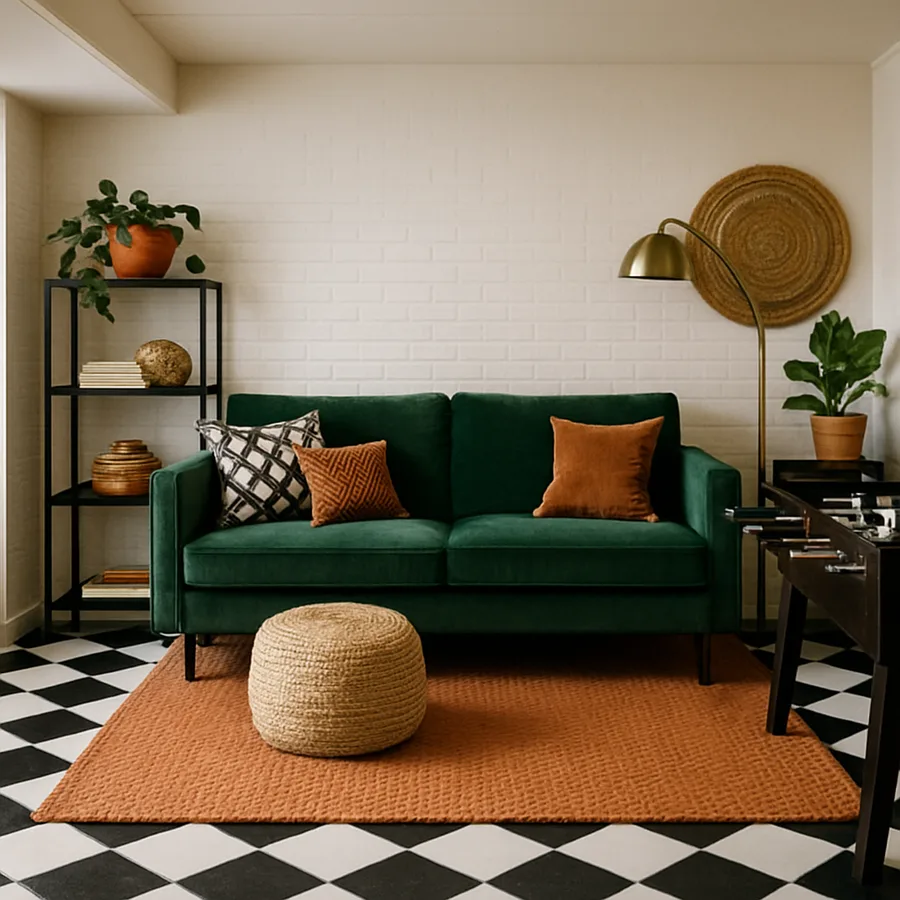
The floor is the single most abused surface in a basement rec room. It collects ping-pong scuffs, pool cue divots, spilled soda, wet boots, and the occasional failed sump pump, all while anchoring the aesthetic of the whole space. Choosing the right material is less about taste and more about matching real performance data to your basement's moisture profile and your family's habits. According to the U.S. Environmental Protection Agency (EPA), basements often have relative humidity readings between 60 and 80 percent during summer months without dehumidification, which is comfortably inside the range where mold colonies thrive on any organic flooring material.
This guide compares the six flooring categories that actually belong in a rec room, scores each against moisture resistance, traffic durability, comfort, and cost, and then walks through the subfloor preparation that makes any of them last. By the end you will know which product line fits your use case, what questions to ask a flooring contractor, and which installation details to refuse to compromise on. Every category recommendation rests on performance testing standards published by ASTM International or the Resilient Floor Covering Institute (RFCI).
Understand the Basement Moisture Equation First
No flooring material can outperform a wet slab. Before you shop a single sample, pull a calcium chloride test (ASTM F1869) or an in-situ relative humidity probe test (ASTM F2170) on the existing concrete. Most manufacturers limit installation to slabs reading 3 pounds per 1,000 square feet per 24 hours or lower on calcium chloride, or 75 to 85 percent RH on the in-situ probe. If your readings exceed these limits, either the product has to change, a vapor mitigation primer has to go down first, or drainage has to be corrected at the perimeter.
Hydrostatic pressure from exterior groundwater is a different problem than interior vapor drive. If the slab is regularly wet in one corner, a dehumidifier will not fix it; you need exterior grading, a functioning French drain, and a reliable sump pump with a battery backup. The National Association of Home Builders (NAHB) Research Center has documented that correcting water intrusion at the source saves roughly four to seven dollars in future remediation for every dollar spent on upfront drainage, so this is not an area to cut.
Here is a question worth sitting with: if a washing machine hose burst in the basement tomorrow, which flooring materials in your short list would survive, and which would need to be torn out? That single thought experiment eliminates half the options most homeowners initially consider.
Luxury Vinyl Plank: The Rec Room Workhorse
Modern luxury vinyl plank (LVP) has become the default basement rec room choice for good reason. A quality rigid-core LVP with a Stone Plastic Composite (SPC) or Wood Plastic Composite (WPC) core is fully waterproof on its top surface, dimensionally stable across temperature swings, and forgiving over slightly uneven slabs. Look for products with a 20-mil or thicker wear layer for heavy rec room traffic; the Resilient Floor Covering Institute (RFCI) classifies these as commercial grade and rates them for 15- to 25-year residential service.
Floating click-lock installations over a 6-mil polyethylene vapor retarder and a thin acoustic underlayment hit the sweet spot of cost, speed, and performance. Glue-down LVP adheres directly to the slab, which is an advantage in rooms with rolling pool-cue carts or heavy arcade cabinets but a disadvantage if the slab ever weeps. Make sure any product you consider is certified by the FloorScore program or meets CARB Phase 2 formaldehyde emissions limits, both of which are good proxies for indoor air quality.
LVP is not perfect. Direct sunlight through a walkout door can fade lighter colors over years, and sharp objects dropped from height can dent the wear layer. But for families that want "install it and forget it," LVP delivers a ratio of performance to price that no other category matches. You can visit ENERGY STAR's Save At Home resources for related tips on reducing moisture loads that accelerate flooring wear.
Porcelain Tile: The Long-Haul Champion
If budget allows and warmth is not the top priority, porcelain tile is the longest-lived basement rec room floor you can install. Porcelain absorbs less than 0.5 percent water by weight per the American National Standards Institute (ANSI) A137.1 standard, making it effectively impervious to spills and humidity. A well-installed porcelain floor with an uncoupling membrane such as Schluter-DITRA can handle 50 years of rec room abuse while looking nearly identical on year one and year thirty.
The tradeoffs are real. Tile is cold underfoot without electric radiant heat, which adds $6 to $12 per square foot plus a thermostat-controlled dedicated circuit. Grout lines, even with epoxy grout, collect dirt over time and benefit from a yearly deep clean. Hard tile is unforgiving on dropped glassware and on joints, which matters in a room where kids flop on the floor to play board games. Counter these drawbacks with large-format tiles (24-by-48 inch or bigger) to minimize grout lines and with a plush area rug in the primary seating zone.
For wet-prone basements, tile bought to the ANSI A137.1 Class IV or V abrasion rating is the gold standard and worth the incremental cost. Coordinate installation with a tile setter certified through the Ceramic Tile Institute or the National Tile Contractors Association (NTCA) to ensure crack-isolation and expansion joints are handled correctly.
Engineered Hardwood, Rubber, and Carpet Tile Alternatives
Engineered hardwood can work in a basement, but only with strict vapor control and confidence that the slab stays below the product's moisture specifications. A 5/8-inch engineered plank with a hardwood wear layer and a multi-ply plywood or HDF core is the most tolerant choice; solid hardwood is almost always a mistake below grade. Expect to sand and refinish engineered floors less frequently than solid, usually once or twice in their life.
Rolled or interlocking rubber flooring deserves a close look if the rec room doubles as a home gym. Rubber absorbs impact, muffles noise, and shrugs off dropped weights. Products rated for commercial fitness use by the American Society for Testing and Materials (ASTM) carry 10- to 15-year warranties against compression and tearing. The aesthetic is more "fitness studio" than "family den," so rubber often works best as a zoned section beneath a rack or treadmill rather than across the whole floor.
Carpet tiles with a moisture-barrier backing are the dark horse of basement flooring. If one 24-inch square gets stained or flooded, you replace only that tile rather than the whole room. Look for tiles bearing the Carpet and Rug Institute (CRI) Green Label Plus certification for low VOC emissions, and choose low-pile commercial-grade constructions that stand up to rolling chairs and foot traffic. Blue-chip hospitality and corporate projects use carpet tile almost exclusively, which says something about its real-world performance.
Subfloor Prep: The Step That Makes or Breaks the Install
Any flooring performs better over a flat, dry, clean, and vapor-controlled subfloor. Concrete slabs are rarely flat out of the box; a 10-foot straightedge dragged across most basements reveals high and low spots of 1/4 to 1/2 inch. Grind the highs, fill the lows with a Portland-based self-leveling compound, and confirm flatness before any underlayment goes down. Manufacturers' warranties almost always hinge on these prep steps, and contractors who skip them are gambling with your warranty coverage.
A 6-mil polyethylene vapor retarder is the minimum beneath most floating systems, and a 15-mil or epoxy vapor mitigation primer is the better choice over slabs with marginal moisture readings. Perimeter expansion gaps of 1/4 to 3/8 inch let floating floors move seasonally without buckling at doorways. Matching transition strips (T-moldings, reducers, and stair nosings) from the same product line keep the aesthetic cohesive and protect edges from chipping.
Have you priced out the cost of redoing a failed install? Labor alone can exceed the original material cost, and the incidental expense of disconnecting pool tables, arcade machines, and home-gym equipment keeps climbing the older the room gets. The careful install on day one is always the cheap one in the long run.
Style, Comfort, and Noise Underfoot
Performance and aesthetics are not opposites in modern flooring. Embossed-in-register LVP now reproduces oak, walnut, and even concrete textures accurately enough that most guests will not guess the material. Tile comes in cement-look, travertine-look, and wood-plank formats that read as authentic from more than six feet away. Carpet tile arrives in dozens of patterns that were not available a decade ago. Pick the texture and color that supports the room's energy, not the one that best imitates a different material.
Noise is the unsung variable. Hard-surface floors in a basement can amplify every bounce of a basketball and every clack of a pool ball into the rooms above. Look for flooring assemblies with an Impact Insulation Class (IIC) rating of 55 or higher, which typically requires a rated acoustic underlayment. The American Society of Interior Designers (ASID) frequently cites flooring acoustics as the top overlooked factor in multi-floor family homes. A few dollars per square foot on a better underlayment can save a lifetime of "keep it down!" from the family room above.
Comfort matters more than homeowners expect. Cold tile on bare feet in February becomes a reason to use the room less, which defeats the whole point of finishing the basement. Radiant heat, strategic rugs, and plush pads behind the couch seating area all contribute to a floor people actually want to be on.
Budget, Warranty, and How to Choose Your Contractor
Material prices shift with market conditions, but the relative order of categories is stable. Carpet tile and builder-grade LVP start around $3 to $5 per square foot installed; premium LVP and engineered hardwood land at $7 to $12; porcelain tile with radiant heat runs $15 to $25; and commercial rubber rolls fall between $6 and $12. Add 10 to 20 percent for pattern matching, stair wraps, transitions, and moisture mitigation where required.
Read warranty language carefully. A "lifetime residential warranty" often prorates coverage sharply after year 10 and excludes damage from standing water, moisture readings above the specified limit, or improper subfloor prep. Reputable manufacturers participate in the RFCI or are certified through the World Floor Covering Association (WFCA), both of which signal consistent product quality control and responsive warranty support.
Choose installers the way you would choose a cardiologist. Verify International Certified Flooring Installer (CFI) credentials, request three recent basement references, and pull photos of completed work. A certified installer will insist on moisture testing, subfloor flattening, and vapor control without being asked; an unlicensed one will quote the job without walking the slab. The gap in outcomes between those two contractors is enormous.
Conclusion
Basement rec room flooring is a layered decision that starts with moisture testing, continues through category selection, and finishes with a careful install over a properly prepared subfloor. Skip any of those steps and even the best product will disappoint within a few years; respect all of them and almost any of the categories covered here can deliver two decades of reliable service. The best choice is the one that matches your slab's moisture profile, your family's habits, and your long-term plans for the room.
As you narrow choices, prioritize waterproof wear layers, documented low-VOC emissions, and acoustic underlayments in that order. Those three features do more for daily comfort and long-term durability than any specific color or grain pattern. Decide with installed samples in your basement lighting, not with showroom samples under retail fluorescents, because the light below grade will change how the material reads in ways that are easy to underestimate.
A rec room is ultimately a room that invites use, whether that is cocktails with friends, movie nights with kids, or a daily workout that keeps the whole household healthier. The flooring either supports or quietly sabotages every one of those activities. Investing in the right category, installed the right way, puts the room on the right side of that line for years.
Take action this week: schedule a calcium chloride or in-situ RH test with a certified flooring contractor, pull three installed samples of your top category, and walk them across your own basement at night with a dim sconce on. The combination of real moisture data and real-light evaluation is how confident flooring decisions get made.
More Articles You May Like



Comments
Post a Comment