10 Essential Elements of Modern Contemporary Interior Design You Need to Know
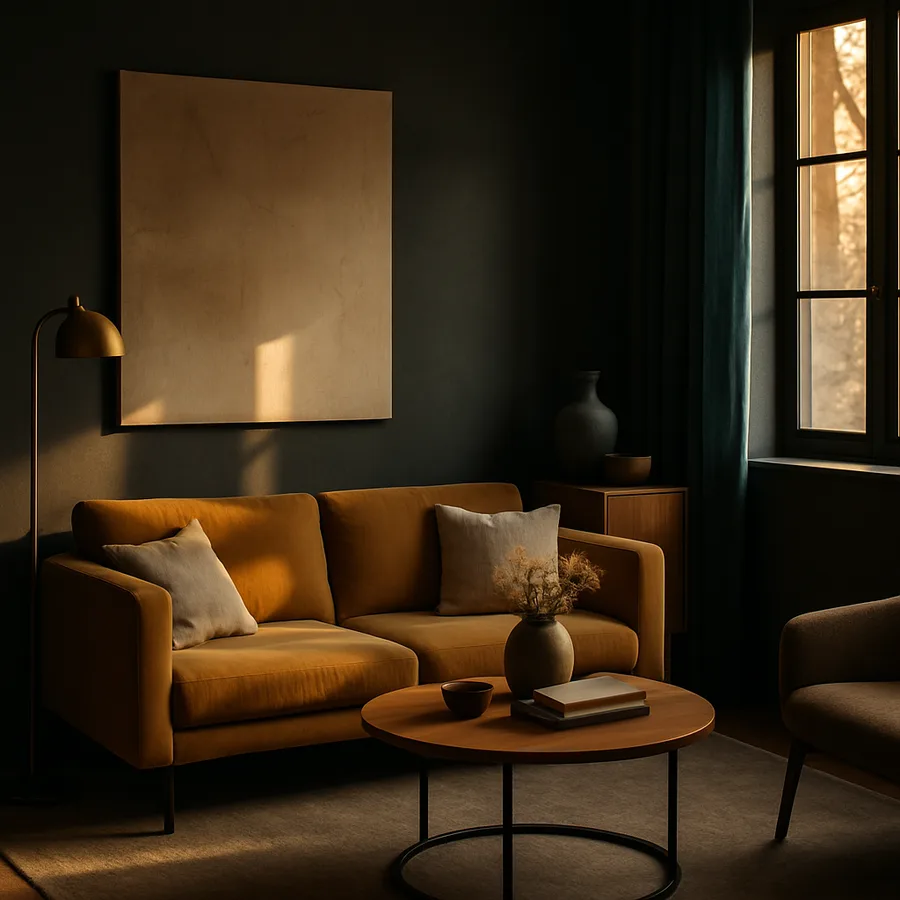
Modern contemporary interior design occupies a distinctive space in the world of home aesthetics, blending the clean geometric lines and functional focus of modernism with the fluid, evolving sensibility of contemporary style to create spaces that feel both timeless and of the moment. Understanding the essential elements that define this design approach empowers homeowners to make intentional choices rather than assembling rooms by guesswork or imitation. According to a study published by the American Society of Interior Designers (ASID), homeowners who can articulate a clear design direction before beginning a project are 60% more likely to report satisfaction with their completed spaces. This guide breaks down the ten foundational elements that give modern contemporary interiors their distinctive character, offering practical insight into how each element functions and how to incorporate it into your own home. Whether you are starting from scratch or refining an existing space, mastering these principles will fundamentally change how you see and shape the rooms you inhabit.
Clean Lines and Geometric Precision
The visual backbone of modern contemporary design is a commitment to clean, uncluttered lines that create a sense of order, calm, and intentionality throughout a space. This does not mean that every surface must be flat or that curves are forbidden, but rather that each line, whether it defines a piece of furniture, a window frame, or an architectural detail, should feel deliberate and purposeful rather than ornamental or arbitrary. The International Interior Design Association (IIDA) describes this principle as "visual discipline," where the eye moves smoothly through a room without encountering jarring transitions or gratuitous decoration that interrupts the spatial narrative. In practice, this means selecting furniture with defined silhouettes, avoiding excessive molding or trim work, and ensuring that architectural features such as shelving, doorways, and ceiling details follow consistent geometric logic.
Geometric precision extends beyond furniture selection to encompass the overall spatial layout, where symmetry, proportion, and alignment create an underlying structure that may not be consciously noticed but is instinctively felt as harmony and balance. A modern contemporary living room might center a low-profile sofa on a wall, flanked by matching side tables and lamps, with artwork hung at a height that aligns with the sofa back to create a cohesive horizontal band of visual interest. This attention to alignment does not produce rigidity; rather, it establishes a framework of order within which texture, color, and personality can emerge without creating chaos. The National Council for Interior Design Qualification (NCIDQ) includes spatial geometry as a core competency in its certification standards, underscoring its importance to professional design practice.
Homeowners can begin incorporating clean lines by auditing their existing furnishings and identifying pieces that introduce visual clutter through excessive ornamentation, irregular proportions, or conflicting stylistic references. A carved wooden coffee table with cabriole legs may be individually beautiful, but if it sits beside a sleek modern sofa and beneath a minimalist pendant light, the stylistic dissonance prevents the room from achieving the coherent visual flow that defines modern contemporary spaces. Replacing or relocating items that conflict with the room's dominant geometric language is often the single most impactful step a homeowner can take toward establishing a modern contemporary aesthetic, and it frequently costs less than adding new elements to compensate for stylistic conflicts.
The Power of a Neutral Foundation Palette
Modern contemporary interiors typically build their color stories on a foundation of neutral tones, including whites, grays, taupes, warm beiges, and soft blacks, that create a serene backdrop against which more expressive elements can operate without overwhelming the senses. This neutral foundation is not about avoiding color altogether but about establishing a calm, unified base that makes intentional color accents more impactful when they do appear. Houzz data indicates that rooms built on neutral palettes receive 40% more saves and shares from users than rooms with saturated all-over color, suggesting that this approach resonates broadly across diverse taste profiles and cultural contexts.
The sophistication of a neutral palette depends entirely on the interplay of undertones, which are the subtle warm or cool hues embedded within seemingly simple colors. A cool gray with blue undertones creates a dramatically different atmosphere than a warm gray with taupe undertones, even though both might be described simply as "gray" in casual conversation. Modern contemporary designers pay meticulous attention to these undertones, ensuring that all neutral elements within a room share a consistent temperature that prevents the subtle but nagging sense of disharmony that occurs when cool and warm neutrals are mixed without intention. ASID recommends testing paint and fabric samples in the actual room under both natural and artificial lighting before committing, as undertones shift significantly depending on light source and intensity.
Within the neutral foundation, variation in tone, from deep charcoal to pale ivory, creates the depth and visual interest that prevents a room from feeling flat or institutional. A modern contemporary bedroom might layer a crisp white ceiling, warm greige walls, a charcoal upholstered headboard, ivory linen bedding, and a natural jute rug, creating a rich tonal journey that engages the eye without introducing a single saturated color. This tonal layering technique is one of the most powerful tools in the modern contemporary designer's repertoire, producing spaces that feel simultaneously restful and visually engaging. The key is ensuring that at least four distinct tonal values are present in any room, spanning from very light to quite dark, to prevent the monotony that can afflict overly cautious neutral schemes.
Strategic Use of Bold Accent Colors
Against the neutral foundation, modern contemporary design deploys accent colors with surgical precision, using them to draw attention to specific areas, create focal points, and inject personality and energy into otherwise restrained compositions. The typical approach involves selecting one or at most two accent colors and distributing them across a room in measured doses, such as a pair of cobalt blue throw pillows, a matching piece of abstract artwork, and a small decorative object on a bookshelf. This controlled distribution creates visual rhythm, as the eye picks up the accent color and moves naturally between the points where it appears, generating a sense of movement and connection that energizes the space without disrupting its underlying calm.
The selection of accent colors in modern contemporary design often draws from nature, with deep greens, earthy terracottas, ocean blues, and mustard yellows appearing frequently as counterpoints to neutral backgrounds. These organic hues feel grounded and authentic in a way that synthetic or neon colors typically do not, and they connect the interior environment to the natural world outside, a principle that IIDA has identified as biophilic design. The intensity of the accent color should be calibrated to the room's size and function, with smaller rooms benefiting from softer accent tones that expand the perceived space and larger rooms accommodating bolder, more saturated hues without feeling overwhelmed.
One effective strategy for selecting accent colors is to choose a single piece of art, a textile, or a natural object that you genuinely love and extract complementary accent tones from it using a color picker app or by eye. This ensures that your accent colors have a natural relationship to each other and to at least one tangible element in the room, avoiding the artificial feel that can result from selecting accent colors purely from a theoretical color wheel. Do you have a favorite piece of artwork or a natural material sample that could serve as the color anchor for your modern contemporary space? Starting from an object you already cherish creates a design that feels personal and authentic from its very foundation.
Texture as a Design Language
In a design approach that relies heavily on neutral colors and clean lines, texture assumes an elevated role as the primary source of visual and tactile richness, preventing spaces from feeling sterile or monotonous despite their restrained palettes. Modern contemporary interiors achieve depth and warmth through the strategic juxtaposition of contrasting textures, pairing smooth with rough, matte with glossy, hard with soft, and woven with solid in combinations that engage the senses on multiple levels. A concrete-topped coffee table beside a plush velvet sofa, a smooth marble countertop adjacent to a rough-hewn wooden shelf, or a sleek leather armchair sitting on a thick wool rug, these textural conversations create the complexity and interest that color provides in more saturated design styles.
Natural materials play a particularly important role in the textural vocabulary of modern contemporary design, with wood, stone, linen, cotton, wool, leather, and ceramics appearing frequently as both structural and decorative elements. The NCIDQ emphasizes that natural materials bring an inherent visual complexity, through grain patterns, mineral veining, weave variations, and surface irregularities, that manufactured materials struggle to replicate convincingly. A solid oak dining table does not simply provide a flat surface; it introduces a living pattern of grain and color variation that engages the eye in ways that even the most realistic laminate cannot match. Investing in genuine natural materials for key surfaces and furnishings is often the most cost-effective path to a rich, layered modern contemporary interior.
The arrangement of textures within a room should follow a deliberate logic rather than occurring randomly, with heavier, rougher textures typically anchoring the lower portions of a space and lighter, smoother textures ascending toward the ceiling. This arrangement mirrors the natural world, where earth and stone occupy the ground plane and sky and atmosphere occupy the upper realm, creating an instinctive sense of stability and rightness. A room might feature a textured stone-look floor tile, a mid-height band of linen upholstery and wooden furniture, and smooth white plaster walls rising to a flat ceiling, creating a textural gradient that feels both natural and architecturally resolved. Breaking this gradient intentionally, such as with a rough-textured pendant light or a stone feature wall, can create dramatic focal points precisely because the contrast defies the expected textural order.
Functional Minimalism Over Decorative Excess
Modern contemporary design embraces a philosophy of functional minimalism that values purposeful objects over decorative accumulation, creating spaces where every element earns its place through utility, beauty, or ideally both. This is not the stark, ascetic minimalism of an empty gallery but a warm, livable approach that recognizes the beauty inherent in well-designed functional objects and eliminates only those items that contribute neither use nor genuine aesthetic pleasure. ASID research indicates that homeowners living in functionally minimalist spaces report 35% lower stress levels than those in cluttered environments, a finding consistent with broader psychological research on the relationship between environmental order and mental well-being.
Implementing functional minimalism requires honest self-assessment about the role each object plays in a room, distinguishing between items that genuinely enhance daily life or visual beauty and those retained out of habit, guilt, or the simple inertia of ownership. A beautiful hand-thrown ceramic bowl on a console table earns its place as both a functional vessel and a sculptural presence; a collection of promotional mugs crammed into an open shelf earns neither distinction. The discipline of modern contemporary design asks homeowners to curate rather than accumulate, selecting fewer objects of higher quality and greater personal significance. This curation process is not a one-time purge but an ongoing practice of evaluating what belongs in a space and what detracts from its clarity and calm.
Storage solutions that maintain the visual order essential to modern contemporary design are crucial supporting infrastructure for functional minimalism, as even the most disciplined homeowner possesses everyday necessities that are not inherently beautiful. Built-in cabinetry with flush, handle-less doors, furniture with concealed storage compartments, and dedicated closet systems that organize belongings behind closed doors all contribute to maintaining the clean-lined aesthetic while accommodating the practical realities of daily life. The investment in smart storage often pays for itself by eliminating the need for additional furniture pieces that would otherwise be required to manage visible clutter, resulting in rooms that feel larger, calmer, and more coherent.
Lighting as an Architectural Element
In modern contemporary interiors, lighting transcends its basic functional role to become a defining architectural element that shapes spatial perception, establishes mood, and serves as sculptural presence in its own right. The approach involves layering multiple light sources at different heights and intensities, combining ambient overhead lighting with task lighting at work surfaces and accent lighting that highlights artwork, architectural features, or textural details. Houzz reports that homeowners who invest in layered lighting schemes rate their overall satisfaction with a room's design significantly higher than those who rely on a single overhead fixture, confirming the outsized impact that thoughtful lighting has on the perception of a completed space.
Natural light receives particular reverence in modern contemporary design, with window treatments, furniture placement, and even wall colors selected in part for their ability to maximize and enhance the quality of daylight entering a space. Sheer curtains or simple roller blinds that can be fully retracted are preferred over heavy drapery that blocks or diminishes natural illumination, and mirrors are sometimes positioned to reflect and distribute daylight deeper into a room's interior. The IIDA has published guidelines emphasizing the health and well-being benefits of natural light exposure in residential environments, including improved sleep quality, enhanced mood, and increased vitamin D synthesis, making the preservation of natural light not merely an aesthetic choice but a wellness consideration.
The fixtures themselves serve as opportunities for sculptural expression within the clean-lined framework of modern contemporary design, with pendant lights, floor lamps, and wall sconces selected as much for their visual impact when unlit as for the quality of light they produce when activated. A dramatic arc floor lamp beside a reading chair, a cluster of geometric pendant lights above a dining table, or a pair of minimalist wall sconces flanking a bed headboard, these fixtures function as design elements that anchor compositions and contribute personality without resorting to the ornamental excess that modern contemporary style seeks to avoid. When selecting light fixtures, consider how they will appear during daylight hours, when they serve purely as visual objects, and ensure that their forms contribute positively to the room's geometric language.
Conclusion
The ten essential elements of modern contemporary interior design, from clean lines and neutral palettes to strategic lighting and functional minimalism, work together as an integrated system that produces spaces of remarkable clarity, warmth, and visual sophistication. Mastering these elements does not require professional training or an unlimited budget; it requires intentionality, a willingness to edit and curate, and an understanding of the principles that give this design approach its distinctive character. Each element reinforces the others, so that improvements in one area, whether it is upgrading your lighting, refining your color palette, or investing in natural textures, amplify the impact of every other element already in place.
Begin by identifying the element where your current space most diverges from the modern contemporary ideal and focus your initial efforts there, allowing each subsequent improvement to build on the foundation you have established. Consult resources from ASID, IIDA, and NCIDQ for deeper exploration of the principles discussed here, and consider visiting Houzz or design-focused social media communities to see these elements applied in real homes by real homeowners. The modern contemporary aesthetic rewards patience, intentionality, and a commitment to quality over quantity, and the rooms it produces offer a daily experience of calm, beauty, and functional grace that justifies every thoughtful decision along the way.
More Articles You May Like


Comments
Post a Comment