Top 5 Interior Design Studios Redefining Modern Aesthetics
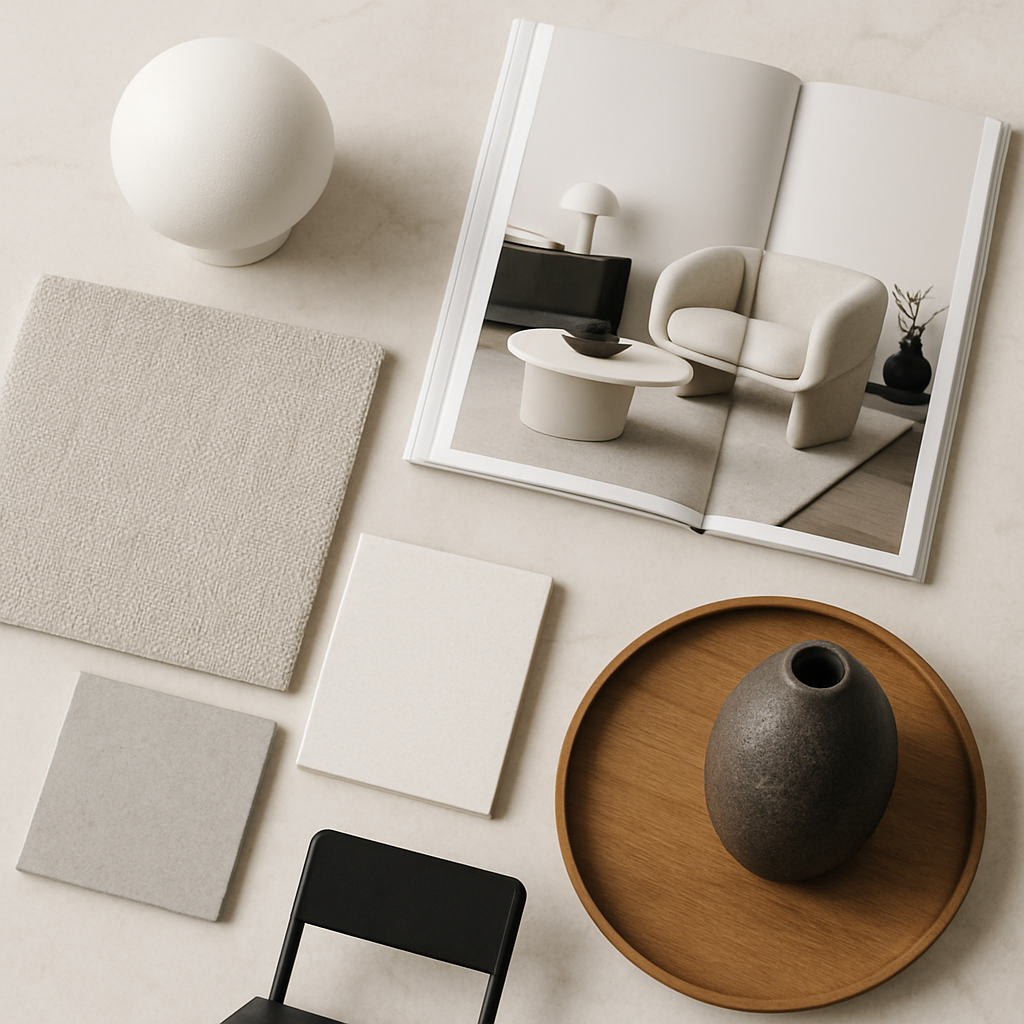
Modern aesthetics in interior design is undergoing a quiet revolution, driven not by a single dominant trend but by a constellation of studios that are rethinking fundamental assumptions about how residential spaces should look, feel, and function. These studios share a willingness to challenge convention while maintaining the rigorous technical standards that organizations like the National Council for Interior Design Qualification (NCIDQ) establish as the baseline for professional practice. What distinguishes a studio that redefines aesthetics from one that merely follows them? It is the capacity to synthesize cultural influences, material innovations, and client aspirations into spaces that feel simultaneously fresh and inevitable, as though no other design solution could have been as perfectly suited to the people who inhabit them. According to the American Society of Interior Designers (ASID), residential design satisfaction scores are highest when clients feel that their space is genuinely unique rather than a variation on a templated style. The five approaches explored in this article represent distinct philosophies that are reshaping what modern interiors can be.
The Biophilic Immersion Approach
Among the most compelling directions in contemporary residential design is the deep integration of biophilic principles that go far beyond placing a few potted plants on windowsills. Studios leading this approach treat the natural world not as a decorative accent but as the organizing principle for every design decision, from structural layout to material selection to lighting strategy. Living walls that span entire room heights serve as both air purification systems and dynamic visual focal points that change subtly with the seasons. Water features are positioned not for dramatic effect alone but for their acoustic properties, generating gentle ambient sound that masks urban noise and promotes psychological calm. Natural stone, reclaimed timber, and unglazed ceramics provide surfaces that connect occupants to geological and botanical processes through tactile engagement.
The scientific foundation supporting biophilic design has become increasingly robust, giving studios credible justification for design choices that might otherwise seem indulgent. Research aggregated by IIDA indicates that residential environments incorporating substantial biophilic elements correlate with measurable improvements in occupant wellbeing, including reduced cortisol levels and improved self-reported sleep quality. Studios working in this mode collaborate with horticulturalists to specify plant species that thrive in specific indoor conditions, with lighting designers to create artificial light spectrums that support both plant health and human circadian rhythms, and with acoustic consultants to ensure that water features and natural materials create sound environments that enhance rather than disrupt daily life.
The challenge with biophilic immersion is maintenance, and the best studios address this proactively rather than leaving clients to discover the demands of living green walls and indoor water systems after installation. Comprehensive care plans that specify watering schedules, seasonal pruning requirements, filtration system maintenance, and plant replacement protocols are delivered as part of the project documentation. Some studios partner with ongoing maintenance services that visit client homes on scheduled intervals to ensure that living elements remain healthy and beautiful. This lifecycle approach distinguishes serious biophilic design from superficial greenwashing and ensures that the initial investment continues to deliver returns for years after installation. Have you considered how much living natural material you could sustain in your daily routine?
The Quiet Luxury Philosophy
Quiet luxury has emerged as a powerful counterpoint to the maximalist, logo-driven aesthetics that dominated high-end residential design for much of the early twenty-first century. Studios working in this register reject the notion that luxury must be visually conspicuous. Instead, they locate luxury in the quality of materials, the precision of construction, the subtlety of color relationships, and the comfort of proportions. A quiet luxury living room might feature a sofa upholstered in a hand-loomed Belgian linen whose texture is its entire statement, paired with a coffee table carved from a single block of travertine whose natural veining provides all the pattern the room needs. The palette stays within a narrow tonal range, creating an atmosphere of calm coherence that rewards sustained attention rather than demanding immediate notice.
The material sourcing for quiet luxury projects is exceptionally demanding because quality must be detectable through touch and experience rather than brand recognition. Studios pursuing this philosophy develop deep relationships with artisan workshops, small-batch manufacturers, and specialty importers who can supply materials that meet exacting standards of hand, durability, and visual refinement. Italian wool-silk blends for drapery, Portuguese limestone for flooring, Japanese joinery techniques for cabinetry, and Danish craftsmanship for seating are combined within a single room not for geographic name-dropping but because each region excels at producing a specific element to a standard that mass manufacturing cannot replicate. AD PRO has documented a 25 percent increase in designer spending on artisan-sourced materials over the past three years, reflecting the growing demand for this level of material integrity.
What makes quiet luxury particularly relevant as a lasting aesthetic rather than a passing fashion is its alignment with sustainability values. Because quiet luxury prioritizes durability and timelessness over trend-responsiveness, the pieces specified for these projects are designed to remain in use for decades rather than cycles of a few years. A cashmere throw that improves with age, a walnut dining table that develops a richer patina over time, and hardware cast in unlacquered brass that evolves from bright gold to deep honey create environments that become more beautiful with use rather than degrading toward replacement. This longevity represents a fundamental challenge to the disposable consumption patterns that drive much of the mainstream furniture industry, and studios that embrace it are making an environmental statement through their material choices whether they frame it that way or not.
The Smart-Integrated Minimalism Movement
A growing number of studios are exploring the intersection of rigorous visual minimalism and comprehensive smart home technology, creating spaces that appear strikingly simple while concealing sophisticated automation systems within their clean lines. The philosophy here is that technology should be experienced through its effects rather than its physical presence. Lights respond to occupancy and time of day without visible switches or control panels. Window treatments adjust to solar angle without manual intervention or conspicuous motors. Climate systems maintain precise comfort levels without bulky thermostats competing for wall space. Music follows occupants from room to room through architecturally integrated speakers that are invisible to the casual observer.
The technical complexity required to achieve this apparent simplicity is considerable, and studios working in this space invest heavily in pre-construction planning and coordination with systems integrators. Every wire run, every sensor location, every device mounting point must be determined during the design phase and incorporated into construction documents with the same precision as structural and mechanical specifications. NCIDQ-certified designers working in smart-integrated minimalism often pursue additional training in home automation standards and protocols to ensure that they can communicate effectively with technology specialists and evaluate proposed system architectures. The result is a design process that is more technically rigorous than traditional practice but produces spaces of extraordinary calm.
The user experience dimension of smart-integrated design is where many studios distinguish themselves. Technology that requires a PhD to operate defeats the purpose of integration, no matter how elegantly it is concealed. The best studios insist on intuitive control hierarchies: automated defaults that handle ninety percent of daily scenarios without any user input, simple physical interfaces like discreet touch panels for the remaining ten percent, and a single well-designed app for advanced customization that most users will rarely need. This layered approach ensures that guests feel comfortable in the space without a tutorial, that daily life proceeds without technological friction, and that the homeowner retains full control for the occasions when personal preference diverges from automated defaults. Is the idea of invisible technology enhancing your daily life something that appeals to your sensibility?
The Cultural Synthesis Perspective
Some of the most exciting work in contemporary residential design comes from studios that synthesize aesthetic traditions from multiple cultures into cohesive environments that transcend any single regional identity. This is not the superficial eclecticism of mixing random global accents but a deliberate and knowledgeable integration of design principles drawn from different traditions. A studio working in this mode might combine the spatial openness and material honesty of Scandinavian design with the artisanal textile traditions of North Africa and the contemplative garden integration of Japanese residential architecture. The result is a layered environment that rewards exploration and creates a sense of worldliness without the themed artificiality of literal cultural reproduction.
The knowledge base required for authentic cultural synthesis is substantial, and studios that excel in this approach typically employ designers with direct experience living or working in multiple cultural contexts. Understanding that a Moroccan zellige tile installation requires specific setting techniques that differ from standard tile work, that Japanese shoji screen proportions follow mathematical relationships rooted in tatami mat dimensions, or that Scandinavian design history is deeply connected to democratic social values rather than merely clean aesthetics allows these studios to integrate cultural elements with respect and accuracy. Houzz has featured increasing numbers of culturally synthetic projects in its editorial selections, reflecting both designer innovation and client demand for spaces that reflect globally connected lifestyles.
The ethical dimension of cultural synthesis deserves careful attention, and responsible studios navigate it thoughtfully. There is a meaningful difference between cultural appreciation and cultural appropriation in design, and the distinction often lies in depth of engagement, attribution, and economic relationship. Studios that source directly from artisan communities in the cultures they reference, that credit the origins of specific techniques and forms in their project documentation, and that pay fair prices for handcrafted elements are engaging in appreciation. Those that reproduce cultural forms in cheap mass-manufactured versions without acknowledgment are not. The best studios working in cultural synthesis view their practice as a form of cross-cultural dialogue that creates economic opportunities for traditional artisans while enriching the residential environments of their clients.
The Adaptive Wellness Design Framework
Wellness-oriented design has evolved beyond its initial association with spa-like bathrooms and meditation rooms into a comprehensive framework that addresses physical, psychological, and social wellbeing through spatial design. Studios at the forefront of this movement design homes that actively promote health through evidence-based strategies: circadian lighting systems that support natural sleep-wake cycles by shifting color temperature throughout the day, acoustic treatments that reduce ambient noise to levels associated with reduced cardiovascular stress, air filtration and ventilation systems that maintain indoor air quality significantly above standard building code requirements, and material selections that eliminate volatile organic compounds and other indoor pollutants.
The social dimension of wellness design addresses how spaces facilitate or inhibit human connection. Studios working in this framework consider how kitchen layouts encourage or discourage family gathering during meal preparation, how living room seating arrangements promote or prevent comfortable conversation among groups of varying sizes, and how the transition between public and private zones within a home supports both togetherness and necessary solitude. ASID research has shown that homes designed with intentional social zoning report higher family satisfaction scores than those where social spaces are determined by convention or real estate convention rather than the specific needs of the household. This research validates what thoughtful designers have long intuited: that the physical configuration of a home shapes the quality of relationships within it.
The adaptive aspect of wellness design recognizes that occupant needs change not just over years but over the course of each day. A home office that functions effectively during focused morning work sessions may need to transform into a relaxation space by evening. A dining room that serves weeknight family meals must also accommodate weekend entertaining with a different number of guests and a different social dynamic. Studios specializing in adaptive wellness design specify flexible furnishing systems, adjustable lighting scenes, and reconfigurable spatial elements that allow rooms to shift purpose without physical renovation. This approach borrows from commercial workplace design, where activity-based working principles have demonstrated that adaptable environments outperform fixed ones in supporting diverse human needs across time.
What These Approaches Share and Where They Diverge
Despite their philosophical differences, these five approaches to redefining modern aesthetics share several foundational commitments that distinguish them from conventional practice. All five prioritize material quality over material quantity, favoring fewer, better-chosen elements over rooms crowded with objects. All five treat lighting as a primary design element rather than an afterthought, recognizing that the quality and character of illumination fundamentally shapes spatial experience. And all five engage with sustainability not as an add-on consideration but as an integral aspect of design decision-making, from material sourcing through lifecycle planning. These shared commitments reflect a broader maturation of the design profession toward practices that are more responsible, more evidence-based, and more responsive to the full complexity of human needs.
The divergences are equally instructive. Biophilic immersion and adaptive wellness design share an explicit focus on health outcomes but differ in their primary mechanisms, with biophilic design emphasizing connection to nature and wellness design taking a broader physiological and social approach. Quiet luxury and smart-integrated minimalism both value visual restraint but pursue it through different means: one through material richness that reveals itself slowly and the other through technological sophistication that conceals itself entirely. Cultural synthesis stands apart in its willingness to embrace visual complexity and layered referentiality, though it shares with quiet luxury a deep commitment to artisanal quality and ethical sourcing.
For homeowners, the practical takeaway is that modern aesthetics is not a single destination but a landscape of possibilities, each offering a distinct relationship between the inhabitant and their environment. The studio that best serves your needs is the one whose philosophy most closely aligns with your values and lifestyle, not the one with the most impressive portfolio or the most prominent press coverage. When evaluating studios, ask about their design philosophy in concrete rather than abstract terms. How do they make material selections? What role does technology play in their typical projects? How do they define sustainability in practice rather than marketing? The answers to these questions will tell you more about what your finished home will feel like than any portfolio image ever could.
Conclusion: Choosing the Design Direction That Reflects Your Values
The studios redefining modern aesthetics are united by a conviction that residential design should do more than look beautiful, it should actively improve the experience of daily life through thoughtful attention to materials, technology, sustainability, and human wellbeing. Whether you are drawn to the living richness of biophilic immersion, the tactile refinement of quiet luxury, the invisible sophistication of smart-integrated minimalism, the layered worldliness of cultural synthesis, or the evidence-based intentionality of adaptive wellness design, the path forward begins with honest self-assessment about what matters most to you in your home environment. Consider visiting the portfolios of studios whose philosophy resonates with your own values, and reach out for an initial conversation about your specific space and aspirations. The most transformative design relationships begin not with a floor plan or a mood board but with a genuine dialogue about how you want to feel when you walk through your front door. Start that conversation, and let a studio whose approach inspires you show you what is possible within your own walls.
More Articles You May Like



Comments
Post a Comment