Eclectic Interior Design: Tips for Blending Old and New Trends Seamlessly
Eclectic Interior Design: Tips for Blending Old and New Trends Seamlessly
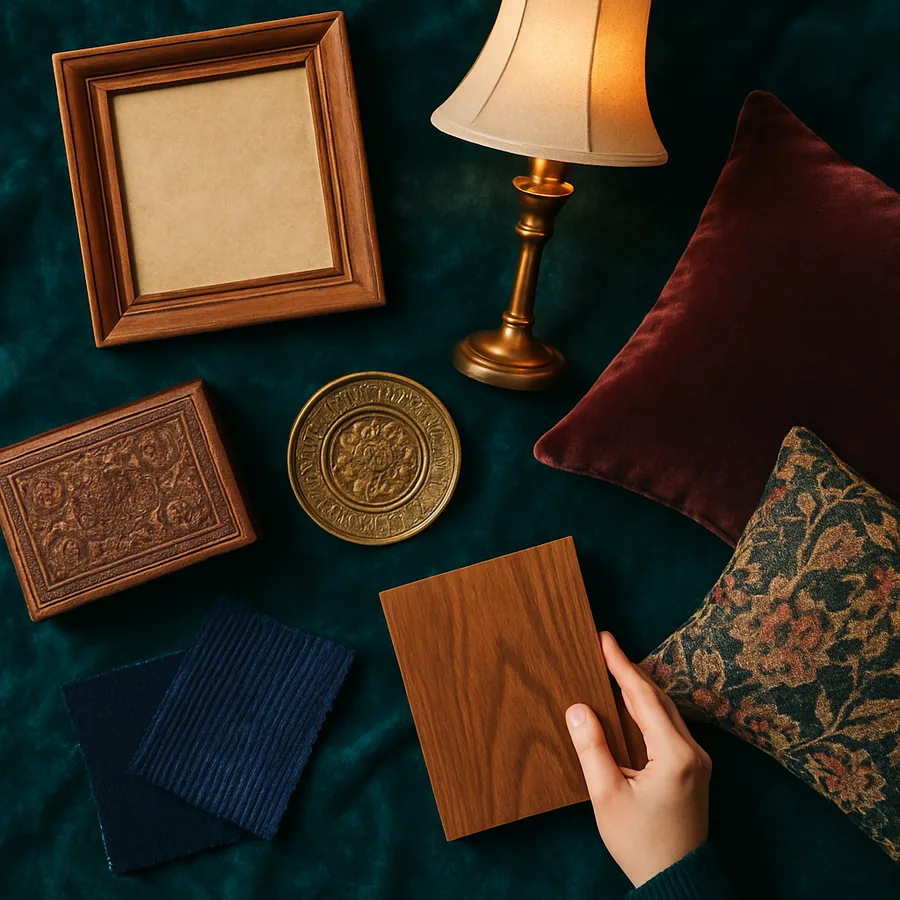
Understanding Why the Old-New Tension Makes Eclectic Design So Compelling
The fundamental creative tension in eclectic interior design lies between preservation and innovation, between honoring what came before and embracing what is emerging now. This tension is not a problem to be solved but a dynamic to be cultivated. When a centuries-old handcrafted wooden chest sits beneath a contemporary abstract painting, or when a vintage Persian rug anchors a room full of streamlined modern furniture, the resulting dialogue between eras creates a richness and complexity that no single-period interior can achieve.
The American Society of Interior Designers (ASID) has increasingly recognized the blending of historical and contemporary elements as one of the defining characteristics of sophisticated residential design. Their research indicates that 63 percent of homeowners express a preference for interiors that combine old and new elements over those that commit fully to either a traditional or contemporary aesthetic. This preference reflects something deeper than mere fashion. It reflects a desire for spaces that acknowledge the full temporal range of human creativity rather than privileging one particular moment in design history.
The appeal of old-new blending also has psychological roots. Environments that contain only new objects can feel sterile and impersonal, lacking the sense of accumulated history that makes a house feel like a home. Conversely, spaces filled exclusively with antiques and vintage pieces can feel museumlike, preserved but not quite alive. The eclectic approach threads between these extremes, creating interiors that feel simultaneously rooted in history and fully engaged with the present moment. This temporal layering mirrors the way we actually live, surrounded by inherited objects, recent purchases, and everything in between.
Establishing a Coherent Design Framework Before Mixing Eras
The most common mistake in attempting to blend old and new is diving straight into acquisition without establishing a guiding framework. The result is often a room that feels like a storage facility for interesting but unrelated objects rather than a composed interior. Before introducing a single piece, successful eclectic designers establish the parameters within which their mixing will occur. This framework is not restrictive but liberating, providing the structure within which creative risks become manageable.
The framework begins with a color palette. Selecting three to five colors that will recur throughout the space gives you an immediate filter for evaluating potential additions regardless of their era of origin. A Georgian side table and a contemporary floor lamp have nothing in common stylistically, but if both feature warm brass tones that participate in your established color story, they will coexist comfortably. The National Council for Interior Design Qualification (NCIDQ) curriculum includes extensive training in color theory precisely because color is the most powerful unifying tool available to designers working across stylistic boundaries.
Scale and proportion form the second dimension of your framework. Every room has an inherent scale determined by ceiling height, floor area, and window size. Furniture and accessories should respond to this architectural scale regardless of their period of origin. A massive Victorian armoire that perfectly suits a room with twelve-foot ceilings will overwhelm a space with standard eight-foot ceilings, no matter how beautiful the piece may be. By establishing scale parameters early, you avoid the frustrating discovery that a beloved acquisition simply does not fit the physical reality of your room.
What is the dominant architectural character of your space? Understanding whether your home leans traditional, modern, or neutral in its bones helps you determine the appropriate ratio of old to new elements. A period home with ornate moldings and detailed woodwork can absorb a higher proportion of contemporary furniture and art, because the architecture itself provides the historical grounding. A modern home with clean lines and minimal detail may need a greater proportion of vintage and antique pieces to achieve the desired old-new balance.
Techniques for Integrating Antique and Vintage Pieces into Modern Spaces
Bringing old pieces into a predominantly modern environment requires specific techniques that honor the character of the vintage items while ensuring they read as intentional additions rather than awkward leftovers from a previous decorating scheme. The key insight is that antique and vintage pieces almost always look better in modern contexts when they are treated as featured elements rather than subordinate background players.
Isolation and contrast is perhaps the most effective technique. Placing a single stunning antique piece against a clean, contemporary backdrop allows it to command attention in a way that would be impossible in a room full of period-appropriate surroundings. A baroque gilt mirror mounted on a minimalist white wall becomes a sculptural event. An ornate Victorian writing desk positioned in an otherwise spare home office becomes a functional work of art. The simplicity of the modern context amplifies the visual richness of the vintage piece, creating a mutually enhancing relationship.
Houzz features on successful old-new blending consistently highlight the power of what designers call the tuxedo rule: pair something formal with something casual, something old with something new, and the contrast elevates both. A rough-hewn antique farm table gains elegance when surrounded by sleek contemporary dining chairs. Those same chairs gain warmth and character when pulled up to a table with visible age and history. Neither piece would be as interesting alone as they are together, which is the fundamental promise of eclectic design.
Functional updating is another valuable technique. Antique and vintage pieces can be adapted for contemporary use without sacrificing their historical character. Rewiring a vintage lamp with a modern dimmer switch, reupholstering an antique chair in a contemporary fabric, converting an old trunk into a coffee table with a glass top, these interventions bridge the temporal gap between the piece and its new context. The result is a hybrid object that participates simultaneously in past and present, embodying the eclectic principle at the level of individual items.
Incorporating Contemporary Elements into Traditional Settings
The reverse challenge, introducing modern pieces into predominantly traditional interiors, requires its own set of strategies. Traditional homes often have strong architectural character that establishes a historical mood, making contemporary additions potentially jarring if handled without sensitivity. The goal is to introduce modernity as a refreshing counterpoint rather than an intrusive contradiction.
Contemporary art is the most reliable vehicle for bringing modern energy into traditional spaces. A large abstract painting or a contemporary sculpture introduces current aesthetic sensibilities without requiring any modification to the traditional furniture, textiles, or architectural details that define the room. The International Interior Design Association (IIDA) notes that contemporary art in traditional settings is one of the most consistently successful design strategies, effective across cultures, budgets, and skill levels. The visual language of contemporary art is bold enough to hold its own against the elaborate detailing of traditional interiors while different enough to create the era contrast that eclectic design requires.
Modern lighting represents another excellent point of entry for contemporary elements in traditional spaces. Replacing a conventional chandelier with a modern sculptural fixture, or introducing contemporary floor lamps alongside traditional table lamps, updates the energy of a room without disturbing its fundamental character. Lighting occupies a transitional position in the visual hierarchy, prominent enough to register as a design statement but not so dominant that it redefines the entire room. This makes it an ideal starting point for homeowners who want to introduce modern elements gradually.
Have you considered what a single contemporary piece might contribute to your most traditional room? Often, the introduction of one clearly modern element transforms the perception of the entire space, shifting it from static period recreation to living eclectic environment. The traditional elements gain new relevance when juxtaposed with something unmistakably current, and the modern piece gains depth and gravitas from its historical surroundings.
Managing Scale, Proportion, and Visual Weight Across Time Periods
The technical dimension of old-new blending centers on scale, proportion, and visual weight, the physical characteristics that determine whether pieces from different eras coexist comfortably in shared space. These considerations are more important than stylistic compatibility because the human eye is far more sensitive to spatial imbalance than to historical incongruity. A room can feel perfectly comfortable with furniture from four different centuries as long as the pieces are proportionally balanced. The same room will feel wrong with pieces from a single period if those pieces are significantly mismatched in scale.
Visual weight refers to how heavy or substantial a piece appears, regardless of its actual physical weight. Dark colors, dense materials, ornate detailing, and massive proportions all increase visual weight. Light colors, transparent materials, clean lines, and compact dimensions reduce it. Antique and vintage pieces tend toward higher visual weight than their contemporary counterparts, because historical design traditions generally favored substantiality and permanence over the lightness and transparency that characterize much modern design.
According to spatial planning principles taught in NCIDQ-accredited programs, balanced visual weight distribution across a room is essential for comfort and aesthetic satisfaction. In practice, this means that a visually heavy antique piece on one side of a room needs to be counterbalanced by either another heavy piece on the opposite side or by a grouping of lighter pieces that collectively match its visual weight. The balancing elements need not come from the same era. A massive antique bookcase can be balanced by a large contemporary sectional sofa. The eras are different, but the visual weights are equivalent, creating equilibrium.
A practical exercise for evaluating visual weight: photograph your room in black and white, which strips away color and reveals the distribution of light and dark areas. If one side of the image appears significantly darker or denser than the other, your visual weight is unbalanced. Adjust by relocating pieces, adding lighter elements to the heavy side, or introducing darker elements to the light side. This technique works regardless of the eras represented and is one of the most efficient diagnostic tools available to the home decorator.
Building Your Old-New Eclectic Home Step by Step
The journey toward a seamlessly blended old-new interior is best undertaken gradually rather than all at once. Rushing to fill a room with a predetermined mix of periods often produces results that feel forced and contrived. The most compelling eclectic interiors evolve over time as their owners develop an increasingly refined sense of what works in their specific space and what resonates with their personal aesthetic.
Begin with your existing possessions. Most homes already contain a mix of old and new items accumulated through years of purchasing, inheriting, and receiving gifts. Before buying anything new, assess what you already have with eclectic eyes. That grandmother inherited china cabinet you have been thinking about replacing might be exactly the vintage anchor your modern living room needs. The contemporary lamp you bought for your last apartment might provide the modern counterpoint that your traditional bedroom is missing. Seeing existing possessions through a new design framework often reveals combinations that were available all along but went unrecognized.
When you do begin acquiring new pieces, whether new-production contemporary items or vintage and antique finds, apply your established framework rigorously. Check each potential addition against your color palette, your scale parameters, and your desired old-new ratio. Ask whether the piece creates productive tension with what is already in the room or whether it simply adds more of the same. The eclectic impulse is to accumulate, but discipline in editing is what separates curated eclecticism from undisciplined hoarding.
Professional guidance can accelerate and refine this process significantly. An ASID-certified designer with eclectic experience can evaluate your existing collection, identify opportunities you may have overlooked, and help you develop a sourcing strategy that builds toward your vision efficiently. Even a single consultation provides a professional perspective that can save months of trial and error. The investment in expertise pays dividends not only in the quality of the final result but in the confidence and pleasure you experience throughout the creative process. Take the first step toward your layered, history-rich, unmistakably personal eclectic home today, and discover why blending old and new is one of the most rewarding pursuits in interior design.


Comments
Post a Comment