Headboard Reading Light Wired vs Battery Operated Compared
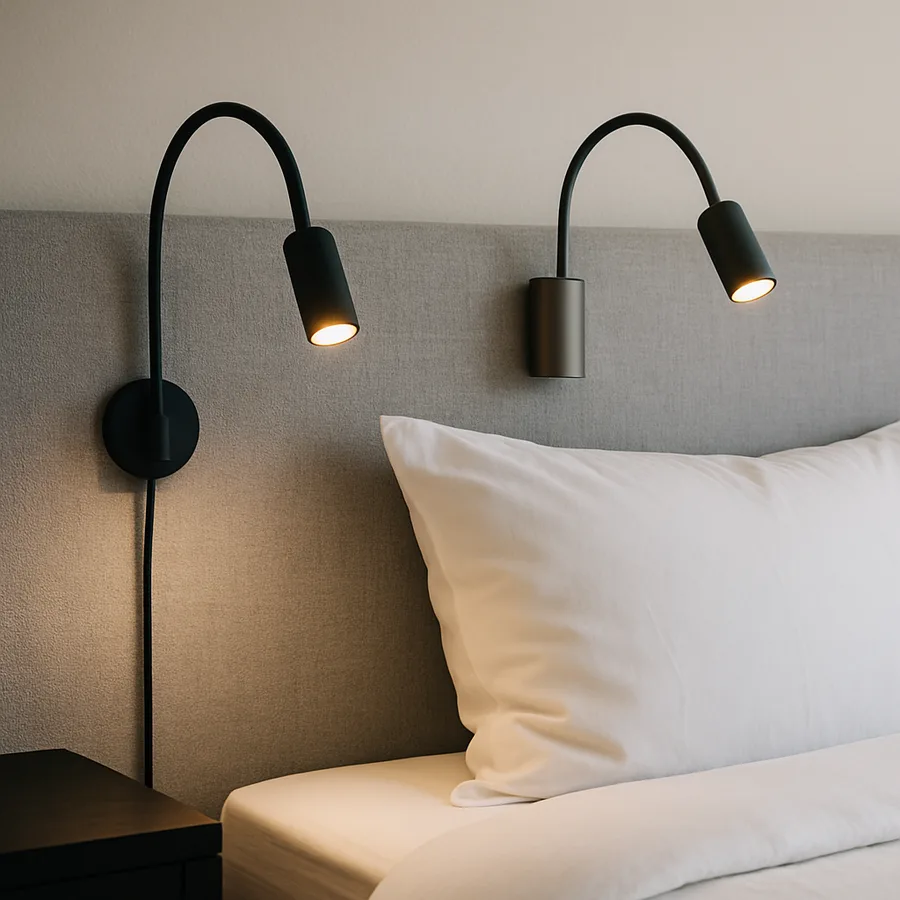
A bedside reading light might seem like a small detail, but anyone who reads in bed knows how dramatically the wrong fixture can degrade the experience. Glare across the page, light spilling onto a sleeping partner, weak output that strains the eyes, a cord snaking visibly down the wall: these annoyances accumulate. The market has split into two distinct camps, hardwired headboard lights and battery operated alternatives, and each offers a genuinely different proposition. Understanding the trade-offs before you commit will save you both money and disappointment. Which approach actually delivers a better nightly reading ritual?
What Has Changed in Headboard Lighting
Bedside lighting used to mean a swing-arm sconce wired into the wall, full stop. Today the category has expanded significantly. Plug-in articulated sconces, clip-on LED book lights, magnetic rechargeable bars, and motion-sensor strips all compete for the same spot above the pillow. The driving force has been the maturation of lithium battery technology and high-CRI LED chips, which together made portable lights bright enough for serious reading without sacrificing color quality.
According to a report from the U.S. Department of Energy, LED lighting now accounts for more than half of all residential lighting installations, and the rechargeable segment is one of the fastest growing within it. The National Association of Home Builders has also documented that bedroom lighting is one of the most commonly retrofitted electrical features during minor renovations, with homeowners increasingly choosing wireless options to avoid drywall repair. That said, hardwired solutions still dominate higher-end builds, and for good reason.
Wired Headboard Lights: The Case for Permanence
A properly hardwired sconce, mounted directly above or beside the headboard, offers performance no battery light can match. The light source can be larger, the optics can be properly engineered, and there is no charging anxiety. You flip the switch, you read, you go to sleep. The aesthetics are typically cleaner: no visible cord, no chunky battery housing, no glowing charge indicator at the wrong moment.
The trade-offs are equally real. Hardwiring requires either new construction, an open wall during renovation, or an electrician willing to fish wire behind finished drywall. Costs vary widely, but a single sconce installation in a finished wall typically runs $250 to $600 in labor alone, depending on the location of the nearest junction box and the patching required afterward. Designers at Architectural Digest frequently specify hardwired sconces in feature bedroom projects precisely because the absence of visible hardware is part of the design language. If you are buying a forever home or completing a serious renovation, the case for hardwiring is strong.
Battery Operated Lights: Flexibility and Speed
Battery operated and rechargeable reading lights have improved enormously. The best examples now deliver 300 to 500 lumens, color temperatures from 2700K to 4000K, and runtimes of 20 to 60 hours per charge. They mount with adhesive plates, magnetic backplates, or clip mechanisms that can attach directly to the headboard itself. For renters, for parents who want to add bedside lighting in a child's room without calling an electrician, and for anyone who reads in bed only occasionally, they make excellent sense.
The hidden cost is behavioral. A rechargeable light requires charging, and charging requires remembering. Many users report frustration with lights that run out mid-chapter, with charging cables left in inconvenient places, or with batteries that lose capacity after two or three years of cycling. The lights themselves often appear chunkier than their wired counterparts because the battery and housing must be integrated into the visible portion of the fixture. Have you ever bought a wireless gadget and stopped charging it six months later? That same drift affects bedroom lighting more than people anticipate.
Aesthetics and the Visual Footprint
This is where many buyers underestimate the gap between the two categories. A hardwired sconce in solid brass, blackened steel, or hand-thrown ceramic can be a small piece of architectural jewelry. The arm articulates, the shade directs the beam, the wire disappears entirely into the wall. The visual quietness is part of the luxury.
Battery operated fixtures, by contrast, must contain their own power source. Even the most elegant rechargeable bars and pucks carry a slightly more utilitarian appearance, and the better ones cost as much as a basic hardwired sconce while delivering less light. That said, recent introductions from Scandinavian and Japanese brands have closed the gap meaningfully, offering portable lights in stone, walnut, and brushed metal finishes that genuinely belong on a refined nightstand or headboard.
Light Quality, Glare, and the Reading Experience
Lumens alone do not determine reading comfort. Three other variables matter more: color rendering index (CRI), beam shape, and adjustability. A CRI of 90 or higher renders printed text and photographs in books accurately; lower CRI lights can make pages look gray or washed out. The beam should be tight enough to illuminate the book without spilling across a sleeping partner's face, which argues for a hooded shade or a directional optic rather than a bare bulb or wide globe.
Adjustability is non-negotiable for serious readers. A swing-arm sconce, whether wired or battery powered, allows you to position the light exactly above the page and tilt it as you shift posture. Fixed lights, no matter how well designed, will always disappoint. The American Society of Interior Designers recommends positioning the light source 15 to 20 inches above the mattress and slightly forward of the headboard for optimal reading angles. Whether you achieve that with wire or battery is a separate question.
Total Cost Over Five Years
A direct comparison helps clarify the decision. A pair of hardwired brass sconces from a reputable brand might run $400 to $900 plus $400 to $1,000 in installation, totaling $800 to $1,900 upfront. Maintenance over five years is effectively zero apart from occasional LED replacement. A pair of high-quality rechargeable reading lights might cost $200 to $500 upfront with no installation. However, batteries typically need replacement or the fixture itself needs upgrading within three to five years, and chargers and cables add cumulative small costs.
For a permanent residence, the hardwired option is almost always cheaper across a ten-year horizon. For a rental, a guest room, or a temporary setup, the battery option is dramatically cheaper. The decision is really about time horizon, not initial outlay. Industry data from Better Homes & Gardens design surveys suggests that homeowners who plan to stay in a property at least seven years strongly prefer hardwired bedside lighting, while shorter-tenure occupants overwhelmingly choose portable solutions.
Installation Realities and Renter-Friendly Options
The friction of installation often decides this category more than performance does. A hardwired sconce above a headboard requires either reaching an existing junction box or running new wire, and in a finished bedroom that nearly always means cutting drywall, fishing cable, and patching afterward. Even experienced electricians charge a premium for sconce installation because it is fiddly, slow work performed on a ladder over furniture. Add a switch leg if you want bedside control rather than wall-switch control, and the labor compounds. Budget at least one full day of professional labor per pair of bedside sconces in a finished room, plus drywall repair and paint touch-up.
Renters face a stricter constraint. Most leases prohibit electrical modifications without landlord consent, and even consenting landlords rarely want to fund the work. For renters, the battery operated category is not a compromise but a necessity, and the good news is that the category has matured enough to be genuinely satisfying. Magnetic mounting plates installed with removable adhesive, clip-on lights that grip directly to a headboard panel, and plug-in articulated wall lamps that route a single visible cord down to a baseboard outlet all work without violating typical lease terms. Survey data published by the National Multifamily Housing Council suggests that more than 38 percent of U.S. households now rent, a share that has climbed for over a decade, and the lighting industry has noticed. The portable bedside category exists because of this demographic reality.
For homeowners considering hardwiring without renovation, the most cost-effective opportunity is during any adjacent project: painting the bedroom, refinishing floors, or upgrading the headboard itself. An open wall behind a headboard temporarily moved out for floor work is the perfect moment to run wire. Plan ahead; if you know you will eventually want hardwired sconces, schedule the electrical work to coincide with a project that already disturbs the wall. Combining adjacent projects can reduce sconce installation cost by 40 to 60 percent compared to standalone work, according to estimates published by industry contractors.
Smart Features, Dimming, and the Modern Bedside Stack
Both wired and battery lights now commonly support smart features, and these features change the daily experience meaningfully. Look for warm-dim functionality, where the bulb shifts toward amber as it dims, mimicking the behavior of an incandescent bulb. This single feature transforms the bedside experience because it allows a reading light to soften toward sleep over the course of an evening rather than maintaining clinical brightness until you flip the switch. Several manufacturers including Hue, Lutron, and a growing roster of independents now offer warm-dim sconces in both wired and battery formats.
Voice and app control matter more in bedside applications than almost anywhere else. The ability to turn off the light without sitting up, to dim it gradually as you read, or to schedule an automatic fade at a set time fundamentally changes how the room feels. Wired smart sconces typically require either a smart switch or a smart bulb behind the fixture, while battery options often include integrated smart radios. The trade-off: integrated smart features in battery fixtures drain the battery faster, so factor that into runtime expectations. Have you noticed how often you end up reading later than planned because reaching for the switch feels like an effort? Voice control eliminates that friction entirely.
Consider also the broader bedside lighting stack. Many readers benefit from a combination of a tightly focused reading light and a softer ambient source nearby. A small table lamp with a low-wattage warm bulb, paired with a directional reading light, allows you to read comfortably without throwing the room into total darkness when you switch off the reader. This layered approach is standard in well-designed hotel rooms, where guests of different preferences must be accommodated, and it translates beautifully to the home. The Illuminating Engineering Society publishes detailed guidelines on bedroom lighting layers, and the consistent recommendation is at least two independently controlled sources at the bedside, regardless of whether the primary reading light is wired or battery powered.
Conclusion
The choice between wired and battery operated headboard reading lights is not really a choice about lighting technology. It is a choice about how permanent your bedroom feels, how much renovation friction you can tolerate, and how often you actually read in bed. Both categories now offer products capable of delivering a satisfying nightly reading experience, and both have refined enough that the old assumption (wired always wins) no longer holds without qualification. The question is which set of trade-offs fits your life.
For homeowners settling into a long-term residence with the willingness to handle electrical work, a pair of properly placed hardwired sconces remains the gold standard. The aesthetics are cleaner, the light quality is typically better, and the long-term cost is lower. For renters, frequent movers, or anyone retrofitting an existing bedroom without renovation budget, modern rechargeable reading lights are no longer a compromise but a legitimate parallel category. The best examples genuinely belong in a beautifully styled room.
Before you decide, perform one simple exercise: notice exactly where your hand falls when you reach for a book at night, exactly where the page sits, and where any sleeping partner's head would be relative to the light. That small observation will tell you more about the right fixture than any specification sheet. Make a decision based on how you actually read, not how you imagine reading. Then upgrade your bedside lighting this month and notice how much more often you actually pick up a book.
More Articles You May Like


Comments
Post a Comment