Electric Bidet Seats With Heated Water and Air Dryer Features
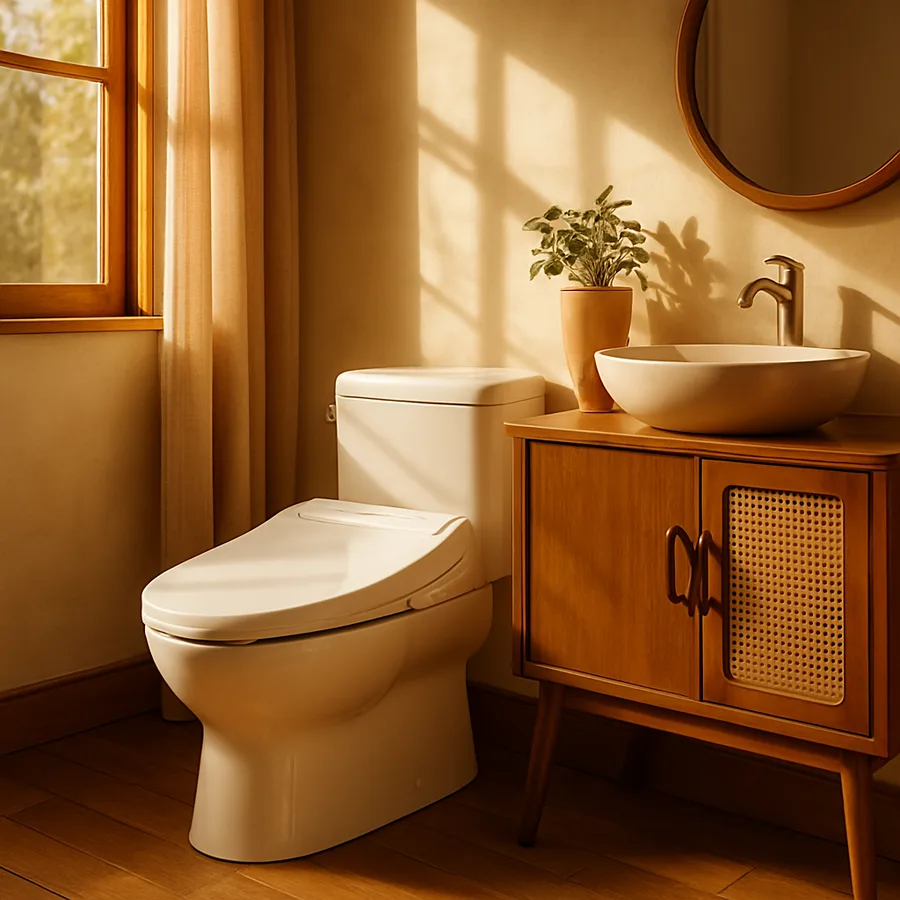
The leap from a basic non-electric bidet attachment to a full electric bidet seat with heated water and a warm air dryer is the moment most homeowners stop thinking of a bidet as a novelty and start treating it as a daily-use bathroom essential. The difference is not just comfort - it is a measurable change in how the bathroom functions throughout the year, particularly in cold-climate states where unheated tap water in January can register below 50 degrees Fahrenheit and turn what should be a soothing experience into something far less pleasant.
According to consumer plumbing-fixture research summarized by Consumer Reports, electric bidet seats now make up the majority of premium bidet purchases at major U.S. home centers, with heated water cited by buyers as the single most-valued feature, narrowly ahead of the warm air dryer. That same research notes that adoption rates among adults over 60 are growing fastest, a pattern interior designers attribute to aging-in-place renovations rather than to general bathroom remodeling. So how do you sort the genuinely premium electric bidet seats from the ones that simply add a power cord to the same hardware?
How Heated Water Actually Works Inside the Seat
Electric bidet seats heat water using one of two distinct architectures, and the difference matters enormously for daily use. The older tank-style heater stores roughly half a liter of pre-heated water inside the seat itself, which means the first 30 seconds of spray are warm but subsequent use depletes the reservoir and switches over to cold supply water. The more modern tankless or "instant" heater uses a high-wattage ceramic element to warm water on demand as it passes through, providing essentially unlimited warm water as long as the seat is plugged in.
Tankless heaters typically draw 1,200 to 1,400 watts during active spray, which sounds substantial until you remember the spray itself rarely runs longer than a minute. The U.S. Department of Energy reference data on household appliance loads places that draw well below a hairdryer or microwave, and far below an electric clothes dryer. Tank-style models, by comparison, sip 50 to 80 watts continuously to keep the reservoir at temperature - meaningful annual energy if the bathroom sees light use, negligible if it sees heavy daily use.
Which heating system is right for your household? The honest answer comes down to traffic. A single-person bathroom or a guest bath used a few times per week is an excellent candidate for a tank model because the reservoir refills between uses. A family bathroom with three or more daily users will quickly run a tank-style seat empty during morning rush hour, and members of the household will notice when warm water suddenly becomes cold mid-cycle. Tankless models eliminate that frustration entirely.
Inside the Warm Air Dryer Mechanism
The warm air dryer is the second defining premium feature, and it is also the most variable in quality across brands. A genuinely useful dryer pulls bathroom air through a HEPA-grade filter, warms it via a small ceramic element, and directs it through an angled nozzle aimed at the wash zone. Effective dryers operate at temperatures between 100 and 115 degrees Fahrenheit and at airflow rates that the American Society of Heating, Refrigerating and Air-Conditioning Engineers (ASHRAE) categorizes as low-velocity warm air - comfortable on skin and quiet enough not to dominate the bathroom acoustically.
Less effective dryers - common in budget electric seats - simply blow ambient bathroom air at body temperature, which removes moisture so slowly that most users give up and reach for tissue anyway. Reading the spec sheet matters. Look for stated dryer wattage of at least 200 watts and a stated airflow specification, even if the manufacturer expresses it in marketing terms rather than CFM. The National Kitchen and Bath Association (NKBA) publishes guidance on bathroom appliance noise tolerance at the NKBA professional resources hub, and the same comfort thresholds apply here: dryers above 55 dB feel intrusive in a typical residential bathroom.
Temperature Controls and User Memory Settings
Premium electric bidet seats let each member of the household pre-program their own temperature, pressure, and nozzle-position preferences, with most quality models offering at least two and as many as four user memory slots. Setting these up the day the seat is installed is the difference between a fixture everyone uses and a fixture only the gadget enthusiast in the family touches. Walk every household member through the menu on day one, write their preferred slot number on a small label inside the medicine cabinet, and the adoption rate climbs immediately.
Water temperature is typically adjustable across three or four discrete stages, usually labeled cold, warm, medium-warm, and hot. The hot setting on most U.S.-market seats tops out at 104 degrees Fahrenheit - the same upper limit applied by the U.S. EPA WaterSense program for residential mixing valves to prevent scald injuries. EPA's underlying water-temperature safety reference is collected at the EPA WaterSense site. Seat temperature is similarly stage-adjustable, generally from off (ambient) up to about 104 degrees as well.
Have you considered who in the household will actually use the warmer settings versus who prefers everything closer to room temperature? In practice, most adults gravitate to the medium settings within a week of installation, while children and visitors often prefer the lower stages. The memory-preset feature is what makes that variation painless; without it, every user has to manually reset every parameter every single visit, and the experience quickly becomes more tedious than rewarding.
Deodorizers, Night Lights, and Other Premium Extras
Beyond heated water and the dryer, premium electric bidet seats bundle a cluster of smaller features that significantly affect daily satisfaction. The most valuable is the activated carbon deodorizer, which draws air from the bowl through a replaceable charcoal filter and exhausts it back into the room. Carbon deodorizers are spectacularly effective when the filter is fresh and useless when it is exhausted, so put a recurring six-month reminder on your phone the day you install the seat. Replacement filters from major brands cost roughly fifteen to thirty dollars.
The integrated LED night light is another subtle but high-value extra, particularly in households with small children or older adults. A soft blue or amber LED inside the bowl makes nighttime visits possible without flipping on the harsh overhead light, which matters more than most people anticipate - a 2024 sleep-environment review summarized by the National Sleep Foundation found that nighttime exposure to bright bathroom lighting measurably delays a return to deep sleep, with average reentry times extending by roughly 18 minutes among adults over 50.
Other extras worth scanning the spec sheet for include a soft-close lid (essential - every modern electric seat should have this), a pulsing or oscillating spray pattern, a self-cleaning nozzle cycle that runs before and after each use, and a child-mode setting that gentles the spray pressure and disables the dryer. Self-cleaning nozzles in particular were once a luxury feature and are now considered baseline by the American Society of Interior Designers (ASID) in their guidance on premium residential bath specification.
Electrical Requirements and Bathroom Outlet Reality
An electric bidet seat needs a grounded electrical outlet within roughly four feet of the toilet, and that outlet must be GFCI-protected per modern code. This is the single biggest obstacle in older American homes. Bathrooms built before 1975 frequently have no outlet near the toilet at all, and bathrooms built between 1975 and 2008 may have a non-GFCI outlet that needs to be replaced before a bidet seat can be installed safely. The National Electrical Code, published by the National Fire Protection Association (NFPA), has required GFCI protection in bathrooms since 1975 and tightened the rules repeatedly since.
If you don't already have a suitable outlet, this is the moment to call a licensed electrician rather than to run an extension cord. Extension cords are explicitly prohibited as a permanent power source for bathroom appliances under most local adoptions of the NEC, and they create both shock and fire risk in a damp environment. A short electrician visit to add a single GFCI outlet typically runs $200 to $400 in most U.S. metros and gives you a safe, code-compliant power source for the seat plus future bathroom upgrades.
Confirm before purchase whether the bidet seat ships with a U.S.-spec power cord (NEMA 5-15P plug) and whether the cord exits the seat on the left or right side. Right-side cord exits on a left-side outlet create awkward routing that telegraphs an amateur install, and several brands sell their flagship models with the cord exit on one side only. Two minutes of pre-purchase research on this single detail prevents a great deal of post-install regret.
Maintenance Routine for Long-Term Reliability
An electric bidet seat is a small appliance and benefits from a small amount of regular maintenance. The single most important habit is replacing the inline water filter every six to twelve months depending on local water hardness; this filter sits inside the seat between the supply hose and the heater and protects both the heating element and the spray nozzles from mineral scale. The Plumbing-Heating-Cooling Contractors Association (PHCC) notes that hard-water buildup is the leading cause of premature failure in electric plumbing fixtures, and the bidet seat is no exception.
Run the self-cleaning nozzle cycle weekly - it takes about thirty seconds and prevents biofilm from establishing on the spray nozzle. Wipe down the seat exterior with a soft cloth and a non-abrasive bathroom cleaner; avoid bleach-based products, which degrade the plastic housing over time and can void the warranty on most premium brands. Replace the deodorizer carbon filter every six months as discussed above, and replace the dryer's intake filter (if your model has one) annually.
Once a year, shut off the water at the angle stop, disconnect the supply hose, and inspect both ends for mineral buildup or rubber cracking. A two-dollar replacement washer caught early prevents a leak that would otherwise damage the underside of the seat housing. Keep the original packaging and printed manual for at least the duration of the warranty, and photograph the serial-number sticker so you can register the warranty online without crawling behind the toilet later.
Conclusion
The leap from a non-electric bidet to a full electric bidet seat with heated water and a warm air dryer is the single most rewarding bathroom upgrade most homeowners can make below the cost of a fixture replacement. Heated water transforms the experience in cold weather, the warm air dryer eliminates the awkward post-spray reach for tissue, and the cluster of smaller premium features - deodorizer, night light, soft close, user memory presets - collectively turn an everyday fixture into something residents genuinely look forward to using.
The decision points worth your attention are heater architecture (tank versus tankless), dryer specification (wattage and noise), electrical readiness (GFCI outlet within reach), and physical fit on your existing toilet. Get those four right and almost any premium-tier electric bidet seat from a reputable manufacturer will serve the household reliably for the better part of a decade. Get any one of them wrong and you'll either be returning the seat, calling an electrician, or quietly resenting the morning rush.
Maintenance is the quiet variable that determines whether a quality electric bidet seat lasts five years or fifteen. Treat the inline water filter, deodorizer cartridge, and dryer filter as scheduled consumables rather than as ignored components, and the seat will reward you with a near-zero failure rate. The PHCC's national member directory is a sensible bookmark for the rare day you do need professional service, and most premium-brand customer support lines handle routine troubleshooting by phone before any in-home visit becomes necessary.
Take the next thirty minutes to confirm your bathroom has a GFCI outlet within four feet of the toilet, measure your bowl shape and tank clearance, and start a short list of must-have features ranked against your household's actual usage pattern. The right electric bidet seat for a one-person household is rarely the right one for a family of five - but with the framework above you can identify yours confidently and enjoy the upgrade by next weekend.
More Articles You May Like



Comments
Post a Comment