Convertible Crib Designs That Grow With the Child to Toddler Bed
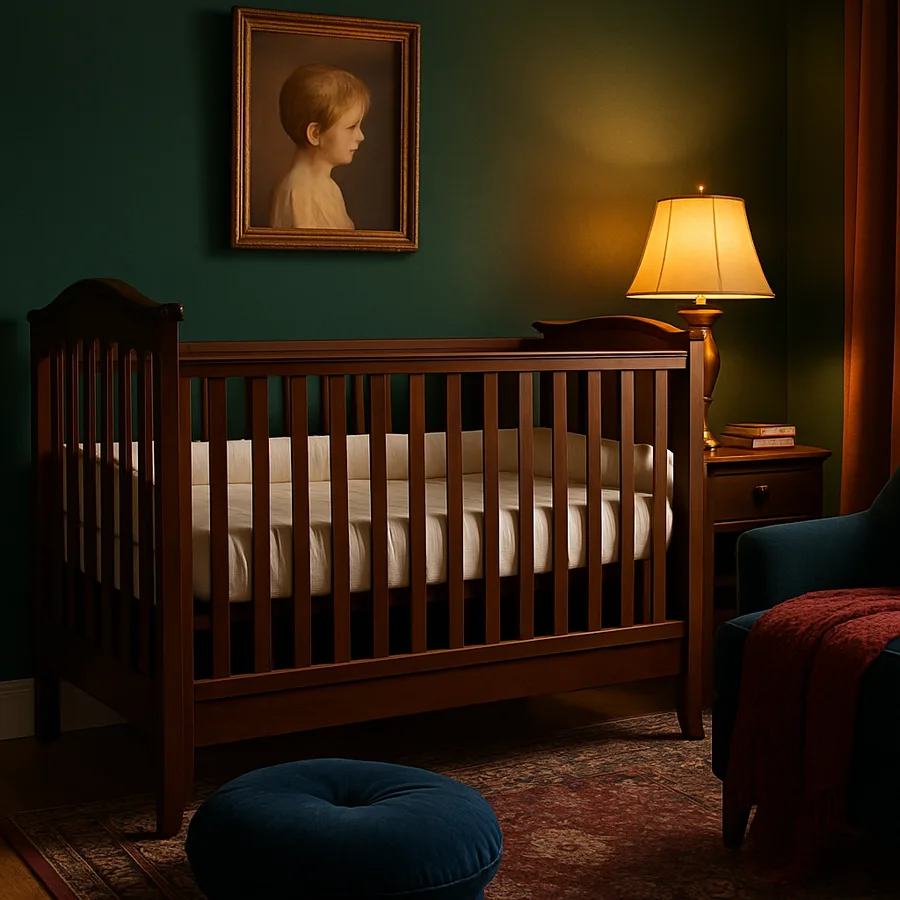
A convertible crib is sold as a single piece of furniture that does the work of three or four. The marketing pitch is irresistible to new parents staring down a registry: one purchase covers crib, toddler bed, daybed, and full-sized headboard, often advertised as lasting from birth through a child's teenage years. The reality is more interesting and more nuanced - convertibles can be an excellent investment, but only if you understand what each conversion stage actually requires, how the design choices made at the crib stage constrain you later, and which features marketed as essential are actually optional.
This guide covers the four common conversion stages, the safety standards that apply at each one, the hidden costs that turn a "two-for-one" deal into a four-piece purchase, and the design features that genuinely matter once the crib becomes a toddler bed and your child gains the ability to climb out of anything.
Understand What "Convertible" Actually Means
The term convertible crib covers a wide range of products with very different conversion paths. A 2-in-1 typically converts from crib to toddler bed only. A 3-in-1 adds a daybed configuration, which is essentially the toddler bed with one rail removed. A 4-in-1 adds a full-sized bed, usually requiring a separate conversion kit and the purchase of a full mattress and box spring. Some manufacturers market 5-in-1 models that include a youth or twin configuration as well.
The number is less important than the path. A 4-in-1 that requires three separate conversion kits, a full mattress, side rails, and a footboard purchased separately is functionally a $400 crib that grows into a $900 system. Compare that to a quality standalone crib at $200 plus a separate $150 toddler bed at age two, and the math is closer than the brochure suggests. According to a 2025 furniture industry analysis, the average family spends 60 to 70 percent of the original convertible crib price on conversion accessories over the product's full lifecycle, which is information rarely included on the showroom floor.
Before you commit, ask the retailer for the full conversion kit list, the cost of each, and whether kits remain in stock for older models. A crib whose conversion kit is discontinued five years after purchase is not actually convertible - it is just a crib with promises.
Verify Crib-Stage Safety First
Every crib sold in the United States must comply with the federal safety standard 16 CFR Part 1219, which the U.S. Consumer Product Safety Commission updated in 2011 to ban drop-side cribs after a series of tragic incidents. A modern compliant crib has fixed sides, slat spacing of no more than 2 and 3/8 inches, and a sturdy mattress support that does not detach when the mattress is pressed down.
Look for cribs that meet the voluntary safety certification from the JPMA. JPMA certification is more rigorous than the federal minimum and covers issues like hardware durability, finish toxicity, and structural integrity over time - all of which matter more in a convertible because the same frame is expected to function for many years and through multiple disassemblies.
Also confirm that the crib meets the ASTM F1169 standard for full-size baby cribs. ASTM standards address mattress fit, structural strength, and warning labels. The combination of CPSC compliance, JPMA certification, and ASTM standards is the safety floor - not the ceiling - and any crib lacking all three should be approached with caution regardless of how attractive the design is.
Look at the Conversion Hardware Before the Aesthetics
The single feature that determines whether a convertible crib will actually be used in its toddler configuration is the conversion rail design. Some cribs use a low rail that attaches to the existing crib frame with two screws - clean, simple, and impossible to lose. Others use a complex multi-piece rail that requires a separate kit, a specific tool, and an instruction manual you may not have in three years.
Evaluate the rail in person if you can. A toddler conversion rail should be roughly 16 to 20 inches tall, smooth on the inside surface, and securely fastened in a way you can verify with your hands. The guard rail height matters because toddlers roll, and a rail that is too low fails its primary purpose. Cribs whose toddler rail extends only 6 inches above the mattress are decorative more than functional.
For the daybed configuration, check whether the rail comes off cleanly or whether you are left with visible screw holes and exposed hardware. Cheaper convertibles convert by removing parts entirely, leaving the crib looking incomplete. Better-designed convertibles use removable rails with covered mounting points that read as intentional design rather than missing pieces.
Plan the Toddler Bed Transition
The transition from crib to toddler bed is the moment most parents discover whether their convertible was a good purchase. The American Academy of Pediatrics recommends transitioning when the child reaches 35 inches in height or shows the ability to climb out of the crib - typically between 18 months and 3 years of age. Climbing out is the safety trigger, because a child who has climbed out once will climb out again, and a fall from full crib height onto a hard floor is a serious injury risk.
Once you make the conversion, expect a regression period of one to three weeks. Toddlers who slept beautifully in a crib often appear in your bedroom at 3 a.m. for the first month after conversion, simply because they can. Plan the conversion for a low-stress week, not the night before a major life event. Many sleep consultants recommend pairing the conversion with a positive ritual - a new pillowcase, a bedtime book about big-kid beds, a small celebration - to make the transition feel like a promotion rather than a loss.
From a safety standpoint, the room itself becomes the crib once the toddler bed is in use. The child can now leave the bed and roam, which means furniture must be anchored to walls, cords must be hidden or removed, and any small objects must be elevated. The CPSC reports that furniture tip-over incidents send a child to the emergency room every 30 minutes in the United States, a statistic that becomes urgent the moment your child can leave their bed unsupervised.
Evaluate the Full-Size Bed Promise Honestly
The conversion to full-sized bed is the stage that almost no family completes. Most children outgrow toddler beds around age five, at which point parents face a choice: spend $200 to $400 on a conversion kit plus $400 to $700 on a full mattress and foundation, or spend $300 to $500 on a complete twin or full bed designed for an older child. Many families choose the latter, partly because the convertible-as-full-bed often looks like a crib that grew up - visible peg holes, dated hardware, and proportions that read as nursery furniture even with new linens.
If you genuinely intend to use the full-bed conversion, evaluate the headboard and footboard design with adult eyes. A footboard that read as charming on a crib often reads as juvenile on a full bed. Look for clean lines, neutral finishes like natural wood or matte white, and a footboard that complements rather than dominates a five-year-old's room. The convertibles that genuinely work as full beds are designed by furniture makers who treat the crib stage as a temporary configuration of an adult-quality bed, not the other way around.
One legitimate cost-saving strategy: skip the full-bed conversion and use the toddler bed configuration until age four or five, then sell or hand down the entire piece. Convertible cribs in good condition retain roughly 30 to 40 percent of their original value on the secondhand market, especially in the toddler bed configuration, which means the effective per-year cost can drop below that of a non-convertible crib once you account for resale.
Choose a Finish and Wood That Will Age Well
A convertible crib lives in your house for somewhere between three and ten years, which is long enough for trends to change twice. Resist trendy finishes - the high-contrast two-tone crib that looks bold on the showroom floor often looks dated by the time your toddler is using it. Solid hardwood frames in natural finishes, matte white, or warm walnut age the most gracefully and pair with the widest range of bedding and decor over the years.
Pay attention to the finish chemistry. Look for cribs labeled with GREENGUARD Gold certification, which limits volatile organic compound emissions to levels considered safe for children's environments. Lower-cost cribs sometimes use finishes that off-gas for months, which is the opposite of what you want in a sleep environment. The American Society of Interior Designers has published material on healthy nursery air quality, and finish off-gassing is consistently among the top concerns flagged for infant rooms.
Solid wood beats engineered wood for convertibles specifically because the piece will be disassembled and reassembled multiple times. Particle board and MDF do not hold screw threads well after repeated reinstallation, which means a $300 engineered-wood convertible may actually be a $300 crib and a $0 toddler bed because the conversion hardware no longer holds. Hardwood maple, beech, and birch are the most reliable choices for furniture that needs to survive multiple transformations.
One detail rarely discussed in showrooms: the quality of the original assembly hardware determines how many conversions the crib can survive. Cheap zinc-plated bolts strip after two or three full assembly cycles, and a stripped bolt in a crib frame is a structural problem you cannot ignore. Look for cribs that ship with steel hardware and that publish replacement hardware availability - many quality manufacturers will send replacement bolts for free for years after purchase. The crib whose maker stands behind the hardware is the crib whose hardware will still be holding when you need it most.
Pay attention to the mattress support system as well. Some convertibles use a metal grid support that holds up over multiple conversions; others use a wooden slat support that can warp or crack under repeated load and disassembly. The metal grid is heavier and slightly more expensive but lasts dramatically longer. If the showroom model has a flexing or creaking support when you press on it, the issue will only worsen over time. A solid mattress support is also a safety feature, not just a durability one - the CPSC has documented incidents involving collapsed crib supports, and a confident, rigid base is the simplest hedge against that risk.
Conclusion
A well-chosen convertible crib can be one of the best long-term furniture investments in a nursery, but only when the buyer evaluates it as a multi-stage system rather than a single product. The crib configuration is the easy part - every CPSC-compliant crib does that job competently. The real test is the toddler bed configuration, which is where the convertible earns its premium, and the full-bed configuration, which is where most convertibles quietly fail.
The best approach is to assume you will use the crib and toddler bed stages, hope to use the daybed stage, and treat the full-bed stage as a bonus rather than a feature you are paying for. Choose the conversion hardware, the wood quality, and the finish with an eye toward year three, not year zero. The crib that looks adorable in a newborn nursery and the crib that still looks intentional in a four-year-old's room are not always the same crib.
Two questions worth asking before you commit: How will this look once it is a toddler bed in a four-year-old's room? If the answer is "still beautiful," buy it. What does the conversion kit cost, and is it in stock today? If the answer is "discontinued" or "back-ordered indefinitely," walk away - the convertibility is theoretical at that point.
Take action this week: measure your nursery, pull up the conversion kit pricing for the three cribs on your shortlist, and add up the true total cost across the crib, toddler, and daybed stages. The crib whose math still makes sense at year three is the crib worth buying.
More Articles You May Like



Comments
Post a Comment