Maximize Space: Innovative Interior Design Ideas for Small Homes
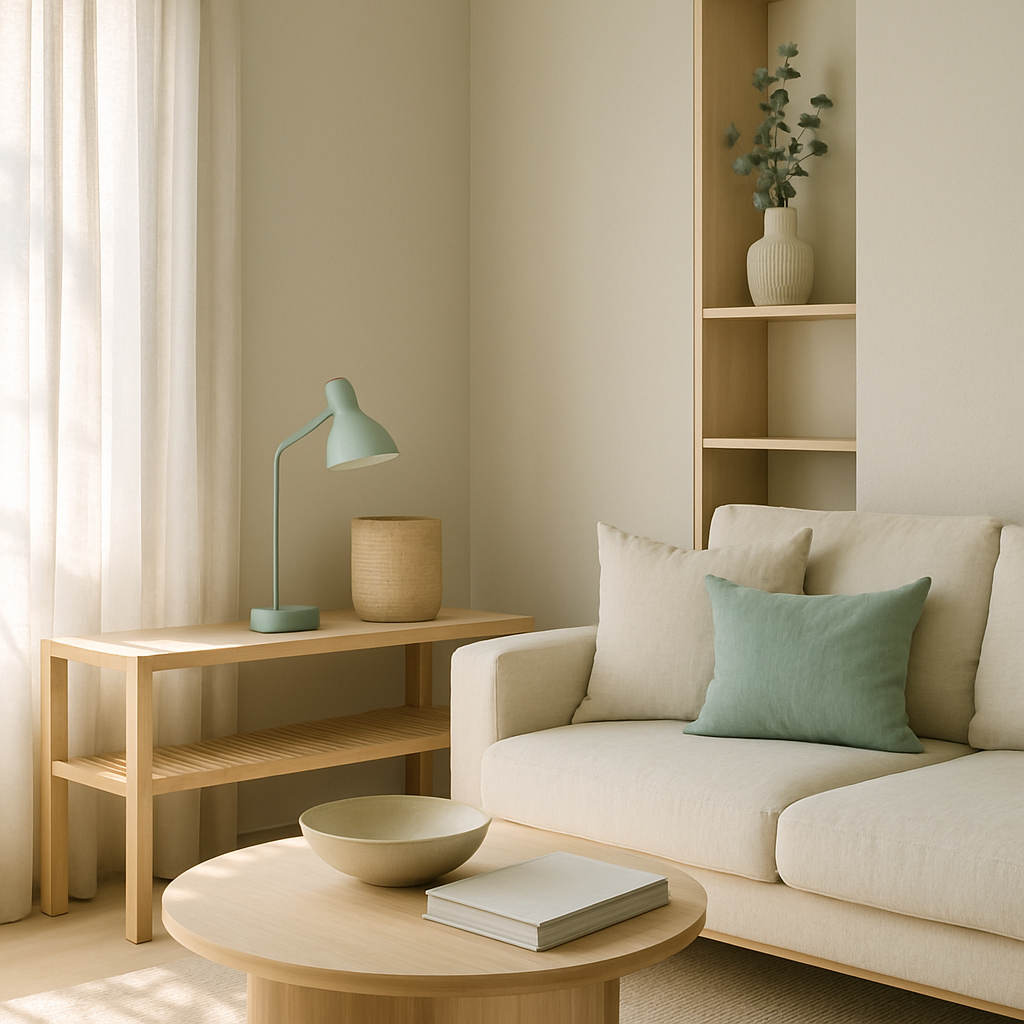
Living in a compact home does not mean surrendering style, comfort, or functionality. The National Council for Interior Design Qualification (NCIDQ) reports that the average new apartment in major metropolitan areas has shrunk by 12% over the past decade, pushing designers to develop increasingly sophisticated strategies for small-space living. With professional design fees ranging from $150 to $500 per hour, understanding which interventions deliver the greatest spatial return on investment matters enormously. A well-planned 600-square-foot apartment can feel more spacious than a poorly organized home twice its size. What separates the two is not luck but deliberate, informed design choices. This guide offers proven techniques drawn from professional practice, industry research, and the real-world constraints of compact living.
The Psychology of Perceived Space
Before selecting a single piece of furniture or paint swatch, understanding how the human brain interprets spatial dimensions is essential. The American Society of Interior Designers (ASID) has published extensive research on spatial perception, demonstrating that visual cues influence our sense of room size as powerfully as actual square footage. Light colors on walls and ceilings reflect more ambient light, which the brain reads as openness. Conversely, dark or heavily patterned surfaces absorb light and create a sense of enclosure. This is not merely aesthetic preference; it is neuroscience applied to architecture.
Sightlines play an equally critical role. When you can see from one end of a home to another without interruption, the brain registers the full length of that distance as available space. Removing unnecessary interior walls, choosing furniture with exposed legs that allow the floor plane to remain visible, and positioning mirrors to extend visual depth all exploit this perceptual mechanism. The IIDA recommends that small-home dwellers conduct a "sightline audit" by standing at each doorway and noting what obstructs the view. Even relocating a single bookcase can dramatically alter how expansive a room feels.
Color temperature also influences perception. Cool-toned whites and pale blues tend to recede, making walls feel farther away, while warm yellows and terracottas advance toward the viewer. For small homes, a consistent cool-neutral palette throughout connected spaces eliminates visual boundaries between rooms, creating the impression of one continuous environment. Houzz found that small-home renovations using a unified color scheme scored 34% higher in owner satisfaction surveys than those using a different palette in each room. Consistency, it turns out, is one of the most powerful tools available.
Multifunctional Furniture: Every Piece Earns Its Place
In a small home, furniture that serves only one purpose is a luxury that the floor plan cannot afford. The shift toward multifunctional design has accelerated rapidly, with manufacturers now offering pieces that would have seemed like novelties a decade ago but are now standard options. Murphy beds that fold into wall-mounted desks, coffee tables with hydraulic lifts that convert into dining surfaces, and modular sofas with built-in storage compartments represent the baseline of small-space furnishing. AD PRO's 2024 small-space report noted that sales of convertible furniture grew by 53% year-over-year.
The selection process should begin with an honest assessment of how you actually use each room throughout the day. Track your movements and activities for a full week, noting which surfaces you use, which you ignore, and where bottlenecks occur. This data-driven approach, recommended by NCIDQ-certified space planners, reveals opportunities that intuition alone might miss. Perhaps your dining table sits unused fourteen hours a day and could be replaced by a wall-mounted drop-leaf that folds flat when not in service. Perhaps your entryway bench could incorporate shoe storage, a coat rack, and a mail organizer, replacing three separate items with one.
Quality matters enormously with convertible furniture because the mechanisms endure constant use. Investing in well-engineered hardware for a wall bed or an expandable table pays dividends in longevity and daily satisfaction. Budget between $1,200 and $4,000 for a high-quality convertible piece that will withstand years of daily transformation. The ASID cautions against false economy here: inexpensive mechanisms that jam, sag, or break within months create frustration that discourages use, effectively transforming your convertible piece back into a single-function item. Does your current furniture arrangement reflect how you actually live, or does it default to a conventional layout that wastes precious floor area?
Vertical Thinking: Walls as Functional Real Estate
When floor space is limited, walls become the primary frontier for storage, display, and even workspace. Floor-to-ceiling shelving systems, wall-mounted desks, hanging planters, and pegboard organization panels all convert empty vertical surfaces into active contributors to daily life. The IIDA estimates that the average small home leaves approximately 60% of its usable wall area completely unused, representing an enormous untapped resource. Thinking vertically is not merely a suggestion for compact spaces; it is a fundamental requirement.
The most effective vertical storage systems share several characteristics: they extend as close to the ceiling as practical, they use adjustable components that can adapt as needs change, and they maintain a consistent visual language that prevents the wall from feeling chaotic. Open shelving in a kitchen, for example, works best when dishes and containers share a cohesive color family. A bedroom wall fitted with a modular closet system should group items by category and frequency of use, placing everyday essentials at eye level and seasonal items near the ceiling.
Floating shelves deserve special mention for their spatial efficiency. Because they lack visible brackets or supports, they maintain the clean wall plane that keeps small rooms feeling open. A series of staggered floating shelves ascending a stairwell wall, a single long shelf running the full width of a bedroom above the headboard, or a cluster of box shelves arranged asymmetrically in a living room all provide storage and display surface without consuming any floor area. Houzz data shows that floating shelf installations are the single most popular small-space upgrade, appearing in 47% of compact-home renovation projects. Mount them at varying heights to create visual rhythm and draw the eye upward, reinforcing the room's vertical dimension.
Light as a Design Material
Lighting in a small home serves a dual purpose: it illuminates tasks and it sculpts the perception of volume. A single overhead fixture casts uniform light that flattens spatial depth and makes rooms feel smaller. Layered lighting, by contrast, creates pools of brightness and gentle shadow that give the brain more information to process, resulting in a richer sense of three-dimensionality. The ASID identifies three essential layers for small spaces: ambient (general illumination), task (focused work light), and accent (highlighting architectural features or artwork).
Natural light remains the most powerful spatial amplifier available, and maximizing its penetration should be a first-order priority. Sheer curtains or translucent roller blinds allow daylight to fill a room while maintaining privacy. Positioning reflective surfaces, whether mirrors, glass-topped tables, or metallic accents, opposite windows bounces incoming light deeper into the interior. For rooms with limited window area, a large-format mirror placed on the wall facing the primary light source can effectively double the perceived window count. The NCIDQ includes daylighting strategies as a core competency in its professional examinations, underscoring their importance.
After dark, warm-toned LED strips concealed beneath floating shelves, inside glass-fronted cabinets, or along the base of a kitchen island create a glow that defines spatial boundaries without the visual weight of table or floor lamps. These hidden light sources are particularly valuable in small homes because they occupy zero floor or surface area. Recessed downlights on dimmer circuits allow you to shift a room's mood from bright and productive to soft and restful as the evening progresses. How does the lighting in your home change between morning and night, and could that transition be more intentional?
Zoning Without Walls: Defining Areas in Open Plans
Open-plan layouts are standard in small homes because removing walls maximizes the sense of spaciousness. The challenge lies in maintaining functional separation between zones, living, dining, sleeping, and working, without reintroducing the visual barriers that partition walls would create. Designers affiliated with the IIDA use several techniques to achieve this balance, each operating through subtle spatial cues rather than physical obstructions. Approximately 68% of new micro-apartment designs now incorporate at least two non-structural zoning strategies.
Area rugs are among the most effective and affordable zoning tools. A rug placed beneath a sofa and coffee table anchors the living zone, distinguishing it from an adjacent dining area even when both occupy the same continuous floor. The rug's edges become invisible boundaries that the brain recognizes intuitively. Similarly, changes in lighting character can define zones: a pendant light centered over a dining table signals "eating area" while recessed spots above a sofa grouping signal "relaxation." These lighting shifts need not be dramatic; even a subtle difference in color temperature or intensity is sufficient.
Furniture placement itself can delineate zones when arranged thoughtfully. A sofa positioned with its back to the dining area creates a psychological boundary without blocking light or sightlines. A low bookcase or console table standing perpendicular to a wall can separate a sleeping area from a workspace in a studio apartment while still allowing the eye to travel across the full room. The ASID recommends maintaining at least 30 inches of clear circulation path between zones to prevent the layout from feeling cramped. Even in the smallest studio, this breathing room between functional areas preserves the sense of deliberate organization that distinguishes a well-designed small home from a merely crowded one.
Storage Solutions That Disappear
The most impactful storage in a small home is the storage you never see. Concealed systems, those built into furniture, tucked beneath platforms, or hidden behind flush-mounted panels, keep possessions accessible without contributing visual clutter. Houzz's annual storage survey found that homes with predominantly concealed storage felt an average of 20% larger to visitors than comparable homes with open shelving and visible bins. The principle is straightforward: what the eye does not register as stored objects, the brain does not count against available space.
Platform beds with integrated drawer systems beneath the mattress surface offer substantial volume without requiring any additional floor footprint. A queen-sized platform bed can conceal up to 40 cubic feet of storage, equivalent to a small closet. Similarly, built-in window seats with hinged tops, staircase drawers in lofted apartments, and toe-kick drawers beneath kitchen cabinets all harvest space from architectural voids that would otherwise sit empty. AD PRO highlighted toe-kick drawers as one of the year's most underrated innovations, noting that they add roughly six cubic feet of storage to a standard kitchen at minimal cost.
For renters who cannot modify built-in structures, furniture with hidden compartments achieves a similar effect. Ottoman storage cubes, bed risers that create under-bed clearance for flat bins, and entryway benches with lift-top seats all conceal belongings behind clean exterior surfaces. The NCIDQ recommends that small-home dwellers aim for a ratio of roughly 70% concealed to 30% visible storage. The visible portion, carefully curated, serves as decoration: a few favorite books, a sculptural object, a small plant. Everything else vanishes behind doors, within drawers, or beneath surfaces, leaving the home feeling calm, open, and deliberately composed.
Conclusion: Small Space, Expansive Living
Designing a small home well requires a shift in perspective: from lamenting what the space lacks to leveraging what it offers. Every compact home has walls to activate, light to redirect, and furnishings to optimize. The strategies outlined here, drawn from ASID research, NCIDQ professional standards, and documented renovation outcomes, demonstrate that square footage is only one variable in the equation of spatial comfort. Perception, organization, and intentionality carry equal weight.
Begin with the intervention that addresses your most pressing daily frustration. If mornings feel chaotic, redesign your entryway storage. If evenings feel cramped, reconsider your living area furniture layout and lighting layers. If your home office doubles as your dining room, invest in a convertible surface that transitions cleanly between functions. Each incremental improvement builds upon the last, and within a few months, the cumulative effect can transform your relationship with your home entirely.
Consider scheduling a consultation with an NCIDQ-certified designer who specializes in compact living. A focused session, typically priced between $150 and $300, can identify opportunities specific to your floor plan that generalized advice cannot address. Take measurements of every room this weekend, photograph each wall, and note which areas generate the most friction in your daily routine. That documentation becomes the foundation of a design plan tailored to your life, your budget, and the full potential hidden within your small but capable home.



Comments
Post a Comment