How Cryptocurrency is Revolutionizing the Interior Design Industry
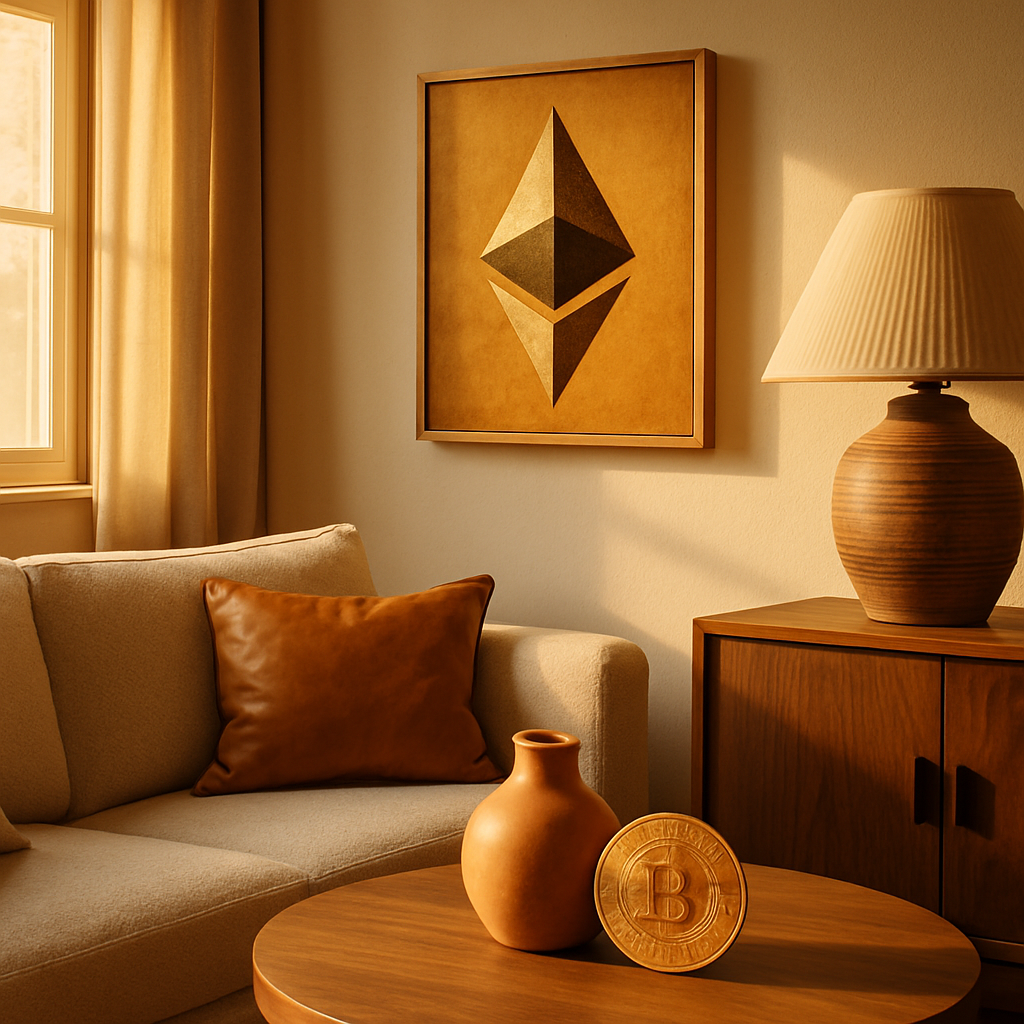
The interior design industry has operated on the same transactional infrastructure for decades: checks, wire transfers, credit cards, and the occasional escrow arrangement for high-value custom work. That infrastructure is shifting. Cryptocurrency and the blockchain technology underlying it are introducing new payment rails, ownership models, and creative possibilities that are beginning to reshape how designers source materials, how clients pay for services, and how digital and physical art converge within residential and commercial spaces. The American Society of Interior Designers (ASID) has acknowledged this shift in recent programming, dedicating conference sessions to blockchain literacy for design professionals. Meanwhile, platforms like Houzz and AD PRO have published features on designers who accept Bitcoin and Ethereum for consultation fees ranging from one hundred fifty to five hundred dollars per hour, and on luxury showrooms that process cryptocurrency for furniture and fixture purchases exceeding fifty thousand dollars. This is not a fringe experiment. The collision of decentralized finance and design practice is producing concrete changes in how projects are funded, how provenance is tracked, and how digital creativity enters physical rooms. Are you prepared for a design marketplace where smart contracts replace purchase orders and NFTs hang on your walls alongside oil paintings?
Cryptocurrency Payments in Design Transactions
The most immediate intersection of cryptocurrency and interior design is payment processing. High-end design projects routinely involve five-figure deposits, progress payments tied to milestones, and final settlements that can stretch into six figures when furnishings, custom millwork, and art are included. Traditional payment methods introduce friction at every stage: wire transfers take days to clear, checks carry bounce risk, and credit card processing fees of two to three percent erode margins on large invoices. Cryptocurrency transfers settle in minutes, carry transaction fees that are often a fraction of card processing costs, and provide an immutable ledger entry that both parties can reference indefinitely.
Several design firms affiliated with the IIDA (International Interior Design Association) have begun accepting stablecoin payments, particularly USDC and USDT, which maintain a one-to-one peg with the US dollar and eliminate the volatility concern that makes Bitcoin and Ethereum impractical for fixed-fee contracts. A designer quoting a project at fifteen thousand dollars per room can invoice in USDC and receive exactly that amount, settled on-chain within minutes, without currency fluctuation risk. The client benefits from lower transaction fees and the ability to pay from anywhere in the world without navigating international wire transfer bureaucracy, a significant advantage for overseas clients commissioning vacation-home interiors remotely.
Tax and accounting considerations remain the primary barrier to broader adoption. Cryptocurrency transactions are taxable events in most jurisdictions, and both designers and clients must track cost basis, gains, and reporting obligations with the same rigor they apply to traditional income. Accounting software integrations from platforms like CoinTracker and TaxBit are simplifying this burden, but the compliance landscape is still maturing. Designers considering crypto payments should consult a CPA familiar with digital assets before advertising the option, and clients should understand that paying in cryptocurrency does not provide anonymity or tax avoidance. Despite these friction points, the transactional efficiency of blockchain-based payments is steadily converting skeptics into adopters, particularly in the luxury segment where project values justify the setup cost. Payments represent only the most visible layer of blockchain's influence on design; the deeper transformation is happening in how we define and verify ownership of creative assets.
NFT Art and Digital Collectibles as Interior Design Elements
Non-fungible tokens have evolved from speculative curiosities into a legitimate category of collectible art, and interior designers are integrating them into residential and hospitality projects with increasing sophistication. High-resolution digital displays, from dedicated frames like Samsung's The Frame and Meural Canvas to custom-built LED panels, allow homeowners to rotate NFT artworks through their living spaces in ways that physical canvases cannot replicate. A single wall-mounted display can showcase a different piece every day, adapting the room's aesthetic to the owner's mood, the season, or the occasion, a flexibility that aligns naturally with the smart home integration trend reshaping current residential design.
Provenance, the documented chain of ownership that establishes an artwork's authenticity and value, has historically been one of the most opaque and fraud-prone aspects of the art market. Blockchain technology makes provenance transparent and immutable. When a designer sources an NFT artwork for a client's living room, the entire ownership history, from the artist's original mint through every subsequent sale, is publicly verifiable on-chain. ASID has noted that this transparency reduces the due-diligence burden on designers who curate art for clients, particularly in the luxury tier where a single commissioned piece can cost more than the furniture budget for an entire room. The designer's role shifts from authenticator to curator, a more creative and less administrative function.
Physical-digital hybrid artworks represent the frontier of this category. Several artists now sell NFTs paired with physical sculptures, prints, or installations, creating a dual-format ownership experience that appeals to collectors who value both the tactile presence of physical art and the verifiable scarcity of blockchain-registered assets. Interior designers working with these hybrid pieces must consider display logistics for both components: a physical sculpture on a pedestal alongside a nearby screen cycling the digital companion piece, for example. This curatorial challenge is generating new design vocabulary and new spatial arrangements that neither purely physical nor purely digital art would demand on its own. The creative possibilities of blockchain do not stop at art on the wall; they extend into the very materials and furnishings that compose the room.
Blockchain-Verified Provenance for Luxury Furnishings and Materials
The luxury furniture and materials market suffers from a persistent authenticity problem. Counterfeit designer furniture, misrepresented stone origins, and fraudulent sustainability certifications cost the industry billions annually and erode consumer trust. Blockchain offers a solution: a tamper-proof digital record that traces a product from raw material extraction through manufacturing, shipping, and final sale. Several European furniture makers have begun embedding NFC chips in their pieces that link to blockchain records documenting the wood's forest of origin, the tannery that processed the leather, and the atelier that assembled the final product.
For interior designers, blockchain-verified provenance streamlines the specification process and protects professional reputation. When a designer certified through the NCIDQ specifies a particular Italian marble for a client's bathroom, the blockchain record can confirm that the stone was quarried from the claimed site, processed without prohibited chemical treatments, and transported through verified channels. This level of traceability supports the sustainable materials movement that is gaining momentum across the design industry, with Houzz surveys showing that over sixty percent of homeowners now consider environmental impact when selecting furnishings and finishes. Blockchain does not make materials sustainable, but it makes sustainability claims verifiable, which is equally important.
The cost of blockchain integration is currently borne by manufacturers and passed through to consumers as a modest premium, typically between two and five percent above the non-verified price. For luxury projects where material budgets already reflect a premium for quality and exclusivity, this increment is negligible. For mid-market projects, the value proposition depends on how much the client prioritizes verified sourcing. As blockchain infrastructure matures and adoption scales, the per-item cost of provenance registration will decline, eventually reaching a point where unverified luxury goods carry a stigma rather than a savings. Designers who build blockchain literacy now will be positioned to advise clients with authority when that tipping point arrives. Beyond materials and furnishings, blockchain is restructuring the contractual and collaborative framework of design projects themselves.
Smart Contracts Streamlining Design Project Management
Smart contracts, self-executing agreements coded on a blockchain that trigger actions when predefined conditions are met, have the potential to automate the administrative overhead that consumes a significant portion of every design project's timeline. Consider a typical residential interior design engagement: the client pays a deposit to initiate, progress payments release at defined milestones, the designer issues purchase orders to vendors, vendors ship goods to a receiving warehouse, and final payment settles upon project completion. Each of these steps currently requires manual invoicing, manual verification, and manual payment processing, creating delays, disputes, and cash-flow gaps that frustrate both parties.
A smart contract can encode the entire payment schedule on-chain, holding funds in escrow and releasing them automatically when milestone conditions are verified. For example, a contract could release thirty percent of the design fee when the client digitally approves the concept presentation, another forty percent when the contractor confirms that all specified items have been received on site, and the final thirty percent when the client signs off on a completion walkthrough. Verification could be as simple as both parties signing a digital confirmation or as sophisticated as IoT sensors confirming delivery timestamps. The IIDA has explored smart contract frameworks in its innovation programming, recognizing that the technology could standardize engagement terms across the industry and reduce the disputes that currently consume disproportionate professional energy.
Vendor relationships benefit equally. Purchase orders encoded as smart contracts guarantee payment upon confirmed delivery, which can improve a designer's negotiating position with suppliers who currently demand prepayment from smaller firms. The transparency of on-chain transactions also builds a verifiable track record: a designer with fifty successfully completed smart contracts visible on a public ledger demonstrates reliability more convincingly than any portfolio presentation or client testimonial. Project management fees, which typically fall within the ten to twenty-five percent range calculated on total project spend, could eventually decrease as smart contracts reduce the administrative labor they are designed to cover. How much of your current project budget disappears into coordination overhead that a smart contract could eliminate? The answer, for most firms, is more than they expect. Smart contracts handle the business side of design; the next frontier applies blockchain to the creative marketplace where designers and clients discover each other.
Decentralized Marketplaces Connecting Designers, Artisans, and Clients
Centralized platforms like Houzz and AD PRO have transformed how clients find designers and how designers discover products, but they also concentrate power in the hands of platform operators who set fees, control algorithms, and own the data generated by user interactions. Decentralized marketplaces built on blockchain infrastructure offer an alternative model where designers, artisans, and clients interact directly, with transaction fees distributed to network participants rather than a corporate intermediary. Several Web3 platforms are already operating in adjacent creative industries, and interior design-specific marketplaces are in various stages of development.
For independent artisans and small-batch manufacturers, decentralized marketplaces lower the barrier to reaching design professionals. A ceramicist in Portugal or a textile weaver in Oaxaca can list products on a blockchain marketplace, accept cryptocurrency payment from a designer in New York, and ship directly to the project site without the markup layers that traditional showroom distribution imposes. The designer gains access to a global inventory of unique, handcrafted items that support the biophilic design and sustainable materials preferences driving current residential trends. The artisan retains a larger share of the sale price. The client receives a product with blockchain-verified provenance linking it directly to its maker, adding a narrative dimension that mass-produced alternatives cannot offer.
Reputation systems on decentralized platforms operate differently from centralized review aggregators. Instead of star ratings controlled by a platform that can suppress or inflate scores, blockchain-based reputation is built from verified transaction completions and peer endorsements recorded immutably on-chain. A designer with two hundred verified project completions and consistently positive peer endorsements carries a reputation that no platform policy change can erase. Similarly, a vendor who consistently delivers on time and to specification accumulates a track record that functions as a trustless credential, visible to any potential collaborator without requiring a third-party guarantor. This shift from platform-dependent to self-sovereign reputation is subtle but profound, and it aligns with the broader movement toward professional independence that many designers seek. Decentralized commerce reimagines the supply chain; the final section examines how blockchain is influencing the very spaces where these transactions play out.
Designing Spaces for the Crypto-Native Client
A growing demographic of cryptocurrency-native clients, individuals whose wealth derives substantially from digital asset appreciation, brings distinct aesthetic preferences and technological expectations to the design table. These clients often prioritize smart home integration at a level that exceeds typical residential specifications, requesting home networks capable of supporting NFT display rotations, hardware wallet storage solutions built into custom furniture, and dedicated spaces for monitoring digital asset portfolios. Interior designers working with this clientele report that technology infrastructure planning, including network switches, power redundancy, and display calibration, consumes as much of the design process as material and furniture selection.
The Japandi aesthetic has found particular resonance with crypto-native clients, who tend to favor the clean minimalism and natural material palette that the style embodies. The combination of Japanese spatial restraint and Scandinavian warmth provides a calm counterpoint to the visual intensity of multiple screens and data dashboards that these clients integrate into their living environments. Designers at firms recognized by AD PRO have noted that the tension between digital maximalism and physical minimalism is a defining characteristic of crypto-native interiors, and resolving that tension is where design skill adds the most value. A room that hides server hardware behind slatted wood panels, displays NFT art on screens that are indistinguishable from framed prints when powered off, and routes all cabling through concealed conduit achieves the seamless integration that this client profile demands.
Privacy and security considerations add another layer to the design brief. Hardware cryptocurrency wallets, seed phrase backups, and network security appliances require secure, climate-controlled storage that a standard bedroom closet does not provide. Some designers have responded by specifying custom safes integrated into millwork, biometric access panels concealed behind art, and dedicated HVAC zones for rooms housing server equipment. These requirements push interior design into territory traditionally occupied by security consultants and IT architects, creating interdisciplinary collaboration opportunities that did not exist five years ago. The design fees for this specialized work often sit at the upper end of the industry range, with project-percentage billing of fifteen to twenty-five percent reflecting the additional coordination and technical knowledge required. If you are a designer considering this niche, developing fluency in both blockchain technology and physical security integration will distinguish your practice in a market where few competitors have both competencies.
Conclusion
Cryptocurrency is not replacing the fundamentals of interior design; it is augmenting them. The core competencies of spatial planning, material specification, color theory, and client management remain as essential as they have ever been. What blockchain technology adds is a new transactional infrastructure that reduces friction, increases transparency, and opens creative possibilities that analog systems cannot support. From stablecoin payments that settle in minutes to NFT art that transforms living rooms into dynamic galleries, from blockchain-verified material provenance to smart contracts that automate project administration, the practical applications are already operational and expanding.
The designers and firms that engage with these tools now, building literacy, testing workflows, and educating clients, will hold a competitive advantage as adoption accelerates. The NCIDQ, ASID, and IIDA are all signaling that digital asset fluency belongs in the modern designer's toolkit alongside AutoCAD proficiency and building code knowledge. Clients are arriving with cryptocurrency wealth, NFT collections, and expectations shaped by decentralized technology, and the firms that can serve them fluently will capture a disproportionate share of the luxury market's growth. If you have been watching cryptocurrency from the sidelines, consider this your invitation to step onto the field. Start by accepting stablecoin payment for a single project, curating one NFT artwork for a client's display, or attending a blockchain literacy workshop hosted by your professional association. The learning curve is real, but it is shorter than you think, and the practitioners who climb it first will define the next chapter of design industry practice.
More Articles You May Like



Comments
Post a Comment