Dutch Doors for Nurseries: Style and Function Combined
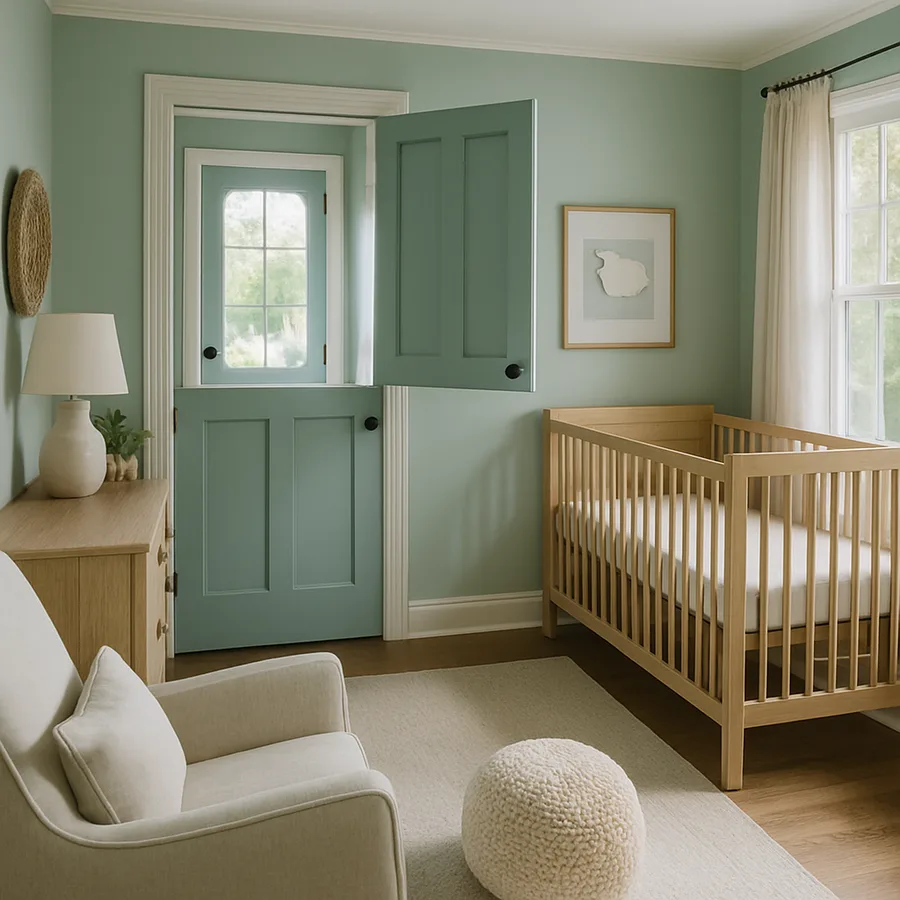
Why a Dutch Door Belongs in Your Nursery
The nursery door is one of those design elements that most parents barely think about, defaulting to whatever standard hollow-core slab came with the house. But the door to your baby's room serves multiple competing functions that a standard door handles poorly. You need to contain a crawling or toddling child safely within the room. You need to maintain airflow and temperature regulation without relying entirely on mechanical systems. You need to monitor your child visually and audibly without entering the room and disrupting sleep. And you want the nursery to look beautiful, because you will spend hundreds of hours in and around this space. A Dutch door -- split horizontally into independent upper and lower halves -- addresses every one of these needs with an elegance that no baby gate, standard door, or half-measure can match.
The concept is centuries old, originating in the Netherlands where farmers used split doors to let light and air into their homes while keeping livestock and children contained. That same principle translates perfectly to the modern nursery. With the lower half latched and the upper half open, you create a physical barrier that keeps a child safely inside the room while allowing unrestricted air circulation, natural light from adjacent rooms, and a clear sightline from the hallway. The American Academy of Pediatrics (AAP) recommends maintaining good air circulation in infant sleeping environments, and a Dutch door provides passive ventilation without the security concerns of a fully open doorway.
From a purely practical standpoint, the Dutch door eliminates the need for an aftermarket baby gate -- those pressure-mounted or hardware-mounted barriers that damage door frames, create tripping hazards for adults, and are universally loathed for their fiddly latches. A Dutch door's lower half is a permanent, beautifully finished barrier that operates with a standard door latch or lock. It is sturdy enough to withstand a determined toddler, attractive enough to complement your nursery design, and functional enough to serve the family for years beyond the baby stage. When the child outgrows the need for containment, the door simply functions as a normal door with both halves latched together.
The aesthetic appeal is the final and perhaps most persuasive argument. A Dutch door adds architectural character to a hallway and creates a charming, storybook quality that resonates with the warmth and whimsy of nursery design. It is a detail that visitors notice immediately and that photographs beautifully for those milestone moments captured in the nursery doorway. Unlike a baby gate, which announces "we have a small child and are managing a hazard," a Dutch door communicates intentional design -- a home where function and beauty are given equal weight.
How Dutch Doors Improve Nursery Airflow and Monitoring
Indoor air quality in a nursery is a legitimate health consideration, not merely a design preference. Babies breathe faster than adults and are more vulnerable to airborne irritants, off-gassing from new furniture and finishes, and the buildup of carbon dioxide in poorly ventilated spaces. The Environmental Protection Agency (EPA) has identified indoor air quality as one of the top five environmental health risks, and nurseries -- often small rooms with new paint, new carpet, new furniture, and closed doors -- are particularly susceptible to poor air circulation. A Dutch door with the upper half open creates a passive ventilation pathway that allows fresh air to circulate continuously without mechanical assistance.
The physics are straightforward: warm air rises and exits through the upper opening while cooler air from the hallway or adjacent rooms flows in at lower levels, creating a natural convection loop. This gentle air exchange reduces the concentration of volatile organic compounds (VOCs), carbon dioxide, and other indoor pollutants without creating the drafts that a fully open door or window might produce. During mild weather, when running the HVAC system is unnecessary, this passive ventilation can maintain comfortable temperatures and fresh air quality throughout the nursery with zero energy cost.
Monitoring is the other major functional advantage. With a standard closed door, parents rely on electronic baby monitors to see and hear their child -- devices that require charging, WiFi connectivity, and often produce the anxiety-inducing false alarms that every parent knows too well. A Dutch door with the upper half open provides direct visual and auditory monitoring from anywhere in the adjacent hallway. You can glance through the opening while walking past, listen for the subtle sounds that precede a full wake-up, and maintain a natural awareness of your child without the mediation of a screen. This does not replace a monitor for nighttime use when the door is fully closed, but during naps and supervised play, it is a simpler, more reliable alternative.
The combination of airflow and monitoring creates a nursery environment that feels open and connected to the rest of the home rather than sealed off and isolated. This matters for the parent's wellbeing as much as the child's. The ability to hear your baby stirring while you work in the kitchen, or to peek into the nursery without opening a creaky door and risking a wake-up, reduces the low-grade vigilance that characterizes early parenthood. Have you ever crept toward a nursery door, hand on the knob, dreading the squeak that might end a hard-won nap? A Dutch door solves that problem entirely.
Choosing the Right Dutch Door: Materials, Sizes, and Hardware
Dutch doors are available in both interior and exterior grades, and for a nursery application, an interior-grade door is the appropriate choice. Interior Dutch doors are lighter, less expensive, and designed for the controlled environment of a home's interior. They are typically constructed from solid wood (poplar, pine, maple, or oak), MDF with a wood veneer, or engineered composites. Solid wood doors offer the best feel, sound dampening, and long-term durability, while MDF-core doors provide a smooth, paintable surface at a lower price point.
Standard interior Dutch doors measure 80 inches tall by 30, 32, or 36 inches wide, matching conventional door frame dimensions. The horizontal split typically falls at 40 to 42 inches from the floor, which is high enough to contain a child through the toddler years while allowing a comfortable sightline over the lower half for most adults. Some manufacturers offer adjustable split heights or custom positioning, which can be worth the premium if you have specific needs -- a shorter lower half for petite parents, or a taller one for an exceptionally determined climber. The Houzz community has extensive discussion threads comparing Dutch door options, dimensions, and real-world nursery installations that are worth reviewing during your research phase.
Hardware selection is critical for both function and safety. The lower half requires a latch that is easy for an adult to operate from both sides but impossible for a young child to manipulate. A standard passage latch with a child-proof cover works well, as does a simple surface bolt positioned at the top of the lower half -- within easy adult reach but well above a toddler's grasp. The upper and lower halves must also lock together when you want the door to function as a single unit, and most Dutch doors include a barrel bolt or flush bolt on the mating edges of the two halves for this purpose. Test the latching mechanism before installation to ensure it operates smoothly and securely.
Hinges deserve attention because a Dutch door places more stress on the hinge system than a standard door. Each half hangs independently, and the lower half in particular will be pushed, pulled, and leaned against by a child many times a day. Use heavy-duty ball-bearing hinges rated for the weight of each half, with three hinges per half for optimal support. Standard lightweight hinges will sag over time, causing the halves to misalign and the latches to bind. The upfront cost difference between standard and heavy-duty hinges is minimal -- typically $10 to $15 per hinge -- but the long-term performance difference is substantial. The Door and Hardware Institute (DHI) recommends ball-bearing hinges for any door that will see heavy daily use, and a nursery Dutch door certainly qualifies.
Style Options: From Farmhouse Charm to Clean Modern Lines
The Dutch door's association with farmhouse and cottage aesthetics is well-earned, but the design is far more versatile than that single style category suggests. A farmhouse-style Dutch door features raised panels, visible hinges in oil-rubbed bronze or black iron, and a painted finish in white, cream, or soft gray. The upper half often includes a window panel -- either clear glass, frosted glass, or a decorative divided-light grid -- that adds visual interest and allows light to pass through even when the door is fully closed. This style integrates naturally into nurseries with shiplap accents, vintage textiles, and warm wood furniture.
For modern and contemporary nurseries, a flat-panel or flush Dutch door in a bold color creates an entirely different effect. Think matte black, deep forest green, dusty rose, or warm terracotta -- colors that make the door a design statement rather than a background element. Minimal hardware in brushed nickel or satin brass completes the modern look, and the absence of raised panels or decorative glass keeps the lines clean and architectural. A modern Dutch door reads as a deliberate design choice, a sculptural element in the hallway that signals thoughtfulness and creativity.
The Scandinavian-inspired Dutch door occupies a middle ground: natural wood finish (typically birch, ash, or light oak) with simple square-edge panels and concealed or minimal hardware. This approach lets the wood grain serve as the decorative element, creating warmth without ornamentation. A clear or light-stain finish on the door paired with white walls and the soft neutrals of a Scandinavian nursery produces a calm, cohesive environment. The Architectural Digest home tours have featured several nurseries where natural-wood Dutch doors serve as the room's defining design element, demonstrating that the door can be the star rather than the supporting player.
Color is perhaps the most powerful styling tool for a nursery Dutch door. Painting the door a color that differs from the hallway walls creates a portal effect -- a visual signal that you are entering a special space. Soft, muted tones like sage, lavender, butter yellow, or robin's egg blue feel appropriate for nurseries without being childish, and they will age well as the room transitions from nursery to toddler room to child's bedroom. Bolder choices like coral, navy, or emerald make a stronger statement and work particularly well in nurseries with otherwise neutral palettes. Whatever color you choose, use a durable semi-gloss or satin paint finish that resists fingerprints, scuffs, and the inevitable sticky handprints that come with toddlerhood.
Installation: DIY Conversion vs. Pre-Hung Options
There are two paths to getting a Dutch door into your nursery: converting an existing standard door or purchasing a pre-hung Dutch door unit that replaces the entire door and frame assembly. Each approach has distinct advantages and trade-offs, and the right choice depends on your skills, budget, and the condition of your existing door frame.
Converting an existing solid-core door is the more affordable option, typically costing $100 to $300 in hardware and materials plus your labor. The process involves removing the door, cutting it horizontally at the desired split height with a circular saw guided by a straight edge, adding a shelf or astragal (the overlapping strip) where the two halves meet to prevent drafts and light gaps, installing new hinges for each half, and adding latching hardware. This approach preserves the existing door frame and trim, maintaining visual consistency with the rest of the home's doors. However, it requires confidence with power tools and precise measuring -- an uneven cut or poorly aligned hardware will be visible every day and cannot be easily corrected.
Critical safety note: only solid-core or solid-wood doors should be converted. Hollow-core doors -- the lightweight, inexpensive doors found in most modern construction -- have a cardboard honeycomb interior that provides no structural integrity at the cut line. A converted hollow-core door will sag, warp, and potentially break apart under the stress of daily use. If your nursery currently has a hollow-core door, replacement rather than conversion is the appropriate path. You can identify a hollow-core door by its lightweight feel (typically under 25 pounds) and the hollow sound it produces when knocked.
Pre-hung Dutch door units are the premium option, ranging from $400 to $1,500 depending on material and manufacturer. Companies like Simpson Door, Jeld-Wen, and Rejuvenation offer interior Dutch doors in a range of styles and sizes, delivered as a complete assembly with the door halves, frame, hinges, and basic hardware included. Installation involves removing the existing door and frame, fitting the new pre-hung unit into the rough opening, shimming and leveling, and securing with screws. A competent DIYer can complete this installation in three to four hours, and a professional carpenter can typically do it in under two. The advantage of pre-hung units is precision -- every component is factory-fitted to work together, eliminating the alignment challenges of a field conversion.
Safety Considerations Every Parent Should Know
While Dutch doors are inherently safer than open doorways for child containment, there are specific safety details that must be addressed in a nursery installation. The gap between the upper and lower halves when both are closed should be minimal -- ideally less than a quarter inch -- to prevent small fingers from being inserted and pinched. An astragal molding or T-shaped weatherstrip on the mating edges of the two halves covers this gap and also reduces noise and light transfer when the door is fully closed for nighttime sleep.
The locking mechanism that joins the two halves together must be robust and reliable. When the Dutch door functions as a single unit (during nighttime, for example), it should latch as securely as any standard door. A surface-mounted barrel bolt at the top of the lower half, engaging into the bottom edge of the upper half, provides a strong mechanical connection. Some parents add a second bolt at the bottom of the mating edge for extra security. The Consumer Product Safety Commission (CPSC) does not have specific standards for Dutch doors, but the general principles of child safety hardware apply: latches should require adult-level dexterity to operate, and there should be no pinch points, sharp edges, or climbable hardware accessible to a child.
The lower half's height determines how long the door functions effectively as a containment barrier. Most children can climb over a 42-inch barrier by age three to four, at which point the Dutch door transitions from a containment device to an airflow and monitoring feature. If your child is an early and enthusiastic climber, consider specifying a slightly taller lower half -- 44 to 46 inches -- which extends the containment window by a year or more. This is a customization easily accommodated in a pre-hung order or a DIY conversion. Is your child already showing climbing tendencies that might influence your height choice?
Finally, if the upper half includes a glass panel, the glass must be tempered safety glass that breaks into small, relatively harmless pieces rather than dangerous shards. Building codes require tempered glass in all door applications, but if you are converting an existing door and adding glass, verify that your glass supplier provides tempered material with the proper safety certification. Frosted or reeded glass patterns offer privacy while still transmitting light, and they obscure the interior of the nursery from hallway view during nighttime feedings or changes -- a small but appreciated detail for privacy-conscious parents.
An Investment in Daily Life That Lasts for Years
A Dutch door is one of those rare home improvements that delivers both immediate practical benefits and long-term aesthetic value. In the nursery, it solves real problems -- airflow, monitoring, child containment, noise management -- with a solution that is more beautiful, more durable, and more functional than the alternatives. No baby gate matches its structural integrity. No standard door provides its ventilation flexibility. And no other single element adds as much architectural character to a hallway for the cost.
The investment grows in value as your child does. The nursery becomes a toddler's room, then a child's bedroom, and the Dutch door continues to serve each stage. A preschooler's room with the top half open stays connected to the household while providing a sense of personal space. An older child can close both halves for privacy during homework or reading. When the children eventually leave home and the room becomes a guest room or home office, the Dutch door remains a charming, functional feature that adds character and value to the home. According to the National Association of Realtors (NAR), unique architectural details like Dutch doors are among the features that help homes stand out in competitive real estate markets, as they signal a level of care and customization that buyers remember.
The broader lesson of the Dutch door is that function and beauty are not competing priorities in nursery design -- they are complementary ones. The most satisfying solutions in any room are those that address practical needs through beautiful means, and the Dutch door exemplifies this principle. It does not ask you to choose between keeping your child safe and having a lovely home. It delivers both, simultaneously, every single day.
Measure your nursery door frame this week and request samples or quotes from at least two Dutch door suppliers -- once you see the options available in your size and style preference, the decision to move forward will be easy.
More Articles You May Like



Comments
Post a Comment