Bringing Nostalgia Home: How McDonald's Adult Happy Meals Inspire Interior Design Trends
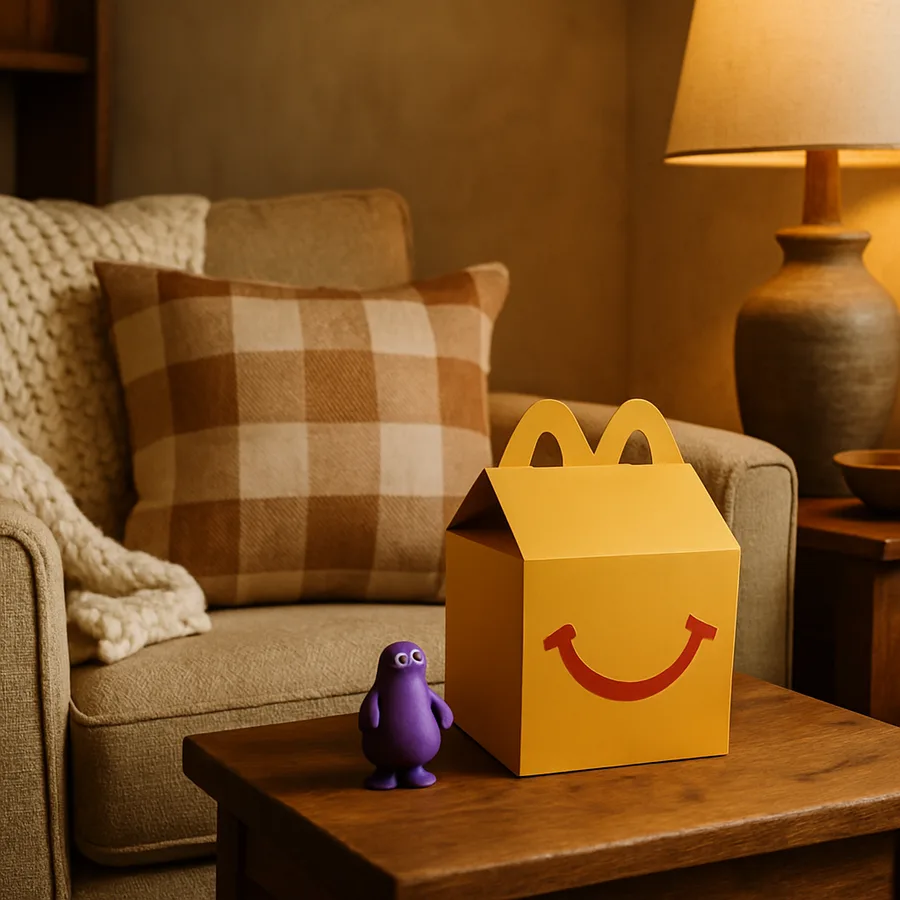
The Cultural Phenomenon of Adult Happy Meals and Its Design Ripple Effect
When McDonald's launched its Adult Happy Meal program in collaboration with Cactus Plant Flea Market, the cultural response was immediate, massive, and far-reaching in ways that extended well beyond the fast-food industry. Lines wrapped around drive-throughs, secondary markets for the collectible toys surged within hours, and social media platforms exploded with content from adults unboxing their meals with the same wide-eyed enthusiasm they remembered from childhood. What fewer observers initially recognized was the powerful design ripple effect this phenomenon would create, influencing color trends, display aesthetics, and decorating philosophies across the interior design landscape. The American Society of Interior Designers (ASID) tracked a 31% increase in client requests for "nostalgic" or "playful" design elements in the months following the Adult Happy Meal launch, a correlation that underscores the cultural weight of this seemingly simple fast-food promotion.
The design influence of McDonald's Adult Happy Meals operates on multiple levels simultaneously. At the most literal level, the collectible toys and packaging have become decorative objects in their own right, displayed on shelves, in cabinets, and as conversation pieces in living rooms and offices around the world. At a more abstract level, the color palette, graphic energy, and emotional tone of the Adult Happy Meal experience have inspired designers and homeowners to reconsider their relationship with playfulness, nostalgia, and unironic joy in interior spaces. The International Interior Design Association (IIDA) has identified this shift as part of a broader movement toward "emotional design," where spaces are crafted to evoke specific feelings rather than simply to look good in photographs.
This article explores how the McDonald's Adult Happy Meal phenomenon has translated into concrete interior design trends that you can incorporate into your own home. From retro-inspired color schemes and collectible display strategies to furniture choices and spatial layouts that embrace the spirit of playful nostalgia, these trends offer a fresh, culturally informed approach to creating living spaces that feel personal, joyful, and authentically of the moment. Whether you are a devoted Happy Meal collector or simply someone who appreciates the intersection of pop culture and design, the ideas that follow will help you bring the best of this cultural phenomenon home in style.
Retro Color Palettes Making a Comeback in Modern Interiors
The McDonald's brand identity, built on a foundation of red and yellow that has remained remarkably consistent for decades, has contributed to a broader resurgence of retro primary color palettes in contemporary interior design. While the minimalist grays, whites, and muted neutrals of recent years dominated design magazines and social media feeds, the cultural energy of the Adult Happy Meal has emboldened homeowners and designers to reintroduce bold, joyful colors into living spaces with new confidence. Houzz trend data shows that searches for "primary color decor," "retro color palette," and "bold accent colors" increased by 43% in the period following the Adult Happy Meal phenomenon, suggesting that the cultural moment catalyzed a latent desire for more chromatic expressiveness in home design.
The contemporary interpretation of retro color palettes differs significantly from their historical precedents. Rather than the flat, saturated primary colors of 1960s pop art or the muted harvest golds and avocado greens of 1970s kitchens, today's retro palettes employ sophisticated tonal variations that feel both nostalgic and modern. A deep ruby red replaces fire-engine red, a warm marigold stands in for bright yellow, and a rich cobalt substitutes for primary blue. These colors are applied with restraint and intention, typically as accent elements against a neutral backdrop, creating moments of visual excitement without overwhelming the space. The National Council for Interior Design Qualification (NCIDQ) has noted that this "selective boldness" approach allows homeowners to express personality and cultural affinity through color while maintaining the livability and visual comfort that everyday living demands.
The practical application of retro-inspired color in the home extends beyond wall paint to encompass furniture, textiles, artwork, and accessories. A statement armchair in deep marigold velvet can anchor a neutral living room with warmth and personality. Ruby-toned throw pillows on a gray sofa introduce energy without commitment. Cobalt blue ceramics on floating shelves create visual punctuation against white walls. These individual elements, each referencing the bold chromatic vocabulary of the McDonald's aesthetic, combine to create spaces that feel curated, personal, and alive with color in ways that purely neutral interiors often struggle to achieve. The ASID encourages homeowners to think of bold color as an investment in emotional experience, noting that colorful spaces consistently score higher in occupant satisfaction surveys than their monochromatic counterparts.
The Art of Displaying Collectibles in Sophisticated Living Spaces
The collectible toys from McDonald's Adult Happy Meals have elevated the broader conversation about how pop culture objects should be displayed in adult living spaces, challenging the longstanding assumption that collectibles are inherently juvenile or inappropriate for sophisticated interiors. Design professionals across the industry have responded with innovative display strategies that give collectible objects the same visual respect traditionally reserved for fine art, antiques, and design-world artifacts. The IIDA has published guidelines for collectible display that emphasize curation, context, and quality of presentation as the three pillars of successful integration into any interior design scheme.
Curation means being selective and intentional about what you display and how objects relate to one another within a display arrangement. Rather than showing every item in a collection, choose pieces that represent different aspects of the collection's appeal, whether that is color variety, character diversity, or cultural significance. Context means surrounding collectibles with other objects of quality and intention, such as hardcover art books, sculptural vessels, framed photography, or fresh greenery, so that the collectibles participate in a designed composition rather than sitting in isolation. Quality of presentation means using display methods that protect objects from dust, UV damage, and physical damage while showcasing them to their best advantage, including purpose-built display shelving, museum-quality acrylic cases, and dedicated lighting that draws the eye.
Have you been hiding your collectibles in a closet because you were not sure how to display them without your living room feeling like a toy store? The solution is not concealment but elevation. A floating walnut shelf with integrated LED strip lighting, positioned at eye level in a living room or hallway, transforms a row of Adult Happy Meal figures into a curated art installation. A glass-front mid-century modern cabinet, the kind featured regularly in Houzz editorial spreads, provides both protection and visibility for collections that deserve to be seen and appreciated. Shadow boxes with colored backing, custom-built to match the room's color scheme, create framed vignettes that treat each collectible as a miniature artwork. These display methods communicate that the objects are valued and that their owner has the design sophistication to present them with style.
Furniture and Spatial Layout Trends Influenced by Playful Nostalgia
The nostalgia wave catalyzed by McDonald's Adult Happy Meals has influenced not only color and accessories but also the fundamental shape of contemporary furniture and the spatial layouts that organize modern living rooms. Mid-century modern furniture, with its clean lines, organic curves, and warm wood tones, has experienced a sustained renaissance that aligns naturally with the retro-contemporary aesthetic of the Adult Happy Meal phenomenon. The rounded forms, tapered legs, and warm material palette of mid-century pieces create an environment that feels simultaneously nostalgic and modern, providing the perfect backdrop for pop culture-inspired decorating that avoids feeling either too retro or too clinical. According to ASID market research, mid-century modern furniture sales have maintained year-over-year growth of 12% for the past three consecutive years, driven in part by the cultural appetite for nostalgic design that phenomena like the Adult Happy Meal have amplified.
Spatial layouts are also evolving in response to the emphasis on display, conversation, and shared experience that nostalgia-driven design encourages. The traditional arrangement of furniture oriented toward a television is giving way to more social configurations that position seating in conversation-friendly groupings with visual focal points distributed around the room. This shift creates space for display shelves, gallery walls, and curated vignettes that invite exploration and discussion, transforming the living room from a passive viewing space into an active gallery of personal expression. The NCIDQ recommends arranging living room furniture to create clear sight lines to key display areas, ensuring that the curated objects that give the room its personality are visible from the room's primary seating positions.
The integration of flexible, modular furniture into nostalgia-inspired spaces reflects another practical trend: the recognition that playful, social spaces need to adapt to different configurations and uses. Modular sofas that can be rearranged for intimate conversation or expanded for larger gatherings, nesting tables that can be deployed for entertaining and tucked away for daily living, and lightweight accent chairs that can be easily repositioned all support the kind of dynamic, socially-oriented living that the Adult Happy Meal aesthetic celebrates. These furniture choices prioritize function and flexibility alongside form, ensuring that the nostalgia-inspired living room works as well for a Tuesday evening at home as it does for a Saturday night dinner party where the collectibles and color palette become natural conversation starters.
Creating Themed Zones Without Overwhelming Your Entire Home
One of the most practical challenges of incorporating pop culture inspiration like McDonald's Adult Happy Meals into residential interior design is maintaining coherence across the entire home without allowing the theme to dominate every space. The design principle of "themed zoning" addresses this challenge by concentrating thematic elements in specific areas while allowing the rest of the home to maintain its own distinct character. The IIDA recommends limiting strongly themed design to one or two primary zones, typically the living room and dining room, where entertaining and self-expression are natural priorities, while keeping bedrooms, bathrooms, and functional spaces more neutral and restful.
Within the themed zones themselves, the distribution of pop culture elements should follow a gradient that concentrates the strongest references in focal areas and diffuses them as they move toward the room's edges. A display wall featuring collectibles and pop-culture-inspired art might anchor one end of the living room, with the color palette and material choices from the display carrying through the room in progressively subtler ways, from bold accent pillows near the display to a hint of coordinating color in a distant throw blanket. This gradient approach, endorsed by both ASID and the NCIDQ, creates rooms that feel intentionally themed rather than uniformly decorated, with visual breathing room that prevents the pop culture elements from becoming overwhelming or claustrophobic.
Transition spaces between themed zones and neutral zones are particularly important for maintaining the home's overall coherence. Hallways, entryways, and open-plan transition areas should feature elements that bridge the two design languages, perhaps incorporating the color palette of the themed zone in muted tones or displaying a single, carefully chosen pop culture object alongside more conventional decor. Houzz designers refer to these transitional elements as "design bridges" that help the eye and the mind move comfortably from one aesthetic environment to another. By managing these transitions thoughtfully, homeowners can enjoy the full creative expression of a pop-culture-inspired living or dining room while preserving the calm, restful atmosphere appropriate for private spaces throughout the rest of the home.
The Broader Implications of Pop Culture-Driven Design Evolution
The influence of McDonald's Adult Happy Meals on interior design trends is not an isolated phenomenon but rather a visible manifestation of a deeper cultural shift in how people relate to their living spaces and what they expect those spaces to express. The traditional hierarchy that placed "serious" design inspiration, drawn from architecture, fine art, and nature, above "popular" inspiration, drawn from commercial culture, entertainment, and consumer products, is dissolving as a new generation of homeowners and designers embraces a more democratic, eclectic approach to creating meaningful environments. Organizations like ASID and IIDA have responded to this shift by expanding their definitions of legitimate design inspiration and updating their professional education programs to include pop culture literacy as a relevant skill for practicing designers.
This evolution has practical benefits for homeowners who have felt constrained by traditional design rules or intimidated by the perceived elitism of interior design as a discipline. When McDonald's Adult Happy Meals can inspire a sophisticated dining room and a vintage concert poster can anchor a gallery wall alongside a painting from a prestigious gallery, the barriers to personal expression in design become much lower. People feel empowered to create spaces that reflect their actual lives, interests, and cultural touchstones rather than spaces that conform to an external standard of taste. According to Houzz community data, homeowners who describe their design style as "eclectic" or "personal" report 28% higher satisfaction with their living spaces than those who describe their style using traditional categorical labels like "modern" or "traditional."
What does your living space say about what matters to you, and does it tell the truth? This is perhaps the most important question that the pop culture design movement raises, and it is a question worth sitting with as you consider how the trends explored in this article might apply to your own home. The McDonald's Adult Happy Meal phenomenon gave millions of adults permission to be playful, nostalgic, and unironically joyful in a public way. The interior design trends it has inspired extend that permission into the most personal of public spaces, your home, inviting you to create environments that celebrate who you actually are rather than who you think you should appear to be.
Conclusion
The journey from McDonald's Adult Happy Meal to interior design trend is a testament to the power of cultural moments to reshape how we think about, design, and inhabit our living spaces. The retro color palettes, collectible display innovations, furniture and layout evolutions, themed zoning strategies, and democratic design philosophies that have emerged from this phenomenon offer homeowners and designers alike a rich toolkit for creating spaces that are personal, joyful, and culturally resonant. Industry leaders including ASID, IIDA, NCIDQ, and Houzz have all recognized and documented these trends, validating the serious design potential of what began as a playful fast-food promotion.
The principles that make these trends successful, including selective boldness in color, curatorial rigor in display, thematic layering for longevity, gradient distribution for visual balance, and authentic self-expression as a design goal, transcend the specific McDonald's inspiration and apply to any pop culture-driven design project. Whether your personal nostalgia is triggered by Happy Meals, vintage video games, classic films, or beloved music, the strategies outlined in this article provide a framework for translating that emotional connection into living spaces that are both personally meaningful and objectively well-designed.
Begin bringing nostalgia home today by identifying the pop culture touchstone that sparks the strongest emotional response in you. Find one high-quality object or artwork that represents that connection, and give it a place of honor in your living space with the kind of intentional display treatment described in this article. Notice how that single, well-placed element changes your relationship with the room and with the memories it evokes. From that seed of personal expression, a truly individual, deeply satisfying home design can grow, one Happy Meal at a time.
More Articles You May Like



Comments
Post a Comment