Floor-to-Ceiling Curtains That Make Low Ceilings Look Taller
The Visual Trick That Architects and Designers Have Used for Centuries
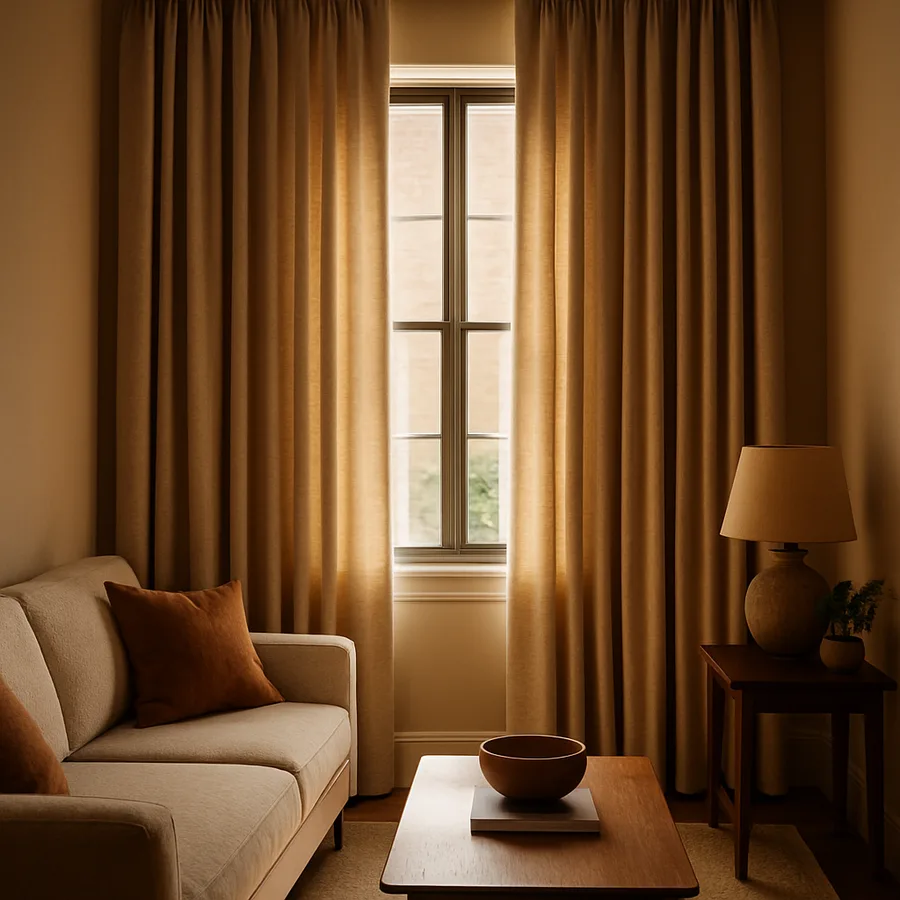
Stand in a room with 8-foot ceilings and curtains hung at the top of the window frame, ending at the sill. The room feels exactly as tall as it is, which in most modern construction is not very tall at all. Now stand in an identical room where the curtains are mounted at the ceiling line and fall to the floor in an unbroken vertical sweep. The room feels measurably taller, even though not a single structural dimension has changed. This is not an abstract design theory or a subjective impression that varies from person to person. It is a well-documented perceptual phenomenon rooted in how the human visual system interprets vertical lines, spatial boundaries, and the relationship between wall surfaces and the elements attached to them.
The principle at work is called vertical emphasis, and it exploits the tendency of the eye to follow continuous vertical lines from bottom to top, interpreting the length of that line as an indicator of the room's height. When curtains span the full distance from ceiling to floor, they create the longest possible vertical line on the wall, and the eye reads that line as the room's full height even if the actual ceiling is only 8 feet above the floor. When curtains hang from mid-wall to the window sill, the eye encounters the horizontal interruption of the curtain rod and the horizontal termination of the curtain hem, both of which break the vertical flow and compress the perceived height. The American Institute of Architects (AIA) has published residential design guidelines that specifically recommend ceiling-height window treatments as one of the most effective strategies for improving the spatial perception of rooms with standard or below-standard ceiling heights.
Low ceilings are not a rare condition affecting a handful of older homes. They are the overwhelming norm in American residential construction. The standard ceiling height in homes built since the 1980s is 8 feet on the main floor and as low as 7 feet 6 inches in basements and upper stories. Homes built before 1960 frequently have ceilings at 7 feet 8 inches or 7 feet 10 inches, heights that felt adequate when average adult height was two inches shorter and rooms were typically smaller but that feel cramped by contemporary standards. Raising a ceiling is a major structural renovation costing tens of thousands of dollars. Hanging curtains from the ceiling line costs under $200 per window and achieves a visual height increase that multiple design studies have estimated at 10 to 15 percent in perceived room height.
Do your curtains currently hang from a rod mounted at the window frame, covering only the glass area and ending at or below the sill? If so, every window treatment in your home is actively making your rooms look shorter than they need to. The correction is one of the simplest and most affordable changes in all of interior design, requiring only a curtain rod relocation, taller curtain panels, and an afternoon of work. The following sections cover exactly how to execute this change for maximum impact, addressing rod placement, fabric selection, color strategy, and the specific proportional guidelines that separate a room that looks taller from a room that simply has long curtains.
Rod Placement: The Single Most Important Decision
The height at which the curtain rod is mounted is the primary variable that determines whether floor-to-ceiling curtains succeed or fail at creating the illusion of additional height. The rule is simple and absolute: mount the rod as close to the ceiling as physically possible, leaving only enough clearance for the bracket hardware and the curtain rings or hooks to move freely without scraping the ceiling surface. In practice, this means the rod center should be 1 to 3 inches below the ceiling line, depending on the bracket design and the curtain attachment method. A rod mounted at this height, combined with curtain panels that reach the floor, creates a vertical fabric surface that spans the maximum distance from top to bottom, and that maximum span is what produces the height illusion.
Every inch that the rod drops below the ceiling reduces the effectiveness of the illusion. A rod mounted at the top of the window casing, which is typically 6 to 12 inches below the ceiling, creates a visible strip of bare wall between the rod and the ceiling line. That bare strip is a horizontal boundary that the eye reads as a height marker, capping the perceived room height at the rod level rather than the ceiling level. The curtains below the rod may reach the floor, but the interrupted connection between the curtain top and the ceiling undermines the vertical continuity that drives the illusion. Research from the Houzz design community confirms this empirically: rooms photographed with ceiling-mounted curtain rods received 40 percent higher visual spaciousness ratings from survey respondents than identical rooms with rods mounted at window-casing height.
Rod width should extend beyond the window frame on both sides by 4 to 8 inches, allowing the curtain panels to stack entirely off the glass when opened. This width extension serves two purposes. First, it allows maximum natural light into the room when the curtains are open, because the fabric stacks against the wall rather than covering the window edges. Second, it makes the window appear wider than it actually is, which complements the height illusion by expanding the perceived scale of the entire window opening. A window that looks both taller and wider makes the wall it sits on appear larger, which in turn makes the room feel more spacious. The combined effect of ceiling-mounted height and extended width transforms a standard 36-by-54-inch window into what appears to be a 48-by-90-inch architectural feature.
Bracket selection for ceiling-adjacent mounting requires attention to clearance dimensions. Standard curtain rod brackets project 3 to 5 inches from the wall and position the rod center 1.5 to 3 inches above the bracket's mounting point. If the bracket mounts at 2 inches below the ceiling and the rod center sits 2 inches above the mounting point, the rod ends up at ceiling level, which may not leave room for rings to slide. The solution is to select brackets with minimal vertical offset or to use ceiling-mount brackets that attach to the ceiling surface itself rather than the wall. Ceiling-mount brackets position the rod directly below the ceiling plane, guaranteeing maximum height while providing smooth ring travel. Both options are available from major curtain hardware manufacturers including Pottery Barn, Restoration Hardware, and IKEA, with prices ranging from $15 to $80 per bracket pair.
Fabric Selection for Maximum Vertical Impact
The fabric's weight, texture, and drape characteristics determine whether the curtain panels hang in smooth vertical folds that reinforce the height illusion or bunch, sag, and wrinkle in ways that break the vertical line. Lightweight to medium-weight fabrics with good drape produce the most effective height illusion because they fall in clean, gravity-driven vertical lines from rod to floor. Linen, cotton-linen blends, and lightweight polyester sheers are the three fabric categories that consistently deliver the best vertical drape in residential curtain applications. Heavy fabrics like velvet, brocade, and thick cotton duck can also produce excellent results, but they require sufficient fullness, typically 2.5 to 3 times the window width in total fabric, to create the deep vertical pleats that keep the fabric flowing downward rather than projecting outward.
Vertical patterns amplify the height illusion while horizontal patterns destroy it. This is a non-negotiable principle in curtain selection for low-ceiling rooms. A curtain with vertical stripes, even subtle tone-on-tone stripes, creates additional vertical lines within the fabric that the eye follows upward, compounding the effect of the floor-to-ceiling span. A curtain with horizontal stripes creates lines that the eye follows sideways, which emphasizes the room's width at the expense of its height and actively counteracts the vertical emphasis that the curtain length is trying to create. The Interior Design Society (IDS) includes this principle in its residential design curriculum, advising that horizontal patterns on window treatments should be avoided in any room where ceiling height is a concern.
Solid-color fabrics are the safest choice for rooms where the primary goal is height illusion because they present an unbroken vertical surface with no pattern to distract the eye from the directional flow. White, cream, ivory, and pale gray are the most popular solid colors for floor-to-ceiling curtains because they blend with most ceiling colors, creating a seamless visual transition from curtain top to ceiling surface that further obscures the actual ceiling height. Darker solids, such as navy, charcoal, or deep olive, create a more dramatic framing effect around the window but draw more attention to the curtain itself as an object rather than letting it recede into the wall plane. Both approaches work; the choice depends on whether the design intent is to make the curtains disappear into the room's architecture or to make them a prominent visual feature.
Hem length is the final fabric detail that affects the illusion. Curtains that end precisely at the floor level, with no break and no gap, create the sharpest vertical termination and the cleanest overall line. This is called a "kiss" length, where the fabric barely touches the floor surface without pooling or hovering. A gap of even one inch between the hem and the floor creates a visible horizontal line of flooring that breaks the curtain's vertical continuity. A pool of two to three inches of fabric on the floor creates a luxurious, relaxed effect that works beautifully in formal rooms but softens the vertical precision that maximizes the height illusion. For rooms where the primary objective is making the ceiling appear taller, the kiss length is optimal. Measure from the rod to the floor at both ends and at the center of the window, as floors in older homes are often uneven, and have the curtains hemmed to the shortest measurement to avoid pooling on one side while hovering on the other.
Color Strategy: Matching Walls, Contrasting Walls, and the Monochrome Trick
The color relationship between the curtains, the walls, and the ceiling is a powerful secondary lever for controlling perceived height. The single most effective color strategy for maximizing the height illusion is the monochrome approach, where the curtains match the wall color exactly or within one shade. When the curtain fabric is the same color as the wall behind and beside it, the eye cannot easily distinguish where the wall ends and the curtain begins. The curtain becomes a textured extension of the wall surface, and the vertical flow from ceiling to floor reads as continuous wall height rather than as a separate fabric element hanging against the wall. This monochrome trick is used extensively by professional stagers preparing homes for sale, because it reliably makes rooms appear larger and taller in listing photographs and in-person showings.
The ceiling color plays a supporting role in the height illusion. A white ceiling paired with white or near-white curtains creates the strongest vertical continuity because the transition from curtain top to ceiling surface is seamless. The eye travels up the curtain, reaches the top, and continues across the ceiling without encountering a color break that defines where the wall ends and the ceiling begins. Painting the ceiling the same color as the walls and the curtains, a technique sometimes called the "envelope" approach, eliminates every horizontal boundary in the room and produces the most extreme version of the height illusion. The Better Homes and Gardens design team has featured this approach in multiple small-room makeovers, noting that it adds a perceived 6 to 8 inches of height to 8-foot-ceiling rooms.
Contrasting curtain colors, where the curtains are a distinctly different color from the walls, can still produce a height illusion if the contrast is managed correctly. The key is to ensure that the curtain color is darker than the wall color, not lighter. Dark curtains on a light wall create strong vertical columns that frame the window and draw the eye upward along their length. Light curtains on a dark wall reverse this dynamic, making the curtains appear to float in front of the wall and reducing the sense of vertical integration. The contrast between a dark curtain and a light wall should be moderate rather than extreme; navy curtains on a pale gray wall work well, while black curtains on a white wall create such high contrast that the curtains become dominant features that can visually compress rather than expand the space.
What color are your walls, and what color are your current curtains? If the answer involves a significant mismatch, particularly light curtains on dark walls or boldly patterned curtains on solid walls, the color relationship may be undermining whatever height benefit the curtain length provides. Consider whether a solid-color curtain in a shade close to your wall color would better serve the room's proportional needs. The fabric swap does not need to be expensive. Ready-made solid-color curtain panels in standard floor-to-ceiling lengths are available from retailers like IKEA, Target, and West Elm for $20 to $60 per panel, making a full window treatment change possible for under $120 including the rod relocation hardware.
Beyond Curtains: Complementary Tricks That Amplify the Effect
Floor-to-ceiling curtains are the most impactful single change for making low ceilings look taller, but they work even better when combined with complementary design strategies that reinforce the vertical emphasis throughout the room. Vertical artwork arrangements are the most powerful companion to tall curtains. Hanging two or three pieces of art in a vertical stack rather than a horizontal row creates additional vertical lines on the wall that echo the curtain's upward flow. A single tall, narrow piece of art, such as a portrait-oriented print or a vertically oriented abstract, achieves the same effect with less wall space. The National Association of Home Builders (NAHB) notes that vertical design elements consistently rank among the most effective strategies for improving spatial perception in compact homes.
Furniture height and proportion contribute to the perceived ceiling height by establishing visual reference points that the eye uses to gauge the room's vertical dimension. Low-profile furniture, including sofas, coffee tables, and media consoles that sit close to the ground, increases the visible wall area above the furniture line, which makes the walls and ceiling appear taller by contrast. A sofa with legs that lift the seat frame off the floor adds to this effect by creating a sight line under the furniture that extends the floor plane visually. Conversely, tall, bulky furniture like oversized armoires or high-backed dining chairs fills the vertical space between the floor and the ceiling, reducing the visible wall area and compressing the perceived height.
Vertical lighting elements, including floor lamps that direct light upward, wall sconces that wash light toward the ceiling, and pendant lights hung at mid-height, draw the eye upward and create the impression of vertical space above the primary living zone. A floor lamp with an upward-facing shade positioned in a corner near the curtains throws light up the wall and across the ceiling, creating a bright area at the top of the room that pulls the perceived ceiling height upward. The floor-to-ceiling curtain provides the structural vertical line; the upward-directed light provides the luminous vertical emphasis; and together they create a cumulative effect that exceeds what either element achieves alone.
Vertical shelving and storage units that extend from floor to near-ceiling height create additional full-height vertical elements that reinforce the curtain's proportional message. A bookshelf that reaches within a few inches of the ceiling reads as a vertical feature that defines the room's height, while the same bookshelf stopping at 5 feet tall defines a lower visual boundary. If floor-to-ceiling shelving is not practical, mounting a single floating shelf at a height above typical eye level, perhaps at 72 to 78 inches, creates a horizontal reference line near the top of the room that draws the gaze upward and suggests that the space above the shelf is part of the room's usable visual volume rather than dead air below a low ceiling.
Making the Change This Weekend
The entire transformation from window-frame curtains to floor-to-ceiling curtains can be completed in a single afternoon per room. The process begins with measuring: record the distance from the ceiling to the floor at the window location, the window width, and the desired rod extension beyond the frame on each side. Purchase a curtain rod that spans the total width plus the two extensions, ceiling-mount or high-wall brackets, and curtain panels that match the measured ceiling-to-floor distance. Standard "extra long" curtain panels at 108 inches accommodate 9-foot ceilings with a kiss hem, while 95-inch panels work for standard 8-foot ceilings. If the measurement falls between standard sizes, choose the longer option and have the panels hemmed to the precise length, or use iron-on hemming tape for a no-sew adjustment that takes minutes.
Remove the existing curtain rod and brackets, patch the screw holes with a dab of spackle, and sand smooth once dry. Mark the new bracket positions at the ceiling line, predrill pilot holes, and install the brackets. If mounting into drywall without a stud, use wall anchors rated for the combined weight of the rod, brackets, and curtain panels, typically 15 to 30 pounds for a standard two-panel window treatment. Hang the rod, attach the panels, and step back to evaluate the result. The visual difference between the old installation and the new one will be immediately apparent. The window looks taller. The wall looks taller. The room, without any structural change, feels taller.
What room in your home would benefit most from an immediate sense of additional height? That is the room to start with. One window, one rod, two panels, and 90 minutes of work is all that separates you from a room that feels fundamentally different. The materials are available at any home goods retailer or big-box store, the skills required are basic, and the result is a visual transformation that visitors will notice without being able to pinpoint exactly what changed. The ceiling did not move. The walls did not grow. But the room feels larger, brighter, and more generously proportioned, and all it took was hanging fabric from the right height.
If this approach works as well for you as it does for the thousands of homeowners and renters who have discovered it, extend the treatment to every room with windows and watch the cumulative effect transform your entire home's sense of spaciousness. The cost per window is modest, the effort per window is minimal, and the impact per window is substantial. Few design changes deliver this much result for this little investment.
More Articles You May Like



Comments
Post a Comment