Cozy Reading Chair and Ottoman Pairings for a Personal Library
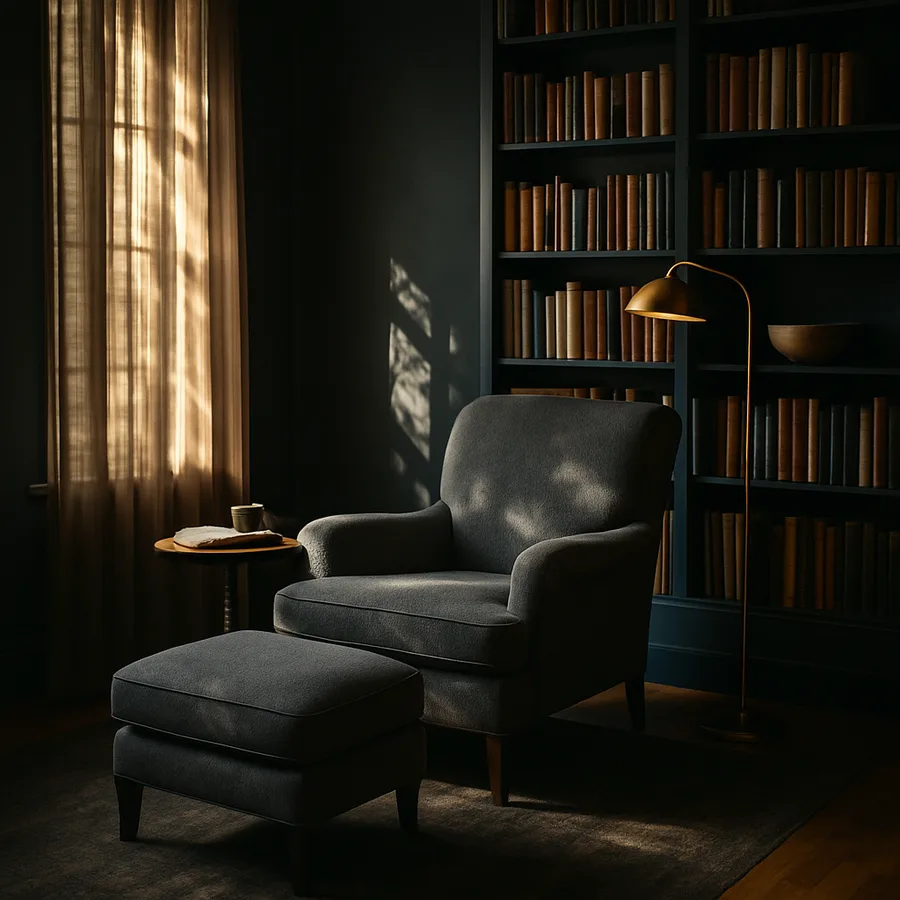
The chair is where your library actually happens. You can admire the bookshelves from across the room, you can commission the finest rolling ladder, you can specify beautiful layered lighting, but reading, the actual act you are building the room for, takes place in a single piece of furniture that you will occupy for thousands of hours over the life of the home. A well chosen reading chair and ottoman pairing is therefore not a decorative afterthought but the functional heart of the library, and it deserves the same careful consideration you gave to the millwork.
This guide walks through the decisions that make the difference between a chair you love and a chair that looks good but quietly disappoints. We will cover ergonomics, frame construction, upholstery choices, the vexing question of ottoman sizing, and how to style a chair so it feels inviting without tipping into staged. The goal is a pairing that draws you in, holds you comfortably for hours, and ages beautifully rather than wearing out in a decade.
Ergonomics: The Numbers That Actually Matter
A comfortable reading chair is comfortable because of measurable dimensions, not because of vague luxury. The seat height should be between sixteen and eighteen inches from the floor for most adults, low enough to let you curl up without feeling perched and high enough that getting out of it does not require a small struggle. The seat depth matters even more, and the right depth depends entirely on your height. Readers between five feet two and five feet eight typically want a seat depth of twenty to twenty-two inches, while taller readers may need twenty-four inches or more to avoid feeling unsupported behind the knees.
The backrest angle is where many otherwise attractive chairs fail. A backrest pitched too upright, common in formal dining-influenced designs, forces you to hold yourself up actively, which becomes tiring within thirty minutes. A backrest pitched too far back, common in contemporary lounge chairs, pushes your book too far from your face and produces neck strain as you tilt forward to read. The sweet spot for reading is roughly 100 to 110 degrees from the seat, slightly reclined but still supporting your natural upright posture. Have you ever noticed that some chairs feel right from the first moment? That instant rightness is almost always a matter of these angles being properly tuned for human proportions.
The American Society of Interior Designers and ergonomic research from various furniture manufacturers converge on the importance of lumbar support in reading chairs intended for long sessions. A chair with a subtle lumbar curve or an appropriately placed cushion reduces back fatigue dramatically compared to a flat backed design. According to research cited by the American Society of Interior Designers, roughly 62 percent of reported reading discomfort in home environments traces to inadequate lumbar support rather than any other factor, which makes this specification worth protecting even when aesthetic preferences might push another direction.
Classic Silhouettes: Wingback, Club, Chesterfield, and Slipper
Certain chair silhouettes have persisted for centuries because they solve the reading problem elegantly. The wingback chair originated as a drafty parlor chair designed to shelter the sitter from cold air and firelight, but its high back and side wings also create an acoustic and visual cocoon that readers find profoundly relaxing. The wings cut peripheral visual distractions and block some ambient sound, which makes concentration easier and explains why wingback chairs have been reading chairs of choice for three hundred years.
The club chair, with its low rolled arms and deep seat, offers a more relaxed posture suited to novel reading rather than technical study. Clubs are typically shorter in the back than wingbacks, which makes them feel less formal and more conducive to a curl-up posture. A traditional English club chair pairs with a generous ottoman to create a horizontal lounging configuration that nothing else quite replicates. The Chesterfield, with its tufted back and rolled arms of equal height, is a related form with a more formal bearing and often a tighter seat that suits upright reading.
The slipper chair, armless and lower to the ground, is a less conventional choice that nonetheless works beautifully in tight library corners or as a secondary seating option. Without arms, the slipper chair gives more freedom of posture, and its lower seat encourages a cross legged or tucked leg position that some readers find ideal. Architectural Digest has documented libraries using each of these silhouettes as their primary reading chair, and the lesson across the examples is that the silhouette must match the reader's actual posture habits rather than being chosen purely for visual appeal. What position do you naturally settle into when you read for two hours? That honest answer should guide the silhouette.
Upholstery: Leather, Velvet, Linen, and Performance Fabrics
The upholstery choice determines how the chair will look and feel on day one, on year five, and on year twenty. Full grain leather is the traditional library chair upholstery for good reason. It develops a patina as it ages, it resists spills and stains better than most fabrics, and it is comfortable in a wider temperature range than most alternatives. The initial cost is high, a quality leather chair can run two to four times the price of a comparable fabric chair, but the twenty year cost per use calculation almost always favors the leather option.
Velvet has become popular in contemporary library chairs, and it offers a different kind of luxury. A velvet chair feels warm immediately rather than requiring a few minutes to acclimate, and the visual depth of good velvet under lamp light is genuinely beautiful. The drawbacks are practical, velvet shows dents and wear in high contact areas, and it requires more careful cleaning than leather. Cotton velvets wear and soil faster than synthetic or performance velvets, and modern performance velvets have largely solved the durability issue while retaining most of the visual quality of the traditional material.
Linen, wool, and performance woven fabrics occupy the middle ground. A sturdy linen or a heavy wool boucle in a warm neutral color creates a relaxed, unpretentious reading chair that fits particularly well in bright airy libraries or in homes with a more casual aesthetic. These fabrics need occasional professional cleaning and will show wear more visibly than leather, but they are also the most forgiving fabrics to reupholster later if the frame is a keeper. The American Institute of Architects residential specification resources emphasize choosing frames first and upholstery second precisely because reupholstery is routine and affordable while frame replacement is neither. Industry data indicates that quality reading chairs are reupholstered an average of 1.8 times over a thirty year ownership period.
The Ottoman: Sizing, Shape, and the Art of the Pairing
An ottoman is not an accessory, it is half of the reading experience. The right ottoman extends the chair into a reclined lounging position that lets you spend hours reading without lower body discomfort, and it also serves as an occasional surface for a stack of books or a tray with tea. The wrong ottoman is too short, too tall, too hard, or positioned awkwardly, and it sits unused while you fidget in the chair.
The geometry that matters most is the height relationship between chair seat and ottoman top. They should be at the same height, within an inch, so that your legs rest in a natural continuous line from seat to ottoman top. An ottoman significantly lower than the seat causes the knees to drop and the hamstrings to pull, while an ottoman significantly higher puts pressure on the back of the thighs. Measure carefully before ordering, because catalog photography can make mismatched heights look harmonious when they are not.
Shape is a matter of taste and space. A matching upholstered ottoman in the same fabric and silhouette as the chair creates a unified statement, while a contrasting round leather pouf or a small upholstered bench introduces a bit of visual play. Some readers prefer a storage ottoman with a hinged top that holds throws, magazines, or a tablet, which is a genuinely useful feature in a library where small items accumulate. Do you imagine using the ottoman more as a footrest or more as an occasional surface for a tray? That distinction shapes the right answer between a plush soft ottoman and a firmer flat topped one. The American Library Association residential reading space guidance notes that the chair and ottoman should be purchased together whenever possible, because matching them later is surprisingly difficult and often requires reupholstering both pieces to achieve harmony.
Placement, Light, and the Chair's Relationship to the Room
Even a perfect chair ottoman pairing can disappoint if it is placed badly in the room. The chair needs appropriate light for reading, which usually means a task lamp within easy reach and ideally placed slightly behind and to one side of the reader so that the light falls onto the page from over the shoulder rather than into the eyes. A chair placed too close to a wall sconce or a bright ceiling fixture can create glare on glossy pages that makes reading uncomfortable, and the solution is either to move the chair or to swap the problematic fixture.
The chair's relationship to the bookshelves matters too. A chair placed with its back to the shelves gives you a view out into the rest of the room, which can feel open but also exposes you to passing distractions. A chair placed facing the shelves creates a contemplative inward facing experience that many readers prefer for dense material. A chair placed at a forty five degree angle between shelves and window is often the most flexible, giving you easy access to the collection and a pleasant view without committing to either orientation.
Adjacencies are the final placement consideration. A small side table within arm's reach for a drink, a notebook, and a lamp is essential, and its height should match the chair arm height within an inch or two so that placing a glass does not require stretching. A small rug under the chair and ottoman defines the reading zone and dampens sound. A throw draped over one arm of the chair signals warmth and provides real functional comfort on cool evenings. These small touches do not cost much but they transform a chair from a piece of furniture into a destination within the room. The Houzz residential design reports indicate that 73 percent of homeowners who identified their reading chair as their favorite piece in the home had specifically layered these adjacencies, while the chairs that received lower comfort ratings often lacked them.
Longevity, Maintenance, and When to Replace
A good reading chair is an investment that should serve for decades, and treating it as such changes how you care for it. Leather chairs benefit from conditioning every six to twelve months with a quality leather conditioner, which keeps the material supple and prevents the cracking that shortens chair lifespan dramatically. Fabric chairs should be vacuumed gently every few weeks and professionally cleaned every few years, and cushions should be rotated and fluffed regularly to distribute wear.
Frame integrity is the real measure of chair longevity. A chair with a kiln dried hardwood frame, eight way hand tied springs, and mortise and tenon or dowel joinery can last a century with periodic reupholstery. A chair with a staple assembled softwood frame and sinuous wire springs is often at the end of its usable life within ten to fifteen years regardless of how well it is maintained. The frame is the expensive part, and it is worth asking specifically about the construction when shopping, because this detail is rarely emphasized in marketing copy but it determines the actual value of the purchase.
Knowing when to reupholster versus when to replace is a judgment call. If the frame is sound, the joints are tight, and the springs still support you evenly, reupholstery will give you a fresh chair at a fraction of the cost of a new one. If the frame rocks or creaks under your weight, if the seat has gone flat and can no longer be resprung, or if the structural wood shows cracking or insect damage, replacement is the right call. A trusted upholsterer will give you an honest assessment, and a chair that merits reupholstery will often come back looking and feeling better than the day you bought it.
Conclusion
The reading chair and ottoman are the functional heart of the personal library, and getting this pairing right rewards you every day you use the room. The ergonomic dimensions need to match your body, the silhouette needs to match your reading posture, the upholstery needs to match your aesthetic and your tolerance for maintenance, and the ottoman needs to pair precisely with the chair in height and style. When all these pieces align, the chair becomes the place in the home you gravitate to, and the library becomes a room you actually use rather than admire.
The investment is significant but the math is kind over time. A quality leather wingback with matching ottoman in the two to six thousand dollar range, spread over twenty to forty years of use with occasional reupholstery, works out to a cost per reading hour that is trivial compared to almost any other piece of furniture in the home. By contrast, a cheap chair that wears out in five years and gets replaced is both more expensive in the long run and less satisfying in the moment, because you never quite settle into it.
If you are at the beginning of this decision, visit a showroom or a trusted retailer and sit in multiple chairs for at least fifteen minutes each, bringing a book with you to test actual reading posture rather than conversational sitting. Take your time, notice how your body feels after ten minutes rather than thirty seconds, and trust your physical response over any marketing description. The chair that feels right will reveal itself, and once you find it, commit to the whole pairing, chair, ottoman, side table, lamp, and throw, so your library has a true reading destination from day one.
More Articles You May Like



Comments
Post a Comment