Black Fixtures in Bathrooms: Matte Hardware That Actually Lasts
Why Matte Black Became the Dominant Fixture Finish
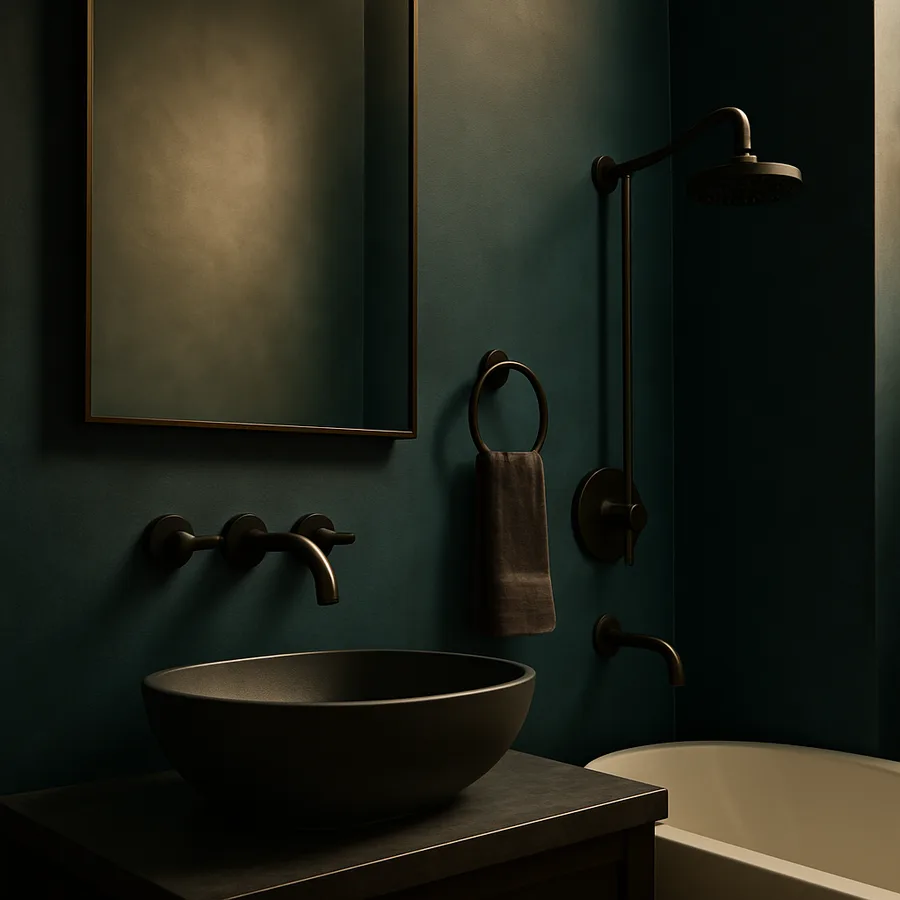
Walk through any bathroom showroom and you will notice a clear shift away from the polished chrome and brushed nickel that dominated for decades. Matte black fixtures have moved from a niche design choice to a mainstream standard, appearing in everything from luxury hotel renovations to entry-level builder-grade homes. The appeal is rooted in something more substantial than trend chasing. Black hardware creates visual anchoring in a room that tends toward light, neutral surfaces, giving the eye deliberate points of contrast that make the entire space feel more intentional and composed. Designers consistently cite this contrast principle as the primary reason matte black works so effectively in bathroom settings.
The National Kitchen and Bath Association (NKBA) reported in their annual design trends survey that matte black finishes ranked as the most specified fixture finish among professional designers for three consecutive years. This sustained demand separates matte black from passing fads like oil-rubbed bronze or antique brass, which experienced shorter cycles of popularity before receding. The staying power comes partly from versatility: matte black pairs equally well with warm wood tones, cool marble, industrial concrete, colorful zellige tile, and everything in between. Few finishes can claim that range of compatibility.
There is also a practical dimension to the popularity surge. Matte finishes are inherently more forgiving than their polished counterparts when it comes to showing water spots, fingerprints, and minor surface imperfections. Anyone who has spent time wiping down polished chrome faucets after every use understands the appeal of a finish that looks clean without constant maintenance. This low-maintenance quality resonates strongly with homeowners who want their bathrooms to look good on a Tuesday morning, not just immediately after a deep clean. The result is a finish that delivers both aesthetic impact and everyday practicality.
Have you ever noticed how certain bathrooms feel pulled together while others, despite having quality materials, seem disconnected? The answer often lies in fixture coordination. Matte black provides a unifying thread that connects faucets, showerheads, towel bars, cabinet pulls, and even mirror frames into a cohesive visual language. This coordinating effect is something the American Society of Interior Designers (ASID) has highlighted as a key principle in successful bathroom design, and matte black makes it achievable without the difficulty of matching exact metallic tones across different manufacturers and product lines.
Understanding the Finish: PVD, Powder Coat, and Electroplating
Not all matte black finishes are created equal, and understanding the technology behind the color is essential if you want hardware that holds up over years of daily use. The three primary methods for achieving a matte black finish on bathroom fixtures are Physical Vapor Deposition (PVD), powder coating, and electroplating, and each carries distinct advantages and limitations. The finish method affects durability, scratch resistance, color consistency, and long-term appearance more than any other single factor, making it worth investigating before committing to a particular product line.
PVD finishing is widely regarded as the gold standard for fixture durability. The process involves vaporizing a solid material in a vacuum chamber and depositing it onto the fixture surface at the molecular level, creating an extremely thin but remarkably hard coating. PVD-finished fixtures resist scratching, tarnishing, and corrosion at levels that far exceed traditional plating methods. Major fixture manufacturers including Delta, Kohler, and Grohe have invested heavily in PVD technology for their premium matte black lines. The Plumbing Manufacturers International (PMI) organization notes that PVD coatings can withstand over two hundred hours of salt spray testing without degradation, compared to roughly fifty hours for conventional electroplated finishes.
Powder coating applies a dry pigmented powder to the fixture surface using an electrostatic charge, then cures it in an oven to form a hard, uniform film. The result is a thick, even coating with excellent color consistency and a true matte texture that feels substantial under the hand. Powder-coated fixtures tend to be more affordable than PVD options, making them a practical choice for budget-conscious renovations where durability still matters. The trade-off is that powder coating, while tough, can chip if struck by a hard object, and once chipped, the underlying metal is exposed and may corrode in a humid bathroom environment. Careful handling during installation eliminates most chipping risk.
Electroplating, the oldest and most common method, deposits a thin layer of black material onto the fixture through an electrochemical process. This is the least expensive finishing method and the one most commonly found on budget-tier fixtures. Electroplated matte black finishes can look identical to PVD finishes when new, but they tend to show wear more quickly, particularly in high-contact areas like faucet handles and towel bar surfaces. For guest bathrooms or powder rooms that see lighter daily use, electroplated finishes can perform perfectly well. For primary bathrooms where fixtures are handled dozens of times daily, investing in PVD or high-quality powder coating pays dividends over the fixture's lifespan.
Selecting Fixtures That Work Together Across Categories
Coordinating matte black fixtures across different product categories requires more planning than most homeowners anticipate. A matte black faucet from one manufacturer may read as a slightly warm black with brown undertones, while a showerhead from another brand may lean cool with blue-gray undertones. Under bathroom lighting, these subtle differences become noticeable and can make a carefully designed space feel uncoordinated. The safest approach is to source all visible fixtures from a single manufacturer's matte black collection, which ensures color matching across the production run.
When single-source purchasing is not possible due to budget constraints or product availability, test samples in your actual bathroom lighting before committing. Request or purchase individual pieces from your shortlisted brands and hold them together under both natural daylight and your installed artificial lighting. The difference between warm and cool matte blacks that looks negligible in a showroom with overhead fluorescent lighting can become pronounced in a bathroom with warm LED recessed lights or a window casting afternoon sun. Houzz community discussions are filled with homeowners who learned this lesson after installation, and the solution is always the same: test before you buy.
Beyond color matching, consider the design language of each fixture. Matte black is available across every style from traditional to ultra-modern, and mixing a Victorian-inspired cross-handle faucet with a minimalist cylindrical showerhead creates visual friction regardless of how well the blacks match. Choose fixtures that share a consistent design vocabulary: similar handle proportions, comparable spout profiles, and matching rosette or escutcheon shapes. This design coherence matters as much as color consistency in creating a bathroom that feels deliberately composed rather than assembled from whatever was on sale.
Accessories deserve the same attention as primary fixtures. Towel bars, robe hooks, toilet paper holders, and cabinet hardware are all visible elements that either support or undermine the black fixture story. Many homeowners invest in premium faucets and showerheads but then install mismatched accessories that dilute the impact. The NKBA recommends budgeting for accessories as part of the initial fixture specification rather than treating them as afterthoughts. A matched suite of matte black accessories from the same manufacturer as your faucets typically costs less than a standalone premium faucet, and the coordinating impact justifies every dollar.
Maintenance Realities: What Matte Black Actually Requires
The maintenance reputation of matte black fixtures is shaped by two opposing narratives, and the truth sits somewhere between them. On one side, advocates claim matte black is essentially maintenance-free because it hides water spots. On the other, detractors warn about visible hard water deposits, soap scum buildup, and impossible-to-repair scratches. The reality depends almost entirely on your water quality and the finish method used on your specific fixtures. Understanding this relationship lets you set accurate expectations and choose appropriate maintenance routines.
Hard water is the primary maintenance challenge for matte black fixtures. Minerals in hard water, primarily calcium and magnesium, leave white or light gray deposits on dark surfaces as water evaporates. On a polished chrome faucet, these deposits blend in somewhat. On a matte black surface, they stand out as chalky white spots that are impossible to ignore. According to the Water Quality Association (WQA), approximately eighty-five percent of American households have hard water, which means this is a relevant concern for the vast majority of homeowners considering matte black fixtures. The most effective solution is addressing water quality at the source with a whole-house water softener or a point-of-use filter on the bathroom supply line.
Daily maintenance for matte black fixtures in soft water areas is genuinely minimal. A quick wipe with a dry microfiber cloth after the last use of the day removes water before it can leave deposits, and this thirty-second habit keeps fixtures looking showroom-fresh indefinitely. For harder water, a mild solution of equal parts white vinegar and water applied with a soft cloth dissolves mineral deposits without damaging the finish. Avoid abrasive cleaners, scouring pads, and any product containing bleach, ammonia, or citric acid concentrates, all of which can damage or dull matte black finishes over time. Most manufacturers void their finish warranty if abrasive cleaning products are used.
What happens when a matte black fixture does get scratched? The answer depends on the depth of the scratch and the finish method. Surface-level scratches on PVD finishes are rare and can sometimes be buffed out with a manufacturer-recommended restoration product. Deeper scratches that penetrate the coating expose the base metal underneath, creating a visible silver or brass line that cannot be repaired without refinishing. This is where PVD finishes earn their premium: the coating is harder than traditional finishes and resists the kind of incidental contact that would scratch electroplated alternatives. For fixtures in high-traffic positions, the durability premium of PVD technology is a worthwhile investment.
Design Pairings: Surfaces and Materials That Complement Black Hardware
The surfaces surrounding your matte black fixtures determine whether the hardware reads as a bold statement or a natural element within the room's composition. White marble and quartz remain the most popular pairing, and for good reason. The high contrast between bright white stone and black metal creates the kind of clean, graphic tension that photographs beautifully and feels sophisticated in person. Calacatta marble with its warm gray veining softens the contrast slightly compared to stark Thassos white, offering a more relaxed version of the black-and-white theme that suits a wider range of interior styles.
Warm materials like natural wood vanities, terracotta tile, and unlacquered brass accents create a more layered and organic composition with matte black. This combination leans toward a collected, eclectic aesthetic rather than a minimalist one. The contrast shifts from graphic to textural, with the matte black providing structure against the warmth and variation of natural materials. Architectural Digest has featured numerous designer bathrooms that mix matte black fixtures with honey-toned oak vanities, handmade ceramic tile, and woven storage baskets, demonstrating that black hardware adapts to warm palettes as effectively as it dominates cool ones.
Concrete, terrazzo, and natural stone in mid-toned grays create a more monochromatic context for matte black fixtures. In these settings, the fixtures do not pop with high contrast but instead become integrated elements within a tonal palette. This approach suits industrial and contemporary bathroom designs where the goal is cohesion rather than contrast. The key to making monochromatic gray-and-black bathrooms feel intentional rather than flat is varying the texture and sheen level across surfaces: honed concrete floors, polished terrazzo countertops, matte wall tile, and the soft matte of the black fixtures themselves create visual interest through surface quality rather than color difference.
Color-saturated surfaces are the bravest and often the most rewarding partners for matte black. Deep emerald green tile, rich navy blue paint, dusty rose zellige, or terracotta-colored plaster walls paired with matte black fixtures produce bathrooms with genuine personality and warmth. The black hardware grounds these bold color choices, preventing them from feeling overwhelming or juvenile. The ASID has noted that designers increasingly use matte black fixtures as the anchoring element that makes ambitious color choices feel sophisticated rather than chaotic. If you have been considering a bold tile or paint color for your bathroom, matte black fixtures may be the stabilizing element that makes the leap feel manageable.
Installation Considerations and Common Mistakes
Professional installation is strongly recommended for matte black fixtures, not because the plumbing connections differ from any other finish, but because the finish itself is vulnerable during the installation process. A wrench slipping on a polished chrome fitting leaves a mark that blends into the shiny surface. The same slip on a matte black fitting leaves a bright silver scratch that is visible from across the room. Experienced plumbers who regularly work with decorative finishes know to wrap fixture contact points with protective tape and use strap wrenches rather than metal jaws. This precaution costs nothing but prevents damage that is expensive or impossible to repair.
One of the most common installation mistakes involves mixing fixture rough-in valves with trim from different manufacturers. The rough-in valve is the mechanical component installed behind the wall, and the trim kit is the decorative exterior that includes the handle, escutcheon, and spout. Matte black trim kits are not universally compatible across brands, and forcing a Delta trim onto a Moen rough-in, or vice versa, can result in poor fit, water leaks, and voided warranties. Always verify rough-in and trim compatibility before purchase, and if you are renovating and keeping existing rough-in valves, source trim kits specifically designed for those valves.
Silicone caulking around matte black fixtures deserves more thought than it typically receives. Standard white or clear silicone caulk against matte black creates a visible transition line that can look unfinished. Black silicone caulk is available from most major manufacturers and creates a seamless transition between the fixture and the surrounding surface. For situations where black caulk would be too dark against the adjacent material, a charcoal or dark gray option splits the difference effectively. This small detail, which costs under ten dollars and takes five minutes to execute, has a disproportionate impact on the finished appearance of the installation.
Protecting fixtures during the remainder of the renovation is another critical step that is frequently neglected. Drywall dust, paint overspray, tile grout, and construction adhesive can all damage matte black finishes if allowed to dry on the surface. The most effective approach is to install fixtures as late in the construction sequence as possible, ideally after all dusty and messy work is complete. When fixtures must be installed earlier in the process, covering them completely with painter's tape and plastic bags provides adequate protection. Removing protective coverings should be the final step before the bathroom is considered complete.
Long-Term Value: Will Matte Black Date Your Bathroom?
The question that gives every homeowner pause before committing to a strong design choice is whether that choice will feel dated in five or ten years. With matte black fixtures, the historical evidence is reassuring. Black hardware has been a consistent presence in high-end interior design for over a century, appearing in Arts and Crafts bungalows, mid-century modern homes, industrial loft conversions, and contemporary minimalist residences. Unlike finishes that are associated with a specific era, such as polished brass with the 1980s or oil-rubbed bronze with the 2000s, black hardware does not carry a date stamp. It reads as a fundamental design element rather than a period-specific trend.
The American Society of Interior Designers has consistently positioned matte black finishes in the "enduring" rather than "trending" category in their annual outlook reports. This distinction matters because trending elements cycle through popularity in three to five years, while enduring elements maintain relevance across decades. The functional parallel is stainless steel in kitchens: once considered a trend, it has become the default finish that no one questions. Matte black in bathrooms is on a similar trajectory, moving from statement choice to standard specification. A bathroom designed with matte black fixtures is unlikely to feel dated in the way that a bathroom designed around a trend-specific element would.
From a resale perspective, matte black fixtures are now neutral enough that they do not polarize potential buyers. According to real estate staging professionals surveyed by the National Association of Realtors, bathrooms with coordinated matte black fixtures and neutral surfaces consistently receive positive feedback during showings, with buyers perceiving the spaces as modern and well-maintained. This perception translates to tangible value: well-executed bathroom renovations with current but not overly trendy finishes recover approximately seventy percent of their cost at resale, and matte black falls squarely in the sweet spot of current without being risky.
The most important factor in long-term satisfaction with matte black fixtures is the quality of the installation and the products themselves. A bathroom with well-chosen, properly installed PVD-finished matte black fixtures against timeless surfaces will look appropriate and attractive for decades. The same design executed with cheap, poorly finished fixtures that show wear within two years will feel dated not because of the color choice but because of the quality degradation. Invest in the best finish quality your budget allows, install it carefully, maintain it consistently, and your matte black bathroom will age with grace rather than regret. Ready to start planning your fixture selection? Begin by requesting finish samples from two or three manufacturers and comparing them in your actual bathroom lighting before making any purchasing decisions.
More Articles You May Like



Comments
Post a Comment