The Ultimate Guide to Sustainable Home Interior Design: Eco-Friendly Tips and Tricks
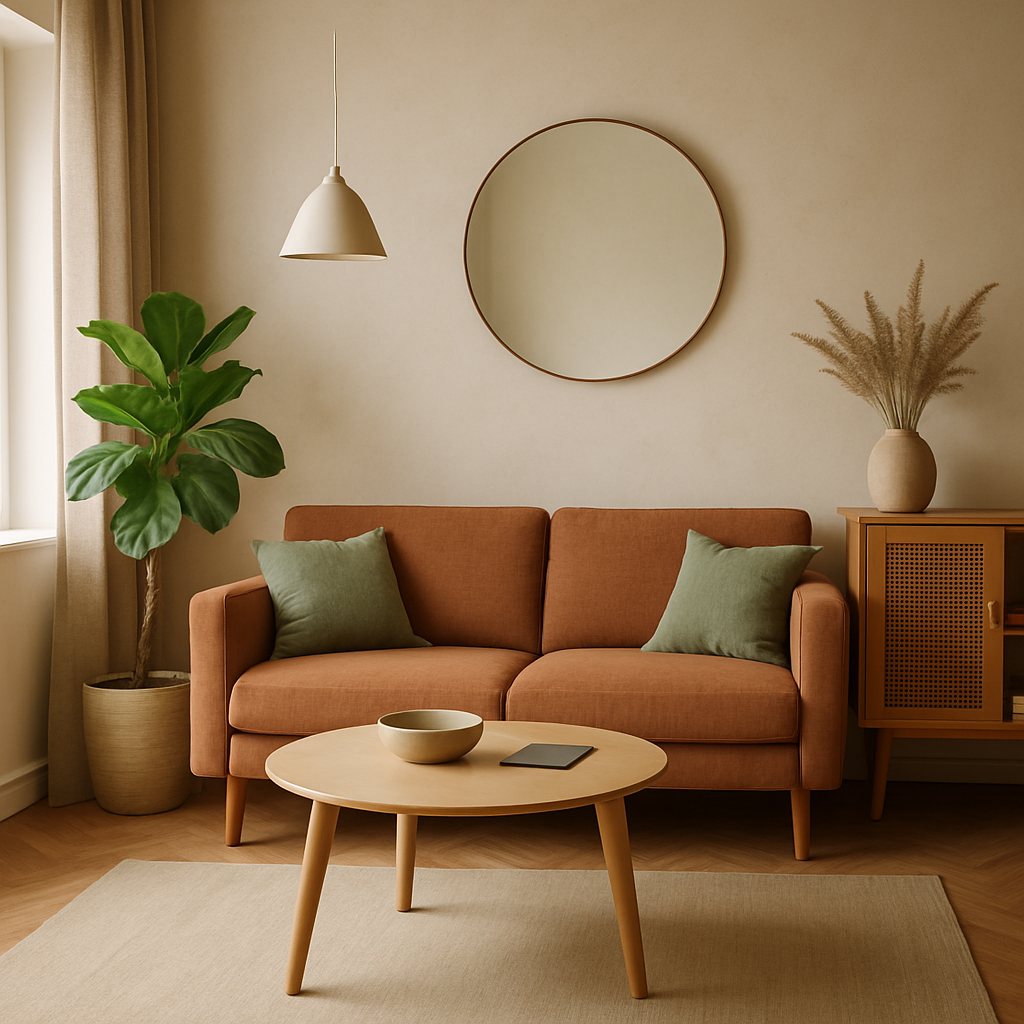
Sustainability in home design has evolved far beyond a niche concern for the environmentally devout. It has become a central consideration for designers, manufacturers, and homeowners who recognize that the built environment accounts for nearly 40 percent of global carbon emissions, according to data cited by the International Interior Design Association (IIDA). Every material selection, every fixture choice, and every square foot of renovation carries an environmental footprint that persists for decades. The encouraging news is that sustainable choices increasingly align with superior aesthetics, improved indoor air quality, and long-term cost savings. This guide examines the most impactful strategies for reducing your home's environmental burden while creating interiors that look and feel better than their conventional counterparts. The principles outlined here scale from a single-room refresh to a whole-house renovation, and many require surprisingly modest investment to implement.
Reclaimed and Salvaged Materials as Design Assets
Using reclaimed materials is among the most effective ways to reduce the environmental impact of a renovation while simultaneously introducing character that new materials simply cannot provide. Salvaged hardwood flooring carries decades of patina, grain variation, and dimensional stability that kiln-dried lumber achieves only after years of use. Antique brick, reclaimed from demolished structures, offers color depth and textural irregularity that manufactured thin-brick veneers attempt to imitate but rarely match. The American Society of Interior Designers (ASID) estimates that incorporating reclaimed materials into 30 percent of a project's material palette can reduce the project's embodied carbon by up to 45 percent, a substantial contribution from a single sourcing decision.
Sourcing reclaimed materials requires more planning than placing an order from a standard supplier. Architectural salvage yards, deconstruction firms, and online marketplaces specializing in salvaged building materials have proliferated in recent years, making the search significantly easier than it was a decade ago. However, quantities can be limited and dimensions non-standard, so designers must adapt their plans to the available inventory rather than specifying exact quantities in advance. This constraint, paradoxically, often produces more interesting and distinctive results. A dining table crafted from a single slab of reclaimed barn wood, for instance, becomes an unrepeatable centerpiece that anchors the room's entire narrative.
Cost comparisons between reclaimed and new materials vary widely depending on the material type and local market conditions. Reclaimed hardwood flooring typically costs 10 to 30 percent more than new equivalents when factoring in preparation and installation, but this premium shrinks or disappears entirely when you account for the material's superior dimensional stability and the aesthetic premium it commands at resale. Have you walked through your home recently and cataloged which existing materials might be refinished or repurposed rather than discarded? Floorboards can be sanded and restained, solid-wood cabinets can be stripped and refinished, and structural timbers can be exposed to become design features. The most sustainable material is often the one already under your feet.
Low-VOC and Zero-VOC Finishes Protect Indoor Air Quality
Volatile organic compounds (VOCs) released by paints, stains, adhesives, and sealants represent one of the most significant yet easily addressable indoor air quality concerns in residential design. The Environmental Protection Agency has documented that indoor VOC concentrations can be two to five times higher than outdoor levels, with freshly renovated homes showing even greater disparities. Prolonged exposure contributes to headaches, respiratory irritation, and more serious health effects over time. The good news is that the performance gap between conventional and low-VOC products has narrowed to the point of irrelevance. Major paint manufacturers now offer zero-VOC interior lines that match or exceed the coverage, durability, and color accuracy of their traditional formulations.
Beyond paint, attention to VOC content should extend to every applied finish in the home. Hardwood floor finishes, cabinet lacquers, countertop sealants, and tile grouts all contribute to the cumulative VOC load. Products carrying the GREENGUARD Gold certification have been independently tested for chemical emissions and meet some of the strictest standards in the industry. NCIDQ-certified designers increasingly specify GREENGUARD Gold products as a default rather than an upgrade, recognizing that indoor air quality is a non-negotiable component of responsible design practice. The cost premium for certified products is typically less than 15 percent and continues to shrink as market demand drives production scale.
What steps have you taken to evaluate the air quality in your home after your most recent renovation or furniture purchase? Simple indoor air quality monitors, available for $100 to $300, can measure VOC levels, particulate matter, humidity, and carbon dioxide concentration in real time. These devices often reveal that recently installed furniture, particularly items made from engineered wood with formaldehyde-based adhesives, can be significant emission sources for months after delivery. Opting for solid wood furniture, or engineered wood products certified to the California Air Resources Board (CARB) Phase 2 standard, dramatically reduces this hidden exposure. Small decisions about finishes compound into significant health outcomes over the years you spend inside your home.
Energy-Efficient Lighting Transforms Atmosphere and Utility Bills
Lighting represents approximately 15 percent of a typical household's electricity consumption, according to the U.S. Department of Energy, making it one of the most leveraged points of intervention for both environmental impact and cost savings. The transition from incandescent to LED technology is effectively complete from a market availability standpoint, but many homes still operate with outdated lighting strategies: uniform overhead fixtures, insufficient task lighting, and an absence of dimming or zoning controls. Upgrading the lighting infrastructure, not just the bulbs but the entire approach, yields benefits that extend from energy reduction to dramatically improved spatial character.
Layered lighting design follows a three-tier framework that ASID has promoted for decades: ambient, task, and accent. Ambient light provides general illumination, typically through recessed ceiling fixtures or indirect cove lighting. Task light delivers focused illumination where specific activities occur, such as under-cabinet strips in the kitchen, adjustable desk lamps in the office, or reading sconces flanking a bed. Accent light draws attention to architectural features, artwork, or display collections. When all three layers operate independently on dimmers, you gain precise control over mood, functionality, and energy consumption throughout the day. A room with three lighting layers on separate dimmers uses an average of 30 to 40 percent less electricity than the same room with a single overhead fixture, because occupants naturally dim unused layers.
Natural light management deserves equal emphasis. South-facing windows in the Northern Hemisphere receive the strongest daylight, and optimizing these exposures through strategic furniture placement, reflective ceiling finishes, and light-colored wall treatments can reduce daytime artificial lighting needs by 50 percent or more. Light tubes and solar tubes, which channel roof-level daylight into interior rooms through reflective conduits, offer a solution for spaces without direct window access. Do your most-used rooms receive adequate daylight during your peak activity hours? Mapping sunlight patterns across different seasons often reveals simple adjustments, like relocating a workspace or replacing a dark window treatment, that improve both comfort and energy performance without any capital expenditure.
Sustainable Textiles and Upholstery Choices
Textiles account for a surprisingly large share of a room's total environmental footprint. The fashion and textile industries combined are responsible for approximately 10 percent of global carbon emissions, and home furnishing textiles follow similar production patterns. Polyester, the dominant fiber in budget upholstery and drapery, is a petroleum derivative that sheds microplastics during washing and persists in landfills for centuries. Shifting toward natural, organic, and recycled fibers addresses these concerns while often delivering superior comfort and longevity. Organic cotton, linen, hemp, wool, and Tencel (lyocell) all offer performance characteristics that match or exceed synthetic alternatives for residential applications.
Certification systems help navigate the sustainable textile landscape. The Global Organic Textile Standard (GOTS) certifies fibers from harvest through finished product, covering pesticide use, water treatment, labor conditions, and chemical inputs. OEKO-TEX Standard 100 tests for harmful substances in finished textiles regardless of fiber origin. IIDA recommends that specifying designers prioritize textiles carrying at least one of these certifications, as they provide the most reliable assurance of environmental and health performance. The price difference between certified and conventional textiles has narrowed considerably; GOTS-certified organic cotton upholstery fabric typically costs 20 to 35 percent more than conventional polyester blends, a premium that many homeowners find acceptable given the health and environmental returns.
Reupholstering existing furniture represents perhaps the most sustainable textile decision of all. A well-constructed sofa frame, typically built from kiln-dried hardwood with eight-way hand-tied springs, can last fifty years or more. The upholstery fabric and cushion foam are the components that wear out, and replacing them costs a fraction of purchasing a new piece while keeping the frame's embodied energy in service. Houzz professionals report that reupholstery inquiries have increased 60 percent over three years, driven by both environmental awareness and the escalating cost of quality new furniture. Does your favorite chair or sofa have good bones hidden beneath tired fabric? Investing $800 to $2,500 in reupholstery with sustainable fabric may be the single most cost-effective and environmentally sound decision in your next project.
Water Conservation Through Thoughtful Fixture Selection
Interior design intersects with water conservation most directly in kitchens and bathrooms, where fixture selection determines daily consumption patterns for the life of the installation. The EPA's WaterSense program certifies fixtures that use at least 20 percent less water than standard models without sacrificing performance. WaterSense-labeled faucets, showerheads, and toilets collectively save a certified household approximately 20,000 gallons annually, enough to fill a backyard swimming pool. The financial savings on water and sewer bills typically recover the modest cost premium within the first year of installation, after which every gallon saved is pure economic benefit.
Beyond fixture efficiency, layout decisions influence water waste in ways that are rarely discussed during the design phase. The distance between a water heater and the farthest hot-water fixture determines how many gallons of cold water are wasted while waiting for hot water to arrive at the tap. Recirculating pump systems or point-of-use tankless heaters at remote fixtures eliminate this waste entirely. AD PRO has featured several net-zero water homes that combine efficient fixtures, greywater recycling systems, and rainwater harvesting to achieve dramatic reductions in municipal water dependence. While a full net-zero water system represents a significant investment, starting with WaterSense fixtures and addressing the hot-water distance problem captures the majority of the benefit at a fraction of the cost.
Aesthetic concerns should not deter anyone from choosing water-efficient fixtures. The design quality of WaterSense-certified products has improved enormously; high-end manufacturers now offer their most popular faucet and showerhead designs in WaterSense-compliant versions that are visually indistinguishable from their standard-flow counterparts. What would it mean for your household if you could reduce your water bill by 30 percent without any perceptible change in daily experience? That outcome is achievable through fixture selection alone, and when combined with the lighting and material strategies discussed above, it positions your home as a model of performance-driven sustainability. The NCIDQ now includes water conservation strategies in its examination content, recognizing that responsible resource management is an integral dimension of professional interior design practice.
Furniture Longevity as an Environmental Strategy
The fastest-growing segment of the furniture market is also its most environmentally damaging: disposable fast furniture. Particle-board construction, stapled joints, and synthetic upholstery produce pieces that rarely survive a single household move, let alone a decade of daily use. An estimated 12 million tons of furniture enters American landfills annually, according to the EPA, representing one of the largest and least-discussed waste streams in the residential sector. The antidote is deliberate investment in furniture built to endure. Solid hardwood frames, mortise-and-tenon joinery, high-density foam or natural latex cushions, and performance-grade upholstery fabrics cost more at purchase but deliver dramatically lower cost-per-year-of-use over their functional lifetimes.
The financial arithmetic is straightforward. A sofa from a fast-furniture retailer might cost $600 and last three to five years before sagging cushions and wobbly frames force replacement. Over fifteen years, that is three purchases totaling $1,800 plus three disposal fees. A quality sofa from a manufacturer committed to durability might cost $2,500 to $4,000 but will last fifteen to twenty-five years with a single mid-life reupholstery. The total cost of ownership is comparable, but the quality of the daily experience is incomparable, and the environmental footprint is reduced by two-thirds. ASID has launched several public awareness campaigns encouraging consumers to apply this lifecycle thinking to every significant furniture purchase.
How do you evaluate furniture quality before purchasing? Several physical indicators are reliable. Lift one corner of a sofa; if the opposite front leg rises simultaneously, the frame has structural integrity. Sit in the center and note whether the frame creaks or shifts. Check whether cushion covers have zippers for removal and cleaning, and whether the cushion cores are replaceable. Examine the underside for corner blocks and the joints for dowels or mortises rather than staples alone. These thirty-second assessments save thousands of dollars and prevent tons of landfill waste over a lifetime of furnishing decisions. IIDA's consumer education resources include detailed furniture evaluation checklists that any homeowner can use during shopping trips, turning every purchase into a deliberate sustainability choice.
Conclusion
Sustainable interior design is not a separate category of design; it is simply good design practiced with full awareness of its consequences. Reclaimed materials bring irreplaceable character. Low-VOC finishes protect the health of everyone who enters your home. Energy-efficient lighting systems pay for themselves while creating superior atmosphere. Sustainable textiles deliver comfort without the hidden cost of microplastic pollution. Water-conserving fixtures perform identically to their wasteful predecessors. And furniture built to last transforms a purchase into a multi-decade relationship with an object that improves your daily life.
The most common barrier to sustainable design is the perception that it requires compromise, that eco-friendly options look inferior, perform worse, or cost prohibitively more than conventional alternatives. The evidence overwhelmingly refutes each of these assumptions. Begin with the strategies that align most closely with your current renovation plans or budget capacity. Replace a single conventional paint with a zero-VOC alternative. Swap one overhead fixture for a layered lighting scheme. Reupholster one beloved piece instead of replacing it. Each action builds competence and confidence for the next. Consult a designer with sustainability expertise if you want a comprehensive plan; the investment typically ranges from $150 to $500 per hour and returns multiples in avoided waste and optimized performance. Your home is your most intimate environment, and it deserves choices that honor both your comfort and the world beyond your walls.



Comments
Post a Comment