The Future of Interior Design: Innovative Strategies from Leading Companies
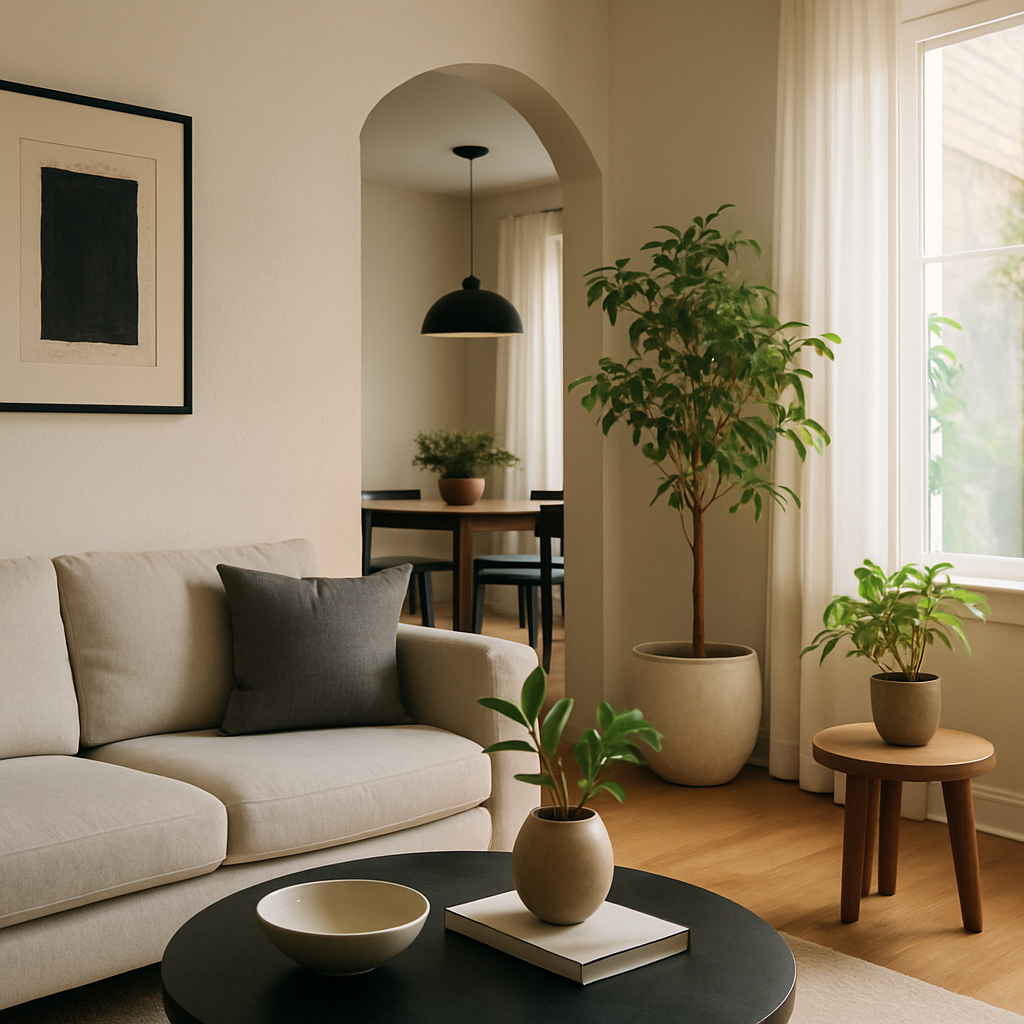
The interior design industry stands at a fascinating inflection point where technology, sustainability, wellness science, and cultural shifts are converging to reshape how we conceive, create, and inhabit our living spaces. Leading design companies are not merely responding to these changes but actively driving them, developing innovative strategies that redefine what residential environments can accomplish for the people who live within them. From firms deploying artificial intelligence to accelerate the conceptual design process to studios pioneering regenerative material systems that give back to the environment, the most forward-thinking companies are building a future where homes are smarter, healthier, more sustainable, and more deeply personal than ever before. The American Society of Interior Designers (ASID) has identified innovation capacity as the single most important differentiator among top-performing firms, noting that the companies shaping the industry's future share a willingness to challenge assumptions and embrace experimentation. This exploration examines the most significant strategies emerging from the industry's leading voices and what they mean for homeowners seeking spaces that are both timeless and ahead of the curve.
Artificial Intelligence and Computational Design in Residential Interiors
Artificial intelligence is rapidly becoming an integral tool in the design process, and leading companies are harnessing its capabilities to enhance rather than replace human creativity. Computational design platforms can now generate thousands of spatial configurations based on defined parameters such as room dimensions, natural light patterns, traffic flow requirements, and furniture inventories, presenting designers with optimized options that would take weeks to develop manually. The designer's role shifts from drafter to curator, evaluating machine-generated proposals through the lens of aesthetic judgment, emotional resonance, and deep client understanding that no algorithm can replicate. The International Interior Design Association (IIDA) has published research suggesting that firms integrating computational tools into their workflow deliver projects approximately thirty percent faster without sacrificing design quality, a significant advantage in an industry where timelines directly affect client satisfaction and project economics.
Beyond spatial planning, artificial intelligence is transforming material selection and specification processes. Advanced platforms can analyze a client's style preferences based on their inspiration imagery and recommend material palettes that align with both their aesthetic vision and performance requirements. These tools cross-reference durability data, sustainability certifications, maintenance requirements, and cost parameters to produce specifications that balance beauty with practicality. Designers at leading firms report that these tools eliminate hours of manual research and catalog browsing, freeing them to invest more time in the creative and relational aspects of their work that clients value most. The technology is also enabling more accurate cost estimation earlier in the project lifecycle, reducing the frequency of budget surprises that can strain client relationships and derail project momentum.
However, the most innovative companies are careful to position artificial intelligence as a complement to human expertise rather than a substitute for it. They recognize that the emotional dimensions of interior design, the ability to create spaces that feel nurturing, inspiring, or deeply personal, remain firmly in the domain of human intuition and empathy. Have you considered how technology might enhance your next design project without diminishing its personal touch? The best implementations use artificial intelligence to handle the analytical heavy lifting, such as code compliance verification, energy modeling, and logistics optimization, while preserving the designer's central role as the creative visionary and client advocate. This balanced approach produces projects that benefit from computational precision while retaining the soulfulness and individuality that distinguish exceptional design from merely efficient space planning. NCIDQ-certified designers are increasingly expected to demonstrate fluency with these emerging tools as part of their professional competency.
Regenerative Design: Moving Beyond Sustainability
While sustainable design focuses on minimizing harm to the environment, a growing number of leading companies are advancing toward regenerative design, a philosophy that aims to create interiors that actively restore and replenish natural systems. This represents a fundamental shift in ambition, from doing less bad to doing measurable good. Regenerative design strategies include specifying materials that sequester carbon, such as hempcrete walls and bamboo flooring that lock atmospheric carbon into the built environment for decades. They incorporate living systems, such as biofiltering plant walls that actively purify indoor air, and greywater recycling systems that reduce household water consumption by repurposing sink and shower water for landscape irrigation. These approaches transform the home from a passive consumer of resources into an active participant in ecological restoration.
Leading companies pursuing regenerative strategies often partner with material scientists, environmental engineers, and agricultural innovators to source products that are not yet available through conventional trade channels. Mycelium-based insulation grown from mushroom root networks, bio-fabricated leather alternatives cultivated from plant cells, and pigments derived from agricultural waste are among the experimental materials making their way into residential projects. Approximately fifty-five percent of design firms specializing in sustainability report active experimentation with at least one regenerative material category, according to surveys conducted by industry organizations. These early adopters are building the supply chains and specification knowledge that will eventually make regenerative materials mainstream, positioning their firms and their clients at the leading edge of a movement that promises to transform the relationship between buildings and the natural world.
For homeowners, engaging with a regenerative design company means participating in a project that contributes positively to the broader environmental context. It means choosing a kitchen countertop made from recycled glass that diverted waste from landfills, selecting insulation that captured carbon during its growth cycle, and installing living walls that improve air quality for the entire household. Houzz has begun featuring regenerative design projects in its editorial coverage, signaling that the platform's editorial team recognizes this approach as a significant emerging direction. The premium for regenerative materials is currently modest and decreasing as production scales, making this philosophy increasingly accessible to homeowners across a range of budgets. What if your next renovation could actively improve the environment rather than simply minimizing its footprint? This question is driving a fundamental rethinking of design values among the industry's most visionary firms and the clients who share their ambition.
Hyper-Personalization Through Data-Driven Design
The future of interior design is intensely personal, and leading companies are developing sophisticated approaches to understanding and serving individual client needs at a depth that was previously impossible. Data-driven design strategies begin with comprehensive lifestyle analyses that go far beyond traditional style questionnaires. Progressive firms are deploying structured interview protocols, environmental psychology assessments, and even circadian rhythm evaluations to build detailed profiles of how each client interacts with their environment throughout the day. These insights inform design decisions at every scale, from the macro-level spatial organization of the home down to the specific color temperature of task lighting in the kitchen and the acoustic properties of bedroom wall finishes. AD PRO has highlighted several firms pioneering these evidence-based personalization methods, noting that their client satisfaction scores consistently outperform industry averages.
Smart home technology is a critical enabler of hyper-personalization, allowing environments to adapt dynamically to individual preferences and routines. Leading design companies are specifying systems that learn occupant behaviors over time, automatically adjusting lighting, temperature, window treatments, and audio environments to match each person's preferences in each room at each time of day. A morning kitchen setting might feature bright, cool-toned lighting and energizing music to support the breakfast routine, while the same space transitions to warm, dimmed lighting and ambient sound for evening cooking and conversation. These adaptive environments represent a fundamental departure from static interior design, where a room's mood and function remain fixed regardless of the time, season, or occupant. Fees for comprehensive personalization consulting at top firms typically range from $150 to $500 per hour, reflecting the specialized expertise required to integrate behavioral analysis with design specification and technology architecture.
Privacy considerations are paramount in data-driven design, and the most reputable companies are establishing rigorous ethical frameworks for client data management. Lifestyle information gathered during the design process is treated with the same confidentiality as medical or financial records, stored securely, and never shared with third parties. Smart home systems are specified with local processing capabilities that keep behavioral data within the home rather than transmitting it to cloud servers. These privacy protections reflect the design industry's understanding that personalization without consent and transparency is surveillance, not service. How comfortable are you with technology that learns your habits to improve your living environment? Leading design companies facilitate this conversation openly with their clients, ensuring that every personalization feature is implemented with full knowledge and explicit approval. The ASID has published ethical guidelines for technology integration that responsible firms are adopting as standard practice.
Biophilic Innovation: The Next Generation of Nature-Integrated Design
Biophilic design has been a dominant trend for several seasons, but leading companies are now pushing the concept into genuinely innovative territory that transcends potted plants and natural wood finishes. The next generation of biophilic interiors incorporates dynamic natural systems that change and evolve over time, creating living environments in the most literal sense. Firms at the forefront of this movement are installing interior ecosystems that include self-sustaining terrariums, aquaponic systems that grow herbs and vegetables while maintaining ornamental fish habitats, and moss walls that require no soil or irrigation while providing natural sound absorption. These living elements transform static rooms into dynamic environments that engage the senses and connect occupants to biological rhythms and processes.
The science supporting advanced biophilic design is becoming increasingly robust, providing design companies with evidence-based frameworks for specifying natural elements with precision. Research from environmental health institutions demonstrates that specific biophilic interventions produce measurable outcomes. Natural daylight exposure during morning hours improves circadian regulation and sleep quality. Views of water features reduce blood pressure and heart rate variability. The presence of living plants in workspaces reduces cognitive fatigue and improves creative problem-solving capacity. Leading design firms are translating this research into actionable design specifications, moving beyond intuitive plant placement to strategic biophilic programming that targets specific wellness outcomes for each room and each occupant. The IIDA has recognized this evidence-based approach to biophilic design as a significant professional development priority for practicing designers.
Material innovation is also expanding the vocabulary of biophilic design in unexpected directions. Biomimetic materials that replicate natural patterns and textures at a molecular level are entering the residential market, including ceramic tiles that mimic the thermal properties of natural stone, acoustic panels structured like honeycomb that absorb sound with extraordinary efficiency, and surface coatings inspired by lotus leaves that repel water and dirt without chemical treatments. These engineered materials allow designers to create biophilic environments in spaces where living plants or natural materials are impractical, such as bathrooms with high humidity, basements with limited light, or kitchens where food safety concerns limit plant placement. Have you explored how biophilic principles might enhance the rooms in your home where you spend the most time? The innovations emerging from leading design companies are making it possible to bring the restorative power of nature into every corner of the residential environment, regardless of architectural constraints or climate challenges.
The Rise of Adaptive and Multigenerational Space Planning
Demographic shifts are driving one of the most significant innovations in residential interior design: the development of adaptive spaces that serve multiple functions and accommodate diverse household compositions. Leading design companies are responding to the reality that modern households are increasingly multigenerational, with grandparents, parents, and children sharing homes in configurations that require thoughtful spatial solutions. These firms are developing innovative floor plans that balance communal living with individual privacy, incorporating features such as soundproofed pocket doors, secondary kitchenettes, private exterior entrances, and flexible rooms that can function as home offices, guest suites, or caregiver apartments depending on the household's evolving needs.
Adaptive design extends beyond multigenerational planning to encompass spaces that transform throughout the day to serve different purposes. A dining room that converts into a homework station and then into an evening entertaining space requires carefully considered furniture selections, storage solutions, and lighting systems that support each function without compromising any of them. Leading companies are specifying modular furniture systems with components that can be reconfigured in minutes, integrated storage walls that conceal work materials behind decorative panels, and zoned lighting systems that reshape the room's character with a single adjustment. The Japandi influence is particularly evident in this trend, as its emphasis on purposeful simplicity and concealed storage naturally supports spaces that must serve multiple roles without visual clutter. NCIDQ-certified designers bring particular value to adaptive design projects because their training in spatial planning, building codes, and accessibility standards ensures that flexible spaces meet safety and usability requirements across all configurations.
Universal design principles are increasingly embedded in adaptive space planning, ensuring that homes remain comfortable and functional for occupants across the full spectrum of physical ability and life stage. Leading companies are specifying wider doorways, zero-threshold transitions between rooms, lever-style hardware, and adjustable-height work surfaces not as accessibility accommodations but as foundational design elements that improve usability for everyone. Curbless showers with linear drains, for example, are both more aesthetically refined and more accessible than traditional step-over tub-shower combinations. Pull-out cabinet shelving eliminates the need to bend and reach into deep storage cavities. These features are increasingly standard in projects designed by forward-thinking firms, reflecting a philosophy that great design serves all people gracefully rather than requiring some to adapt. What changes to your home would make daily life easier for every member of your household? This question often unlocks design opportunities that improve comfort and functionality in ways homeowners had not previously considered.
Collaborative and Community-Centered Design Models
The traditional model of interior design as a service provided by an expert to a passive client is giving way to more collaborative frameworks that empower homeowners as active participants in the creative process. Leading companies are developing workshop-based design methodologies where clients participate in structured creative sessions alongside the design team, contributing ideas, making real-time decisions about materials and spatial arrangements, and experiencing the design process as an engaging journey rather than a series of presentations and approvals. These collaborative models produce outcomes that more authentically reflect the client's personality and values, as the homeowner's voice is woven into the design at every stage rather than filtered through the designer's interpretation alone.
Community-centered design is an extension of this collaborative philosophy, with companies increasingly considering how residential projects affect and are affected by their surrounding neighborhoods and ecosystems. Firms practicing community-centered design engage with local artisans, source materials from regional suppliers, and consider the cultural context of the neighborhood when making aesthetic decisions. A home in a historic district might incorporate salvaged materials from nearby renovation projects, honoring the area's architectural heritage while creating something fresh and contemporary. A residence in a coastal community might feature marine-inspired elements sourced from local makers who specialize in ocean-reclaimed materials. Houzz editorial coverage has increasingly highlighted projects that demonstrate sensitivity to local context and community engagement, reflecting a broader appreciation for design that is rooted in place.
The democratization of design knowledge through digital platforms, open-source resources, and virtual consultation services is further reshaping the relationship between design companies and their clients. Leading firms are offering tiered service models that range from full-service project management to virtual consultations, DIY guidance packages, and curated shopping lists that allow homeowners to execute professional-quality designs at a fraction of the traditional cost. This accessibility does not diminish the value of comprehensive design services but expands the market by giving a broader range of homeowners access to professional expertise at price points that match their budgets and project scopes. AD PRO has noted that firms offering flexible engagement models are experiencing significant growth in client acquisition, suggesting that the future belongs to companies that meet homeowners where they are rather than requiring them to conform to a single service model. How much involvement do you want in shaping your home's design? The most innovative companies are building frameworks that accommodate every answer to that question, from hands-on collaboration to full delegation.
Conclusion: Embracing the Future of Interior Design
The future of interior design is being written by companies that refuse to accept the limitations of conventional practice. From the integration of artificial intelligence and computational design tools that enhance creative productivity to regenerative material strategies that transform homes into agents of environmental restoration, the innovations emerging from leading firms represent a profound expansion of what interior design can accomplish. Hyper-personalization driven by behavioral data and adaptive technology is creating living environments that respond to individual needs with unprecedented sensitivity. Advanced biophilic strategies are deepening the connection between built and natural environments in scientifically grounded ways. Adaptive space planning is meeting the complex needs of modern households with flexibility and grace. Collaborative design models are empowering homeowners as creative partners rather than passive consumers. Together, these strategies paint a picture of an industry that is becoming simultaneously more technologically sophisticated and more deeply human in its orientation. For homeowners, the message is clear: the quality, intelligence, and responsiveness of professional interior design have never been greater. Whether you are planning a project today or envisioning one for the future, engaging with a firm credentialed through ASID, IIDA, or NCIDQ ensures that your investment is guided by professionals who are not only keeping pace with these innovations but actively driving them. The home of the future is not a distant concept. It is available now, designed by companies that are transforming the industry and the spaces within it.
More Articles You May Like



Comments
Post a Comment