The Future of Home Decor: Top 5 AI Tools for Interior Design
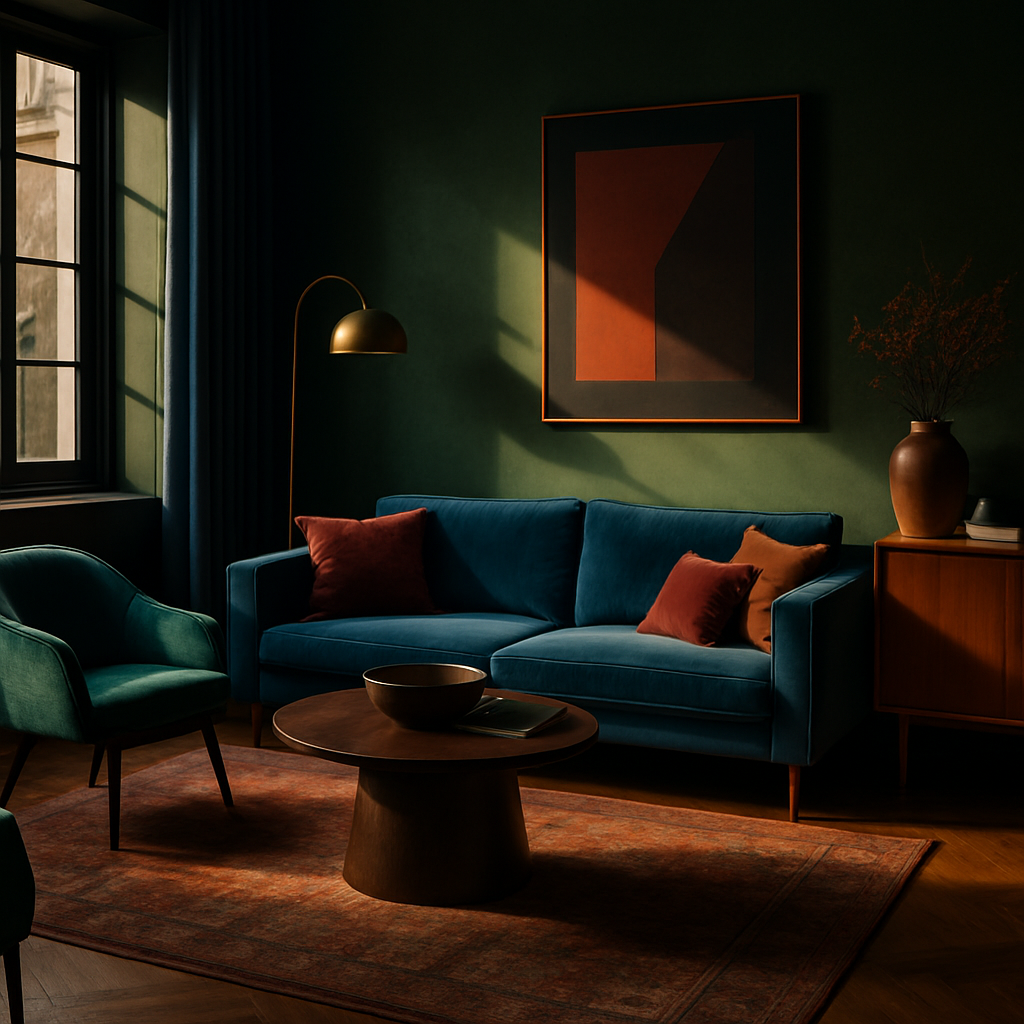
Artificial intelligence has moved from the periphery of interior design into its operational core, and the pace of this transformation has surprised even the industry's most technology-forward practitioners. According to the International Interior Design Association (IIDA), 42% of residential designers now use at least one AI-powered tool in their client projects, up from just 11% in 2021. This rapid adoption reflects a fundamental truth: AI does not replace the creative judgment that makes great design possible, but it dramatically accelerates the research, visualization, and iteration processes that consume the majority of a designer's time. For homeowners, these same tools democratize access to design capabilities that were previously available only through expensive professional consultations charging $150 to $500 per hour. Whether you are a professional designer looking to enhance your workflow or a homeowner tackling a renovation with confidence, understanding the AI tools reshaping interior design is no longer optional. The five platforms profiled below represent the leading edge of this transformation, and each one addresses a distinct stage of the design process.
AI-Powered Room Visualization: Seeing Before Spending
The most immediately impactful category of AI design tools is room visualization, which allows users to see photorealistic renderings of proposed design changes before committing any money or labor. These platforms use generative AI models trained on millions of interior photographs to transform a simple snapshot of your current room into a convincing preview of how it would look with new paint colors, furniture arrangements, flooring materials, or lighting configurations. The technology has matured rapidly since its initial introduction, and current-generation tools produce images that are often indistinguishable from professional photography. ASID has acknowledged the value of these platforms in reducing client decision anxiety and minimizing costly design mistakes.
The workflow is straightforward: you photograph your room, upload the image to the platform, and specify the changes you want to explore. The AI processes the geometry, lighting conditions, and spatial relationships in your photograph and generates a modified version that preserves the room's proportions while applying your requested changes. Want to see your living room with dark walnut floors instead of light oak? The tool renders it in seconds. Curious how a sage green accent wall would look behind your bed? Upload and find out. This instant feedback loop collapses a process that traditionally required mood boards, paint samples, and weeks of deliberation into a few minutes of experimentation. Have you ever abandoned a design idea because you could not visualize how it would actually look in your specific room? AI visualization eliminates that barrier entirely.
The limitations of current visualization tools are worth understanding. They excel at surface-level changes like color, material, and furniture style but struggle with structural modifications like wall removal, ceiling height changes, or complex built-in installations. The AI may also generate furniture pieces that do not exist as purchasable products, creating a gap between the rendered vision and the available reality. Despite these constraints, visualization tools have proven their value as exploration instruments that help homeowners narrow their preferences and communicate more effectively with contractors and designers. The technology improves with each model update, and the gap between AI-generated previews and physical reality continues to shrink.
Intelligent Space Planning: Optimizing Every Square Foot
Space planning, the discipline of arranging furniture and circulation paths within a room's footprint, has traditionally required either professional training or extensive trial and error. AI space planning tools automate this process by analyzing your room's dimensions, door and window locations, and functional requirements, then generating optimized furniture layouts that maximize usability and flow. The NCIDQ examination devotes significant attention to space planning principles, and these AI tools encode many of the same rules that certified designers learn through years of study: minimum clearance distances, traffic flow patterns, focal point alignment, and the relationship between furniture scale and room proportion.
The best AI space planners go beyond simple arrangement to consider how the room will actually be used. If you indicate that your bedroom also serves as a home office, the tool will propose layouts that create distinct zones for sleeping and working while maintaining adequate circulation between them. If you have children who play in the living room, the algorithm accounts for open floor space and positions fragile items away from high-traffic areas. This functional intelligence distinguishes AI space planning from simple drag-and-drop tools, because the AI understands the behavioral patterns that each room configuration implies. Houzz has integrated AI space planning features into its platform, allowing homeowners to experiment with layouts using furniture from its marketplace catalog.
For homeowners working within tight budgets, AI space planning offers a particularly compelling value proposition. A professional interior designer typically charges between $500 and $2,000 for a comprehensive space plan, depending on the room's complexity and the designer's market rate. AI tools deliver comparable output for a fraction of that cost, often through monthly subscriptions priced between $10 and $50. The trade-off is the absence of the nuanced, context-specific judgment that a human designer brings, which means AI-generated plans should be treated as strong starting points rather than final prescriptions. Review the AI's suggestions critically, test them with painter's tape on your floor to evaluate the proposed arrangement in physical space, and adjust based on your own instincts and daily routines.
Style Matching and Product Recommendations
One of the most time-consuming aspects of interior design is sourcing products that match a desired aesthetic across multiple categories: finding a coffee table that complements your sofa, curtains that harmonize with your wall color, and hardware that ties the room together. AI style-matching tools address this challenge by analyzing the visual characteristics of items you already own or admire and recommending complementary products from retail inventories. The underlying technology uses computer vision models trained to identify stylistic patterns, including color relationships, material textures, proportional ratios, and design era markers, and then searches product databases for items that share those patterns.
The practical benefit is substantial. Rather than browsing dozens of websites and showrooms hoping to stumble upon the right piece, you can photograph an item you love and receive a curated list of products that would coexist harmoniously with it. Some platforms extend this capability to entire rooms: upload a photograph of a bedroom you admire, and the AI will identify each visible item and suggest purchasable alternatives at various price points. AD PRO has reported that designers increasingly use these tools during the specification phase of projects, using AI-generated product lists as a starting point that they then refine with their professional expertise and trade-only sourcing relationships. The time savings can be measured in hours per project.
The accuracy of style-matching AI depends heavily on the breadth and quality of its product database. Tools connected to large retail ecosystems like Houzz, Wayfair, or Amazon tend to return more relevant results simply because they have more products to choose from. Niche or luxury items may be underrepresented, which means the AI's recommendations skew toward mid-market products. For homeowners working within typical budgets of $5,000 to $15,000 per room, this mid-market focus is often perfectly aligned with their needs. For those seeking high-end or artisanal pieces, the AI recommendations serve better as directional guidance, pointing toward the right style territory even if the specific products it suggests are not the final selections.
AI Color Palette Generation and Harmony Analysis
Selecting a cohesive color palette is one of the most daunting tasks for non-designers, and AI color tools have made this process dramatically more accessible and reliable. These platforms analyze color theory principles, including complementary relationships, analogous harmonies, and split-complementary schemes, and apply them to your specific room conditions based on uploaded photographs. The AI can evaluate the existing colors in your space, including flooring, furniture, and fixed elements like countertops or tile, and recommend wall colors, accent tones, and textile palettes that harmonize with what is already there. The ASID endorses evidence-based color selection, and AI tools represent the most accessible implementation of that principle for homeowners without formal design training.
Advanced color AI tools incorporate lighting analysis into their recommendations. Because the same paint color can appear dramatically different under warm incandescent light, cool LED light, and natural daylight, the most sophisticated platforms ask you to upload photographs taken at different times of day or to specify your lighting conditions manually. The AI then adjusts its recommendations to account for these variables, suggesting colors that will perform well across all the lighting conditions your room experiences. This capability addresses the most common source of color selection disappointment: the paint that looked perfect on the screen or in the store but appeared entirely different once it was on the wall. What if you could eliminate that uncertainty before purchasing a single gallon of paint?
The integration of color psychology research into AI palette tools adds another layer of sophistication. Some platforms allow you to specify the mood you want to create, such as calming, energizing, or focused, and the AI selects colors associated with those psychological states based on published research. This mood-based approach is particularly valuable for bedrooms, where the relationship between color and sleep quality is well documented by the IIDA and other professional organizations. By combining color theory, lighting analysis, and psychological research into a single automated tool, AI color platforms deliver a caliber of color advice that was previously available only through professional consultation, and they do so instantly and at minimal cost.
Generative Design: From Prompt to Floor Plan
The most forward-looking category of AI interior design tools is generative design, which creates entirely new room concepts from text descriptions or simple sketches. Rather than modifying an existing room, generative design tools build proposals from scratch: you describe the room you want, including its size, function, aesthetic preferences, and budget constraints, and the AI produces a complete design concept comprising floor plans, furniture selections, color palettes, and material specifications. This capability represents a fundamental shift in how design concepts are originated, moving the starting point from a blank canvas to an AI-generated draft that can be refined and personalized through iterative conversation with the system.
NCIDQ-certified professionals are divided on the implications of generative design. Some view it as a threat to the profession's creative core, while others see it as a powerful ideation tool that expands the range of concepts a designer can explore within a given time frame. The pragmatic consensus, reflected in IIDA position papers, is that generative design excels at producing competent baseline solutions but lacks the cultural sensitivity, emotional intelligence, and site-specific intuition that distinguish exceptional design from merely adequate design. A generative AI can produce a Japandi bedroom that checks every stylistic box, but it cannot sense the way morning light falls through your particular window or understand the personal memories that make a certain shade of blue meaningful to you specifically.
For homeowners, generative design tools offer an unprecedented entry point into the design process. Instead of starting with vague inspiration and struggling to translate it into actionable decisions, you can begin with a concrete AI-generated proposal and modify it to suit your taste. This inverts the traditional design workflow and can significantly reduce the time and cognitive effort required to reach a finished plan. The technology is still maturing, and current tools occasionally produce layouts that violate building codes or spatial norms that a trained designer would catch immediately. Treating generative design output as a sophisticated first draft rather than a finished plan is the appropriate stance for now, and this stance will likely evolve as the technology continues to improve through the coming years.
Navigating Privacy, Cost, and the Human Element
The proliferation of AI design tools raises practical questions about data privacy, subscription costs, and the appropriate balance between algorithmic assistance and human judgment. Most visualization and planning tools require you to upload photographs of your home, and understanding how each platform stores, uses, and potentially shares those images is an important due diligence step before committing to a service. ASID has issued guidelines recommending that designers and homeowners review the data retention policies of any AI tool they adopt, particularly platforms that use uploaded images to train their models. Reading the terms of service may not be glamorous, but it is a necessary precaution in an era where interior photographs can reveal sensitive information about your home's layout and security features.
Cost structures vary widely across AI design platforms, from free tiers with limited functionality to professional subscriptions exceeding $100 per month. For most homeowners, a mid-range subscription in the $15 to $40 per month range provides sufficient functionality for a single renovation project, and the subscription can be cancelled once the project is complete. Compare this to professional design fees of $150 to $500 per hour, and the economic argument for AI tools becomes compelling, though it is important to recognize that AI and professional design are not interchangeable. A skilled human designer brings contextual understanding, relationship management, trade pricing, and project oversight that no AI tool currently replicates. Do you need the full spectrum of professional services, or would AI-assisted self-design meet your current needs?
The healthiest approach to AI design tools is to view them as collaborators rather than replacements, whether you are collaborating with them as a homeowner or as a professional designer integrating them into your practice. Use AI to generate options, test ideas, and accelerate research, but reserve the final creative decisions for human judgment informed by personal experience and emotional intuition. The IIDA's position on AI in design emphasizes this complementary relationship: technology handles the computational tasks that benefit from speed and scale, while humans provide the meaning, narrative, and cultural context that transform a technically correct room into a space that feels like home. The future of interior design is not human or machine but human and machine, working together to produce results that neither could achieve alone.
Conclusion
AI tools have fundamentally expanded what is possible in interior design, giving homeowners visualization capabilities, space planning intelligence, style-matching precision, color science integration, and generative ideation that were inaccessible outside professional studios just a few years ago. The five tool categories examined here, endorsed or acknowledged by organizations including the ASID, IIDA, NCIDQ, and AD PRO, address every major stage of the design process from initial concept through product selection. The technology is not without limitations: privacy concerns, accuracy gaps, and the irreplaceable value of human creative judgment all warrant careful consideration. But for homeowners willing to engage these tools thoughtfully, the result is a design process that is faster, more confident, and more exploratory than anything previously available at consumer price points. Your next step is concrete: choose one AI design tool from the categories above, upload a photograph of the room you most want to improve, and spend thirty minutes experimenting with the possibilities. That single session will reveal more about your design preferences and your room's potential than hours of passive browsing ever could.



Comments
Post a Comment