Revolutionize Home Decor: How Interior Design Apps Are Changing the Game
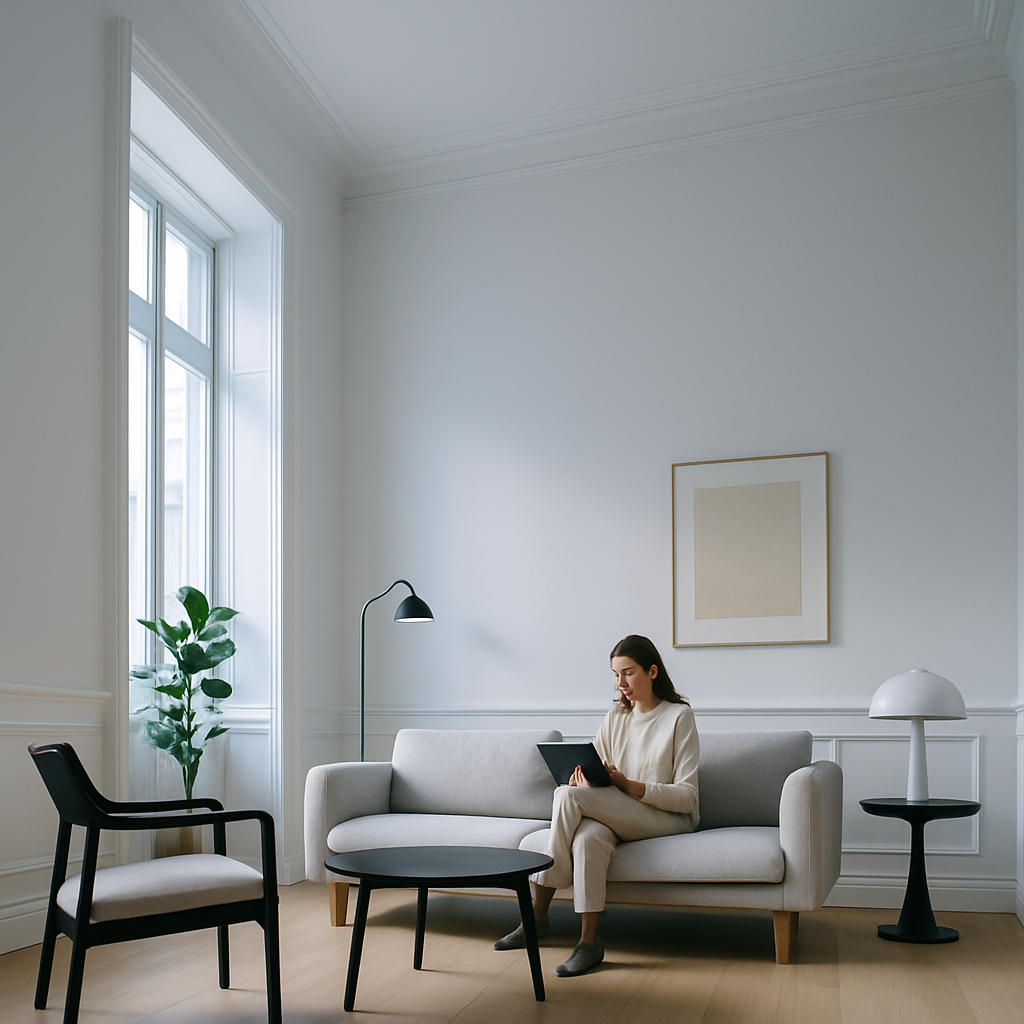
The home decor industry has undergone a structural transformation driven by mobile technology that would have seemed improbable just ten years ago. Interior design apps now generate photorealistic room renders, overlay virtual furniture onto live camera feeds, and connect homeowners with credentialed designers through asynchronous workflows that eliminate geography as a constraint. A 2024 survey conducted by the American Society of Interior Designers (ASID) found that 72 percent of design professionals reported clients arriving at initial consultations with app-generated floor plans or mood boards in hand, fundamentally altering the starting point of the professional relationship. The shift is not merely technological; it represents a redistribution of creative authority from gatekeepers to the people who actually live in the spaces being designed. Understanding how these apps work, where they excel, and where they still fall short provides a practical framework for anyone considering a decor overhaul, whether the budget is $500 or $15,000.
The Rise of Augmented Reality in Home Decor Planning
Augmented reality has moved from a marketing novelty to a functional planning instrument in under five years. Early AR implementations let users place a single piece of furniture in a camera view, which was entertaining but rarely useful for serious decision-making. Current implementations, powered by LiDAR sensors and depth-mapping algorithms, scan an entire room's geometry and allow users to populate it with dozens of items that maintain correct spatial relationships. IKEA Kreativ, Amazon's Room Decorator, and Houzz's View in My Room feature all leverage this technology to varying degrees of sophistication. The practical impact is measurable: Houzz reported that products viewed through its AR feature had a 35 percent higher conversion rate than products viewed as static images, suggesting that spatial context drives purchasing confidence.
The accuracy of modern AR placement solves a problem that has plagued furniture retail for decades. A sectional sofa looks entirely different in a 5,000-square-foot showroom than it does in a 220-square-foot living room, and that discrepancy has historically been the largest source of post-purchase regret. AR eliminates the guessing by rendering the item at true scale within the buyer's actual environment. Smart home integrations add another layer of utility; a user can position a smart speaker or a motorized blind in the AR view and evaluate how it interacts with existing fixtures. The National Council for Interior Design Qualification (NCIDQ) has acknowledged AR as a legitimate planning tool in its updated competency standards, recognizing that spatial visualization through technology is now a core skill rather than an optional supplement.
Limitations remain. AR accuracy degrades in rooms with unusual geometry, such as angled walls, cathedral ceilings, or sunken living areas, because the depth map struggles to interpret non-standard planes. Lighting conditions also affect the visual fidelity of the overlay; a virtual lamp placed in a bright room looks washed out, while the same lamp in a dim room appears more saturated than its real-world counterpart. These are solvable engineering challenges, and each software update narrows the gap. For now, users should treat AR as a high-confidence approximation rather than an exact replica, and validate critical dimensions with a tape measure before placing a purchase order.
AI-Powered Style Recommendations and Personalization
Artificial intelligence has introduced a level of personalization that was previously available only through an extended designer-client relationship. Several apps now analyze a user's saved images, quiz responses, and browsing behavior to generate style profiles that go beyond simple labels. Instead of categorizing someone as "mid-century modern," the AI might identify a preference for warm wood tones, low-slung silhouettes, brass hardware, and textured textiles, then curate product recommendations that satisfy all four dimensions simultaneously. This granular matching reflects how real design preferences work: few people fit neatly into a single style box, and the most compelling rooms blend elements from multiple traditions.
The recommendation engines also learn from aggregate data. When thousands of users in similar-sized apartments choose similar furniture configurations, the AI identifies patterns that inform layout suggestions for new users with comparable spaces. IIDA's 2023 technology report noted that AI-curated room plans achieved higher client satisfaction scores than unguided self-service plans in a controlled study of 1,200 participants. The result is not surprising; pattern recognition across a large dataset captures spatial wisdom that an individual homeowner, designing their first room, simply does not possess. Have you ever wondered why certain furniture arrangements feel instinctively right while others create an undefined sense of unease? The AI has seen enough data to codify those instincts into repeatable rules.
Privacy considerations accompany any AI that ingests personal behavior data. Reputable apps disclose their data practices and offer opt-out mechanisms, but users should read the terms before uploading photos of their homes. The design data itself, room dimensions, furniture preferences, budget ranges, is low-sensitivity compared to financial or health data, but aggregated lifestyle information still has commercial value. ASID has called for industry-wide transparency standards for design apps that collect behavioral data, positioning the issue as a professional ethics concern rather than a purely legal one. Informed users who understand the trade-off between personalization and privacy can make a conscious choice rather than a default one.
3D Rendering: From Professional Studios to Pocket Devices
Photorealistic 3D rendering was once the exclusive province of design firms with dedicated workstations and expensive software licenses. Today, apps like Planner 5D, Coohom, and HomeByMe generate renders on mobile devices that approach the quality of professional output. The democratization happened because cloud computing offloaded the heavy rendering calculations from the device to remote servers, so a three-year-old phone can produce an image that a standalone laptop could not have generated in 2018. AD PRO featured a side-by-side comparison of app-generated renders and professional studio renders in which an independent panel of designers correctly identified the professional version only 62 percent of the time, barely above chance.
The emotional impact of a photorealistic render should not be underestimated. Flat floor plans and mood boards communicate information, but a render communicates experience. Seeing a sunlit kitchen with accurate shadow angles, reflective granite countertops, and the soft glow of under-cabinet lighting creates an emotional commitment to the project that abstract planning documents cannot achieve. That emotional engagement is a double-edged sword; a beautiful render can also mask practical problems like insufficient storage or poor traffic flow. Experienced designers use renders as one tool among many, always cross-referencing the image against the floor plan to ensure that what looks good also works in the daily reality of cooking, cleaning, and moving through the space.
Render speed has improved dramatically. Early consumer tools required overnight processing for a single image; current apps deliver a draft render in under sixty seconds and a polished version in five to ten minutes. That speed enables iterative design: change the wall color, render, evaluate, change it again, render, compare. The iteration loop that once took days in a professional workflow now takes an afternoon on a phone. For homeowners investing $5,000 to $15,000 per room, the ability to test twenty variations before committing to one is a cost-avoidance mechanism that pays for the app subscription many times over.
How Design Apps Are Reshaping the Professional Landscape
The rise of consumer design apps has not displaced professional designers; it has redefined the terms of engagement. Clients who arrive at a consultation with an app-generated floor plan and a curated Pinterest board are not replacing the designer's expertise; they are accelerating the discovery phase. The designer spends less time interpreting vague preferences and more time applying technical knowledge to refine a concept that already has a clear direction. NCIDQ-certified professionals report that app-literate clients reduce the average number of revision rounds by 40 percent because the initial brief is more articulate and visually specific.
Some designers have integrated consumer apps directly into their client workflow. Rather than producing a floor plan in AutoCAD and presenting it as a finished artifact, they share a Planner 5D project file that the client can navigate, modify, and annotate. This collaborative approach transforms the designer from an authority figure delivering pronouncements into a guide who helps the client refine their own emerging vision. The shift aligns with a broader cultural movement toward participatory design that the International Interior Design Association has championed through its "Design for All" initiative, which emphasizes inclusive processes over top-down prescriptions.
The economic impact extends to the industry's pricing structure. Flat-fee online design packages ranging from $75 to $500 per room have pressured traditional firms that charge hourly rates to articulate their value proposition more clearly. What does a $300-per-hour designer provide that a $150 app-plus-designer package does not? The answer typically involves custom solutions: bespoke furniture specifications, integration with architects and contractors, code-compliant space planning, and access to trade-only vendors. These services remain valuable for complex projects, but the bar for justifying premium pricing has risen because consumers now have a baseline comparison. Design apps have not commoditized design; they have commoditized the entry-level planning that used to be bundled into the premium fee.
Biophilic and Wellness-Focused Design Through Technology
Biophilic design, the practice of integrating natural elements into built environments to improve occupant well-being, has found an unexpected accelerant in design apps. Apps that include indoor plant libraries, natural material textures, and daylight simulation tools make biophilic principles accessible to homeowners who may never have encountered the term. Planner 5D's catalogue includes over 200 plant species rendered at accurate scale, so a user can test whether a fiddle-leaf fig or a monstera better fits the proportions of a bookshelf alcove. The visual feedback loop encourages experimentation with greenery in rooms where a homeowner might not have considered it, such as bathrooms, hallways, and home offices.
Daylight simulation is a particularly powerful feature for wellness-oriented design. Several apps model how natural light moves through a room across the course of a day, showing where direct sun falls at 9 AM versus 3 PM. This information influences window treatment choices, desk placement for home offices, and the positioning of seating areas. ASID's well-being research initiative has documented a correlation between intentional daylight exposure in living spaces and improved occupant mood and sleep quality. An app that visualizes these patterns transforms abstract wellness advice into actionable room planning. Where does the afternoon sun hit in your living room, and is that where you actually spend your afternoons? If not, the furniture arrangement might be the problem, and a simulation can reveal the solution.
The quiet luxury movement, which prizes understated natural materials over ostentatious branding, also benefits from app-based visualization. Distinguishing between three shades of natural linen for a curtain panel, or comparing the grain patterns of white oak versus European beech for a dining table, requires the kind of side-by-side material comparison that apps handle effortlessly. In a physical showroom, these comparisons involve driving between locations and relying on memory to compare samples seen hours apart. In an app, they involve two taps and an instant render. The technology does not change the design philosophy; it removes the logistical friction that previously made nuanced material selection impractical for non-professionals.
Practical Limitations and the Road Ahead
For all their capabilities, design apps have blind spots that honest assessment should acknowledge. Tactile qualities, how a fabric feels against skin, how a stone countertop absorbs warmth, how a hardwood floor responds underfoot, remain beyond the reach of any screen-based tool. Designers frequently cite the "showroom moment" as irreplaceable: the instant a client runs a hand across a velvet cushion and says "this one." Material samples ordered online partially bridge the gap, but they arrive in small swatches that do not convey how the material behaves at room scale. Until haptic technology advances significantly, the physical swatch will remain a necessary companion to the digital render.
Acoustics represent another gap. A room's sound character, whether it echoes, absorbs, or amplifies conversation, depends on surface materials, room geometry, and furnishing density in ways that no consumer app currently models. A minimalist room with hard surfaces and sparse furniture may photograph beautifully in a render but feel uncomfortably reverberant in person. Professional designers account for acoustic properties when specifying materials; consumer apps do not yet surface this dimension. Houzz's professional community forums contain numerous threads where homeowners describe stunning rooms that "sound terrible," a consequence of optimizing for visual impact without considering the auditory environment.
The road ahead is encouraging. Integration with smart home ecosystems will allow apps to simulate not just how a room looks but how it performs: lighting scenes, thermostat zones, speaker configurations, and motorized shade schedules all previewed in a unified digital model. Machine learning will continue to improve style matching, layout optimization, and cost estimation accuracy. The apps of 2025 and beyond will likely incorporate real-time collaboration features that let a homeowner and a remote designer co-edit a 3D model simultaneously, mirroring the workflow that architects have used for years in professional tools like Revit. The trajectory is clear: more capability, more accuracy, and more accessibility with each release cycle.
Conclusion
Interior design apps have moved decisively beyond novelty into genuine utility, reshaping how homeowners plan decor projects and how professionals deliver their services. Augmented reality eliminates scale guesswork, AI personalizes recommendations with a precision that rivals an attentive designer, and 3D rendering converts abstract ideas into emotionally compelling visuals. These tools have not replaced professional expertise, but they have raised the floor of what any homeowner can accomplish independently and sharpened the conversation when professional guidance is sought.
The practical next step is to choose one room and one app, then spend an evening testing what the technology can do with your specific space. Measure the room, scan it if the app supports it, and start placing furniture. The gap between imagination and visualization closes the moment you see your own walls, your own windows, and your own dimensions populated with the decor choices you have been considering. That tangible preview is the catalyst that turns contemplation into confident action, and the app store is the only showroom you need to visit first.



Comments
Post a Comment