10 Innovative Interior Design Ideas to Transform Your Space
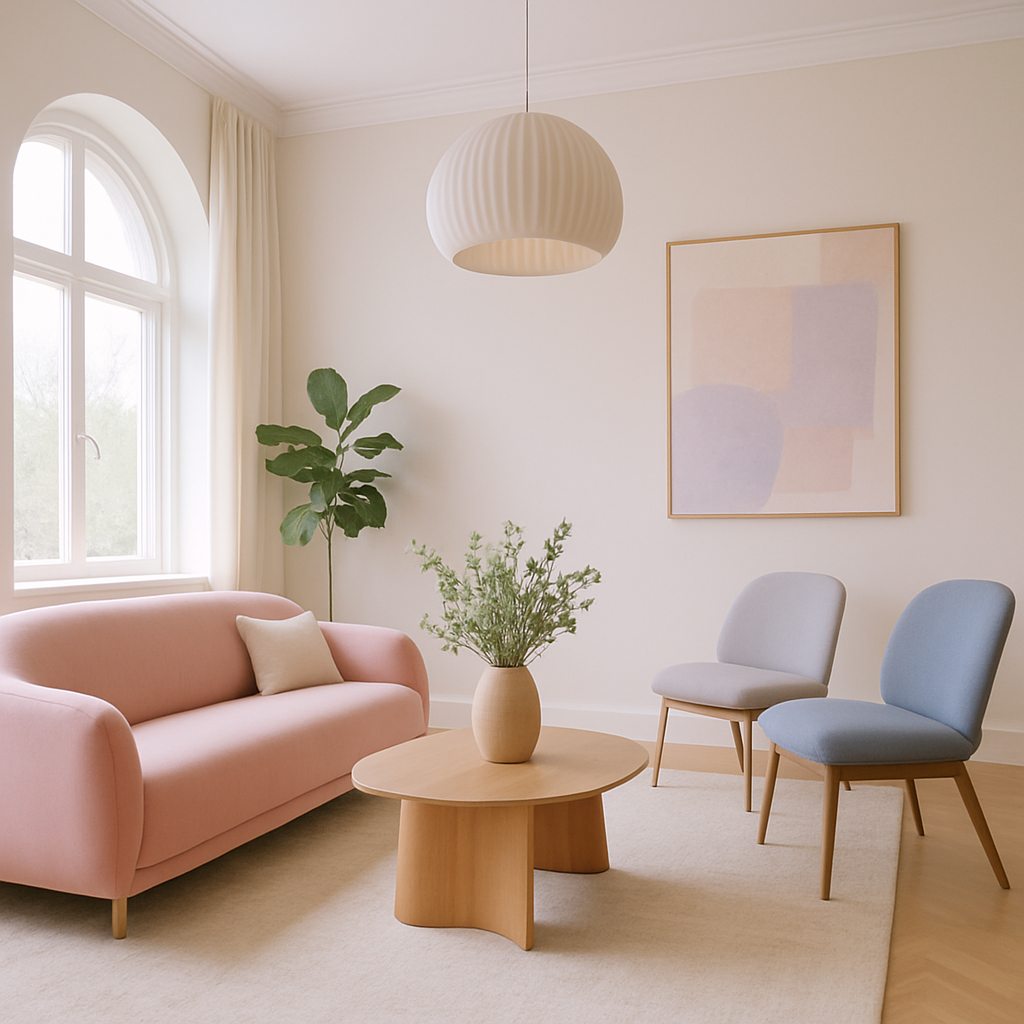
Innovation in interior design does not always arrive in the form of radical new materials or futuristic technology. Often, the most impactful changes come from reconsidering how familiar elements are combined, positioned, and prioritized within a living space. A room that has felt stale for years can be dramatically refreshed by rethinking its relationship to natural light, rearranging furniture to create better traffic flow, or introducing a single unexpected material that shifts the entire character of the environment. The American Society of Interior Designers (ASID) reports that 85 percent of homeowners who make intentional design changes to their primary living spaces report measurable improvements in daily satisfaction and well-being. The ten ideas presented in this guide are drawn from current professional practice and emerging design philosophies, each offering a distinct pathway to meaningful spatial transformation without requiring a complete renovation. Whether you have a weekend and a modest budget or the resources for a more ambitious project, at least several of these approaches will resonate with your situation and goals.
Living Walls and Vertical Gardens
Vertical gardens represent one of the most visually striking expressions of biophilic design available to homeowners. Unlike a few scattered houseplants, a living wall creates an immersive experience, transforming an ordinary partition into a lush tapestry of foliage that introduces texture, color, and even humidity regulation into the room. Modern living wall systems have evolved well beyond the complex irrigation setups that once made them impractical for residential use. Self-watering modular panels, pre-planted pocket systems, and preserved moss installations that require no watering at all have made vertical gardens accessible to a far wider audience than the wealthy homeowners and commercial spaces where they first appeared.
The placement of a living wall deserves careful consideration because it will become the dominant visual element in whatever room it occupies. Designers featured on Houzz recommend positioning living walls in spaces where they can be appreciated from multiple angles and where they receive indirect natural light, such as a dining area visible from the kitchen, a hallway that connects living spaces, or a home office where the greenery provides a calming backdrop during video calls. The psychological benefits are well documented: research supported by the International Interior Design Association (IIDA) indicates that exposure to indoor greenery can lower cortisol levels and improve concentration, making living walls not just decorative features but genuine contributors to occupant health.
Maintenance concerns are the most common reason homeowners hesitate to install living walls, but the options now range from high-maintenance live plant systems to zero-maintenance preserved moss panels that retain their color and texture for years without watering, soil, or sunlight. Preserved moss walls are particularly well suited to Japandi interiors, where their organic texture and muted green palette complement the warm wood tones and restrained compositions that define the style. For those who want the vitality of live plants, drip irrigation systems connected to a timer reduce upkeep to periodic pruning and occasional fertilizing, a commitment comparable to maintaining a small garden.
Japandi Fusion Rooms
Creating a fully realized Japandi room involves more than combining a few Scandinavian furniture pieces with Japanese accessories. The authentic expression of this style requires understanding the philosophical underpinnings of both traditions: the Japanese concept of wabi-sabi, which finds beauty in imperfection and transience, and the Scandinavian principle of hygge, which prioritizes warmth, comfort, and coziness. When these philosophies merge, the result is a space that feels simultaneously refined and approachable, pared back but never cold, carefully composed but never rigid.
Material selection is where the Japandi aesthetic comes to life most vividly. Light-toned woods like ash, birch, and maple provide the Scandinavian warmth, while darker accents in walnut, black-stained oak, or charcoal ceramics introduce the depth and groundedness associated with Japanese design. Textiles should favor natural fibers: linen, cotton, wool, and raw silk in muted tones that complement rather than compete with the wood. AD PRO has noted that the most successful Japandi interiors limit their material palette to five or fewer distinct materials, creating coherence through restraint rather than variety. Each material is given enough space to be appreciated individually, which is a direct reflection of the wabi-sabi principle of valuing the essential character of each element.
Furniture in a Japandi room should favor low profiles and clean geometric forms. Platform beds without headboards, low-slung sofas with exposed wood frames, and floor cushions for casual seating all reflect the Japanese preference for living close to the ground. What distinguishes Japandi from pure Japanese minimalism is the Scandinavian emphasis on ergonomic comfort; seating should be visually light but physically supportive. The overall effect should be a room where every object earns its place, where negative space is treated as a design element rather than an absence, and where the eye moves through the composition without encountering visual clutter or unnecessary complexity.
Smart Lighting Ecosystems
Lighting is the single most transformative element in any interior, yet it remains one of the most underinvested aspects of residential design. A room with beautiful furniture, thoughtful colors, and quality materials can still fall flat if the lighting is limited to a single overhead fixture that casts flat, shadowless illumination. Smart lighting ecosystems address this by providing layered, adjustable, and programmable light that can adapt to different activities, times of day, and moods without requiring you to manually adjust individual fixtures every time your needs change.
The concept of circadian lighting, which adjusts color temperature throughout the day to support natural sleep-wake cycles, has moved from healthcare and hospitality settings into residential applications. Morning light scenes activate cooler, blue-enriched tones that promote alertness and energy, while evening scenes shift toward warm amber hues that stimulate melatonin production and prepare the body for sleep. Designers writing for AD PRO have reported that clients who implement circadian lighting systems frequently describe improvements in sleep quality and energy levels, benefits that go far beyond aesthetics. Have you noticed how you feel different in a room lit by candles compared to one lit by fluorescent tubes? Smart lighting gives you control over that spectrum.
Beyond circadian adjustment, smart lighting allows you to create task-specific scenes that support different activities in the same space. A home office might have a focused work scene with bright, cool light directed at the desk surface, a video call scene with soft, diffused frontal lighting that eliminates unflattering shadows, and a reading scene with warm directional light positioned over a comfortable chair. Each scene is activated with a single command, voice prompt, or schedule trigger, eliminating the friction of manual adjustment that often leads people to simply leave their lighting unchanged regardless of the activity. The key is to plan these scenes during the design phase, as recommended by the IIDA, rather than attempting to retrofit them into an existing lighting layout.
Multifunctional Furniture Solutions
As living spaces trend smaller in many urban markets, furniture that serves multiple purposes has evolved from a compromise into a sophisticated design strategy. The current generation of multifunctional furniture bears little resemblance to the clunky sofa beds and drop-leaf tables of previous decades. Designers are now creating pieces that transform elegantly between configurations, such as coffee tables that rise to dining height on hydraulic lifts, modular seating systems that reconfigure from lounge to guest bed to daybed, and wall units that conceal fold-down desks, storage, and even Murphy beds behind sleek panels that look like built-in cabinetry when closed.
The quiet luxury interpretation of multifunctional furniture prioritizes material quality and mechanism refinement. A well-engineered transforming table should operate smoothly and silently, with hardware that is either invisible or treated as a design detail in its own right. Solid wood surfaces, leather-wrapped edges, and precision metal fittings distinguish high-quality multifunctional pieces from their budget counterparts. Professional interior designers certified by NCIDQ frequently specify custom multifunctional pieces for clients with space constraints, and while the cost per item is higher than standard furniture, the savings in square footage and the elimination of multiple single-purpose pieces often make the investment worthwhile.
The psychological impact of multifunctional furniture extends beyond practical space savings. A room that can smoothly transition from workspace to dining room to entertainment area provides a sense of expansiveness and possibility that a rigidly defined space cannot match. According to ASID research, residents of compact living spaces report higher satisfaction when their furniture supports multiple activities than when they attempt to dedicate fixed zones to each function. The flexibility itself becomes a source of comfort, knowing that your home can adapt to whatever the day requires rather than constraining you to a predetermined set of uses.
Textured Accent Walls
Accent walls have been a staple of interior design for decades, but the concept has evolved far beyond painting one wall a different color. Contemporary accent walls use texture, dimension, and material variation to create focal points that engage the sense of touch as much as sight. Fluted wood panels, three-dimensional plaster treatments, textured stone cladding, woven reed panels, and even acoustic felt tiles in geometric patterns all offer ways to introduce depth and interest to a room without relying solely on color contrast. These textured surfaces respond to light in ways that flat painted walls cannot, casting subtle shadows that shift throughout the day and adding a dynamic quality to the space.
Material selection for textured accent walls should be guided by the overall design language of the room. In a Japandi-inspired space, shou sugi ban, a Japanese technique of charring wood to create a blackened, deeply textured surface, creates a dramatic focal point that connects to both the Japanese aesthetic tradition and the biophilic emphasis on natural materials. In a contemporary setting, fluted or ribbed wood panels in a light oak or ash finish add rhythm and movement without overwhelming the composition. Houzz reports that textured accent walls are among the most frequently saved design features on their platform, indicating strong homeowner interest that cuts across style categories.
Acoustic performance is an underappreciated benefit of many textured wall treatments. Felt panels, woven textiles, and dimensional wood surfaces all absorb sound reflections that would otherwise bounce off flat drywall, reducing echo and improving the acoustic comfort of a room. This is particularly valuable in open-plan living spaces, home offices where clear audio for video calls is important, and bedrooms where sound absorption contributes to better sleep quality. The IIDA has published guidelines on acoustic design for residential interiors that highlight textured wall treatments as a practical solution that simultaneously addresses aesthetic and functional objectives, making them one of the most efficient design interventions available. Gallery wall compositions can also benefit from textured backgrounds; mounting a curated arrangement of artwork, photography, and dimensional objects against a fluted wood or plaster accent wall adds depth and context that a flat painted surface cannot provide. Professional designers recommend using paper templates, as endorsed by ASID, to test gallery arrangements before committing, and the quiet luxury approach favors fewer, higher-quality pieces with generous spacing that allows each work to be appreciated individually.
Integrated Indoor-Outdoor Living
Blurring the boundary between indoor and outdoor space is one of the most powerful ways to expand the perceived size and experiential richness of a home. This concept extends well beyond installing a sliding glass door; it involves creating material continuity between interior and exterior spaces, establishing sightlines that draw the eye outward, and designing transitional zones that belong to neither inside nor outside but serve as bridges between the two. The biophilic design framework positions this kind of integration as essential to human well-being, arguing that our evolutionary heritage makes us most comfortable in environments that maintain a connection to the natural world.
Material continuity is the most direct way to achieve a seamless indoor-outdoor transition. Using the same flooring material, or a closely matched variation, on both sides of a threshold eliminates the visual boundary that typically separates interior and exterior spaces. Porcelain tiles that replicate the appearance of natural stone or wood are increasingly popular for this application because they can withstand weather exposure on the outdoor side while maintaining a warm, organic appearance that complements interior finishes. Designers featured on AD PRO have noted that this continuity technique can make a modest patio feel like a natural extension of the living room, effectively increasing the usable living area of the home without any structural modification.
Furnishing transitional zones requires pieces that can handle temperature fluctuations, moisture, and occasional direct sunlight without deteriorating. Performance fabrics that resist fading, mildew, and staining have advanced to the point where outdoor cushions and upholstery are virtually indistinguishable from their indoor counterparts in terms of comfort and appearance. Teak, aluminum, and synthetic wicker frames combine durability with aesthetics that complement both indoor and outdoor design vocabularies. Professional fees for designing integrated indoor-outdoor living spaces typically fall within the $150 to $500 per hour range charged by NCIDQ-certified designers, and the investment frequently yields returns in both property value and quality of daily life that exceed the initial expenditure.
Conclusion: Choosing Your Starting Point
Ten ideas may feel like an abundance of options, but the goal is not to implement all of them simultaneously. The most successful interior design transformations begin with a single, deliberate change that sets the tone for everything that follows. Review the ideas presented here and identify the one that speaks most directly to a frustration or aspiration you have about your current living space. Perhaps your home lacks a connection to nature and a living wall or biophilic material upgrade would address that gap. Perhaps your lighting is flat and uninspiring and a smart lighting ecosystem would transform your daily experience. Whatever resonates most strongly is your starting point.
Commit to one project over the next thirty days. Research the options, establish a budget, and begin the process of making that single change a reality. Consult the resources offered by ASID, IIDA, and Houzz for inspiration and professional referrals, and consider how each change might naturally lead to the next. A textured accent wall might inspire a new color palette, which might suggest different furniture, which might reveal the need for better lighting. This organic progression is how the most authentic, personally meaningful interiors develop over time, not through a single dramatic makeover but through a series of intentional decisions that accumulate into a space that genuinely reflects who you are and how you want to live.
More Articles You May Like


Comments
Post a Comment